Introduction
Aleksandar Dimitrov, founder and CMO of Amused Agency, explains how simple content and relationship building help experts attract clients online. He shares how his boutique studio supports consultants and thought leaders through personal branding, offer positioning, and educational content.
Learn why website experiences should reflect where visitors come from, and how videos and lead magnets can build trust before asking someone to book a call. Aleksandar also discusses LinkedIn marketing, adapting writing to different platforms, and applying timeless customer psychology instead of chasing every new tool. For marketers and founders, this episode offers a clear reminder to listen deeply, follow up, and focus on fundamentals.


Increase +180% conversions from your website with AI
Get more conversions from your existing traffic by delivering personalized experiences in real time.
- Adapt your website to each visitor’s intent automatically
- Increase conversions without redesigns or dev work
- Turn anonymous traffic into revenue at scale
RICK: Pathmonk is the AI
for website conversions. With increasing online competition, over 98% of
website visitors don’t convert. The ability to successfully show your value
proposition and support visitors in their buying journey separates you from the
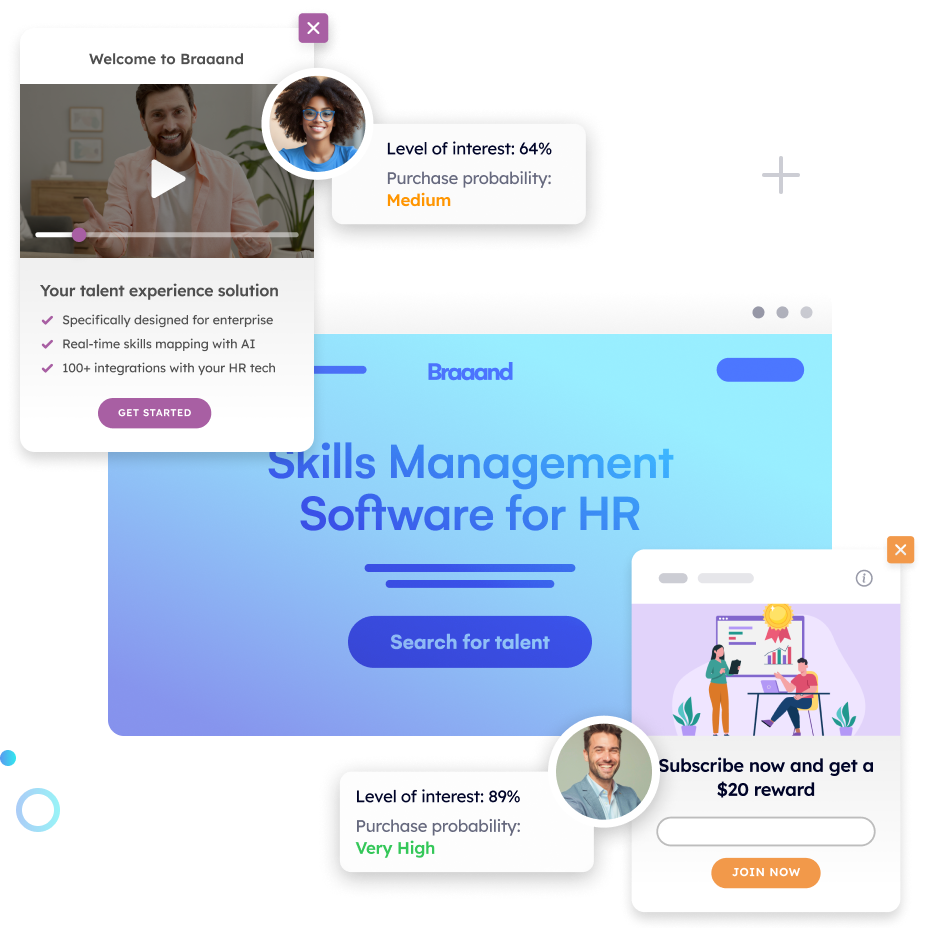
competition online. Pathmonk qualifies and converts leads on your website by
figuring out where they are in the buying journey and influencing them in key
decision moments with relevant micro experiences like case studies, intro
videos, and much more.
Stay relevant to your visitors and increase conversions by 50% by
adding Pathmonk to your website in seconds by letting the AI do all the work
and increase conversions while you keep doing marketing as usual. Check us out
on pathmonk.com. Hey, everybody. Welcome back to Pathmonk Presents. Today we’re
joined by Alexander Dimitrov.
He’s the s- founder and CMO of Amused Agency. Alexander, welcome to
the show.
ALEKSANDAR DIMITROV:
Yeah. Thank you, Rick.
RICK: Of course. Pleasure
to be here. Glad to have you here, and, I’m excited to jump in, Alexander, or
Alex, if you don’t mind. For sure … just wanna know a little bit about
Amused. maybe we start with the basics, I m- in your own words, what’s the big
idea behind your agency? And, typically we ask if you were explaining this to a
friend over coffee, right? Casually, easily, let’s say, how would you describe
what you do?
ALEKSANDAR DIMITROV:
Yeah. So what we do is pretty much we write on the internet, but in a way that
also helps you find customers.
As simple as that. we love to package, information, teach people,
help our clients teach, and get paid to teach. that’s in a sense like what we
do at scale with client work, and we’re a small boutique studio out of,
Bulgaria and Eastern Europe, but, we work with over 80 clients, across the
internet all around the world, mostly, from the US and also Europe, local
clients.
And what we do, it’s, pretty niche. So you’ve seen all kinds of,
marketers online, but, we do like simple things that work. If you have any
questions.
RICK: I lo- I love
simple, first of all, and I love the fact that, you just mentioned, “Hey,
we’re a small boutique studio. We’re over 80 clients,” right?
Which is, I think, an, an impressive number for a small boutique
studio, but also the fact that you work with people all over, right? it’s,
pretty awesome, and it shows like the, the power of, the internet these days
that you can reach people all over the world, and if you provide a good
service, then they keep coming, right?
But on that note, I’m also curious what kind of businesses that you
work with? what… Are there any specific industries maybe where you feel your
services are fit for? And is there a key problem? And this is a two-part,
right? Is there a key problem that you help these, these people solve?
ALEKSANDAR DIMITROV:
Yeah.
First, I’ll take you a little bit back as an evolution of how we
started, and I’ll tell you what we do now because, eventually today we’re
selling like more of like information and work with, if you think about
influencers, thought leaders on LinkedIn, like people who have like decades of
expertise, they have already successfully exited a business or, they’ve been in
corporate world for decades and now they want to do consulting on their own and
build their personal brand and also, find clients.
We help them along their journey. But in the beginning, we started
as, I have a friend saying “If there’s no fish, everything i- is
like-” Looking as a meal. But, that includes e-com clients. First of our
clients were mostly in the e-com space. But eventually that was, like, a little
bit boring for me and, we decided to shift and, just embrace people who read
the same books.
Listen to the same podcasts and share the same ideas with us, which
is, growing, learning along the way, writing and there’s a lot of,
interconnected, topics that we can touch on later. But we believe in that,
AMUSE stands for Be the Muse Your Clients Seek To Find.
It’s a little bit of a spin-off of, if you, heard about the, the
Gandhi version, be the change you want to see in the world. So i- it’s like
we’re here to, serve clients who are also type of solopreneurs, but some of
them also have, businesses, because they’ve done it for so many years.
RICK: Perfect. A- and,
the way I understand it is that you, will help with thought leadership in a way
that they also, articulate what they want to talk about, their product, their
service, their offering. W- what have you, right?
And just make it clear. And I know simple is a key word because
you’ve mentioned it a couple times already, right?
So I guess make it simple. is that pretty much the gist of it?
ALEKSANDAR DIMITROV:
Yeah. Everyone struggles with the same problems if you think about it from a
marketing perspective. who are the people that I talk to? What is the problem
that I solve? what is the positioning they’re offering? Everything changes
from, a year with, GPT 3.5 to a year with, GPT 5.0 and things like that.
But tools change, the, the market change, but what doesn’t change
is how, customer psychology works and how people buy. So we lean on those
things. We adapt along the way. We help, clients package their offers
differently, host, like, webinars and trainings, have, long and short-form
content.
RICK: Okay. Fair enough.
so as you said, human psychology remains the same in a way, right? So I’m
curious how these people, these clients of yours, how do they discover you? And
are there any channels at the moment that have become your go-to for bringing
in more of them? I suppose here, going out on a limb and an assumption here,
LinkedIn might be a big channel for you and social media in general.
but in all of that- And we can, we can attack this by compartments,
let’s say. In all of that, what- how does your website play a role in all of
this, in attracting new business?
ALEKSANDAR DIMITROV:
Honestly, I wish my website played a, a big role. I’m not like a traditional
PPC guy who, spends a lot of time on Google Analytics and, Google Search and
ranks keywords to pop in Search so that, people discover me this way.
That’s why website is not, the primary place I invest my time on,
you know, building a internet and online presence. But we do, mostly myself, I
spend a good part of my day on LinkedIn, and emails, local events. but it- it’s
pretty much like networking calls. A lot of those, I’m here, recording a
podcast, and also have planned to do a podcast, for the agency as well.
we recorded a number of episodes that none of them are live, but,
maybe one day.
RICK: Of course. Of
course. So LinkedIn, as you said, yeah, it l- it sounds like that would be one
of the best channels, right? Yeah … so let’s touch on the website for a
second, because you said, I wish it was a, I’m paraphrasing here, but you said,
it’s, it was a little bit better and whatnot. From your experience, what
actually makes a website convert? if you were to make changes to yours or from
what you’ve seen across the, the web, are there any tools or tactics that you
think work or maybe even a framework, if you will, that has worked wonders in
your experience?
ALEKSANDAR DIMITROV:
Yeah. So website by itself, it’s, you can think of it as simple as like a
business card on the internet, right? But, it could be way more than that, not
to oversimplify. But what I think a lot of people get wrong is, building a
website, but they’re thinking about themselves in the process of building their
website and not, like, how people, land on the website and where they’re coming
from.
I have a, a good friend of mine, he’s like an theater, like a
actor, like a live performance, not like in movies, and he’s always saying
that, a character in a play, they need to know where you’re coming from. It’s
the same as, m- maybe, for the digital marketing world and business online, you
need to have, a different type of w- website catered to cold traffic, say
people are coming from, advertisement somewhere else or from organic content.
It will be a different structure, it will be a different website.
and the things that will work and convert will be different in terms of if you
have people from SEO, and if you have been ranking very well and you have,
blogs that lead to the website after a search, that’s pretty good, But, it’s
way different structure. And- I can speak to different of those segments if you
wanna, go those rabbit holes. but what I would say across the board really
works well is that if you have, something that captures people attention, so it
doesn’t matter where they come from, you have, some sort of, a video, or some,
a freebie that looks like a lead magnet, then they can opt in if they want to,
talk with you.
They can… nobody books a call before they know who you are,
right? So there need to be, like, a bridge before that. And, this teaser offer
that is free for everyone.
RICK: that’s a good one,
and I like it. And I- personally, as a consumer, I found myself, say, booking
calls whenever I felt like I could already, as you said, I could already trust
the person.
And so when we got on the call, I felt like, “Hey, I, how… I
know how you speak already,” or, “I know at least the way you think.
I can see, we might be able to work together.” ’cause otherwise it’s just,
w- why would I give you my time? what’s the incentive, right?
ALEKSANDAR DIMITROV:
Yeah.
RICK: What do I get from
it?
So-
ALEKSANDAR DIMITROV:
People buy from people, and, that’s the main premise. Online it does… It’s no
different, it’s just that the experience is a little bit altered, and there’s,
different steps to get to know someone online.
RICK: Absolutely.
speaking of people, let’s switch gears for a second here, Alex. Maybe we talk
about you as a leader, as a, founder.
What’s a day in the life like for you? I’m sure there’s a, lot of,
things that you’re juggling, right? but if you were to pick, say, three things
that you focus on as soon as you sit down at your desk at the, at the start of
the day, what would you say they are?
ALEKSANDAR DIMITROV:
Look, dude, I’ll also give you, an archetype.
I’m most likely, a hunter. we mostly eat what we kill, but in a
sense that, we’re very personalized and, I like to work with people who I’ll,
I’d like to, call my friends eventually. And, I’m following with a lot of
people. I’m investing to build relationships. This is the majority part of my
day.
And say this is the good half of it, and then the second half is,
writing, getting better as, building my own skills as a writer, as a marketer,
and also delivering and working with clients.
RICK: I like that, and
especially the honing the skills part ’cause you… So many people, speak
personally here.
you get into, I don’t wanna call it a rut necessarily, but you get
into a flow, into the routine, of doing the things that you’re supposed to do.
but maybe that doesn’t include necessarily working on your skills, right? Just
perfecting your skills and getting better. Now, you have a, a…
such a unique position in a way where, your skill is directly
connected to the outcome for your clients. So writing, right? So writing is…
it’s a great one ’cause you can practice daily in, inside work, outside of
work, and things like that. But it’s, pretty cool to just see how you think
about it in a sense that, “Hey, I just gotta get better, so I, put my head
down and I write.”
Or, I read headlines,” or, “I practice specific
tone,” or whatever the case, right? that’s, that’s pretty cool. Now,
there’s a flood of content out there, Alex, and I’m curious: how do you stay
focused and keep learning, with all that chaos that’s out there? Are there
certain places or people, maybe routines that you turn to for inspiration or
even staying ahead?
ALEKSANDAR DIMITROV:
Yeah. recently I’ve been, thinking about the old type of advertising,
literature and the first marketing, books that, came out in the late… I- in
the early 19, 00s, so last century. And also, I’m bullish on, Substack as a,
medium. I think it’s, it’s really cool.
There’s a lot of people who have, a different angle, an unorthodox
point of view of, if you wanna say building a business online, but specifically
writers, and you can see how that changes. because you need to write and adapt
your writing to how people read online, because you have to be mindful of, how
people consume your writing as well.
It’s one thing to write on LinkedIn, it’s another to write for
newsletters and things like that. Formats matter. But I’m learning from people
who are ahead of me, I invested a lot of, more than, maybe even 30K at this
point to, get better and learn from those who are ahead of me.
RICK: That’s, I like the
focus on the old stuff, right? ‘Cause, you go back to the classics, you… Many
people think, “Hey, I gotta get on the new trends, on, on whatever is
newest.” But actually, if you look back, there’s, already a foundation that
was set, and people built off of that. As opposed to focusing on new things,
focus on the old stuff, and then you can build your own, flavor of or whatever
you’re working on, right?
So that’s a pretty cool approach.
ALEKSANDAR DIMITROV:
Yeah. there’s no, black belt techniques that submit, black belts. There’s just,
white belt techniques that are mastered to perfection that, that black belts.
RICK: Good, point. Good
point. Speaking of black belts, right? This is a segment that we’re going into
before we wrap things up.
It’s a rapid-fire segment. We, we need to move quickly, We need to
roll with the punches. but it’s essentially what it is, it’s, it’s just a few
questions to keep things light and engaging, Alex, so don’t worry about it. No
need to be a black belt at anything for this. but I just wanted to check, are
you ready for it?
ALEKSANDAR DIMITROV: I
am.
RICK: All right. Sweet.
So when it comes to content, to stay on that, train, do you prefer reading,
watching, or listening to things?
ALEKSANDAR DIMITROV:
Listening and reading
RICK: Okay. So what’s the
latest piece of content, and it could be an audiobook, a, a podcast or a book
itself that you’ve read, and was there anything that really stuck with you in
it?
ALEKSANDAR DIMITROV: I
read The Obvious Adams last, week, and it’s, one of those old books in
advertising, as was mentioning earlier. So it’s a very thin book. I heard it as
a recommendation from, Rory Sutherland, who’s the chairman in Ogilvy, and also
like a very, wise guy. But this is like a, a book that it tells a story about
this copywriter in, the Mad Men era.
I think it was even before that. It was, early advertising era in
New York, back in the days. and the guy was just, willing to learn. He was
just, very simple, to the point that he might even appear boring to comparison
with other colleagues of him, but he didn’t miss the obvious things and, hence
the, the nickname Obvious Adams.
Yeah. And there’s a very good gold nuggets in there that, doubling
down on to what works, just making sure that you solve problem one, two, and
three before you move to problem four, five, and six is a, it’s a great lesson.
RICK: that’s… Okay,
that’s cool. definitely gonna note that down after the, episode.
But, if you had a magic wand, Alex, and you could fix one
frustrating thing in your marketing life with tech, what would you pick?
ALEKSANDAR DIMITROV: It’s
a good question. a lot of the things with AI change, Maybe a agentic thing is,
the, the future, and I would like to work on my own systems internally as a
business, not just, operations, but, working on the business, and that’s,
something that I’ll do.
It’s not, a specific thing. A lot of the workflows you already
have, but yeah, just sometimes you want to be aware of what you don’t know,
That’s, the, the biggest thing. You wanna be certain that you’re not missing
something valuable. If there’s something that could be, like, a reminder of
“Hey, check this thing,” because it’s, your best n- your best next
move.
RICK: Okay. That’s an
interesting one. what’s one task that you’d love to put on autopilot forever?
ALEKSANDAR DIMITROV:
admin definitely. those type of, accounting, finance, transactions and just
like the usual things. If there’s like a fancy dashboard. there’s all, all
tools for everything, but this is something that I always thinking about.
RICK: Okay. Okay. I’m
sure there’s a slew of tools out, out there already that, and probably- …
vendors that are gonna be in your inbox now they’re, they know you’re on
LinkedIn so often, I’m sorry about that. with that, Alex, I, I wanna thank you
for being on the show with us today. As we wrap things up, I also wanna give
you the last word. If someone forgets everything about the interview today,
Alex, what is the one thing that they should remember about the work you guys
are doing at Amuse?
ALEKSANDAR DIMITROV:
That’s a great question. The one thing that I wish, people remember is that,
everyone, remembers how you made them feel and not, like, how wise you were. So
people like to listen, deeply, to be listened deeply, but not very often that
is the case. And, communication is, the easiest thing to be, misread.
sometimes you think you had, a, a conversation, but people just get
caught up. So remind people that you exist, post more, create more. don’t be
afraid to follow up. And, I would say, this is, my message.
RICK: Love that. To close
with, with some wisdom, why not, right? So Alex, I wanna thank you again, and,
if someone wants to check you guys out, see what you’re up to, what you’re
doing, where can we send them?
ALEKSANDAR DIMITROV:
Amused.agency. Also, follow me on, LinkedIn. I’m on Substack, Amused Alex, and
would love to, chat.
RICK: First of all, put
your handle in the description, of, this episode in, the show notes. But as I
said, it’s been a pleasure, Alex, and, really trying to understand, how you
think and, the, focus on simplicity, right?
That, that was my takeaway personally. and keeping things simple,
but trying to distill the complex in, simplicity is not that easy, right? So I
guess, we need people like you and your team to, to work on that when it comes
to marketing. In the meantime, Alex, I wish you a wonderful day, and I hope we,
we get to do this again soon.
ALEKSANDAR DIMITROV:
Thank you, Rick. See you soon.
RICK: All right. Bye,
everyone.