Introduction
Krishna Lohani, founder of Ask For Video, shares how she combines filmmaking experience with AI video production to serve Indian D2C brands. She explains her approach to creating videos quickly and affordably while maintaining quality, and why she encourages creative diversity rather than repeatedly duplicating ads.
Discover how LinkedIn and Instagram bring prospects to her video portfolio, where proof of work builds confidence and WhatsApp replaces contact forms with direct conversations. Krishna also discusses website speed, clear calls to action, and educating clients about creative strategy. Marketers and founders will gain ideas for connecting video production, audience needs, and a simpler path from discovery to inquiry.


Increase +180% conversions from your website with AI
Get more conversions from your existing traffic by delivering personalized experiences in real time.
- Adapt your website to each visitor’s intent automatically
- Increase conversions without redesigns or dev work
- Turn anonymous traffic into revenue at scale
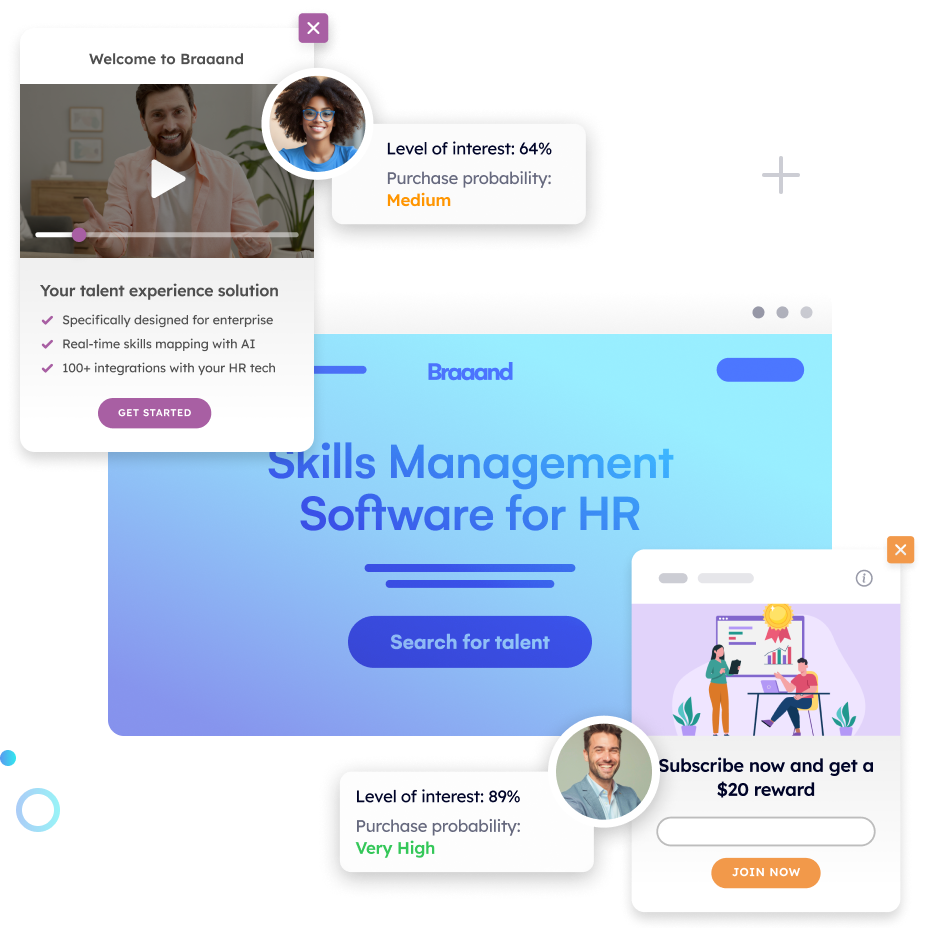
RICK: Pathmonk is the AI for website conversions. With increasing online competition, over 98% of website visitors don’t convert. The ability to successfully show your value proposition and support visitors in their buying journey separates you from the competition online. Pathmonk qualifies and converts leads on your website by figuring out where they are in the buying journey and influencing them in key decision moments with relevant micro experiences like case studies, intro videos, and much more.
Stay relevant to your visitors and es- increase conversions by 50% by adding Pathmonk to your website in seconds by letting the AI do all the work, and increase conversions while you keep doing marketing as usual. Check us out on pathmonk.com. Everybody, welcome back to Pathmonk Presents. Today we are joined by Krishna Lohani.
She’s the founder of Ask for Video. Krishna, welcome to Pathmonk Presents. Hello.
KRISHNA LOHANI: Hi, Rick. How are you doing?
RICK: I’m doing well, thank you very much, and I’m excited to jump in, Krishna. We go straight to the point. we just spoke offline, for a bit, before starting this, and I like your approach, saying, “Okay, let’s go.
Let’s do it.” So let’s go. Let’s do it. Let’s start with the basics. Krishna, tell us a little bit about Ask for Video. what’s the heart of what your company does? And if you were to explaining it to a friend over coffee, how would you describe what you do?
KRISHNA LOHANI: So to begin with name, Ask For Video explains itself.
but usually before, getting di- diving deep into what we do, usually I start off when I’m telling about my business to a friend is by telling them what the problems that the industry right now is facing the, people I cater to. So d- I guess I can say that Ask For Video actually is helping the Indian D2C brands who are at the moment stuck between two bad options.
one is freelancers they can approach for getting the videos made who are very cheap but are very inconsistent. And the other option that they have is a traditional studio which is usually expensive. They create good videos, but they are mostly slow, and, they are not good enough to try new ad videos that people or these brands can try on Meta.
So Ask For Video actually sits exactly in that gap, and I’m actually trained as a filmmaker from a reputed film school. So I’ve been doing animation and editing for over 10 years now and running this studio. All these years we’ve been editing videos for the clients, creating 2D, 3D animation, CGI videos. But, recently we’ve added a new vertical of, native AI videos.
And the best part about this that helps the clients, the D2C brands, is quick turnaround time for videos that they can get done, at volume and also at a tenth of the cost of a traditional shoot. So AI gives you the speed, cost efficiency, a lot of volume without looking cheaper. So I think the filmmaking background that I have, gets that value addition to them.
And Ask For Video helps them getting high quality videos at a exceptionally good price, with a really fast turnaround time
RICK: Amazing. That’s, That was quite, quite the explanation. I really appreciate you going in depth a little bit about, also the key problem you help, these freelancers or, these companies solve essentially.
Now, say, that I’m looking for, someone to help me out with, with a video creation or, maybe editing or, whatever that, that, that covers, your sever- service offering. Now, how do I get to discover you guys? How do I… How do I find out about Ask For Video? And in other words, I- I’m asking, what are the marketing channels at the moment that have become your go-to for bringing in more business, more clients?
KRISHNA LOHANI: So to be honest, the platform that’s working the best for us at the moment is LinkedIn. LinkedIn and Instagram. so we use the website as a portfolio place, which they get redirected to. But most of the D2C, founders, the brand managers, strategists, creative directors are actually looking out on LinkedIn for people who fit their category, and that’s where even I reach out to them.
Mostly when they show interest, I, also do a lot of posting on LinkedIn, tearing down ads, strategies. So that’s how I interact with them, and then they get routed towards the website. Website basically is, I won’t say just a portfolio. It shows more than it talks because they go straight to the videos that we’ve created for the previous clients or all the, spec work that we’ve done.
So once they’ve seen the body of work, that is when it becomes… They become confident, and that, that gets converted into, DMs, WhatsApp conversations, and, that just becomes an icebreaker. So website is a secondary, organic place to find us, but it’s mostly LinkedIn and Instagram where people reach out to us.
RICK: Okay. Gotcha. So social sounds like the, the main channel right now. Yeah. the website is secondary in a sense that it’s, more of a supplement, if you will, to, show rather than tell, which is great of course because it shows the quality of your work, the, breadth of, your clientele, and, so that’s great.
Now, is there anything, would you say in the website that you think, really works at the moment, as far as getting people to say, book a call with you or message you? anything you got your eye on improving even, or would you say the website is just what you’ve said, right? a portfolio of, explaining, w- what your products, what your services are all about and what the finished product is rather?
KRISHNA LOHANI: So I would say actually website not only just shows the body of work or the industry that we’ve been working with or the clientele, but I think it also opens that one door of reaching out to us through WhatsApp. personally, I feel that, this is a very, very specific decision that I had taken to not have any forms on the website.
We only have a WhatsApp channel. So that has always worked, and it’s a portfolio. it works very well when we have any specific client, and I can just redirect them to a certain page where they can see similar kind of work that they… that resonates with them. So yeah, I think website does that bit for me, where speaking to a human becomes easier instead of just showing interest.
It’s just a better way of converting because there is some proof of work. Like- LinkedIn is where they can connect with me, but proof of work is where the website is, and WhatsApp is the door, the channel through which they can connect, in person with me.
RICK: Gotcha. Okay. since you mentioned, conversion, from your experience w- working with clients, on the, video side of things, I’m sure many of these videos will go also on their websites, for maybe product teasers or what have you, right?
Yeah. what do you think actually makes a website convert? And I’m asking this from a standpoint of, Pathmonk is a sales tool for websites. And so conversion is a big part of, what we do. And our, listeners are also interested in conversion tools, tactics for… or maybe, even little tricks.
Now, from your experience, again, what do you think makes a website convert?
KRISHNA LOHANI: I think what works the best is associate. My website is something which is extremely video heavy. We literally have grids of video. What matters is the website should load quickly. it should have good SEO. I personally make sure that it’s not very word heavy, wordy or tense, but, enough to get some kind of SEO and pretty good ranking on Google.
So that’s second thing I make sure. every time I update my website with new videos, I make sure that I’ve optimized it quite well, that it loads quickly irrespective, and, make sure that there are good enough keywords that are, updated every, fortnight, which gets trended. So that’s another thing that I make sure that it is…
that I do. Website is light, it’s SEO driven, and there are call to actions after every other section. So mostly my call to actions don’t have form, as I mentioned earlier. It’s mostly the WhatsApp button or also gets redirected to the LinkedIn page where they can, connect with me personally one on one.
RICK: Gotcha. Okay. driving people to that conversation, that’s the icebreaker, the, opener, if you will, and then, and then you get a chance to actually s- maybe ask the questions. I’m sure there’s more of a consultative approach to, “Hey, you need a video, but I’m the expert. Let me ask you a few questions about what you actually ne- what you think you need, and this is what you might actually need.”
But that’s, no, that’s a great approach, and I, love that. And, maybe we switch gears for a second here, Krishna. We, we talk about you as a leader, as the founder, Ask for Video. What’s a day in the life of Krishna like? you wake up, right? you sit at your desk or you go to your place of work.
what are the things that give you energy, and, what are the things that you, you’re excited about when you start your working day?
KRISHNA LOHANI: So usually the way I have divided my work is, such that I do the things that I like the most in the beginning. So that perks me up, gives motivation to go on with the day.
And the tougher things I keep for the afternoon. So usually there are four things that I do in a day. First is, replying to the DMs, writing my, weekly posts on LinkedIn, commenting, replying to the comments on my posts, checking my website that everything is working fine, making sure all the links that I have embedded on the website are playing well, they are not throwing any errors around.
That’s the first thing that I do. So when I see people replying to the posts, the interaction, it just makes… gives s- I could… I can say that it gives me a validation that, okay, what I’m doing is right. that gives me a good kick in the day, followed by the, regular schedule that I have for the day, where I reach out to, a lot of businesses, D2C brands.
I do my bit of research on the brands, the kind of ads that they are running, what I think can be the potential clients whom- to whom I can pitch my work. that’s usually the second thing that I do. That’s before lunchtime, I try to, close up on all these things. Post-lunch, I sit and do the actual production work, basically run my AI pipeline for the active clients, do, do the creation.
Currently I’m working for a sleep supplement brand, creating the videos for them, generating, prompts and, writing scripts and ideation, all of that. Heavy lifting work is done usually post-lunch. it’s very intense mostly, and around five o’clock, till five o’clock I just get a bit tired by doing all of this work.
Last thing that I do during the day is something which is not planned mostly. I tend to educate clients. I actually… It’s never planned, but it usually happens mostly, towards the end of the day, where I start replying to the clients or write commеr- commenting to the posts where I see there is a difference in understanding what is happening, in the industry.
What is the thing is, basically Meta has recently shifted their algorithms, and it’s become like a responsibility on me to educate clients and brand strategists to understand the shift. the thing is, what Meta is now doing is it is not pushing ads based on what interests people, but it’s, it started reading the videos itself, for…
It keeps a check on what the hooks are like, what the content of the video is, what is the variation. Based on that, it actually pushes the video. And another thing that Meta has started doing is it, actually in a way punishes, brands who actually duplicate creative. So what usually happens is, brands when they see a particular kind of, ad is doing very well, they start duplicating or recreating the same, video with different hooks.
Meta punishes, the brand usually by pulling out all these videos, not pushing them, giving them very low impressions. So it’s become my responsibility now to actually reach out to the clients and tell them if they ever engage with me, that, it’s better to have diversity. It’s better to try new, different kind of creatives that works well with their brands and, give them tidbit informations about what the industry or their category is doing well, what are the benchmarks that Meta has set, so that they’re aware and not in cocoon where, they’re just push- posting videos in bulk and spending money on performance, videos without understanding what will actually work and what won’t.
So that’s usually the thing I do towards the end of the day. Sometimes I’m very pepped up and, go all out. There are certain days when I take it easy and light and retire early on the day if the production aspect of the video, of the day is really heavy
RICK: Well, it sounds like it. from just, the beginning to the end.
and, I like, that you leave… you say- you said, heavy lifting work, right? I’m sure that’s also the, the… I’m assuming, right? It’s the most creative part of it, too, where you actually ge- go to production, and of course, you have to be focused, you have to block everything out. And it’s one of tho- mo- those moments where personally, if I were to do something like that, it’s, my moments where I’m most focused in the zone, in a flow state, if you will, where nobody exists.
of course, given that y- you prevent them to, from interrupting you, but that’s another, thing altogether. But yeah, it sounds like it’s a full day altogether, and it’s very interesting what you shared about the a- algorithm, on Facebook, that it reads the video. That’s very interesting stuff.
I will definitely recommend that our listeners go and, follow you on LinkedIn so they can, get educated on all of this because I’m sure, video is a big, component of, ads these days, of any kind of, you know, social media, content. So 100%, we need that education, we need that guidance to make sure that they perform, the best that, they should.
appreciate that and, giving us a glimpse into, into, your day. Now, as we wrap things up, Krishna, unfortunately, we have a, a pretty dynamic, also pretty, let’s say, compact podcast. we’re going towards the end of it. We’re in the back half, and one of the main things that happens at the end for us, is the rapid-fire segment question, which is essentially just a few questions to keep things light and engaging.
Nothing crazy, really, but the only question I have for you right now is, are you ready for it?
KRISHNA LOHANI: Yes.
RICK: All right. Let’s do it. So when it comes to consuming content, do you prefer watching, listening, or reading?
KRISHNA LOHANI: to be honest, I prefer watching because I come from the video background. I have a few Skool communities that I have been, part of for a while now.
So I really enjoy, watching their videos, what they… the course material that they put up, even the community where they discuss things. It’s one of the go-to place where I get all the updates of the industry. Every month we have new video models, AI models that are being dropped, so getting updates about that.
Then there are a lot of aggregators who keep dropping offers and contests. So that’s where I usually go to get all my information. S- And another part of this thing that I like the most is, they, do a lot of peer review work. So I like doing my passion projects, so that’s the place where I put my weekends on and I just go and put my work out there.
Peers come and, do their critical review, and constructive, I would say. And I do the same. And it’s very, enriching and satisfying to do something apart from the actual client work that I’m doing. So yeah, that’s that
RICK: Wow. Awesome. Thanks for sharing. if you had a magic wand, Krishna, and you could fix one frustrating thing in your marke- marketing life with tech, what would you fix?
KRISHNA LOHANI: so to be honest, it might sound out of a science fiction film, but I really want something, some tech which can help me have a memory system or, not just me, I’m sure it’s something even others would like to have, where you can actually journal your thoughts. Because I see a lot, I read a lot, and I watch a lot of stuff.
I get very inspired. But most of the times… And it sparks a lot of ideas, but most of the time when I sit down and want to write ideas on concepts, I just keep forgetting things. So if a tech-based thing can do something, I would love that someone can create a way where you can store your memories somewhere, and it’ll be an infinite pool of ideas where I can reach out to every time I have some requirement.
I’m good at most of the things, but falling back on my memory is not one of the strong points I have. So yeah, I would love to have that, a tech memory storage system.
RICK: out of- you said it’s out of a sci-fi movie. Personally, I don’t think we’re too far off from it at the moment. At the rate that technology’s progressing, especially with AI, it sounds, so far-fetched right now, but, in maybe six months’ time, it’s hey, something, something’s happening right now.
that sounds great, by the way. It’s, it’s just a way to store in a way, right? Extra storage. I’m sure we’d get charged for it at some point, too. But-
KRISHNA LOHANI: I’m sure …
RICK: with that I appreciate the answer. That’s, very creative and interesting. final one is, if you could put a task, a mundane task or anything that you do daily, on autopilot forever, what would you pick?
KRISHNA LOHANI: so to be honest, one of the things that I spend a lot of time is, reaching out to clients’ brands. A lot of that I have already automated, in my workflow, the research and, out- outreach part of it. But I would love if there is some way I can automate, the aggressive part of the activity where I have to look out for each of the interested, my brands I’m interested in.
The activity of looking out for what kind of videos they are putting, the right, contact person I can reach out to, what is a good fit for them, all the things that works well for them. Because right now I’m doing all of this manually. Some of it is automated, but then, yeah, I’ll save a real chunk of my week’s work, for my actual production that I do.
I want to spend more of my time in doing the creative work that I love, but lesser of this, outreach kind of a thing, business development aspect of it. So if there’s some way I can just automate through and through the entire activity, it’d be great.
RICK: Yeah, I feel you. that’s, that’s a part of, Personally, for the podcast and my team does, and, of course, there’s a little bit of automation that you can do, but where’s that, where’s the other things that you can potentially do, right? And it takes a lot of time sometimes, and it’s worth it, of course, ’cause at the end, you get to speak to people and you get to your goal.
But I hear you. I hear you. So maybe someone out there is already, thinking about it or maybe has a service for us. So I’m not, I’m not against, people reaching out, so- Bring him on. Krishna, I wanna thank you a lot for being on the show with us today. I also wanna give you the last word.
if someone forgets everything about the interview today, what is the one thing that they should remember about the work you guys are doing in Ask For Video?
KRISHNA LOHANI: I would say give good quality AI a chance. I think there is a lot of slop out there, but this tool has the potential of, you know, letting all your creativity out and make it do the best for the brand.
So I think A- AI videos is something which is going to be here for a very long time. It’s better that you try out the right things with the right strategies, keeping in mind the audience, and allow, platforms like Instagram, Facebook, TikTok to do its thing to get you your customers the desired, return on all the ad spends that you’re doing by just giving AI a chance, and yeah, it’ll save a lot of time and money.
I guess that’s… I would… That’s something I strongly believe in.
RICK: Love that. Love that. And if… Where can we send people if they want to check you guys out, understand more about your services?
KRISHNA LOHANI: Yeah, they j- people can look for me on my website called www.askforvideo.com, or they can look for me on, LinkedIn with the name Krishna Lohani.
RICK: Too easy. All right, thank you so much, Krishna. again, appreciate your insights, appreciate your time, and thanks again for being part of Pathcore Presents. With this, I’m gonna leave you to the rest of your day, and, I wanna say goodbye and maybe s- hopefully, see you soon. And, at the same time, I wanna say goodbye to our audience, and, thank you for listening in.
KRISHNA LOHANI: Thank you. Thanks a lot, Rick. This was great. Of
RICK: course. Thank you. All right. Bye, everyone.