Introduction
Smriti Dhingra, co-founder and chief systems architect of Chapter Two Collective, explains why scaling businesses need more than campaign optimization. She shares how marketing operations connect performance metrics to decisions about revenue, profitability, and channel investment.
Discover why defining your website’s role in the customer journey should come before choosing conversion metrics, and how qualitative insights and quantitative data help distinguish traffic problems from user experience issues. Smriti also discusses using a website diagnostic tool to assess client fit and offer practical tips. For founders and marketing leaders, this episode offers a business-focused approach to aligning teams, preserving context across platforms, and making marketing more useful to leadership.


Increase +180% conversions from your website with AI
Get more conversions from your existing traffic by delivering personalized experiences in real time.
- Adapt your website to each visitor’s intent automatically
- Increase conversions without redesigns or dev work
- Turn anonymous traffic into revenue at scale
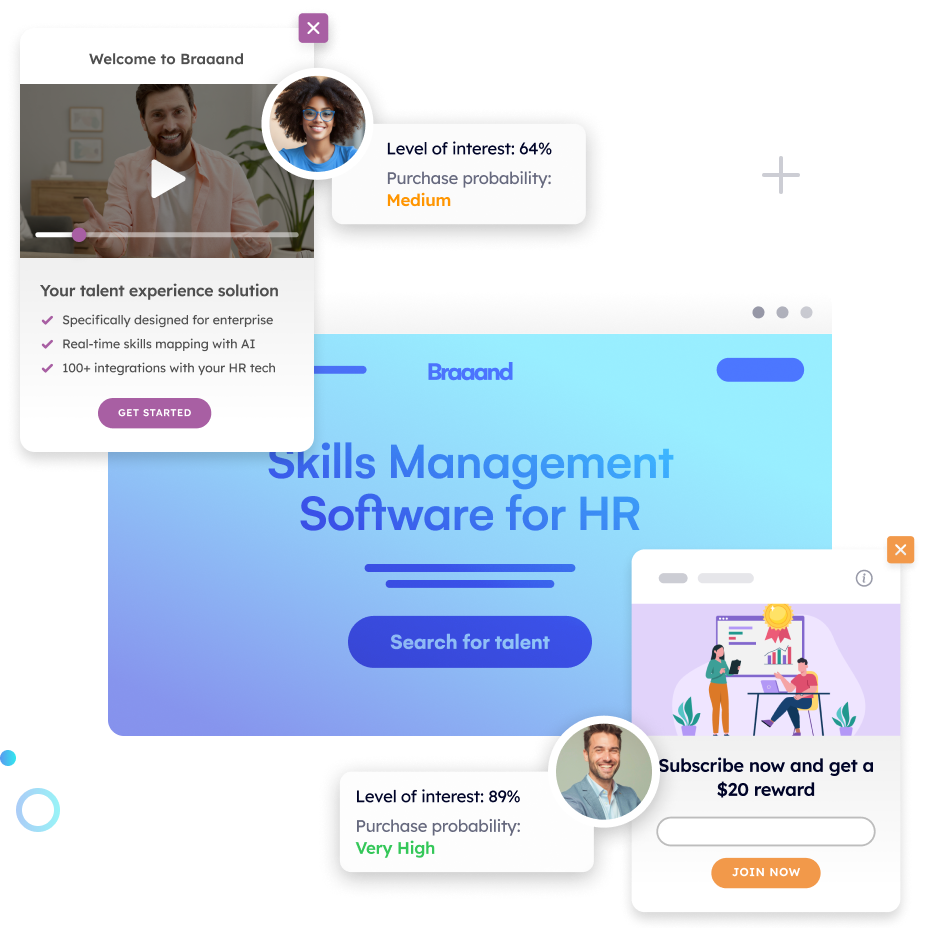
RICK: Pathmonk is the AI for website conversions. With increasing online competition, over 98% of we- website visitors don’t convert. The ability to successfully show your value proposition and support visitors in their buying journey separates you from the competition online. Pathmonk qualifies and converts leads on your website by figuring out where they are in the buying journey and influencing them in key decision moments with relevant micro experience, experiences like case studies, intro videos, and much more.
Stay relevant to your visitors and increase conversions by 50% by adding Pathmonk to your website in seconds by letting the AI do all the work and increase conversions while you keep doing marketing as usual. Check us out on pathmonk.com. Hey, everybody, welcome back to Pathmonk Presents. Today we’re joined by Smriti.
She’s the co-founder and chief systems architect of Chapter Two Collective. Smriti, welcome to the show.
SMRITI DHINGRA: Hi, thanks for having me. Very excited to be here.
RICK: Excited to have you here, Smriti, and maybe we get started with the basics. we massage the conversation a little bit and we start with Chapter Two Collective.
What is it all about? What do your company, what does your company do, right? And, if you can give us an idea, typically what I ask is if you can, if you were to explain what you do to a friend over coffee, right? The most simple way possible, how would you describe what you do?
SMRITI DHINGRA: Yeah, great way to start the conversation.
so at Chapter Two Collective we are, a team of consultants, where what we help is we help scaling businesses, try and turn their marketing chaos into commercial clarity. And what I mean by that is, most scaling businesses have a lot of things going on in their marketing. they’re adding channels, they’re adding budgets, they might be adding more resources.
But underneath all of that, there is an operational infrastructure that needs to really help align all that activity into business decisions, which is where a lot of scaling businesses struggle. So if I were to explain this to a friend, I would basically say this, that, if you’re really struggling to understand what the marketing campaigns are actually doing for your business, then we’re the team that helps you figure that out.
So- Oh, okay. Yeah. what we do is we have our own proprietary systems and processes where we then help figure out different dashboards, different KPIs, different performance metrics, and you know how all of that ladders up into business decisions. That helps the leadership make, the next set of business decisions in terms of, where to spend money, which channel to invest in, how are we generating value for customers.
those are very important business decisions, and a lot of dashboards and marketing tech doesn’t allow you to understand that unless there’s something that’s bringing it all together, and we’re the team that does that.
RICK: That’s awesome. And, look, something you just said caught my attention, just helping leadership make decisions and, those decisions are essentially what moves the needle, right?
And, not to oversimplify it, but many business decisions are, at the end of the day, are really about, the bottom line. W-w-how are… how much, revenue are you able to bring in with this decision? Is it net positive, net neg-negative, or, are we gonna break even with this? But sounds to me like your team is gonna come in, look at everything, right?
The hol-holistic view, if you will, and then help leadership make those decisions based on, the data, on the insights that you gather, and, it sounds super valuable. Now, I’m also curious about, the types of, industries that you work with. are there specific industries or verticals that you feel that you-you’re offering really shines at the moment?
And is there a key problem that you’ve observed that’s, that you help them solve?
SMRITI DHINGRA: Yeah. So we don’t really think about the best fit for our business in terms of industry. We think about it more in terms of operational operating structures, right? So we’re not for businesses that are just starting out.
This is especially valuable for businesses that have digital commerce and are scaling. this is when their operational infrastructure really starts giving away because there is just too much happening in terms of marketing. there are– there is more tech, and there are more tools, and then, maybe there are more channels that you’re now operating in.
So when you start thinking about operating conditions, what we are basically working with is people who are focused pri-primarily on digital commerce, which could be, consumer goods, it could be e-commerce, it could be SaaS, it could even be a B2B business. But it’s more about when they’re looking to scale, and they don’t necessarily know how to connect, like you rightly said initially.
So the business metrics, whether it’s profitability, revenue, or expansion, how do you connect all of that to your campaigns? So that’s what we look at. And then in terms of, the way we look at it is we help understand businesses. First, we help them diagnose their operating problems.
That’s how we look at. that’s where we look at a fit. In terms of first we come in, and we do a full segment of diagnosis to understand if we are the right team to come support you. And only after that validation is done and signed off by both teams is when we get into the prescriptive and iterative part of our engagement.
RICK: Okay. That’s very interesting. Now, let’s assume that, I’m, a potential fit, for your team, right? So I’m out in the market, I’m searching. How do I discover you, right? That’s– That would be my first question. And in other words, it’s asking, what are the marketing channels that are you go to for bringing in more business, bringing in more of those, those potential clients that will become then actual clients?
SMRITI DHINGRA: Yeah. I think we are at a stage that we are still very focused on founder-led content via LinkedIn. That’s one of the ways that we’ve really been able to reach out to the right people and have the right people reach out to us. and then the second is high-trust networks within through referrals and through, within our own networks.
at this stage, we’re definitely more focused on one-on-one, so we’re not looking at volume so much as, just looking at reaching the right people. it’s because a lot of founders, through our conversations we figured out, are not even looking for the solution that we provide. They don’t understand that the constraint that they have is not budgets or resources, it’s actually an operational issue, right?
So it’s, there’s a lot of education that is involved with the kind of services and, processes that we, have. So it’s still very founder-led content, and, acquisition through referrals and within our networks. And we’ve just also started doing a lot of podcasts, discovery through podcasts such as yourselves.
that’s another channel that we’re looking at.
RICK: No, that’s perfect. And, what better way than explaining your thinking, the way your company works and your philosophy and your ethos and, a bunch of other things than a podcast, right? It’s a longer form typically that allows you to actually explain and articulate what, your offering is.
So that is great. in all of this, I’d be remiss if I didn’t ask, if the LinkedIn, for example, and the networking events and the shaking hands is working great for you guys, where does the website sit in all of this? how’s it working for you, and, do you use it to then drive more business, for Chapter Two Collective?
SMRITI DHINGRA: Absolutely. with, again, the kind of work that we do, it requires a little bit more information because it doesn’t necessarily… we don’t necessarily fit the agency model. Neither do we fit into the consulting model. So we are embedded fractional leaders, right? So we just don’t come in and either give you like a strategy deck, nor do we really execute your campaign.
So it’s somewhere in between, and our website does a really good job of explaining that. So that’s where the website comes in. even through our content, ev- one of the things that we do is always try and drive people to the website where they can learn more and obviously get in touch with us because, I do have a co-founder.
She manages another market. So we operate across multiple markets, then we- who’s the right person to speak to? So all of that information’s on the website. And then the second thing that the website really does is, help us validate the right audience. So there is a diagnostic tool built into the website where you can understand if you are the right team, if you have the problems that, that we are solving.
So if you’re… if we are the right fit. And then it also gives you some very quick wins. I think that’s a really cool part of that diagnostic. It’s not just validation of if we are the right fit, but we also give you some quick wins and tips that you can improve based on your responses. it does two things.
It helps the customer learn more, and then second, it helps us validate and them validate us.
RICK: That sounds super valuable. And I’m curious, maybe from your experience, you can draw from, all the clients that, that you’ve worked with, but what do you think actually makes a great website convert?
are there any tools, maybe tactics, frameworks that you work off of that you’ve seen work like this diagnostic tool or maybe something similar? I’m just… our, audience will eat this up for breakfast because, we’re… Of course, the nature of our business, Pathmong is a, a sales, tool for websites.
So what have you seen work so far?
SMRITI DHINGRA: Okay. So I think I will just take a step back and answer in a more strategic way because I’m sure you’ve had people who’ve come and explained the execution aspect of it really well, better than I can. But, what I like to think about is, the conversion journey, and this again goes back to the basics of what customer journey are we trying to get up, people to filter through, is to really understand what does conversion mean for your business?
for an e-commerce website, it’s really clear, Absolute … A purchase at the end, or even for a SaaS product. a purchase is what a successful conversion is. But for businesses like myself or even for yourself, maybe the journey is a bit more complex and the website is not the end goal.
That it doesn’t really lead to a buying decision at that moment. It sits somewhere in the middle of the funnel, so it’s more under consideration. So when you understand what role does the website play and where in that funnel it sits for your business, I think that qualitative assessment of the customer funnel and the customer journey really allows you to then think about what conversion metrics to put in, right?
So what are you optimizing your website for? Is it to actually get the buying decision in that moment, or is it to deepen the consideration and get more conversations going? And that qualitative assessment then combined with, everything that we do in terms of, looking at path recordings or looking at form drop-off rates and any of those other assessments that we do, then those two combined really help you understand is it a quality of traffic problem or is it a UX/UI problem.
you can really understand with a mix of that qualitative and quantitative analysis.
RICK: Wow. Thank you. That, is indeed a different answer than we- what we typically get, and I do, really do appreciate the bird’s-eye view of, thinking about this strategically, right? So thanks. I’m sure people are scribbling notes now as, w- whenever they’re hearing this, thank you for that. now, Smrithi, let’s switch gears for a second. Maybe we talk about you as a leader. Let, let us know a little bit about… Get us a, a glimpse into, your day, if you will. M- maybe you can tell us what you focus on a day-to-day, what are you
what’s your day like, and the main things that really, take your time and energy, as soon as you sit down to work.
SMRITI DHINGRA: Yeah. I think my work at this point is split between three parts. so one is, of course, project delivery with clients, right? So I have, my week is scheduled around meetings with my clients, across different, teams that I’m involved with.
we would be looking at their performance data, their business data, reviewing that with the leadership. So that part of project delivery is, one thing that I do. The second part that I look at is systems design, because, as we build our own processes and systems and we make contact with real-world business problems, there’s a lot to, take back and refine our own thinking.
a lot of time also goes into that. and, I am a founder just like any other founder. I’m, like, also working weekends. So weekends go into a lot of, content creation, really thinking about through the week, A lot of time I just pick up from what I’ve done in that week and think about our content and, what we want to put out there in terms of, the content that we want people to engage with.
So that’s where my weekends go. but yeah, mostly throughout the week it’s in between either looking at our own systems or working with our clients on their actual performance.
RICK: Interesting. Now, it sounds like a busy week. That’s, for sure. but at the same time, I j- I just wanna go back one second, to the way I framed the question.
I, I asked, what takes your energy and time? it should be noted, I think, and then I speak for myself here, that many of those things might actually give you energy ’cause you like doing them, right? So I don’t know what the split is for you doing things that you have to do, if that makes sense, and things that you really enjoy doing, but it sounds to me like there’s enough variety there for you to be able to s- to span across different things and be able to actually enjoy, some of it at the very least, right?
SMRITI DHINGRA: Yeah. No, absolutely. I think there are… as a founder, there are parts of the business you learn to love, which you might not have loved, when you were working in a job. but I think the joys of building things, and at this point for us, we are so sure of, of the gap that we are fixing in the market that, it’s, really, interesting to take it out to different businesses and have those conversations.
So if that means, meeting different teams or doing business development or putting content out there, which might not necessarily be things that I did in the past or enjoyed, but now I’m beginning to do it because it solves that, solves what we’re trying to do, which is to reach out to more people.
And, we’re very sure that we’re trying to solve a problem that a lot of tech… At this point, marketing technology doesn’t fix it. Doesn’t fix it. Doesn’t even fix with AI because no one’s talking about business decisions. people are talking about campaign optimizations and different platform metrics, but how does it all make sense for a business?
and that means I need to be out there doing different things, juggling multiple roles. so yeah, it’s a lot, but I don’t mind it at this point.
RICK: Okay. Fair enough. A-and thanks for, expanding on that. Now, speaking on different things, we have a segment a-as we lead into the back half of our episode together here, Smriti, there’s a rapid fire segment that I personally enjoy doing ’cause the, I think the questions are, interesting.
just wanted to check with you if you’re ready to jump in, because it’s gonna be quick and sharp.
SMRITI DHINGRA: I hope so. Let’s go. I hope I don’t fumble.
RICK: All right, let’s do it. Let’s do it. Let’s do it. So when it comes to consuming content, Smriti, do you prefer watching, listening, or reading?
SMRITI DHINGRA: Listening. It’s just something that, you know, it just…
You can do it while you’re doing other things, and it just keeps my, I think, brain really active. So listening for sure.
RICK: Okay. Listening, it is. So what’s the latest piece of content you listened to? Could be an audiobook, a podcast of course, whatever, maybe a soundbite from a Short, whatever it is, that really stuck with you.
Was there a gem in it that you think was insightful?
SMRITI DHINGRA: Oh, good question. I think it was the last thing that I thought about a lot was just, organizational efficiency because, again, I’m trying to juggle multiple things. And, one of the things that I heard at a, from a different podcast was, really setting your day and, just visualizing your day first thing in the morning.
And what I find is if I s- decide first thing in the morning how I’m going to split my time across my day, I end up sticking to it. So that, that organizational efficiency was something that really stuck with me.
RICK: That sounds very interesting. you design your day and to be coherent with your thinking, then you wanna step into it and do the things that you’re supposed to do as opposed to just let it, let it go by chance, right?
So taking a note on that one too, for sure. now, if you had a magic wand, Smriti, and, you could fix one frustrating thing in your marketing life with tech, what would you pick? What would you fix?
SMRITI DHINGRA: I would fix the loss of context across different platforms instantly, ’cause that would make every marketer’s life on this planet so simple. that’s, I think, one thing that if I could fix, I would, where, we don’t lose context from, Meta to Google to, to Shopify. those are the things that, that where, every business struggles.
And then, that context, also gets lost within organization across different teams. So if there was one thing to really fix, and if technology could fix it for us, that would be it.
RICK: Okay. I like that. Maybe this is related, maybe not, but what’s one thing that you would love to put on autopilot forever?
SMRITI DHINGRA: Sorry, I didn’t catch that question. Could you-
RICK: No problem. What’s one thing that you’d love to put on autopilot, let’s say, that you wanted to automate, if you will, and you could do it forever?
SMRITI DHINGRA: again, just adding on to what I just said about loss of context, I think if we could just automate all the information getting collected to one business-ready view, that would be great.
I think a lot of time is spent by different teams, like finance between, finance and supply chain and marketing. Everyone just has, different platforms and metrics, and then to bring all of that together in one business view, business-ready view, that somehow has still not been solved.
I’m sure AI agents are trying to fix it and, people are trying to solve it, but at this point, it’s not really been solved. So if we can automate that, that would just solve… save so much time for everyone involved.
RICK: I agree a 100%. Now, Smriti, I, I wanna thank you for being on the show with us today.
As we wrap things up, I also wanna give you the last word. So if someone forgets everything about the interview today, what is the one thing that they should remember about the work you guys are doing in Chapter Two Collective and, what about your philosophy, for example?
SMRITI DHINGRA: Great question. If you were to take away one thing out of this conversation, I would say think of your marketing outside of campaign optimization.
It’s a business function. It’s supposed to help you make different business decisions better because it’s also a function that sits closest to the customer. So think when you start taking that perspective and looking at it as a business function and not just a bunch of campaigns getting optimized, you’d really get the true value of what marketing can provide to the business, both internally and what that means outside to the customer as well.
RICK: Love it. What a way to close. Smriti, thank you so much again. And, if you wanna send people your way and they wanna check out Chapter Two Collective, how can they do it? Where can we send them?
SMRITI DHINGRA: You can just send them to our website, which is www.chaptertwocollective.com.
RICK: Too easy. All right, Smriti, as I said, thank you for the insightful conversation.
I hope, we get to do this again soon, maybe in a few months, see things how have been. But, again, thank you, and I wish you a wonderful day.
SMRITI DHINGRA: Thank you. Thanks for having me. It was lovely.
RICK: Of course. Bye, everyone.