Introduction
Nik Boogaerts, CEO and founder of Dealyv, explains why real estate agencies should revisit neglected CRM contacts instead of focusing only on new leads. Drawing on over 15 years in real estate, he shares his approach to restarting conversations and keeping relationships alive until buyers and sellers are ready.
Discover how phone outreach brought his startup its first 10 agency clients, and why an ad campaign with no purchases prompted a simpler website buying journey. Nik also discusses using customer feedback to guide product design and keeping automation from becoming another task to manage. Founders and marketers will find lessons in lead nurturing, reducing friction, and building for a specific audience.


Increase +180% conversions from your website with AI
Get more conversions from your existing traffic by delivering personalized experiences in real time.
- Adapt your website to each visitor’s intent automatically
- Increase conversions without redesigns or dev work
- Turn anonymous traffic into revenue at scale
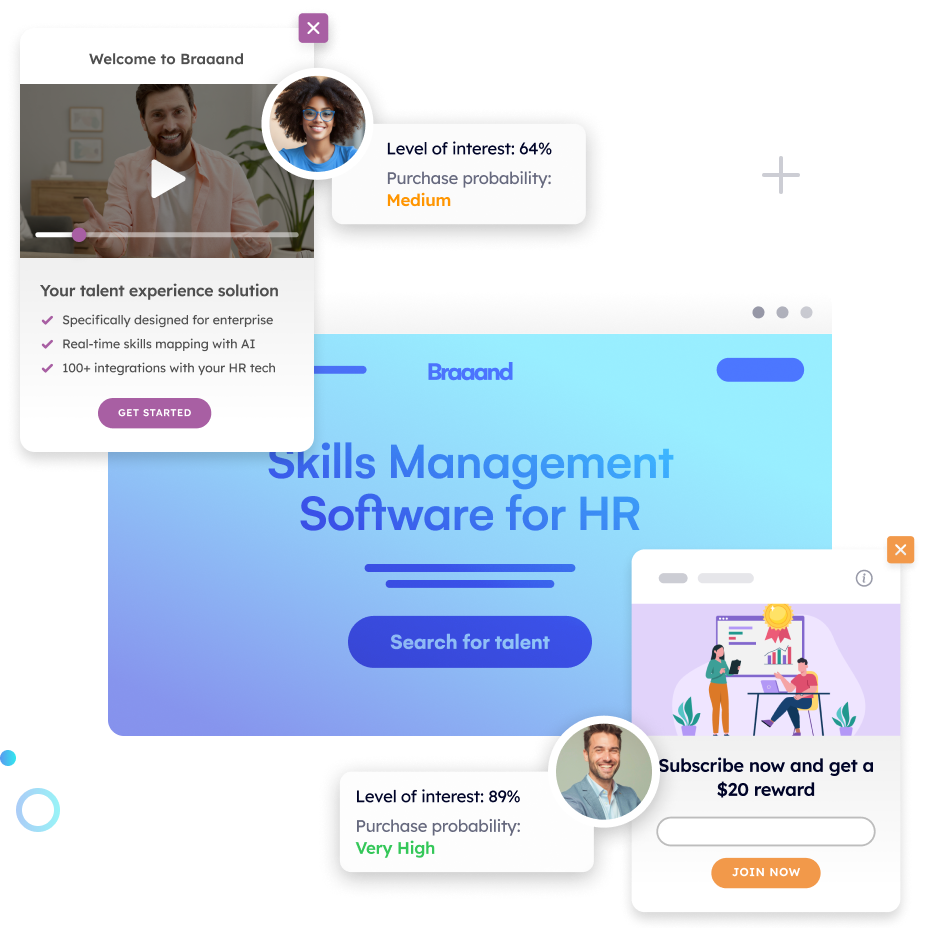
RICK: Pathmonk is the AI for website conversions. With increasing online competition, over ninety-eight percent of website visitors don’t convert. The ability to successfully show your value proposition and support visitors in their buying journey separates you from the competition online. Pathmonk qualifies and converts leads on your website by figuring out where they are in the buying journey and influencing them in key decision moments with relevant micro experiences like case studies, intro videos, and much more.
Stay relevant to your visitors and increase conversions by fifty percent by adding Pathmonk to your website in seconds by letting the AI do all the work and increase conversions while you keep doing marketing as usual. Check us out on pathmonk.com. Hey, everybody. Welcome back to Pathmonk Presents. Today, we’re joined by Nik.
He’s the CEO and founder of Dealyv. Nik, amazing to have you here, and welcome to the show.
NIK BOOGAERTS: Thanks, mate. Thanks for having me. yeah. let’s start this thing.
RICK: All right. Exactly. Yeah. we’re just talking about, offline, about that life and, living in, in, beautiful places like Spain or Italy now.
we’re here, to talk business, Nik. So let’s start with the basics. Maybe we talk about Dealyv. Um, tell us a little bit about your company, about this startup, and, what are you guys working on at the moment. And if you were to explaining this to a friend over coffee, let’s say, how would you describe what you do, if, not to say your elevator pitch?
NIK BOOGAERTS: quite easily, or I try to make it always easy for everyone. what I try to do or what we built, and that’s re- uh, that became Dealyv, was very simple. We’re tackling a massive problem in the real estate market. And for me, I built it because I’ve been a real estate agent for over fifteen years, have my own company, even ran a family company for…
’cause we’re like four generation in real estate with my– from my families- but then I had my own company. And it all came down to the same thing. There’s a massive problem, and I decided to tackle it. And I looked everywhere, seeing if there was a solution already made, and there really wasn’t anything specifically for real estate.
So built just that. And in short, what it does is we revive, it’s– I call it revive, where we restart conversations with old clients that are sitting still in your CRM. So real estate agencies every month spend thousands of getting new leads, and a lead is someone simple, interested in either buying a property or selling their property.
But if they don’t answer on this, literally on the moment that the agent reaches out- Then they sometimes get neglected because the next day there is another 10 people that the agent needs to call, and not one agent is gonna go back and say, “Oh, I… Oh, what do I gotta do today? I’m gonna call the guys from last week because I’m gonna neglect the 10 new guys that were in my, on my phone book today.”
And that’s where there is a massive revenue leakage actually that I also myself discovered as an owner, and I decided to tackle. That’s how I built Deallif in order for literally recover lost revenue for real estate.
RICK: That’s awesome. And it sounds like the application wouldn’t just stop at the real estate, level or the agencies even.
‘Cause, personally just seeing, how sales work and in software even, I think there’s a, there’s an opportunity there. it’s just me, my opinion, of course. But for reviving old leads, ’cause that’s a problem that any company with a sales cycle has, right? you buy, you spend on, say, ads and, whatnot to get new leads, but then the old leads that get forgotten, maybe still showed some kind of interest and then, it’s just a cycle and then you burn through it pretty quickly and then that’s it, right?
You spend a lot of money. great service. And, I’m curious, what… Is there a specific type of, real estate agency that you guys serve, that you help them solve this problem? Or is it just more of a, of a problem that all of these agencies have in a way?
NIK BOOGAERTS: Actually, I would say unless you’re just a solo, like a solo agent that, you just handle with your personal friends, that you have 100, maybe 100 phone numbers that you have to call, then yeah, do it yourself.
You don’t need us. But anything above that definitely can use our system because we keep relationships alive. So you don’t get forgotten and your agents or your clients don’t go to another agency. Because the, maybe if someone’s not ready to buy today, doesn’t mean that life doesn’t happen and maybe in six months they’re in a completely different position.
So keeping those conversations alive is exactly… It’s gonna either make you lose that revenue or that possible, client who’s going to buy or sell with you, or they go to someone else. But they’re already in your CRM, so if you’re not talking to them, just delete them. That’s the, what I’m thinking or what would I always thought, and that’s now what I’ve built to save from agencies from doing.
The other thing you said was very, very interesting I found. You said, yes, this actually is a market that you can expand into many different avenues. But not for me. Reason why, Deallif is specifically built for real estate because my background, as I said before, is in real estate and it is a completely different thing to sell someone- a house is 90% someone’s biggest asset, Peo, and you have to treat it with the respect that it deserves.
So you cannot treat it in the same way that, say, selling a, a piece of bread or a car tire. So I believe the, way that our f- our whole system works and the way it’s designed to speak to the clients, you cannot, do the same for exactly selling a car tire or a piece of bread. it’s completely different tactics.
It’s… Yeah, there’s much more to it than just, “Hey, you want to buy? You want to…” No, there’s a lot more, going on there. So I real- I think it’s very good that you said, yeah, we would have an open market if I would say, ideally it’s for everyone. But no, because the background is in real estate and I’ve been a professional for over, 15 years of my adult career life in real estate, I s- specifically chose to stick with it because I know what I’m selling, and I wouldn’t be able to do it for another product, or at least not as good.
So this is only designed for real estate, specifically for real estate.
RICK: I like that, that specificity. I’m sure that because of your experience now, you’re, able to speak to many of the problems, to that dynamic between the agent and the buyer and, I think, I think that… I’m sure that helps.
Nik, I’m curious, what, what are the channels that you’ve seen working so far for bringing in more business? Because I know you’re, at the startup level, we speak to many founders too, and that’s, that’s a, might be a bit of a struggle in the beginning especially, right? So what’s been working for you and what are you focusing on lately as far as, marketing?
NIK BOOGAERTS: that’s quite funny. marketing, we’re just about to launch our GTM, so can’t really tell you what channel is working the best. But for me, the easiest part was super easy. I just picked up the phone, called. one month, I was able to close 10 agencies who wanted to work with us. Then I closed that loop because remember, we, did start, and I had to sit on all different hats at the same time, and it was for me, very important.
First of all, we figured out the product actually has a demand because you’re able to close 10 in one month, so that’s great. Now it’s, does it actually work well and are the people happy? So we closed it. We made sure everything is working perfectly for our clients, and now we’re gonna expand. But I first wanted to make sure that it worked perfectly because otherwise, sorry, I don’t want to be a cheap…
I don’t want to sell something that doesn’t work online because there’s no freaking way I put my name behind it or, that I wanted to do this,
RICK: Gotcha.
NIK BOOGAERTS: So sorry, to come back to your question, what works best for me? Wouldn’t be able to tell you. For me now, it was just picking up the phone for one month and closing 10 clients and closing the loop.
RICK: See, that’s good. That shows kind of the, the kind of scrappiness that you need to have a- at the beginning, especially, right? The… Just to be able to get those clients, get the, proof, that the product works, that the service works, and, and you build up from there, right?
NIK BOOGAERTS: Yeah, And it’s not always easy.
s- yeah, like any guy that listens to this and they’re on sales, they know, like, how rough it can be. But it does help when there’s actually a product behind it that people need, and there is a, there’s a market for it. But still, yeah, there is a lot of denial and neglect that, “Oh, no, we do everything perfect.
No, we don’t need this.” Great, mate. just hang up and the next one calls and becomes a client, so no worries. So-
RICK: That’s it. That’s the kind of mentality you need to have. I was gonna ask something about the website, but I think, you know what w- makes sense? maybe we’ll have you back in six months or 12 months and, see how that’s been working for you.
Maybe, we can expand a little bit on the marketing channels, if that’s okay with you, right? It’ll be cool to see, in a way, like, the growth of, of Dealyve and, you know, what’s, what’s been working for you.
NIK BOOGAERTS: No worries … Yeah. The only thing I can tell you, and this is a fun one e- especially for you guys, because of course you specialize in websites, but, what we did in the beginning and what I found…
Remember, I come from real estate, so I know how to sell a house, I know how to talk to people. I’ve never ventured into this side of sales. and my whole product is designed for simplicity, and what I figured out is that we made our website too complex. So-
In short, it, and I think this is, maybe a strength or a weakness, how to explain it?
Is our biggest weakness was in the beginning, it was more difficult to buy our product than to use our product because when you go online, “Hey, book a sales call. Go to calendar and do that. Have another 20-minute sales pitch.” Now, the clients that actually go to our website, they fundamentally knew, “We have a problem.
This guy has, have a solution. I want it fixed.” They didn’t want a 20-minute demo. They didn’t want another sales call. They just wanted to click and go. So we, a week and a half ago, I think, we went live with our new website, and as I said, we’re just about to start our GTM, so yeah, in six months, I can’t tell you, what will work or not.
Coming back to the previous website, we did do one a- ad campaign, and we saw there was a lot of traction to the website because it is, again, a problem that is very heavy in the real estate sector. But I can tell you, and this is brutal for me, but it was 0% that followed through to actually buy. So that’s a heavy, it’s a heavy hit, but, it, I prefer to say it than say, “Oh, no, it’s not that.” It’s, that’s the reality. So with that understanding, I said, “Okay, what’s wrong? Okay, if my product is easy, then my website should be too. It should be part of it.” So we flipped the whole thing and made it click and go So
RICK: that’s awesome. Yeah. and it shows that iteration, that, that mentality a sc- scientific approach where you have a hypothesis, right?
That’s the… That’s your website. You put it out there, doesn’t work, right? So what do you do? You iterate on it, and then hopefully the next one works a little bit better, and you look at the data, you look at, what works and what doesn’t, as you said, and then you keep improving on it, and that’s, that’s how it works essentially.
Totally. All right. So yeah. Perfect. Nik, m- maybe we switch gears for a second, we talk about you, about, you founding, Deeliv. but more than anything, I’m… I’d be curious, and I’m sure our listeners are too, to know a little bit more about what’s a day in the life like? What, do you do on a daily basis?
What you focus on to grow the company? now you have the GTM impending, right? That’s next week. what’s your focus like
NIK BOOGAERTS: every day? My focus, as I said, I’m currently sitting on a lot of chairs, but, it’s fine. But I think the main focus that I always wanna do is I am actually our client, as funny as that sound.
Because if I would still have my real estate company, I would use Deeliv, and what I find extremely important is that it’s easy to use. I have a fully dedicated tech team with six guys that know everything about technology. in all honesty, the same thing that why I say I’m a client and I wanna make it easy is because real estate people like myself, we are normally people-people.
We read people, we’re good at conversation- people laugh. Don’t ask me to set up my iPhone because I’ll just give it back. there’s no, point, but that’s the whole thing. I created a system that should have- it should work like your personal PA that you don’t have to train. And that’s exactly what I’m trying to do.
So to make it super user-friendly, that’s where I’m always at, being the bridge between, I would say, the client and my tech team who’s building the solution. Because sometimes they give me back, “Nik, we fixed it. Here you go. That’s a solution. That’s how you’re gonna give it.” And I look at that, I’m like, “Okay, I understand you’re giving me a solution, but there’s no freaking way that I can do this, man.
I need a tech guy to do this.” So I said, “Okay, now how do we make this easy so I can use it?” And then they come back, and that’s what the product is. So it should really… If… That’s my job at the moment, is of course grow GTM. I need to think. but… And of course, I’m getting the feedback from the customers because sometimes now I know how to use it, but then a customer doesn’t.
So I’m always there making that bridge between customer and what we built to make it super easy to use. User-friendliness is the number one goal here. So there’s- a reason why, I think on the website we also have it, it says, “No training, no setup, just go.” That’s the fundamental thing.
It needs to stay that way. That’s it.
RICK: Okay. that focus, you just talked about the website, simplicity on the website. Now it sounds like simplicity on the product itself. So that’s, the underlying, principle in a way that you’re pushing and it… And I think many people will appreciate it just because of, even people being in software in general- It’s not easy.
You just say, “Make it simple.” It’s not that easy- No, not at all … ’cause you’re trying to, you’re trying to push a, a product that, that’s solving a big problem. How do you expect it to be easy? So that’s, where the hurdle comes and the challenge is. But, when you, do that, then, that’s how you start selling your product.
NIK BOOGAERTS: Yeah. I think actually with the technology, or the way I see it, is if it can work in a background that you don’t need to think about it, or not another tool that you need to manage, that’s what I want to achieve. So something where they just, you know, they know they can trust, it works. They don’t think about it.
It’s not another thing you need to manage. So the worst thing that I think it can happen is, and I’ve seen it happen, and I’ve tried it, before I build it, I’ve tried other tools and everything, and it just diverted my attention from my clients, and it says, “Okay, I’m gonna do this automatic for you.”
my time saved here went there.
And that’s what I want to avoid. I just want it to go automatic and move on with what I need to do. And that is, as real estate is, you really talk to people, and you create customer relationships, and that builds trust, and then they’ll buy or sell a property with you.
But if you don’t do that, nothing’s gonna happen for you.
RICK: Yeah. Yeah. and again, I like that foc- focus on, simplicity, but also the, the human connection that you make, with th- these people to begin with. And, you’re good at that. So that part of may be easy for you. That is. That’s my- … the rest, that’s a challenge.
NIK BOOGAERTS: Exactly. That’s the job to make sure that the tech guys also know that. that’s the job.
RICK: Nik, you run a startup, right? Are you, comfortable with high speed?
NIK BOOGAERTS: What do you mean? Sorry.
RICK: it’s fast-paced. It- things move quickly. Th- things change every day, right?
So-
NIK BOOGAERTS: Absolutely. I agree with you in A, but not in m- maybe not fundamentally. Because if I really believe, just like a building, remember, fourth generation, is you need a good structure. If you have a good foundation, then it doesn’t matter what changes. As long as the foundation is good, you can build upon it.
And there’s so much happening now, changing even, if you go really into all of that, say, the price of AI is going up, all of it. But it doesn’t if you ha- if you make it into a controlled environment, which we have. That’s why it took long for us to build from scratch everything, but we have full control over how much spending or tokens cost, right?
So it’s not like we’re gonna go, “Phew.” Something’s happened, our prices are gonna go up for our clients. No, we fully calculate it. It stays the way it is. You’re not gonna get an extra, surprise because, the, the price somewhere else went up for tokens. No, this is all, as long as you have a good structure, we’re safe.
RICK: I like that. And speed and control, that’s the, combination to that, right? now, Nik, we’re g- getting towards the end of our time here. So what we typically do, in, in this setup, in this podcast, is we have a rapid fire segment. And rapid fire questions, essentially, it’s just a few questions to, keep you on your toes, and, think- All right.
Let me see … a little bit. So you ready for it?
NIK BOOGAERTS: Okay, I’ll try.
RICK: All right. So when it comes to content, to consuming content, do you prefer watching, listening, or reading?
NIK BOOGAERTS: Actually all three, but, it really depends on which demographic I’m trying to reach. sometimes it’s better to… You’re so- sell- selling outbound or inbound for me?
RICK: No, I’m talking about the content you consume, right? Ah. So what, what format do you prefer? is it, some, some people are more visual, they like to watch things or read, or some people are more like, they like to listen.
NIK BOOGAERTS: easy. When it’s about business, read. When it’s just pleasure and all of that, of course, just, s- like, anyone else, at the end of the day, to doomscroll on Instagram to just…
You don’t care. That’s it. But if it’s fundamental and important, then read, yeah.
RICK: Okay. Okay, fair enough. So what’s the latest piece of content that you read? It could be an article, it could be a, book, of course, or a white paper even, that you read, and was there anything that really stuck with you in it?
NIK BOOGAERTS: I’m actually… I reread a book when I did– when I decided, okay, I’m going to really build this, and we have a full team and all that. when I’m– just finished uni years ago a friend of mine gave me a book, Super Teams by, Coy Tu. Cool book. Read it. it’s, actually amazing. and it’s about managing.
And I read it just of coming out of uni, and I found it interesting. But now as CEO and actually taking on the role, managing teams, different personalities, all of it, now it makes more sense. So it’s, it really helps because, I’m working now with, for the first time in my life, with people that are not real estate connected.
If I’m– I managed real estate teams before, but this is really te- It’s completely different personalities. And this has given me insight on how to work around it, not to, hurt someone’s ego or say something wrong. It’s literally following the whole team and making a company grow.
So it’s pretty cool. So it’s a very good book to reread. So I’ll say it again, the Super Teams by Coy Tu, definitely what I would, recommend to anyone.
RICK: Perfect. Thanks for the recommendation. Nik, if you had a magic wand and you could fix one frustrating thing in your life with tech at the moment, what would you fix?
NIK BOOGAERTS: Would you said tech? no. you know what? If you’d have one second, okay, let me think. Okay, imagine you had a button where you can actually see within less than a second that someone is just browsing or has real intent. I think that would be it with technology. And what I’m building or what we have built with Deallive is like the le- lead revival, is we actually go through someone’s database and saying, “Okay, did they just reach out because they liked, an Instagram post, or did they reach out because they really needed you?”
But this can take months because we’re talking to humans. Because, whenever the agent’s ready, the, the client might not be ready. He might be picking up his kids from school or something like that. So coming back, like life happens. But imagine there is exactly, you’d have a magic wand. You go through a database and you go…
And you can delete these 5,000 people because they have no… They’re just, they were browsing. But these 400 that are still there, they’re buying this month. That is, I think, worth, and that’s exactly what I’m trying to build.
RICK: That sounds awesome. And, look, shameless plug here, but, on a website level, that’s what Pathmonk does, right?
It, reads, it, it analyzes people’s behavior and then def- defines intent. anybody out there interested in, in, in Pathmonk, feel free to reach out. Cheeky, I know, hats off-
NIK BOOGAERTS: No,
we’re, on the same path. We’re just taking different, paths.
RICK: There you go. There you go.
Nik, if you could go back and give your past self a, a quick pep talk at the start of your career, right? what would advice would you give yourself?
NIK BOOGAERTS: Watching my wording here, because it’s self-critique and you can be a bit rougher. But, I would say, you know what? Thinking back, looking at it this way, I prefer now to have 100 problems that I can fix in the morning because I know I have something to work on, than lay at night, have 100 problems in my head and have nothing to show for the next day because they were just keeping me up and there was nothing to fix because it was only in my head.
So 100 problems with working product that you can fix gives you something. 100 problems keeping you up at night awake because, “Oh, I might do it.” I think that was the… I would have done this for other ventures a lot quicker if I was, had that mindset a lot earlier. Also then being said, mistakes happen.
and I’m not gonna say “Oh, I go back, I would change.” Yeah, of course I’d change a couple of things, but then I make another mistake because that’s normal. So it doesn’t mean if now I… There is no solution to go, “Hey, this is gonna be the perfect line.” Everything you’re gonna do, you’re gonna, you’re gonna…
something’s gonna happen and you’re gonna make a mistake. Learn from it. But it doesn’t matter if you go back and you try something else that it’s gonna be perfect. So that’s what I mean, like it’s keep growing and keep going.
RICK: Okay. I like that. That’s, that should be a slogan, right? Maybe you’ll put that in one of your offices someday.
Nik, thank you again for being on the show with us today. Let’s, wrap this thing up. I, wanna give you the last word, Nik. If someone forgets everything about the interview today, what is the one thing that they should remember about the work you guys are doing at Dealyve?
NIK BOOGAERTS: We are just trying to help, simple as that.
I designed this to first help myself. I saw that, it really is a big problem in the industry, and it’s sadly neglected by most. But it’s costing the owners the most money. And I’m not here, “Okay, the owner.” No, it’s also the real estate agent. Because if you’re working for an agency where they just say, “Hey, man, you start working.
Call these 500 people this month.” Because, I’m telling you, it’s gonna cost you. it gives you a burnout to do all that cold chasing, and we’re just trying to take that away so you focus on the client that actually wants to talk back to you and not the guy that just wants to call you names and hang up the phone.
So that’s what I’m trying to do, stop people from having a burnout and making sure that they’re actually happy again with their work.
RICK: No, that, that’s awesome. It doesn’t stop at the service level where, “Hey, we help you revive leads.” It’s actually going to, to the whole life, right? Yeah. If you burn out, then it’s no good- Yeah
for work, for life, for anything. So I like that. Yeah.
NIK BOOGAERTS: Yeah.
RICK: Awesome. Nik, thanks again for, for coming with us to the- to us today. And, as I said, it was insightful, just to know how you’re running the startup. And it will be great to have you back in a few months’ time just so we can talk about, your GTM and how things went.
So until then, Nik, thank you so much again, and, I wish you a wonderful day.
NIK BOOGAERTS: No worries. Cheers. Bye.
RICK: All right. Bye, everyone.