Referrals get you considered, your digital presence gets you chosen
Is a referral enough? In financial services marketing, prospects check you online first. Fernando Pena of Rokture shows how to turn trust into growth.
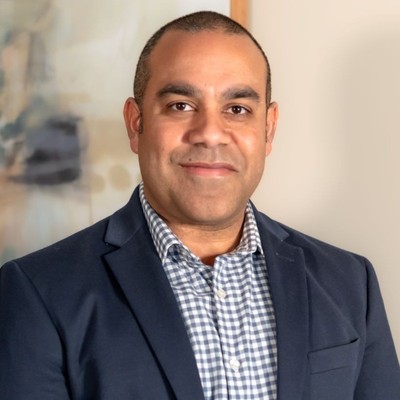
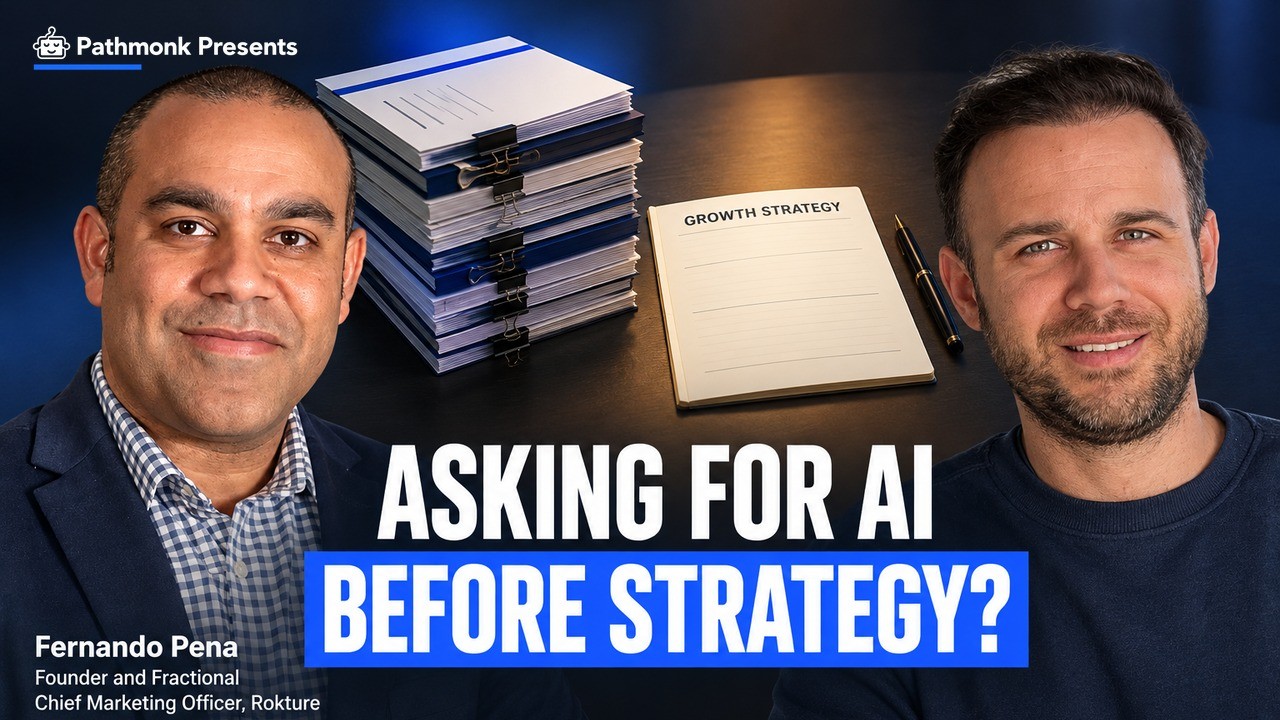
“The referral is getting that company in the running for consideration, but the digital presence is what's actually helping to sway them to interact with that organization.”
at
- Company
- Rokture, a fractional CMO practice founded almost 4 years ago
- Speciality
- Turning trust built offline into measurable digital growth
- Works with
- Small to mid-sized financial services firms: RIAs, community banks, credit unions, mortgage and insurance companies
- Deliverable
- Strategy, customer experience, technology and measurement
Too long, didn’t listen?
Fernando Pena is the founder and fractional CMO of Rokture, which helps small and mid-sized financial services firms such as RIAs, community banks, credit unions and mortgage companies turn the trust they built through referrals into measurable digital growth. His point: a referral gets a firm considered, but prospects now check Google, LinkedIn and AI engines before they call.
He explains why he leaves technology for later and starts with audience, goals and stakeholders, why a differentiated message matters more than the channel, and how to use personalization that shortens the path to conversion without feeling creepy. He also shares how vibe coding changed his work, and why changing habits is harder than any tool.
Treat digital as the deciding check
Referrals put you on the shortlist, but prospects then research you on Google, LinkedIn and AI engines. A dead LinkedIn page, a broken link or outdated information can cost you the deal.
Strategy first, platforms later
Before you jump into SEO, LinkedIn ads or an AI strategy, define the audience, past wins, growth goals and the stakeholders who own the change. Only then check whether your current technology already covers it.
Talk about the prospect, not yourself
Most financial institutions chase the same clients, so you stand out by showing prospects you understand them. The right message to the right audience matters more than the channel.
Personalize the path, not the pitch
Highlight the product a visitor clicked on instead of telling them you tracked them. Respect privacy limits and make compliance steps as painless as possible.
Some brilliant ideas
“The technology is probably the easiest part of the formula. The more difficult part is convincing the organization or stakeholders that there's a different way to do something.”
Don't talk about yourself, talk about who they are, so that they can see themselves within your organization, and feel comfortable doing business with you.
Most organizations will say, we need SEO, we need to be doing LinkedIn, we need an AI strategy, and those are individual tactics, but it's not an overall system that helps accomplish exactly what it is they're setting out to do.
Full transcript
Introduction
[0:00:00] ADRIAN GARCIA RAMOS: Welcome to Pathmoon Presents, where we talk with growth and marketing leaders about what's actually working right now. I'm Adrian, your host, and today I'm joined by Fernando Pena. Founder and fractional Chief Marketing Officer at Rokture. Hi! Hi, Fernando, how's it going?
[0:00:20] FERNANDO PENA: I'm doing great, how are you?
[0:00:22] ADRIAN GARCIA RAMOS: Doing pretty well, thank you, thank you for asking. So, we were just talking about the name of your company, Rokture. It's an amazing name, and I would like you to give us some Some background on how did you end up with that, and what you guys are actually doing these days.
The story behind the Rokture name
[0:00:40] FERNANDO PENA: Absolutely. Well, when I started Rokture almost 4 years ago, I was trying to think of a name that would really create some individuality and create an impression of this is a company that is going to help really create a foundation for digital growth for other organizations. And so I started searching, I actually used a word generator and came up with the word Rokture. And I figured, it doesn't really mean anything, but if something like Amazon or eBay can work for a company, then I wanted Rokture to be the one term where as soon as somebody types it into Google Search, or AI now. I would come up. And that's basically how the name came up.
[0:01:21] ADRIAN GARCIA RAMOS: Okay, so, you know, to me, Rokture sounds like a fracture, and at the same time, like a rock. So.
[0:01:29] FERNANDO PENA: Correct.
[0:01:30] ADRIAN GARCIA RAMOS: You know, elaborate on those kind of, angles that you are aiming for with, with the name, and how that relates to your business?
[0:01:38] FERNANDO PENA: Yeah, absolutely. So, Fracture, I would like to think that maybe that coincides with the fractional model that I offer, where I help from an executive perspective without being a full-time hire. And then the rock part of it is that there is a sense of foundation or stability associated with the types of activities that I help organizations with, and that's digital growth, and so by creating this foundation. foundation layer, you're not able to grow your organization as you see put.
Financial firms built on referrals
[0:02:07] ADRIAN GARCIA RAMOS: Yeah, absolutely. So, in terms of the, let's say, digital marketing service that you provide, I would like to ask you what kind of services are you focused on, and also, what kind of companies do you support, right? If you have a rather specialized practice, or if you go for a variety of different verticals, what is what you do?
[0:02:27] FERNANDO PENA: Sure. So, Rokture helps, smaller to mid-sized institutions, financial services institutions, and helps them to take trust that they've built in their local communities and industries, and turn that into measurable digital growth. A lot of these companies, what they've done is that they've built their businesses using referrals, partnerships, and just long-term relationships, but that doesn't always translate into positive digital growth. So I help them understand where they're getting stuck from a digital perspective, and then build the strategy, the customer experience, the technology, and also the measurement needed to fix all of that.
[0:03:05] ADRIAN GARCIA RAMOS: Right. So, you know, for the mainstream people that might not be related to the financial services and, you know, the vertical itself. I would thought… I would think about, like, maybe small banks or, you know, mortgage, service providers, anything related to loans and credits. Is that the type of companies that you are supporting? Just for our audience to have an idea on the typical, you know, business that you are, behind?
[0:03:37] FERNANDO PENA: Yeah, absolutely, and thanks for asking. So, I work a lot with… my major focus right now has been RIAs, so those are independent wealth management advisors, or financial advisors, but I do also work with specialty finance companies, so as you mentioned, mortgage companies, accountants, insurance companies. Credit unions, the smaller ones, and also community banks. And these are companies that oftentimes they have great histories, they do very good job at what they do, but they're, again, very heavily dependent on those in-person relationships and referrals. So, it's… but the problem is that now prospects are making decisions very differently than they used to.
If I refer you to someone, you're probably not just gonna pick up the phone automatically and call them, you're gonna go to Google, and you're gonna do research on them. go through their website, look at their LinkedIn, and probably ask ChatGPT or some other AI engine, what do you think about this company? So, the referral is getting that company in the running for consideration, but the digital presence is what's actually helping to sway them to, interact with that organization. So, very different business model than what we've seen in the past.
[0:04:49] ADRIAN GARCIA RAMOS: Sure. So, I think that what is coming here is that you are focused on lead generation, you know, services for, financial institutions. I'm wondering now about the approach in terms of digital marketing services, whether it's that… and we're just building, schema, right? Or service provision for these companies? Or it is rather a pure performance play, in which they just want, you know, to have more leads, and as you said before, like, optimize the referral processes, and maybe paid acquisition, or any other, you know, streamflows of leads that they might have. How would you, you know, see the industry and the service that you are providing these days?
[0:05:31] FERNANDO PENA: Well, it really is dependent upon the organization's goals and objectives, so most organizations are driven by the balance sheet. So, ultimately, growth is where they're at. So that's what I've been really focusing on most of the time. However, if an organization is trying to just get the word out and create a brand, then there's a very different approach in getting that done. But what I find is that there's… most of it is very focused on, okay. how many leads can we get in, and also how many different opportunities can we help to convert. So that's where I would help build that strategy, figure out exactly what that organization is after, and then
Go ahead and mobilize the entire team to a point where we can help to achieve whatever growth objectives they might have.
Digital as the great equalizer
[0:06:18] ADRIAN GARCIA RAMOS: So, I'd like to have your thoughts on not only the current landscape, but also the trends that you've seen in the industry. I think that that could be very valuable for the audience in terms of, like, you know, performance marketing, what were the main channels that were used 5 years ago, what's happening right now, what's… what's driving the industry, what's working, what is not working, yeah.
[0:06:47] FERNANDO PENA: Sure. So, I've spent most of my career in financial services, and mostly through some larger institutions, but I also have spent some time at some smaller institutions. And what I've noticed is that digital's the great equalizer, that's what I like to say, where regardless of the size of a company, they can make a very positive impression on digital, and they can actually compete against the big dogs out there. And so, what I like to look at is the fact that everyone Everyone realizes that, and as you mentioned, there's a lot of change and a lot of shift in terms of technology and capability in the industry today.
So, where most companies are struggling, though, is that, okay, it's… this is overwhelming. What do I do with it? And that's where I would come in and help to figure out, okay, what can we separate in terms of the hype and the noise, and figure out exactly what is needed. Most organizations will say, like, oh, we need SEO, we need to be doing LinkedIn, we need an AI strategy, and those are individual tasks tactics, but it's not an overall system that helps.
[0:07:48] ADRIAN GARCIA RAMOS: Snap.
[0:07:48] FERNANDO PENA: accomplish exactly what it is they're setting out to do. So, I do recognize and appreciate all of the individual modernizations and also innovations that are taking place, but understand that we need to focus on what this particular organization may need, and then leverage that technology after the strategy is built. To move forward towards their goals.
Strategy before technology
[0:08:14] ADRIAN GARCIA RAMOS: Right. So… It's something that I used to ask, but could you share an example of an organization that you are starting to work with? What is kind of your, you know, your first steps when you want to analyze a situation and make an audit of the things that are working, the things that are not working, whether or not they know their goals, and if that's clear, or if you need to spend some time explaining, you know, how to align the marketing with the business goals. How does it go, and whether or not you have a framework or something that could be, you know, valuable for you when it comes to Starting a business relationship with a new customer.
[0:08:56] FERNANDO PENA: Yeah, absolutely. So the type of organizations that I like to work with are those that have probably dabbled in digital in the past, and they're on a positive growth trajectory, but what they've realized now is that, unfortunately, the old way of doing business isn't going to help them meet their growth objectives. And what's funny is when I start conversations with these organizations, oftentimes they're chomping at the bit, like, okay, we need to get AI in here, we need to do this, we need to advertise on Google or on LinkedIn. And I sort of put them, you know, I say, hold on, we'll talk about technology later. And that's surprising to a lot of them, because they think, well, since I'm digitally focused, we're going to be talking about platforms.
No, in reality, I want to learn more about that organization. I want to know who is it that they're trying to target, what successes have they had in the past, what are they trying to achieve in terms of their overall growth. And also, you know, in terms of their internal structure, who is going to be involved, and how are the different departments and the different stakeholders going to be a part of this transformation? Then, when we finally have all that figured out, we can look and see, do they have the technology already that helps them meet those objectives, or do we need to look for something else? So that's where it's a little surprising to a lot of my clients that we don't even start that conversation until we're deeper into the relationship, because to me, the technology, as important as it is, it's just a tool, and ultimately, this is still a people business.
And the technology's really just going to help to facilitate and to create additional productivity and some energy around that relationship, but it's still a people-to-people type of arrangement.
Channels matter less than the message
[0:10:38] ADRIAN GARCIA RAMOS: Right. So we've talked about the demand, you know, for these kind of services. I would like to talk about the offer of, you know, prospects and opportunities, so… we have different things, right? You mentioned before, like, LinkedIn, or Google Ads, or even content marketing. So, in your space, what would you say that are the most… Valuable, let's say, prospect offerings that are out there to, you know, to collect quality leads for your customers.
[0:11:12] FERNANDO PENA: It really does vary. I mean, you touched upon a few of them. So, obviously, the biggest exposure you're going to get is going to be on something like Google or Meta, and then LinkedIn, of course, is a treasure trove when it comes to B2B, because you have so many professionals that are there. But, the thing that I always stress is that you have to be where your clients or your prospects might be. So if they happen to be on Reddit, for example, then you'll want to be there. Now, obviously, the rules of engagement are going to be very different in… depending on the platform. So, you have a much more visual approach on something like Instagram, for example, while on X, it's a lot more of a…
a verbose approach. So it really is dependent upon what it is that you're trying to achieve. But one thing that is difficult is that, of course, most financial institutions are chasing after the same clientele. So what I stress is differentiation. My clients have to demonstrate to their prospects how they're different, and that they understand that prospect. So I tell them, don't talk about yourself, talk about who they are, so that they can see themselves within your organization, and feel comfortable doing business with you. So, to me, the channel or the platform isn't as important as making sure the right message is out there.
Marketing the right audience.
[0:12:36] ADRIAN GARCIA RAMOS: Right.
[0:12:37] FERNANDO PENA: And then you should see some successes there.
From the ad to the conversion
[0:12:40] ADRIAN GARCIA RAMOS: Yeah, absolutely. You mentioned something that touched my nerve. Your messages are out there, right? The messages for the customers that you're targeting. But I also think that it is super relevant, not only to have the messages out there, but also in there. And by in there, I mean… in your money side, right? It's about, you know, where the conversion is happening, because you could have, like, a lot of content marketing, writing about a particular target customer, or have LinkedIn posts, or even ads running for that particular customer persona, but at the end of the day, if you don't relate the message that you are portraying
Out there with, the continuation bet that you are going to have on the website when those guys get into the, the conversion, where the conversion happens. you are likely going to miss them, right? So, I would like to have your take on that, and how is that you, in a way, position yourself, explaining this kind of a whole arc theory when you talk to your customers, and whether or not they allow you to change a website and adapt it in order to improve the conversions?
[0:13:53] FERNANDO PENA: Yeah, that's a great point, a great question, because the reality of it is, is that the search process right now is so fragmented, so some people do research on Google. Other people are going to be using AI engine and just start asking questions. So, in the past, you can optimize for Google, because that was where 95% of your audience was. Now, on the other hand, you have to optimize for so many different platforms. And what happens is that people come in through different mechanisms, and so they generally will end up in the same place, ultimately, which is your conversion form that you just described.
But there's so many opportunities to, unfortunately, stumble and make mistakes along the way. So one of the things that I stress is, of course, testing and experience from start to finish, and understanding it from that prospect's perspective. There's, oftentimes, unfortunately in financial services, you get a lot of friction on many steps.
[0:14:47] ADRIAN GARCIA RAMOS: Oh, yeah.
[0:14:47] FERNANDO PENA: There's compliance concerns, so you've got to have.
[0:14:49] ADRIAN GARCIA RAMOS: Had it.
[0:14:50] FERNANDO PENA: closures, you've got to have acknowledgements, and that's a hassle. But it's a reality in our business, and we've got to try to work around it. So trying to figure out how to make that as painless as possible is obviously a big deal. The other thing, too, is just making sure that, you know, I tell a lot of my clients that digital's not necessarily where the conversion's going to take place, because, again, people are still stressing for that in-person experience, but it's where they're going to be highly influenced and determine if they're going to do business with you. So something like, let's say, a dead LinkedIn page is a negative sort of experience that that
Prospect has in their mind about you. Something like a broken link on the website, or outdated information. All of that comes into account when they're trying to make a decision on whether they're going to do business with you. But I do take that funnel very seriously, and do try to optimize it as best as possible, based on who they're trying to attract, and also what the lead time or buying cycle is in that conversion lifespan. Some of them are very lengthy, and in that case, we treat that differently than somebody who's actually going to go through a conversion process that only takes a couple of days or so.
Personalization without being creepy
[0:16:08] ADRIAN GARCIA RAMOS: Sure. I want to ask you about, you know, a term, crafted as ads continuity. Basically. it might be an ad, or it could be a social post, or anything else, but the idea is to personalize not only what you see on that first, attention grabber, right, with the website in which that particular visitor is going to land, right? So, you could do that with UTM links. You could create specific landing pages. You could even customize the, you know, creatives, or even the assets that you're going to have in the website, so that it is going to be linked, right? So if you are selling a particular product or services, like a mortgage, and you know that it's going to be a woman who's going to contract that particular service, then you can't relate the message across the whole experience to that particular person and customer persona. So, I just wanted to ask you, in the…
financial services, if you have seen this, ads continue to… continue… sorry, continuity, or… or any kind of a personalization from, A to Z in terms of increasing the conversions and… and the results of your work.
[0:17:22] FERNANDO PENA: Yeah, absolutely, and I'm a huge advocate of personalization. The challenge with financial services, though, is that, and especially now with a lot of the rulings, especially in the EU, where there are challenges around the use of data. So, because of privacy requirements, then there are limitations on what you can use, and there's a lot of concern from many prospects on on how their data's going to be utilized. So, in my viewpoint, the best personalization is where you're personalizing the experience, but not necessarily doing so in a way that is, for lack of a better term, creepy.
[0:17:58] ADRIAN GARCIA RAMOS: Right.
[0:17:58] FERNANDO PENA: You don't want a website to come back and go, oh, we saw that you spent, you know, X amount of dollars.
[0:18:03] ADRIAN GARCIA RAMOS: Your name, your name on the website.
[0:18:06] FERNANDO PENA: Exactly. And also, I think a lot of marketers also make the personalization kind of cheesy, too, so I get a lot of spam emails, and they're like. Hello, I see that your website, you know, that this is what Rokture does, and all I did was just, scrape what's on my website and paste it on an email. That doesn't work. I mean, people see right through it. But if you do similar to what you described, where somebody has clicked on a mortgage product, and now all of a sudden, your website might change the order of the product so that mortgage is highlighted. Right. That is the right way to do personalization, because you're not doing something where you're saying, we saw you clicked on mortgage, so are you interested?
What you're doing is you're making that path… to the ultimate conversion a lot easier. And that's the right use of personalization, is personalized experiences. So, you might have a baseline website, but now, based on that individual's profile and also the activities that have been monitored, or that you've tracked on them, then you modify that experience accordingly. And most financial services probably don't do that as well as they could. Mostly because there is a fear of overusing the data, and also, you know, the industry's very slow to move and innovate because of all the risks and compliance concerns around something like that.
Vibe coding as extra horsepower
[0:19:24] ADRIAN GARCIA RAMOS: Yeah, absolutely. So, I would like to close the, you know, the interview with a question related to your day-to-day work. And all these new tools that we are seeing around, like, you know, AI and Entropic, you know, Cloud Code, ChatGPT, many things, going around, so… I would like to ask you for a use case that has changed your professional life, in a way, that maybe you can describe something that you didn't use before, because it was not available, but now it is, and you have made good use of it, and it's, in a way, you know, working for you. That could be insightful for the audience as well.
[0:20:08] FERNANDO PENA: Yeah, absolutely. So, I mean, I've used, all the… well, not all of them, but I've used quite a few AI tools, and at first, when I started using AI, I thought, okay, here I can use, AI as, creating generative, content, which was great, but now I think of AI as, like, additional horsepower. So, in the past, let's say that I needed to create a custom application, I would have to go on to a, a site that allows me to hire potential programmers, break them out, make sure they understand my requirements. This whole process was very frustrating, and ultimately, when I would get the finished product, it was not at all what I was expecting. So, enter vibe coding. And although I can code myself, what I find is that it is, you know, something that is frustrating and takes a long time. So, I started…
I dove deep into these vibe coding platforms, and now when a client of mine needs something, I can develop whatever it is that they might need in minutes. And oftentimes with that, I can now spend my time trying to optimize and to create a more efficient user experience, instead of trying to manage the backend. So that's been the transformational part for me, because It's just that this is a huge productivity gain for me, and on top of that, the machine generally does what I want it to, as opposed to with some developers, there were sometimes requirements lost in translation. So I feel bad for junior developers, because a lot of the opportunities that they were probably taking on might be superseded now by AI, but…
I am finding that that's been transformative for my business.
Technology is the easy part
[0:21:47] ADRIAN GARCIA RAMOS: Yeah, absolutely. I think that what you are describing here is not a product opportunity, but rather a commercial opportunity, so that your digital marketing services are an entry point, and then you might become a digital marketer, or you might become, You know, Operation Transformation Manager, in a way, for the companies that you are working with, because you know more than them, and you have all the resources to create pretty much, whatever they need, right?
[0:22:16] FERNANDO PENA: Yeah, that's a great point. In fact, it's something that I think a lot of, of, people in the industry may lose sight upon, that oftentimes the issue that these organizations don't have is not necessarily marketing related. So, I may come to the table talking about marketing, because that's what's most visible. But there's oftentimes issues from an operational perspective, from a sales perspective, so there's an opportunity to optimize a lot of parts of the organization in pursuit of this growth goal. So, I always say that the technology is probably the easiest part of the formula. The more difficult part is convincing the organization or stakeholders that there's a different way to do something, and we need to
modify your existing processes and create habits that take us towards this goal that we're trying to get to. That's where the challenge is, and that's where I've spent a lot of my career in the past, and I continue to do so now, is really that advocating and creating the right strong people relationships that help them understand This is how it impacts you, and this is how it's going to positively impact the entire organization.
[0:23:29] ADRIAN GARCIA RAMOS: 100%. I… I couldn't agree more. So, Fernando, thank you so much for coming on. It's been a.
[0:23:36] FERNANDO PENA: Absolutely.
[0:23:36] ADRIAN GARCIA RAMOS: My pleasure. I would like to pass you the word in case you, you know, just want to mention your URL for the business, Rokture, or your LinkedIn retail, so that people can reach you out. And what is you?
[0:23:51] FERNANDO PENA: Yes, so my website is ROKTURE.com, and then my LinkedIn is under my name, Fernando Pena. I'm not… I haven't memorized the URL, because of course, it's that long LinkedIn URL, but it probably says Fernando Pena Jr, and I'm easily found on there, and of course, if you type in Rokture, this should be the only company that shows up on LinkedIn.
[0:24:13] ADRIAN GARCIA RAMOS: Perfect. Thank you very much, Fernando.
Got a growth story worth sharing? Tell it on the show.
We talk with founders and marketing leaders about what actually moves their pipeline. If you’ve built something other marketers can learn from, we’d like to hear it.
- 01Apply
Tell us who you are and the story you’d bring to the show.
- 02We get in touch
We review every application and reach out if it’s a fit.
- 03Record your episode
A remote conversation, published as video, audio and a full transcript.