CRO is where the smart money is | Aayush Bucha from AAA Digital
E-commerce CRO is where the smart money is. Aayush Bucha of AAA Digital shares the landing page, creative and ad budget tactics that lift ROAS.
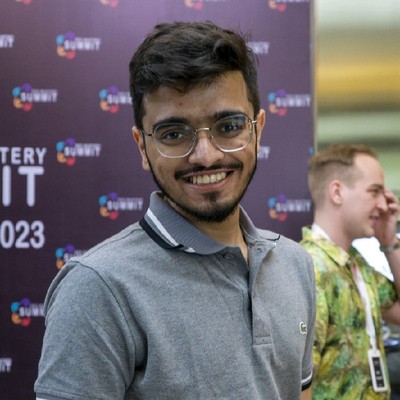
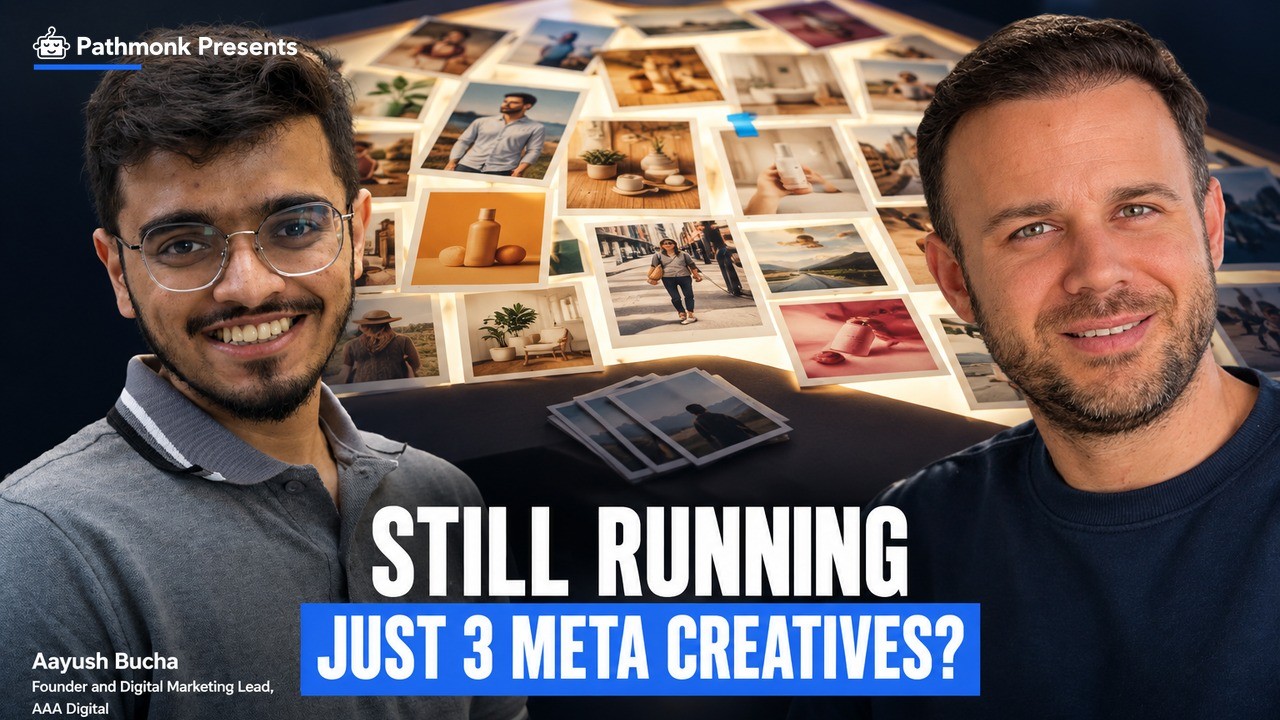
“Traffic from Meta and Google is going to get expensive year over year. CRO is where the smart money is, so we focus a lot on that, we fix the basics first, and then we move up the ladder.”
at
- Company
- AAA Digital, an omnichannel growth marketing agency
- Speciality
- CRO, funnel fixes and paid media on Meta and Google
- Works with
- Shopify and WooCommerce brands making at least $10K a month
- Deliverable
- A 6-month growth roadmap, then funnel fixes, landing page tests and ads
- Growth engine
- SEO, social media, LinkedIn and word of mouth
Too long, didn’t listen?
Aayush Bucha founded AAA Digital, an omnichannel growth agency for Shopify and WooCommerce brands that already make at least $10,000 a month. His rule is simple: traffic from Meta and Google keeps getting pricier, so the agency fixes the funnel and CRO before scaling spend. Persona-based landing pages, built in hours with AI coding tools, lifted ROAS from about 4x to 6 or 7x.
He also explains why Meta now rewards creative volume, how the team replaced paid fraud tools with an in-house filter, and why putting 10% of the budget into secondary conversions lifted ROAS by about 25%. He closes with his full-funnel budget split and the AI tools his team built in-house.
Fix CRO before you scale spend
Traffic from Meta and Google costs more every year, so fix the site and the funnel before buying more clicks. Aayush starts every client with a 6-month roadmap that says what could work and what could fail.
Feed Meta a high volume of creatives
Two or three creatives no longer carry a Meta account. Aayush sees better results when the account gets many varied creatives that speak to different buyers.
Match landing pages to buyer personas
Rewrite a whole landing page around one pain, such as sleep for a herbal tea, and test it. With AI coding tools a page takes 2 or 3 hours, so most of the effort can go into testing.
Budget for secondary conversions, then wait
About 10% of the budget aimed at actions like add to cart cut their cost by around 40 to 45% and lifted ROAS by about 25%. Give it a month to a month and a half before you judge the results.
Some brilliant ideas
“What used to work on Meta doesn't really work anymore, and it's more about creative diversity. When we put in volumes in terms of creatives, it starts working better, and if you're playing with 2 or 3 creatives, it didn't work really well.”
Something that we still do here is that we do interest-based targeting, which is not what all other agencies are doing these days, because everyone is moving to broad campaigns on Meta, but this is actually working really well when you're working on just top funnel things.
Keep experimenting on prompts, because prompts are where the game is. If you are able to communicate with the prompts properly, half of your war is already done.
Full transcript
Introduction
[0:00:00] ADRIAN GARCIA RAMOS: So, welcome to Pathmonk Presents, where we talk with growth and marketing leaders about what's actually working right now. I'm Adrian, your host, and today I'm joined by Aayush Bucha. Founder and digital marketing lead at Triple A Digital. Hi, Aayush. How's it going?
[0:00:19] AAYUSH BUCHA: Hi, hi, Adrienne! How's it going? We're, like, I'm doing really great. We've been prepping up for the coming festivities, Black Friday and all of that, for all of our clients, so it's been a bit busy, but yeah, I'm enjoying it.
[0:00:32] ADRIAN GARCIA RAMOS: Amazing. So, you mentioned… Black Friday, I guess that you will likely have to do something to, I mean, related to… to e-commerce, is that correct? What is that?
[0:00:42] AAYUSH BUCHA: Yes, sir.
[0:00:42] ADRIAN GARCIA RAMOS: In AAA. Explain us to bit of… of it.
Inside AAA Digital and its $10K revenue bar
[0:00:47] AAYUSH BUCHA: Yeah, so we're basically a growth marketing company which focuses mostly on e-commerce brands around Shopify and WooCommerce. So that's where expertise is. We tend to work only on omni-channel marketing. We don't just focus on a single aspect of marketing, and that is what differentiates us from the other marketing agencies. We come in as growth partners, and we make sure that you don't overspend on your ads, we make sure that we fix the funnels first, and we help, like, brands with the CRO, and I definitely feel that Pathmonk really helps us with all of the CRO initiatives that you guys have. It's a really good thing to have.
[0:01:27] ADRIAN GARCIA RAMOS: Right. So, you mentioned, Shopify, I wonder, like, Shopify is huge, do you have any particular vehicle that you approach, mostly? From the different e-commerce stores that you may find on the internet.
[0:01:46] AAYUSH BUCHA: Yeah, so there are a couple of verticals that work really well with us. One of them is fashion, and the other one is home essentials. So, these are the two main verticals that we really focus on, but there are some, like, gray hat verticals that we really excel in as well, and that includes, like, cannabis. smoke products, all of that. So we cater to all of the brands, so we know how to market all of them. So it's not very particularly we focus on these, but overall, we do all of it.
[0:02:15] ADRIAN GARCIA RAMOS: Right. I was wondering, you know, if I wear, let's say, peptides, or nutraceutical, or something like that in your niche. And… what's about, kind of, creating a Shopify store? What is the right moment to contact with you? Is that… right when I have the idea, right when I have the community, right when I want to growth it, what is it?
[0:02:38] AAYUSH BUCHA: So, yeah, very good question, first of all. So we basically act as growth partners, and we don't really work with brands that usually start off.
[0:02:46] ADRIAN GARCIA RAMOS: Okay.
[0:02:47] AAYUSH BUCHA: on the very basic stages. So, the reason is, most brands, when they start out, they need to find out a product-market fit, and we are not the ones, or the correct people who experiment with your products and stuff. We are the ones who actually scale you when your money's logged, when you're not able to grow your brand from X to Y. That's where we come in.
[0:03:08] ADRIAN GARCIA RAMOS: Right, so in terms of, like, revenue, if you may share it, what's a suit spot.
[0:03:13] AAYUSH BUCHA: Oh, you don'.
[0:03:13] ADRIAN GARCIA RAMOS: To stop working with a guy.
[0:03:15] AAYUSH BUCHA: Yeah, the baseline revenue that we look for is 10K per month, or bare minimum. Thank you, Aayush.
Fix the funnel before scaling ads
[0:03:22] ADRIAN GARCIA RAMOS: $10,000 per month in revenue. Okay.
[0:03:26] AAYUSH BUCHA: Yeah, yeah.
[0:03:27] ADRIAN GARCIA RAMOS: Perfect. So, yeah, I wanted to ask you about, you know, this growth framework, or, you know, like, resources that you know for the different verticals that you work with. Can you, you know, explain them to us, and what are the, the, the, the… you know, The main ways that you utilize to drive growth for your customers.
[0:03:53] AAYUSH BUCHA: Yeah, so we don't work with all brands, and that is what I think differentiates us. So, we, sort of understand who we are onboarding, that is what, is our core expertise. So, let's say if we are able to grow you. Only then we'll onboard you, and that is where we have clear communication. So, say, we'll give you a proper roadmap of, let's, the coming 6 months of how we are going, to go about what kind of, strategies we are going to invest in, what would work, what could potentially fail, all sorts of that stuff in the beginning. Before that, we also dive into the core aspects, or the bare minimums of your website, for example, let's say
CO and CRO, because traffic from Meta and Google is going to get expensive year over year, and you know that, right? CRO is where the smart money is, so we focus a lot on that, we fix the basics first, and then we move up the ladder.
Google intent versus Meta pull marketing
[0:04:47] ADRIAN GARCIA RAMOS: Yeah, I wanted to ask you about, you know, the differentiation between paid acquisition and, let's say, organic or non-paid acquisition. What is your approach with these, let's say, brands starting with $10,000, you know, per month? How do you handle that transition from awareness to performance? What's, you know, the state of social in terms of traffic acquisition? Give us some insight on those kind of steps, and how do you approach it with your customers?
[0:05:25] AAYUSH BUCHA: Sure. So, there are some brands which basically sell by themselves. For example, if you're working on a laptop brand, right? People would definitely go on Google and search for laptops. That's bare minimum, right? So, those kind of products usually work well on Google. So, we know what kind of expectations to set beforehand. On the other hand, there are some products that need a pull. or let's say the purple, white, white, teeth, strips that you see on the internet, the ones that are trending right now, they need pool marketing, right? So you need to run meta ads to acquire those customers. So it actually depends on the kind of tools you're working with, and we, like, we basically create a set framework before, going to a specified, like, specific decision to say.
So it actually depends a lot.
[0:06:14] ADRIAN GARCIA RAMOS: Yep. Yeah, so, you know, thinking about the pre-acquisition and media buying,
Pricier clicks and Meta's creative volume
[0:06:24] ADRIAN GARCIA RAMOS: I wonder if you… if you can give us some, you know, trends on how the industry is going, and how do you see the… You know, the cost, also the clicks, and what is happening recently in the different platforms that we all use?
[0:06:44] AAYUSH BUCHA: So, what we have seen is, like, interestingly for our agency, what you've seen is Google has gotten expensive, around 15-20% year over year, but at the same time, our cost per conversions have gotten down. Like, the cost per conversion has gotten down, and the cost per click has increased. So, that goes to show that Google is, like, getting smarter and smarter in getting qualified people to your site, and it's where their algorithm is getting trained. So, this is sort of an interesting insight that we found recently. Like, we basically churned out the entire year's data of all the clients and everything using AI. We use a lot of AI, by the way. We have made custom solutions for keyword research to help brands, like, give a dedicated growth ideas and scrape the ads of the competitors before giving them a dedicated
solution. So, yeah.
[0:07:35] ADRIAN GARCIA RAMOS: Yeah, sure. So, in terms of, like, a meta, are you seeing the same trends? Like, an improvement in, you know, cost per conversion, or it's another world and you should, you know, treat them as different animals?
[0:07:50] AAYUSH BUCHA: Yeah, so Meta, for us, has been a bit down recently. I'm guessing it's because of the Q4. All the marketers recently are complaining about that, so at least the ones in my circle, so, yeah. It's actually a different ballgame. What used to work on Meta doesn't really work anymore, and it's more about, like, creative diversity. We've seen, like, when we put in volumes in terms of, like, creatives, it starts working better, and if you're, like, playing with 2 or 3 creatives, it didn't work really well.
Persona landing pages built with AI
[0:08:21] AAYUSH BUCHA: So it's more about creative volume and how you're able to communicate using your creatives to your buyers. That's how Meta wins.
[0:08:29] ADRIAN GARCIA RAMOS: Okay. I wanted to ask you about the… you know, you were talking about personalization and CRO and how important it is, because at the end, that's going to define the performance, the ultimate performance of your conversions in… in… for your ads. What's the relationship, or what kind of a… Bridges, have you seen between ads? and web personalization, right? I think that the term is called, like, ads continuity. I don't know if you have worked, or if you have any tools for solving that problem. What's your take on that?
[0:09:07] AAYUSH BUCHA: Sure. So, can you just repeat your question one sec? I just, I just want to make sure that I answered it again.
[0:09:12] ADRIAN GARCIA RAMOS: Yeah, so basically, most of the websites for e-commerces are defined as landing pages, right? And they are going to be connected to a particular UTM coming from an app. And you will have to not only create an ad, but also, you know, create a landing page that is going to resemble that attention grabber that you are bringing to the ad. So, my question is, what's your take in all these personalization strategies for the website? how do you approach a problem? What solutions have you found? What tools do you use? Yeah, please explain us on that.
[0:09:46] AAYUSH BUCHA: yours.
[0:09:48] ADRIAN GARCIA RAMOS: Combination of ad and web.
[0:09:51] AAYUSH BUCHA: So what we've seen is, we have been, like, very aggressive in terms of, like, testing landing pages along with the personas that, like, buyers are off. For example, if we are promoting a herbal tea, and the buyers are, like, constantly suffering from sleep, right? They're not getting good night's sleep. So we basically tend to, like, rework the entire landing page as a test to see if the copies with sleep actually convert well, and, within our, like, last four or five months, we've started this very recently, by the way, and it actually performs, like, way better. So, the ROAS, where we used to, like, see 3 or 4x ROAS, we jumped from 4 to 6X and 7. So these are, like, for, like, UA markets, but this is a very interesting insight, yeah.
[0:10:36] ADRIAN GARCIA RAMOS: Yeah, so what… if I may ask, what tools do you use for creating these landing… landing pages? Is it your web development team that is, you know, changing by hand and running A-B tests, or you have a… I don't know, Lovable, or, you know, any other kind of AI tool for creating them? How do you approach that?
[0:10:55] AAYUSH BUCHA: Yeah, so we basically use Claude, or, let's say ChatGPT codecs, or, Claude CLI, to basically, make all the landing pages. We add in some skills with, design, CRO, all of that, so that they give us a good, polished output. Once most of the design is, like, doable, or 80-90% there, we have in our, like, web developers come in and, like. do hit-and trials and, like, fix the design properly, and then we just put it live. So we don't really invest a lot of time, I'd say, in building landing pages. It takes, like, 2 or 3 hours to make a landing page these days, so we focus more on testing these days, yeah.
[0:11:34] ADRIAN GARCIA RAMOS: Right, right. Well, the thing is that, depending on how many ads you're going to be running and, you know, the different kind of opinions that you want to tackle, you are going to have to create, you know, different landing pages, so… Depending on the scale, you might have a customer that could be running tens or even hundreds of different landing pages, is that correct?
[0:11:58] AAYUSH BUCHA: Actually, we just, like, so this is for one particular brand, that I have in my mind. We're currently doing around 250 or 260 ads across two ad accounts, so that's a lot. Wow. So, and we're doing, like, 150K or 200K, USD spends there. So, $200,000 in spends, monthly, and we're netting a 3X wire. So, we tested in that specific segment, we tested it across, like, 2 different products, and we made, like, 15 landing pages for each, for buyers. So, made it, like, very, very extensive.
[0:12:35] ADRIAN GARCIA RAMOS: Yeah, so, again, like, those two to three hours that at the beginning didn't seem like much, if you, you know, it escalates quickly in a way, right? So, if you have hundreds of landing pages to run, that may be a challenge. I wonder your opinion about, you know, the customers these days, like, do they assume that having, like, a different landing pages for the different products and paid acquisitions that they run. Is that something normal, or do you find some friction from your customer saying, I don't really want to, you know, have this bunch of landing pages, I prefer to stick to my home and, you know, to tell the story in the terms that I want? How do you feel that?
[0:13:20] AAYUSH BUCHA: I don't really see a difference, because, I don't see people, like, going on, outside of ads, because paid acquisition… one would work really well. If someone is actually looking for more detailed copies or looking for competitors, paid is probably not the right way. You, like, focus more on SEO, right? SEO, EU, NGO. So, the strategy would be a bit different for me, but for me, I don't think it really matters to people. Like, people love being communicated in the way they want, and that is how.
[0:13:49] ADRIAN GARCIA RAMOS: Right.
[0:13:49] AAYUSH BUCHA: Which…
[0:13:50] ADRIAN GARCIA RAMOS: Okay, sure. So, you say that most of the e-commerce shops, I mean, at the end, it's their business, and they understand that it is a performance initiative, and they need to optimize for what it converts.
Fraud traffic and weighted landing page tests
[0:14:02] ADRIAN GARCIA RAMOS: Amazing. I have a follow-up question, given your expertise, and this is related to something that, if you don't have the scale needed, you might overlook, right? So, it is about these fake clicks and bug clicks that are in the platforms. I think that it's not about Meta, or Google, or TikTok. we all have it, it's all of the products, right? And, in a way, you are paying for clicks that, at the end of the day, are not… legit, right? To say it in a way. I would like to know your take on that, if this is something that you have experienced, and if you are aware of any solution that could, you know, support you, your customers, or anyone else in improving that situation.
[0:14:51] AAYUSH BUCHA: Yeah, so this actually happened, like, 7 or 8 months back with us on a specific brand that we were working. The conversions basically dropped to, like, half overnight, so we were getting a price of around 3.5 for that specific brand, and overnight we dropped to 1.5, and, like, the brand owners naturally started to panic, right? And we got on a call, we basically, tested on, looked for all the tools available on the market to like, offer something for fraud traffic and fraud traffic filtering, so we came across, two tools. One of them was, like, RedTrack. I think that is the one that we used, and the other one was, I think, Kaitaro, if I remember it correctly. So these are the two tools that we use. Over time, I think these tools were, like, sort of expensive. If we, like, started to scale on every band, like, I think it's, like, $170 per tool, so we sort of built that in-house.
Right. So, we have, like, a server, we basically pay, like, $50 for hosting that, and all of the other info is basically free for us now. So…
[0:15:55] ADRIAN GARCIA RAMOS: Okay, good. So, yeah, you had a problem, but you found a solution. For the customers that you are… Just to follow up, like, for the customers that you're running nowadays, I guess that you don't want to have a catastrophic failure, you know, to realize that you have a problem, so do you have any kind of a monitoring or something in place just to make sure that That is not a threat for your operation.
[0:16:20] AAYUSH BUCHA: So, we have also done one more thing. We've recently started testing out weighted, like, so we just use one landing page, and we have distributed three same A-B testing copies on that. So, we put in, like, 70% weightage on a specific landing page and 20% weightage on another landing page, and we see what is actually performing well during the day. So, meta is very well, if you see it that way, and when you're playing with bigger budgets. it is all the way more riskier, right? So, we see what kind of, like, conversions are happening on which A-B test that we are doing, and we basically set, from end to end. So, we have, like, media buyers who are on the account 24-7, right? Because that's at stake. So, we make sure that,
we basically, like, tune the ads whenever the specific landing pages give better performance, because Meta, like, behaves very differently over time. So, on week one, you'll see a landing page performing very well. On the week, the performance would be basically very, like, dull. So, that usually really helps us, I would say.
Secondary conversions and the budget split
[0:17:25] ADRIAN GARCIA RAMOS: Right. Oh yeah, definitely. You are so, let's say, you know, knowledgeable about this industry, I don't want to miss any chance to give you a right question or something that is really interesting for us.
[0:17:41] AAYUSH BUCHA: Okay.
[0:17:42] ADRIAN GARCIA RAMOS: One thing that, I would like to have your, your, your thoughts on. It's about the ads, so when you're running ads, we talked before about the personalization of the web, but at the same time, the ads need to have as much as… information as possible from the web and the conversions that are happening in there, right? So, I'm wondering, if you guys, deploy, beyond the conversion events in the website. So, for example, let's say that you know that there are 3 steps that a visitor in the website needs to complete for reaching a conversion. So you can pass just the conversion event to the ad, so that the ad is going to learn on that particular conversion event, but there might be two, which are going to be in the middle.
that are going to be very interesting for the ad to learn faster, right? So those, so I've heard that there are many media buyers deploying this kind of a custom event. By hand, manually, because they know exactly the funnel and such. Is this real? Is this happening? Are you using it? Is it worth it?
[0:18:49] AAYUSH BUCHA: I'll share my insights. So, let's say if we have, like, $1,000 a day on a specific ad account, what we basically do, if the purchase end goal, what we have is, like, 10% of that ad budget that we plan for there, we use that for getting more and more, like, secondary conversions, and that actually helps when you are, like, setting up proper remarketing campaigns. So, that actually, gets a lot of, like, ad-to-action if, let's say our purchase is coming at around $100, and our ad-to-cards are coming around $15. With a specific campaign targeted towards, like, a secondary action, you'd see that the cost per conversion of that secondary action goes down, like, around 40-45%.
So, what you pay, like, $10 per, or $15 an ad, like, add to cart, you'd just drop it down to 7.5 and 7. But, one caveat here is that it doesn't happen in a month. Right? So, let's say if you have, like, 10 ad to cards that came from an ad, they won't convert overnight. The funnel needs to be run for at least, like, month, month and a half, before getting some decent results. So, it definitely works, but it needs a longer phasing period, to say.
[0:20:00] ADRIAN GARCIA RAMOS: Right. So, could you give us a big, let's say, number or ballpark in terms of, like, an ad budget optimization? How much do you manage to reduce, let's say, or to improve your budget, given this technique?
[0:20:18] AAYUSH BUCHA: Yeah, so, on top lines, we've basically seen about 25% improvement on ROAS. Wow. We… yeah, so it definitely works, but on month one and, like, by the end of month one, you'll not see much. If you're tracking the first click attribution and the end click attribution, you'll see that there's definitely a role that is happening. So you'll not be able to attribute this exact campaign for the end goal. But you'll definitely see the first click coming from and the purchases. So, all the other campaigns will see a drop in the, like, cost per conversions, but this campaign works.
[0:20:53] ADRIAN GARCIA RAMOS: Okay, so, yeah, well, that's mind-blowing. 25% is a lot. Just, you know, a follow-up comment, like, do you have a separate campaign from the ones that you're running, or do you run the… and how are… how is the information going to permeate or to distill from that learning campaign with the secondary goal to the other campaigns with the… with the main goal. Is that because of the account itself, that it's all, like, a… Connected?
[0:21:27] AAYUSH BUCHA: Yeah, so… so we have a very specific account structure that we follow. We have, like, one or two dedicated campaigns for remarketing. We have one for top of the funnel conversions, for example, page views, traffic, and then we have, like, secondary conversions. So, for top funnel conversions, let's say page views and ad- so page views and, like, session views, session durations, we track all of that with GTMs. So, we usually have, like, a 2% or 3% of the entire day's budget dedicated towards those campaigns, because they also help bring in a lot more customers. The caveat, or something that we still do here is that we do interest-based targeting, which is, like, not a…
not what all other agencies are doing these days, because everyone is moving to broad campaigns on Meta, but this is actually working really well when you're, like, working on just top funnel things, and that's what actually, gives us better audiences. That's something I would say. Of course, it does differ from account to account, but that's what I've seen. Other than that, so 5% on top of the funnel, 10% on, like, middle funnel, and we have, like, 15% remarketing budgets, and, we have, like, the 60-60, 65% budget that we have spent, like, remaining. We spread it across 2 or 3 campaigns. Out of that, 45% is, like, dedicated to one specific campaign. That is optimized towards maximized conversion values, and the rest is, like, like.
Depending on the categories, collections, all sort of that stuff.
Finding clients and the Shopify decline
[0:22:55] ADRIAN GARCIA RAMOS: Amazing. Okay, so, yeah, I think that that's enough for the theory, right? Let's talk about entrepreneurship a bit. How do you find customers? How do you engage with them?
[0:23:09] AAYUSH BUCHA: Yes, we don't sympath…
[0:23:11] ADRIAN GARCIA RAMOS: You, you, you run them?
[0:23:13] AAYUSH BUCHA: Yep. We run ads for our own acquisition. It's basically.
[0:23:16] ADRIAN GARCIA RAMOS: Okay.
[0:23:17] AAYUSH BUCHA: like, we have, like, multi-channel acquisition systems, so we don't really rely on ads, because ads, specifically about leads, are not the best solution, because if you look at Google, it's very expensive. If you're running on Meta, you'll see a lot of trash coming in, so you need to optimize for everything, right? So we basically tend to go for an omni-channel approach, where we also do an SEO for our, like, our own website. We're also working on social media, where we are, like, actively speaking about, like I told you before this podcast, right? I'm also, like, actively engaged on with, like, community… LinkedIn. So word of mouth also comes in. Yeah. LinkedIn is also there, yeah.
[0:24:02] ADRIAN GARCIA RAMOS: Yeah, so what would you say is, you know, your growth limitation as an agency these days?
[0:24:10] AAYUSH BUCHA: Sorry, yeah, I didn't get you.
[0:24:12] ADRIAN GARCIA RAMOS: I, I… I was asking you, what would you say is your growth bottleneck or limitation these days as a, you know, a Shopify agency or e-commerce agency? Yeah.
[0:24:25] AAYUSH BUCHA: Yeah, very good question, and actually something that we're dealing with right now. So, what happens is, like, if you see, Google search trends for Shopify, you'll see there's a decline in Shopify, right? So, what we have done is we've started segmenting our, like. like, not just one channel, so we're also testing out some affiliate campaigns, some other lead generation businesses that we can possibly explore too, so we don't just, like… of course, this is our core business, and we've been doing it for a long time, but of course, we don't want to go into the sunk cost fallacy, and just keep on working what's not, like, going to be there. We also estimate that a lot of the, with AI coming and all of our people
But short of, like, start migrating from Shopify to their own custom solutions, which will also make it… make our lives difficult, of course, right? Because we are very tuned to one specific segment, we are very tuned to being there, so I don't want that to happen on my agency, so I've started, like, putting in some budgets on testing, R&D, and stuff, where we keep something for
AI tools, prompts and educating clients
[0:25:28] AAYUSH BUCHA: They test out our profits.
[0:25:30] ADRIAN GARCIA RAMOS: Amazing. You have mentioned a couple of times, that you are pretty invested in AI and, you know, running operations with AI, and given, let's say, a new hands, your team with AI, I wonder if you could share, you know, a use case or something that is supporting you or your team in the day-to-day work, that could resonate with the audience, and could be, in a way. a tool or insight that they can… they can also, let's say, think of or replicate, yeah.
[0:26:07] AAYUSH BUCHA: Sure. So, let's say if you're wanting to, like, do SEO, for example, right? We have… we used to use AHS and SEMrush, but if you know the tool, AHS is by, like, it's around $250 or $300 a month. So, what we did is we basically built our own version of Ahrefs, where we are pulling, basically, data from, data for SEO API, and we have built our own MCP on top of that. So, we have also connected, like, Google Search Console and Google Analytics. So now, my team, what they do is they basically chat in with these chatbots, which we have built on top of these MCPs, and they basically get what they need.
So, what would have taken, like, 2 or 3 hours to… for them to go to the account, see and filter everything, and find the audience, all sort of that stuff has, like, reduced to minutes. So that is something that we're doing. But there are a couple of repos that I could usually recommend to people. For example, I really find OpenSEO on SEO is a very good repo on GitHub. It's open source, you can try it. It's an alternative of SEMrush and Ahrefs. If you are a bit techy, you can basically build on top of it as well. Then there are a couple of cloud tools for ads and copywriting, which I would recommend everyone has it now.
And… keep experimenting on prompts, because prompts are where the game is. If you are able to communicate with the prompts properly, half of your war is already done. You don't have to do a lot, so I make sure most of my team knows how to prompt the first prompt right. That is where I work a lot.
[0:27:47] ADRIAN GARCIA RAMOS: Okay. Yeah, that's interesting. So, you recognize yourself that you have become kind of a trainer for your team? I… I wonder if you… if you have thought about, like, training services, not… not just for your team, but also for the companies that you work with, or as a part of the R&D, Initially that you were discussing before, do you think that there's going to be an opportunity for that in the future?
[0:28:16] AAYUSH BUCHA: Yeah, yeah, yeah. Sorry, can you repeat again? I was lost. Very sorry.
[0:28:22] ADRIAN GARCIA RAMOS: Yeah, no, you were talking about training your team, and how important it is they having the right tools to, you know, maximize, the performance. So, I was wondering if… Training services is something that you have considered to… Let's say, provide to your customers, or to new customers, or… In a way of a value proposition.
[0:28:48] AAYUSH BUCHA: Yeah, so I've not really explored that, to be honest, but I do keep my, like, current, like, clients, like, updated with AI on all sorts of, things that they can basically help us accountable for. For example, if we are… if you go to Meta, and you do breakdowns on, like, audience segments, or maybe time zones, you can see clearly what, time of your ad account brings in your most performance. So if you're, like. having a specific rule set up for that specific time, we'll definitely see better results, right? So these are sort of the things that I basically educate my clients, to, like, basically get better results from us, so that we are also held accountable. Ultimately, we are, getting paid for growth, right? Because we are a growth agency.
[0:29:31] ADRIAN GARCIA RAMOS: Yeah, that's it. Okay, Aayush, thank you so much for coming on. I think it was a really interesting conversation with relevant topics. I would like to pass you the word, in case you want to, you know, name your website and how the audience could reach you out on LinkedIn, feel free.
[0:29:51] AAYUSH BUCHA: Yeah, so, My agency's name is AAA Digital, and you can find us with the link. I think I'll share it with AD, and he'll link it down in the description. Or you can, like, search for my name on LinkedIn, you'll find me there. I'm very happy and open to all the questions that you may possibly have. I always love to chit-chat about, anything marketing, yeah.
[0:30:14] ADRIAN GARCIA RAMOS: Perfect. So, Aayush, thank you very much for coming on. Let's stay in touch.
Got a growth story worth sharing? Tell it on the show.
We talk with founders and marketing leaders about what actually moves their pipeline. If you’ve built something other marketers can learn from, we’d like to hear it.
- 01Apply
Tell us who you are and the story you’d bring to the show.
- 02We get in touch
We review every application and reach out if it’s a fit.
- 03Record your episode
A remote conversation, published as video, audio and a full transcript.