Introduction
Maira Bakali, co-founder of Disilytics, explains why reducing buyer uncertainty matters more than simply adding information to an online store. Combining development expertise with data analysis, she helps established e-commerce brands understand why existing traffic is not converting.
Discover how viewing your website through a first-time buyer’s eyes can reveal unanswered questions that interrupt purchases, including a skincare example where missing skin-type guidance creates hesitation. Maira also shares how LinkedIn and referrals bring clients to Disilytics, while case studies and testimonials build trust on its website. Founders and marketers will gain a practical perspective on website audits, product page clarity, and understanding the reasons behind customer behavior.


Increase +180% conversions from your website with AI
Get more conversions from your existing traffic by delivering personalized experiences in real time.
- Adapt your website to each visitor’s intent automatically
- Increase conversions without redesigns or dev work
- Turn anonymous traffic into revenue at scale
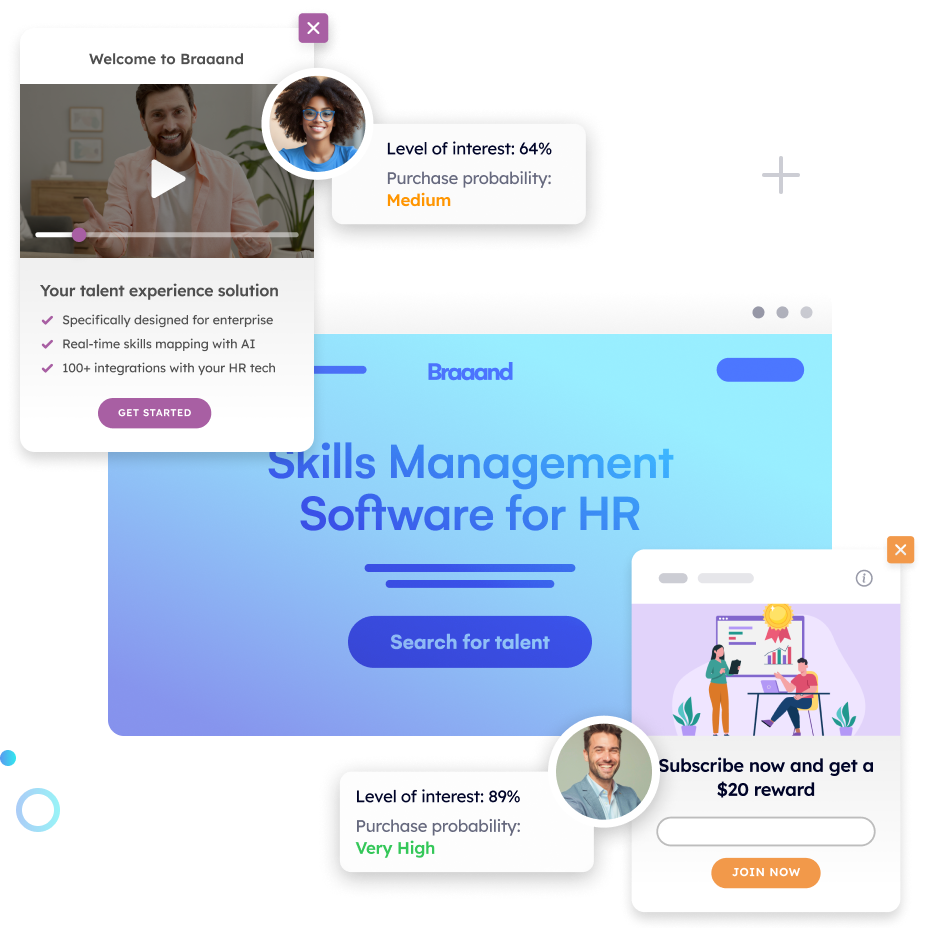
RICK: Pathmonk is the AI for website conversions. With increasing online competition, over 98% of website visitors don’t convert. The ability to successfully show your value proposition and support visitors in their buying journey separates you from the competition online. Pathmonk qualifies and converts leads on your website by figuring out where they are in the buying journey and influencing them in key decision moments with relevant micro experiences like case studies, intro videos, and much more.
Stay relevant to your visitors and increase conversions by 50% by adding Pathmonk to your website in seconds by letting the AI do all the work and increase conversions while you keep doing marketing as usual. Check us out on pathmonk.com. Hey, everybody. Welcome back to Pathmonk Presents. Today we’re joined by Maira.
She’s the co-founder of Disilytics . Maira, I’m excited to speak to you, and welcome to the show.
MAIRA BAKALI: Thank you for having me, and I’m great to be here.
RICK: Amazing. So let’s get started, Maira. Maybe we start with the basics. All right? We talk about Disilytics . What’s the heart of what your company does? I know there’s a lot of, of CRO involved, so our audience will love this, I’m sure.
And tell us, if you were to go and get a coffee, with a friend, how would you explain what you do in the most simple, understanding way possible?
MAIRA BAKALI: Okay, so before explaining Disilytics , I would like to tell you how Disilytics began, because Disilytics began as intersection of data and development, because my husband is a data scientist and I’m a developer.
So we both founded Disilytics when we had some arguments about why this website wasn’t looking good and how is it converting better when it’s not looking good. So Disilytics is an intersection of data and technology alongside e-commerce growth. If I would explain it to a friend that I usually do, because whenever I go somewhere, everybody asks me what I do.
As, as a Pakistani woman entrepreneur, I get this question a lot, that how do I maintain a company and what do I really do, and how I can help other people do that. So let’s say you have an online store. It’s working, but it’s not working better, and that’s where Disilytics comes in. It helps you find that intersection points and the question why.
Why your buyer is not buying, why they are abandoning your site, and how they can convert better. So that’s what Disilytics does.
RICK: That’s amazing. And I, think you nailed it as far as, making it simple. Yeah. ‘Cause, just explaining the why behind the, what happens, right?
And that’s, a big one, ’cause everybody… Maybe not everybody, but people know how to look at data, right? You know how to read data. Now, get a layer behind that. Why? Why is this happening? And the data doesn’t tell the whole story, right? And so that’s where you guys comes in and, that’s, that sounds awesome.
Now, give us an idea of what your, to get into the marketing lingo, if you will, of your ICP. what’s your ideal customer profile? w- what kind of companies do you work with, and what’s the key problem you help them solve?
MAIRA BAKALI: So again, I would say that our ICP are the brands that already have a momentum going on.
We don’t go with the brands that have just launched and say that, “You’re doing everything wrong. Your product is not right.” We go to the brands that already have some momentum. They have a product that is selling to the market. They have customers. They have traffic as well, and the traffic is not converting the way it should, and that’s the problem we solve.
Because, what I realized after working with multiple founders, they look at their website from a founder’s perspective, and a founders knows about their brand inside out. They don’t look at their website from a first-time buyer perspective, and that’s the key problem that I solve. I solve that if a first-time buyer is ending up on this website, how their journey is going on.
Where are they hesitant to buy or make a purchase? So it’s most We have worked with multiple industries as well, like beauty, cosmetics, fashion, apparel, home and goods. And the focus is not on the industry, it’s on the stage a brand is in. So again, that thing, the momentum. If they have a momentum going on, we come in and help them.
RICK: Okay. That… Thanks for the explanation. Now, let’s say, potentially, right? I’m in a company that has- Yeah … some momentum, right? I’m looking for someone to help us understand the why behind the data and also help us with CRO services, right? And I go on Google, right? Yeah. How do I find out about you guys?
In other words, what are the marketing channels, other marketing channels that are your go-to for bringing in more business at the moment?
MAIRA BAKALI: So I would be honest, I started as a freelancer, so my most of my clients came from Upwork. And then we transitioned into a company, and those Upwork clients gave us multiple reference as well.
So people come to us and they say, “Oh, this guy referred me to you. I want you to audit our website.” And these days, our biggest acquisition channel is becoming LinkedIn. People are searching for us. people are searching for CRO and audits, and they reached out to us. So and then the second part is they go to the website and they book, a call.
So yeah, LinkedIn these days.
RICK: That, sounds like, I wanna say 80% maybe of the companies that or people we speak to, right? LinkedIn is a big one for sure as far as outreach and all of that. So checks out. now you tou- you touched on, of course, the website audits, are part of your service offering I’m sure.
when it comes to your website, then how much of a role does it play for bringing in more business? Is there anything about it that you think really works or, doesn’t work even?
MAIRA BAKALI: That’s a great question. And quite frankly, we don’t have much time to focus on our own website. So we just build it, and it serves as a point of validation than as a point of discovery.
So people find us, they talk to us or they reach out to us, then we send them to our website. They build the trust there because we have case studies, we have testimonials there. And one more thing about us, we don’t have sales rep. Me and my husband takes the calls directly with the founders and the brands.
So we don’t have sales rep. They can book directly the calls with us, and we deal with customers directly. So the website is a point of building trust rather than discovering. Whether it should, be discovering as well as my main focus is on the CRO part. So yeah.
RICK: I understand. And, that’s pretty much everybody’s in that situation where, there, I think there’s a saying about, the shoemaker’s son always has some, the broken shoes or something like that. Now I’m butchering it, I’m paraphrasing, but that’s the idea, right? Yeah. so- Yeah, that’s the
MAIRA BAKALI: idea.
RICK: Yeah, I get it. I get it. now from your experience, working with clients, what actually makes a great website?
Or rather, let me rephrase that. What makes a website convert and become great? and are there any tools, tactics, frameworks even that you love to, recommend or you think are great at the moment to help you do that?
MAIRA BAKALI: I’m glad you asked that question because, that’s my motto because there is no blueprint for every website.
Each brand is different, each niche is different, each industry is different. But the point I’d focus on is reducing uncertainty because your product page can have mountains of information, but it does not have one question that is stuck in my mind and I can abandon that process if I’m not getting answer of that question.
Like recently I ended up on a skincare website. Okay? I found that product to be a great product. Its texture was great because I saw the testimonials. It has, toxin-free ingredients, but nowhere on the site it was mentioned that which skin type is suitable for it. So if that’s not the question they’re answering, how can I, get the product and use it myself?
Because I’m uncertain in that regard. I won’t make a purchase based on whether I’m not sure if it… Will it work for me or not? So reducing uncertainty is the biggest part for the business to make a website convert better.
RICK: I like that. It’s a, great way to think about it. I’m sure, there’s, gonna be a…
This is gonna be a springboard for different conversations along, the marketers that listen to this we- to this podcast- Yeah … just
to think about, hey, are we reducing uncertainty at all or are we making it even more complex for the user, right? Yeah. and that’s not what you want at all. let’s switch gears for a second, Maira, as we head into the, the second half of our episode together here. give us a glimpse into your role, right?
As a co-founder you just said, it’s, a, a two-person team, right? You, and your husband. what are the main things you focus on a day-to-day when you sit down to work, and what makes you… What gives you energy, if you will?
MAIRA BAKALI: So I’d say my, my biggest point is curiosity, and that’s why I end up in multiple domains together.
That’s how I ended up from development to the CRO part. The question why? And I do ask that to ChatGPT as well, that if we would go to this thing as a different angle, what it would show us. So my day-to-day is mostly taking client calls. We do have developers on our team, so I do have to convey those context to our developers, help in when they are stuck at something because, of course, I bring that expertise, and discussing strategy with my husband, and again, dealing with a toddler, as I’m also a mom of a two-year-old.
So that’s how my day revolves around. It’s not predictable. It’s very unpredictable and revolves around my two-year-old’s schedule and because she’s the boss of her house. So mostly client calls, proposals, estimations and things like that. And again, when I take some time, I have more time, I end up on LinkedIn.
Okay. Because instead of doom scrolling on Instagram, I have been doom scrolling on LinkedIn these days, so
RICK: yeah. Okay, fair enough. Listen, just with, with the note on, the toddler, I- I’m surprised you’re not wearing a Supergirl or Superwoman shirt at the moment because, that is a lot. now a personal note, my wife is a superhero too, and we’ve got three little kids and, she’s at home with them all day at the moment and, look, that’s crazy.
On top of that, you’re also running a company. props to you- Yes … Maira. That’s, that’s a great job right there. Thank you. Thank
MAIRA BAKALI: you Yeah.
RICK: Thank you. Of course. Of course. so Maira, as we head into the, the, the wrap up, phase of, this episode together, I would love to ask you a few questions in rapid fire style as we like to do it here.
Okay. So really it’s just a few light and engaging questions that we use at the end just to, finish it off. Does that sound good to you? Okay.
MAIRA BAKALI: Yeah.
RICK: All right. If you had a magic wand, Maira, and you could fix one frustrating thing in your marketing life with tech, what would you fix?
MAIRA BAKALI: I think so context switching between, expectations and the results.
explaining people, if you’re expecting this thing, it might not be the result you’re getting, and the realistic expectations and things like that and, Yeah, stuff like that. Okay. I think so. Yeah,
RICK: that, that’s a good one. and of course you need a magic wand for that because, you know- Right
there’s no tool out there- Exactly … to help you do it. what’s a task that you’d love to put on autopilot forever?
MAIRA BAKALI: I would say forever because we do have automations for the technical part, but my daughter’s bedtime routine, I would like to put that to automation because that’s very unpredictable. But as for technology, I would say, we have AI for taking notes, but we don’t…
I don’t have automations to, s- send that note to my developer and then getting the response back to the client as well. So automating that process completely would be great. It would be a godsend. I
RICK: love that. and I agree. that- that’s also something that, we deal with, and, even with team members dedicated to it, th- there’s never…
there’s always need for more help in a way or, or-
MAIRA BAKALI: Yeah …
RICK: improving the, processes, right? Maira, I wanna thank you a lot for being on the show with us today. As we wrap things up right now, we’re at the end of it, I also wanna give you the last word. So if someone forgets everything about the interview today, what is the one thing they should remember about Dissalytics and the work you guys are doing?
MAIRA BAKALI: So the one thing they should remember is if they are not at the stage they want to be in, Dissalytics can come in and get them to that stage.
RICK: Awesome. So- And what a way to close. Maira, again, thank you so much for your insights and, for the conversation today. if we want to send people your way, how can we do it?
Where can they go?
MAIRA BAKALI: They can reach out to me directly on LinkedIn. I’m very active on LinkedIn. Or they can come to our website, dissalytics.com. D-I-S-S-A-L-Y-T-I-C-S.com.
RICK: Amazing. So that’s what we’ll put in the show notes. We’ll put your LinkedIn. We’ll put your website. And, and I’m hoping, there’ll be floods of, people coming your way after this.
But with that said, Maira-
MAIRA BAKALI: Hopefully …
RICK: thank you so much for your insights again. I hope we get to do so- do this again soon.
MAIRA BAKALI: Yeah, maybe. Hopefully. Thank you. Thank you. It was very nice talking to you.
RICK: Of course. All right. Bye, everyone.
MAIRA BAKALI: Bye. Goodbye.