AI is about to break the $10,000 agency retainer
Can founders build startup marketing foundations without a big retainer? David Wilson of Nebula Marketing on AI, WhatsApp and cohesive customer journeys.

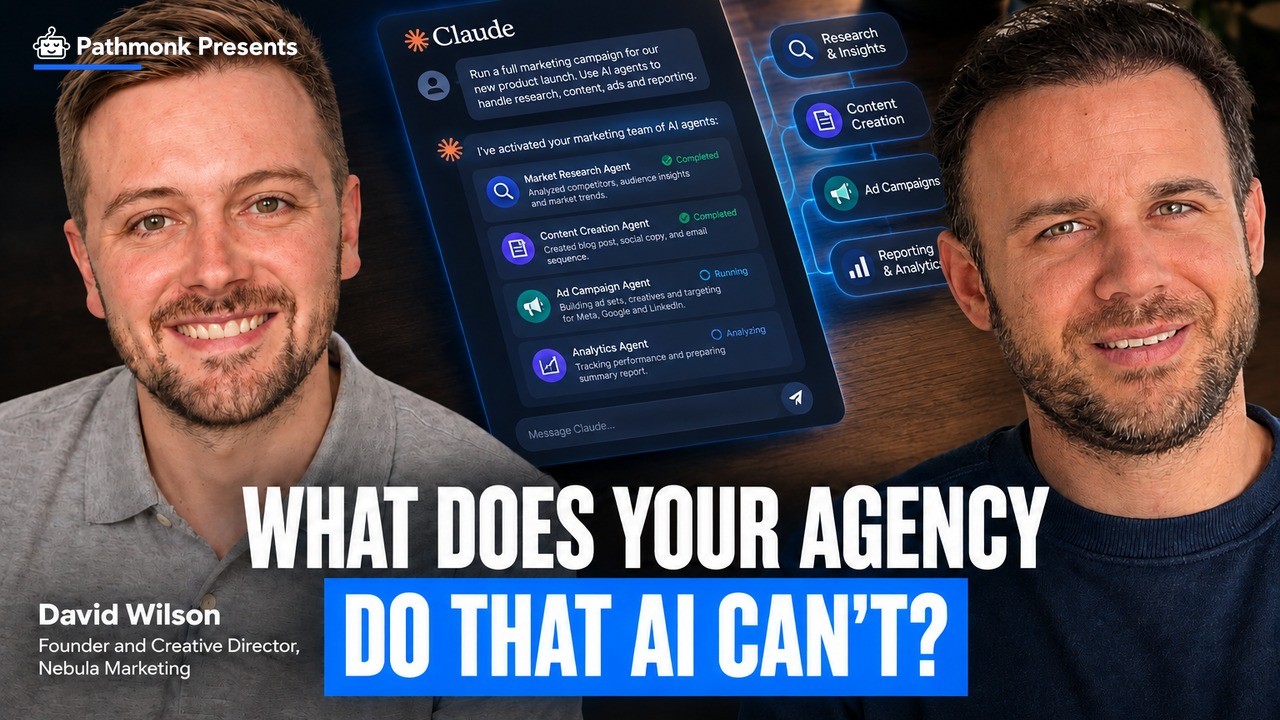
“You're charging me a $10,000 a month retainer, I can hire one or two people to leverage AI platforms to yield the same or similar results. Why do I need an agency?”
at
- Company
- Nebula Marketing, a boutique digital marketing agency
- Market
- South Africa first, with some international clients
- Works with
- Small businesses and startups, from one-person service businesses to B2B SaaS
- Deliverable
- Tailored marketing foundations: brand identity, strategy, channels and customer journeys
- Edge
- AI-powered delivery without traditional agency overheads
Too long, didn’t listen?
David Wilson is founder and creative director of Nebula Marketing, a boutique digital agency serving small businesses and startups in South Africa. He sees founders stuck between agency retainers they cannot afford and DIY marketing without the expertise to make it work. Nebula uses AI to cut agency overheads and build the marketing foundations clients need from the start.
With Adrián García Ramos, David argues AI will put heavy pressure on retainer-based agencies, explains why blogs are returning with GEO and why WhatsApp leads business engagement in South Africa, and shows how a cohesive customer journey builds trust and conversion. He also shares plans for a free AI brand audit.
Build foundations before buying retainers
Small businesses that skip brand identity and strategy often spend 3 to 5 years in the market before they have to backtrack. Set the foundations first and every later campaign has something to build on.
Choose channels that fit your business
Stop reusing the same content across 5 to 10 platforms because the market says you should. E-commerce funnels run through the website, while services businesses in South Africa win on WhatsApp.
Make every touchpoint tell one story
Social media, website, email replies and sales outreach should feel like the same brand. Pass the context from the first engagement to the sales team so the follow-up stays personal and builds trust.
Show value AI subscriptions cannot match
Clients can now create content in-house with a cheap AI subscription. Agencies need to rethink hourly rate cards and team structures and prove what they deliver beyond the platforms.
Some brilliant ideas
“They've got to have a cohesive experience across all of these things, because if the client has a very disjointed experience through the social media to the website, the odds of that conversion taking place are very low.”
Are you just choosing the platforms that have been dictated by the markets over the past couple of years, or are you aligning the right channels and platforms that suit your business?
Clients don't just expect, if you're sending me an email, that it's got my name on it. That is standard practice these days.
Full transcript
Introduction
[0:00:14] ADRIAN GARCIA RAMOS: So, welcome to Pathmonk Presents where we talk with growth and marketing leaders about what's actually working right now. I'm Adrian, your host, and today I'm joined by David Wilson. Founder and Creative Director at Nebula Marketing. Hi, David, how's it going?
[0:00:34] DAVID WILSON: Morning, Adrian. Good thanks on yourself. Thank you for Allowing me the opportunity to join the series.
[0:00:42] ADRIAN GARCIA RAMOS: So, what is, that Nebula marketing does?
[0:00:46] DAVID WILSON: So, Nebula is a boutique digital marketing agency. We specifically focus on the small business and startup environments. At this point, our primary focus is in South Africa. That being said, we have had some engagements and discussions with some international clients. But, yeah, to, I suppose, provide a little bit of context, we aim to bridge the gap that we've noticed in the market with regards to how you know, traditional agencies interact with the small business and startup economies in the country.
Why founders struggle with marketing
[0:01:23] ADRIAN GARCIA RAMOS: Right. So, yeah, that's interesting what you mentioned. You talked about the founders. So, when you have to pitch or introduce yourself to a founder, what are the typical things that you mentioned, or how you… you know, it's not about creating the need, but actually satisfying the problems that they might have, right? So, how would you do it?
[0:01:43] DAVID WILSON: So at this stage, just based on the market insights and kind of intelligence and the engagements we've had is small business and startup founders. They lack quite a lot of direction and guidance in terms of where their marketing journey should begin. And what tends to happen is one of two things. Either the first is they approach a couple of agencies, they get a campaign or a strategy brief put together, and that's accompanied by a retainer. And, you know, the way the traditional kind of agencies function is They've obviously got an expanded team that are assigned to their account. They put together a pitch or a proposal with a retainer attached to that.
And within the small business and the startup economy, a lot of these founders lack the capital or investment, you know, facilities to be able to take on that sort of retainer. And if they do, you know, a lot of startups obviously come up with funding from the get-go. They usually engage with these agencies before they are at a maturity level. to actually make these things viable. So that's the first thing. The second thing is that because of this lack of capital investment, the founders or the startup decide they're going to handle the marketing function themselves. Right. And, you know, credit where credit's due, it's a very proactive approach, but often, you know, they lack the foundational marketing expertise or insights to effectively handle this function, which leads to them having kind of a disjointed marketing approach, or
or not yielding the results they want, and then becoming disillusioned. So, the core offering addresses that, is… We work with these small businesses and startups to build the marketing foundations that are going to drive the future marketing and brand growth for their organizations.
Using AI to lower the barrier to entry
[0:03:51] ADRIAN GARCIA RAMOS: Okay.
[0:03:53] DAVID WILSON: What we do as a differentiator is, because we leverage various AI technologies, is we are able to make that a lot more cost-effective. for these clients. And reduce the barrier to entry. So, you know, because we don't operate on a typical agency structure, we don't have an account manager, a strategist, a designer, a copywriter, a videographer. You know, all of those functions add overheads, which means the retainer and the costing to the client needs to increase to cover those overheads. So, I'll… Our ability to leverage these technologies makes, or allows us to make the price point much lower. And, you know, that I think is a key point to any founder or startup ventures, you know, the funding is limited, they need cost-effective solutions.
And the fact that we are hands-on and dedicated and tailor all of these approaches to their specific businesses. It's not a templated approach. There aren't various different handoffs for confusion to take place. So, yeah, you know, we want to work Very hands-on and tailored with our clients, but also lowering those barriers to entry for them to be able to market and grow their brands effectively.
A diverse small business market in South Africa
[0:05:12] ADRIAN GARCIA RAMOS: Okay, absolutely. So, I guess that you focus on South African smart businesses and startups, right? I'm… I would like to know about, you know, the kind of companies that you are approaching. I don't know if you, you know, the setups, for example, are… B2B SaaS, or maybe they are, you know, into manufacturing, or e-commerce, or any other thing, and then for smart businesses as well, right? Because I guess that's going to define whether or not you focus on, let's say, pet acquisition. or more like an organic approach or it's not like a consultancy in terms of ASA.
[0:05:49] DAVID WILSON: is.
[0:05:49] ADRIAN GARCIA RAMOS: That's an optimization that you can bring related to marketing, right?
[0:05:54] DAVID WILSON: so.
[0:05:55] ADRIAN GARCIA RAMOS: Yeah, what can you tell us about that?
[0:05:57] DAVID WILSON: So the the market in South Africa is very diverse. I think we've got one of the most entrepreneurial kind of markets in the world. Okay. And that leads to a very broad, kind of, I suppose, client or target demographic for us. We've got, you know, one- or two-man operations that focus on a simple service like aircon, installation and servicing. that then can apply to a B2B SaaS, startup that is targeting local businesses. So, it is a very diverse, market, but I think what we've noticed within this space is the… the strategic approaches are fairly sound and strong. What they are struggling with at this point in time is differentiating their offerings in the market, because it is so diverse and, you know, saturated to a certain extent.
They are looking at ways, you know, how do they elevate their brand in the market? And, you know, certain clients will come to us who have been in existence for a couple of years that have kind of progressed through this marketing journey. without those foundations in place, and they now want to take a step back and, you know, build their brand identity and strategy correctly. And then we've got clients who are, you know, nothing has been done, it's a clean slate, and they want to build this correctly from the get-go. That being said, you know, there are certain exceptions where there are you know, strategies and identities in place, but now they're looking at optimizing certain aspects of the marketing function, whether that's the lead development and funneling customer journeys, you know, website optimizations. So, you know, we see a very expanded and varied clientele basis, but I think, you know, the area we want to focus on is making
sure that these small businesses and startups don't exist for 3 to 5 years before then having to backtrack and build their brand and their marketing functions correctly.
AI and the future of agency retainers
[0:08:11] ADRIAN GARCIA RAMOS: Right. So, you mentioned before about being cost-effective. I think that that's super relevant, especially, you know, taking into account the retainer landscape that we all know. So, I wonder if. That is, the trend that you are seeing, or let's say that the future for the agencies. Or rather, what's the, you know, the situation for the agencies that rely on our retainer and that think that they will be forever, right? So I would like to know your thoughts on that. And what other trends you see that could be relevant for the future in the agency space?
[0:08:53] DAVID WILSON: Yeah, it's a very, very good question, and I actually had a discussion with another founder this morning around it, and I think the agency space is going to experience quite drastic change over the next couple of months, and I think it's primarily because of the rise of AI, which we can get to in a session. taken, but I think we need to understand that clients' requirements are changing, and I think, you know, especially economic pressure means every dollar or rand they are spending, needs to actually yield value. Especially in small business and the startup space, and they are looking at more cost-effective alternatives. And, you know, in the past, a client kind of only had two options, being that, you know, handle the marketing themselves, or outsource it to an agency.
And I think with the proliferation of the AI technologies, that gap is starting to close in that, you know, marketing has never been more accessible to people.
[0:09:55] ADRIAN GARCIA RAMOS: Right.
[0:09:56] DAVID WILSON: That obviously comes with pros and cons, but, you know, if the small business owner or startup founder can leverage a ChatGPT or Claude subscription for a couple of dollars a month to create their marketing content. that is going to become a much more, I suppose, aggressive conversation they are having with these agencies to say, you know, you're charging me a $10,000 a month retainer, I can hire one or two people to leverage AI platforms to yield the same or, you know, similar results. Why do I need an agency? And I think agencies are gonna have to start adopting or adapting to this kind of market dynamic, and they are gonna have to start changing their offerings. You know, the typical service rate card build on the production teams per hour.
I think that is going to have to change quite drastically, and even the way these agencies structure their internal teams. Right. You know, that's gonna have to undergo quite a lot of change, because they… they are going to be seeing more clients moving away and trying to handle this, capability through the AI platforms. Whether that is going to be successful or not, you know, is largely dependent on the client and their understanding of AI technology. But I think the trend we are seeing within South Africa, especially in the small business space, is These businesses are now starting to handle their content generation in-house.
Right. Like I say, the level of quality obviously varies from business to business, but I think it's going to start putting a lot more pressure on the agencies and marketing platforms that they have relationships with. To say, you know, we are paying for these extremely expensive retainers. What are you providing at the end of the day that we can't get out of these platforms directly?
Content formats: blogs, GEO and WhatsApp
[0:12:00] ADRIAN GARCIA RAMOS: Yeah, that's super interesting. I was thinking about this, content generated, being done in-house. By the founders or the small companies, as you mentioned before, you know, in company or in conjunction with, with their agencies. Given that, you know, we are going to create content all across with different AI tools, I wonder… If… we are going to have the same content in the same format, in a way that now, like, to what I see, we have… Like, a less podcast, or… not podcast, sorry, it's, less, like, a blog post, or content that is going to be positioned in the websites, and if people are going towards social content.
or other formats that might represent or connect with their audiences, right? I don't know if… when you say about creating content, do you relate to that kind of format, or you stay with a blog post or, you know, newsletters? Do you see any transition in terms of the formats that we are going to use in the future with the formats for content?
[0:13:17] DAVID WILSON: Yeah, I think we've kind of undergone this transition a couple of times in the last decade or so, and I think, you know, with the rise of social media. Every single business owner has seen it as a critical component of their marketing strategy. We have to be on social media. And that has largely dictated their content creation strategy. You know, we have to have these specific formats for these platforms, these ads. And I think that has led to a lot of saturation on these platforms. And, you know, just based on client interactions I've had is… they are happy to pursue those as kind of, you know, those are the standards that we need to adhere to. We have to be prevalent and present on social media and Google Ads and all the rest, but they've kind of become tick box exercises.
And I think these business owners and founders have noticed the saturation and how competitive it's become in that space, and a lot of them are now looking at different ways to leverage content and different platforms and channels. And… I think, you know, blogs… with the rise of the internet, were the thing that every business needed to do. And then they sort of tapered off with the rise of social media, and now I'm seeing a comeback with them because of… I think the tie into the AI, kind of GEO or LLM rankings and optimizations that businesses are wanting to be, you know, implement. So, I think some…
older content types we are going to see start re-emerging, but I think people are also starting to think more creatively about the platforms they use. Especially within South Africa. You know, Facebook, Instagram, the MetaStack, YouTube are all big platforms, but our number one kind of platform for business engagement has become WhatsApp. I think the latest stat I read was, like, 90-95% of the population are active on WhatsApp. And a lot of businesses are now focusing on that in their strategies and their content production to account for, okay, if our customers are active on these platforms. That's where we should be talking to them, and we need to tailor our content and our messaging to match those platforms. So, you know, that's a regular conversation we have, is
are you just choosing the platforms that have kind of been dictated by the markets over the past couple of years, or are you aligning the right channels and platforms that suit your business? If you're an e-commerce platform, you know, majority of your content and your Kind of funnel activity is going to be through your website. If you're a services business, most of that is going to be done through WhatsApp in South Africa. So, I think, yeah, it's more about understanding the channels that are relevant to the business, and then structuring the content according to that, rather than this blanket approach of just following the social media and digital trends.
Building a WhatsApp strategy
[0:16:38] ADRIAN GARCIA RAMOS: Yeah. I I think that that could be an interesting insight for audience. You mentioned WhatsApp. That's definitely, you know, a large app in in Europe as well, especially for for small and medium businesses providing services. I'm wondering what's, the typical strategy that you provide, or you kind of. you know, present to your customers on WhatsApp. I don't know if that is a distribution lease, or if you go, you know, customer by customer, and then share some offers, or some, you know, kind of a, in a way, intrusive message. So, how does it work?
[0:17:15] DAVID WILSON: So, like I said, you know, we don't work off a templatized approach to our customers. We first sit down with them, we understand their business needs, requirements, and what role marketing is going to play in that. And based on that, we will then put forth Kind of recommendations or a proposal in terms of where their marketing efforts and dollars should be going. And that applies also to the channels. You know, every client we engage with has a website, an Instagram, a Facebook, a WhatsApp, a TikTok, and what we find is they are trying to manage 5 to 10 platforms, reusing the same content and messaging across the board.
And they're just not getting the results they want. So, if, for instance, we engage with a client that is services-based. we will, first of all, discover, you know, are they utilizing WhatsApp as a method of communication and engagement? If they are, to what extent? If they are already, then it's a case of optimizing and improving on that, but if they aren't, it's putting forth a strategy and an execution or an implementation plan to build that WhatsApp function of the business. And, you know. Luckily, we do have a lot of technologies and automations available now that can build these journeys and engagements and automated replies and stuff.
But it's more a case of understanding, is it the right fit for the business at that time, and how are they leveraging it currently? So, you know, that's just an example from a WhatsApp basis, but the same would apply to if they are building an e-commerce platform, or if they want to increase their social media accounts, you know, all of those. Kind of factors and components and optimizations of… Packaged together, put forward to the client, and then they can make a decision, based on that information.
Conversion and a cohesive customer journey
[0:19:19] ADRIAN GARCIA RAMOS: Okay, so, you know, so far we've talked about, some organic approaches for generating traffic to a website or a place in which you can convert a user or a visitor, a prospect. And as you may know, most of the digital marketing societies might be focused on let's say, acquisition of traffic, and then the conversion of that traffic, right? So, in terms of conversion of traffic, and the business that you have on your website, you might use, like, personalization strategies, you could use, web optimization strategies, so there are different things. in the arsenal for the founders you work with. I wonder what kind of tools, or what kind of, you know, like, advice you provide to your customers in terms of
increasing or improving the the conversion on the the money sites right? The the websites. If you haven't.
[0:20:21] DAVID WILSON: Sorry, I just lost you at the end there for the last.
[0:20:24] ADRIAN GARCIA RAMOS: Yeah, so I… no problem. I was just saying that in digital marketing, you have, like, the acquisition part and the conversion part, right? So. for the conversion… I mean, for the acquisition, we have been talking about the organic kind of approaches that you can have for your customers. I'm asking now about the conversion part and what kind of tools you have for personalization or web optimization. Not only tools, but also kind of advices or, you know, different value that you might provide in that end. Regarding to the conversion.
[0:20:57] DAVID WILSON: Okay.
[0:20:57] ADRIAN GARCIA RAMOS: website.
[0:20:57] DAVID WILSON: Yeah, from a conversion perspective, I think we… as a consultancy service, you know, we don't build the specific optimization tools or conversion tools, and, you know, obviously that's where a service like Pathmonk would… would… customer, but… First and foremost, it's understanding, you know, what is currently in place with the customer. If there isn't anything in place, then obviously that's a good opportunity for us to build the framework. But what we have found is most client engagements, or the way they've structured these customer funnels and customer journeys and engagement. frameworks. There's no kind of golden thread tying through from
their marketing efforts, to their sales, to their finance, to their data insights, and reporting that, and kind of closing the loop. They kind of build these very disjointed systems whereby the social media will point to a blog post that is Kind of hosted on a dedicated page on the website, with no conversion or development or engagement tool, or prompt. into that, and if a client reaches out via email to request a proposal or a quote, there is no sort of automations or marketing content strategies built into the responses to that. You know, the experience I get over social media engagements and the experience they get through direct outreach are kind of chalk and cheese. They don't mirror the same thing.
And that's where we find a lot of drop-off with clients, is the image they are portraying on their social media and their digital channels, once it comes through to the actual customer engagement. is a completely different experience to the customer, and that throws up quite a lot of red flags and calls, you know, calls kind of trust into the equation, especially within South Africa. We are quite a skeptical bunch of people.
[0:23:11] ADRIAN GARCIA RAMOS: Okay.
[0:23:11] DAVID WILSON: to look into every bit of detail, and how did this brand engage me, and where did this email come from? And, yeah, I think our main kind of point of direction to clients is that they've got to have a cohesive experience across all of these things, because if the client has a very disjointed experience through the social media to the website, the odds of that conversion taking place are very low. And it's kind of optimizing each little interaction or engagement through this whole process that we can actually improve that and ensure that, you know, the conversions do happen, but I think, you know, part and parcel of that is
once those conversions take place, it's the what happens after that that is equally important, and I think this is where a lot of businesses and brands fall short, is, you know, marketing does the kind of heavy lifting, they get that attention, and.
[0:24:12] ADRIAN GARCIA RAMOS: you.
[0:24:13] DAVID WILSON: Drive the client acquisition through the website once that lead comes into the funnel. It then takes organizations and sales teams you know, a bit of time to reach out. And once they do reach out, that context from the initial engagement isn't shared with that team and it becomes a very disjointed exercise. So, you know, as equally important as the conversion stage is, is, you know, what It takes place after that, and does that mirror the same experience the client has had throughout this whole journey?
[0:24:50] ADRIAN GARCIA RAMOS: I couldn't agree more. Actually, you have different approaches to solve that, let's say, cohesive, problem, right? One is to, let's say, create a landing page for every single action that you go after, right? Say, an article, or a mention, or anything that is related to a particular audience that you're trying to target. At Pathmonk, it's very simple, but we track the UTMs, and no matter what is the landing page where you're going to go after, the personalization is going to display to a particular UTM that you have. And that could work not only, you know, upstream from, let's say, an ad that you're running, or maybe a mention that you have in a comment on LinkedIn, but also downstream. So, if you have a guy who's, in a way, providing the email, and you are kind of following up with an email campaign or something like that.
We can also define a link that is going to personalize experience one evening.
[0:25:48] DAVID WILSON: is.
[0:25:49] ADRIAN GARCIA RAMOS: coming back to the website, right? So, at the end, it's, you have the story arc. And you need to close it and make it well so that the people can rely on you and can trust you and your process.
[0:26:00] DAVID WILSON: Yeah, exactly. I think, you know, trust building is massive, I think just in the global economy. And I think that's exactly what we want businesses and clients to do. And, you know, this whole customer journey is a trust-building exercise, and I think Personalization has a massive role to play in that, and I think personalization has evolved quite drastically over the last couple of years. You know, clients don't just expect, okay, if you're sending me an email, that it's got my name on it. You know, that is standard practice these days. They want personalization, like you said. If that email is coming from a different member of the team.
they've got context into that specific client to say, you reached out to us because of XYZ, this is how we can help you. They don't want the standard automated responses or the, you know, generic templates that sales teams have been provided for follow-up. They want that personalization because it shows that companies have actually taken the time to read, first of all, what the client is about and what they actually need assistance with. And then, you know, tailor your messaging and your proposal or your engagement. to that client. It's not just about You know, putting their name into the communications and hoping that's, you know, going to speak to them.
[0:27:26] ADRIAN GARCIA RAMOS: Yeah, we… I mean, we might say that, you know, caring about the prospects and the business that you have is kind of a… A minimum. Right? Or it's becoming a minimum. Because with technology, we are… It's hard.
AI workflows and a free brand audit
[0:27:42] ADRIAN GARCIA RAMOS: at our fingerprints, so we can really get that information, so it's a matter of dedicating some time to understand who we are talking to, and customize experiences so that they rely and be trust for us. Okay, so… I wanted to follow up with a question regarding AI. You mentioned before that you, with your team, kind of developing new tools and kind of new workflows and things that you implement with your customers. I'm curious about that, so if you have a kind of a success case or something that it's really… you know, make a difference for you and your team, and you can share it, or the portion of it that you can share it, right? That could be awesome, just to have an idea on what you're working and how other people could get some advantage out of it.
[0:28:36] DAVID WILSON: Yeah, so, like I say, AI is definitely becoming part and parcel of every conversation we have with clients. Right. And, you know, part of our ethos, or I suppose the business tenets, is we also don't want to hold customers hostage to the agency. We don't want them to be held to long retainers, and at the end of the retainer, they come out with nothing at the end. We also want to implement, as best as we can, a lot of marketing education, and part and parcel of that now is, I suppose, AI fluency or literacy, about how once they've reached a certain maturity stage, or a stage of critical mass, they can utilize AI platforms
to, you know, the best advantage they can. So, I think, you know, not referencing any specific customer case studies, I think just the work we've been doing with Nebula. is a lot of optimization in terms of how we deal with clients, and those interactions, and specifically around, I suppose, customer experience and insights that we offer back to them. And the leveraging of these AI technologies means we can do it in a much faster turnaround time. Which is setting us apart from the competition, because we can obtain the data, we can interpret the data, we can present the findings in reports in a much shorter timeframe than was previously possible, which allows customers to make more
informed decisions quicker. It leads to a much shorter, I suppose, client journey. It's not months and months of discovery and questionnaires and workshops. And they actually get something tangible back at the end of the day. So, something we want to implement going forward is an automated brand audit that can run for clients. It's free of charge, it's for anybody interested to understand, you know, what is their brand and marketing footprint look like at the moment, their identity. And leveraging AI to conduct that research, package it. Obviously, you know, we ensure there is human oversight, in every stage, so that, you know, it's still controlled and validated at various stages.
But… Kind of during this whole exercise is also educating the customer about what platforms are available to them, how we structure this, you know, although we are a marketing agency. a lot of clients also have questions around how do they optimize operations within their business. You know, a lot of them, this is their first business venture. What do they need to do? How do they handle customer engagement? Okay, if they run a marketing campaign, can we advise them on You know, building handoffs, or… process flows and workflows so that their team can then investigate the leads and tie the reporting back. And, you know, that leads to, I suppose, more of the consultancy side, where we can point them
to specific technologies or platforms that they can utilize in this space. And, you know, tying back to your offering is. we can offer, you know, some level of website development, optimization, etc, but we are not specialized in an area like Pathmonk is. So, if we have a… customer who is looking to optimize in that space, or they've got a specific use case that Pathmonk would address. That is within our, kind of, consultancy perspective to suggest something like that.
Educating clients and planning the handoff
[0:32:34] ADRIAN GARCIA RAMOS: Absolutely. Actually, by the things that you're saying, I'm wondering if you are also providing training services on AI, because I guess that that's going to be, you know, vanilla and chocolate, in a way, like…
[0:32:47] DAVID WILSON: Okay. It's something we've considered, it might be part of the service offering going forward, but look, I'm not gonna profess to be, an AI genius, you know, I'm also… Still learning as I go along, you know, it… it's constantly changing, there are millions of different platforms and frameworks and stuff. So, I think, you know, possibly when we get to a stage where we feel we've got sufficient knowledge. To offer that as a value add, potentially. But I think, you know, like I said, what we want to do through the business at this stage is.
[0:33:24] ADRIAN GARCIA RAMOS: have.
[0:33:25] DAVID WILSON: offer it to the clients through our constant engagements, not as a billable service, but, you know, make sure that at the end of their journey with Nebula. they come out with, you know, some education around marketing and, you know, AI technologies as part of that.
[0:33:46] ADRIAN GARCIA RAMOS: No. I'm just thinking about your business, not as a retainer base, as we talked before, but rather as a modular base. So that you have a module that you implement for your customers, and, you know, at some point in time, the customer can decide. to run it on his own, right? And you provide a handoff, like a training process, so he's able to do that. He's proficient on new skills and new things that he's going to manage. And you know what? At the end of the day, you're going to end up as best friends, because, I mean, chances are that once he's in the first step, you are already in the tenth step, right? And you're going to show him, okay, this is module 1, but we have 9 more modules.
Would you like to come over, right? And, you know…
[0:34:37] DAVID WILSON: Yeah, exactly. That is the vision. But I think, you know, it's also, we aren't here to upset the apple cart. You know, we aren't playing in the same space as the bigger Agencies, and that's part of our, kind of, promise to our customers, is once they reach a point of self-sufficiency, or if they need, you know, agency support that is outside of our, kind of. Scope. we will be honest with them and say, okay, you know, we've done what we can to build your foundations and lay the groundwork. You've now reached a point of maturity where either they can decide, okay, we're going to bring in in-house resources, and then, like you say, we can provide the training and handover support to facilitate that.
Or they move on to a bigger agency that, you know, carries on this leg of the journey. So, we don't want to kind of cannibalize any of the agency space. We're there to fill a gap in the market. to hopefully improve this kind of marketing development within the country.
[0:35:47] ADRIAN GARCIA RAMOS: Yeah, absolutely. I was just thinking about the future and how this could proliferate, you know, with, Yeah, upcoming… Kind of, transitions. Okay, so, David, thank you so much for coming on. It's been a pleasure having you and, you know, sharing insights. I wanted to pass you the word in case, you know, anyone in the audience is going to be looking forward to reach you out. Or know more about Nebula Marketing, What would be the the way?
[0:36:21] DAVID WILSON: So, the easiest would be any of our social media profiles, Facebook, Instagram, LinkedIn, alternatively, the website. Yeah, you know, it's the easiest, most direct way. Even if you just want to have a casual chat, you're more than welcome to reach out to me personally on LinkedIn. I'm always active on there and looking to have conversations and… you know, just bounce some ideas around. But, yeah, thank you so much for the opportunity. It's been great chatting with you.
[0:36:57] ADRIAN GARCIA RAMOS: Okay, thank you, David. Let's keep in touch.
Got a growth story worth sharing? Tell it on the show.
We talk with founders and marketing leaders about what actually moves their pipeline. If you’ve built something other marketers can learn from, we’d like to hear it.
- 01Apply
Tell us who you are and the story you’d bring to the show.
- 02We get in touch
We review every application and reach out if it’s a fit.
- 03Record your episode
A remote conversation, published as video, audio and a full transcript.