How companies improve traffic from AI Search +28%* in three months with Pathmonk running their GEO
The MCP endpoint that lets assistants act, prompt intelligence, competitor answer tracking, answer-first content, the GEO check, publishing and AI search analytics: the work of getting a brand named inside ChatGPT, Perplexity, Gemini and Copilot, done continuously by Pathmonk from each company's own first-party data.
*Average lift in sessions arriving from AI assistants across Pathmonk GEO customers, measured in their own Pathmonk analytics over the first three months. Citation figures are measured against a fixed set of tracked buyer prompts, re-run against the assistants on a schedule.



The problem: the answer replaced the results page
A buyer used to search, scan ten links and choose one. Now they describe their situation to an assistant and get a single answer naming two or three companies. If the brand is one of them it is in the consideration set before a website is ever opened. If it is not, there is no second page to be on.
- The click is optional now. AI Overviews and assistant answers resolve the question in place, so a page can be correct, ranking and still never visited
- There is no position to track. A brand is named or it is not, and nothing in Search Console tells anyone which of those just happened
- Assistants cite few sources. An answer leans on a handful of pages, so the difference between third and fourth is the difference between existing and not
- The answer is rebuilt every time. A citation held last month can vanish this month with no update, no notice and no ranking drop to explain it
- Buyers ask in private. The research that used to leave a trail in analytics now happens inside a chat window nobody can see
- Marketing pages were not written for it. Models quote passages that answer a question directly, and most brand copy answers nothing until paragraph four
None of this is a reason to stop publishing. It changes what publishing is for: being the source a model reaches for when it composes the answer. That means knowing the exact questions buyers ask, writing pages that answer them in the first two lines, making the site machine-readable, and checking every month whether the citation is still there. The companies in this story had a real product and no presence in the answers their buyers were reading.
How Pathmonk does it: one engine, the whole GEO workflow
Pathmonk reads the company's first-party visitor data, Search Console and analytics, learns the brand through Company DNA, and tracks what the assistants say about the category today. From that it builds the prompt set, writes the answers, fixes the machine-readable layer and publishes. Every step below runs continuously, and every step can stop for a human sign-off or run straight through, depending on how the account is set.
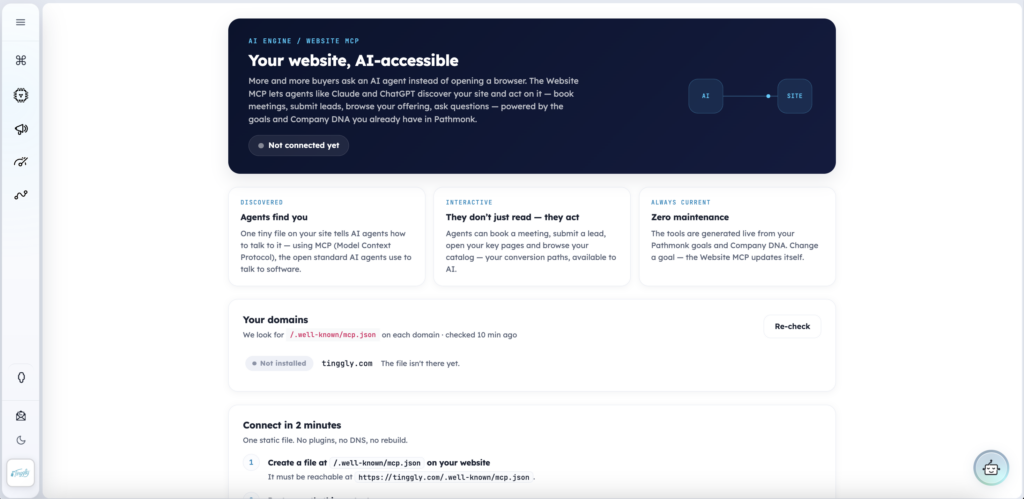
Website MCP: the assistant can act, not just mention
The conversation is where the buyer already is, and most of them never reach a browser. Website MCP exposes the brand and its conversion actions to AI tools directly, so an assistant can book the meeting, submit the lead, browse the offering and answer questions inside the chat. Being cited is worth far more when the citation can be acted on.
- One static file at /.well-known/mcp.json, no plugins, no DNS, no rebuild
- The actions are generated from the goals and Company DNA already in Pathmonk
- Conversion happens in the conversation instead of after it
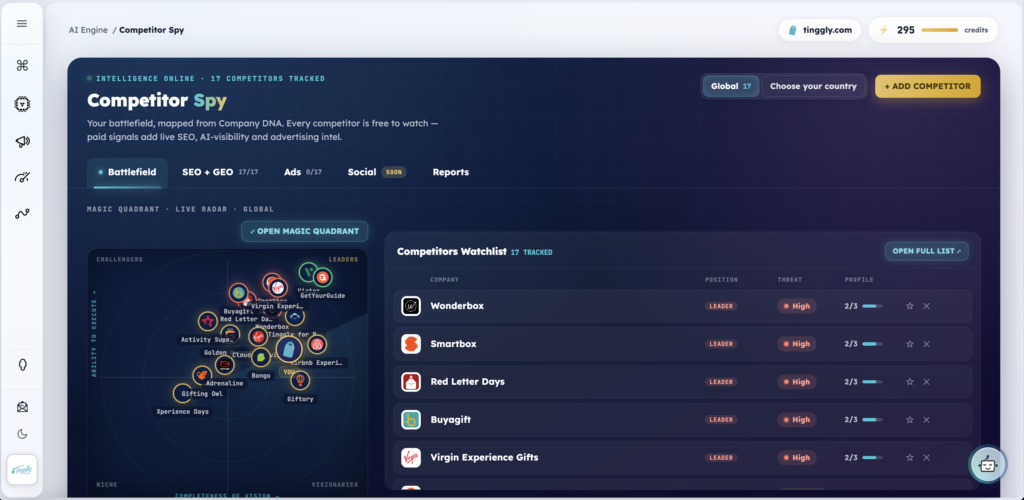
Competitor Spy: the prompts buyers ask, and who gets named
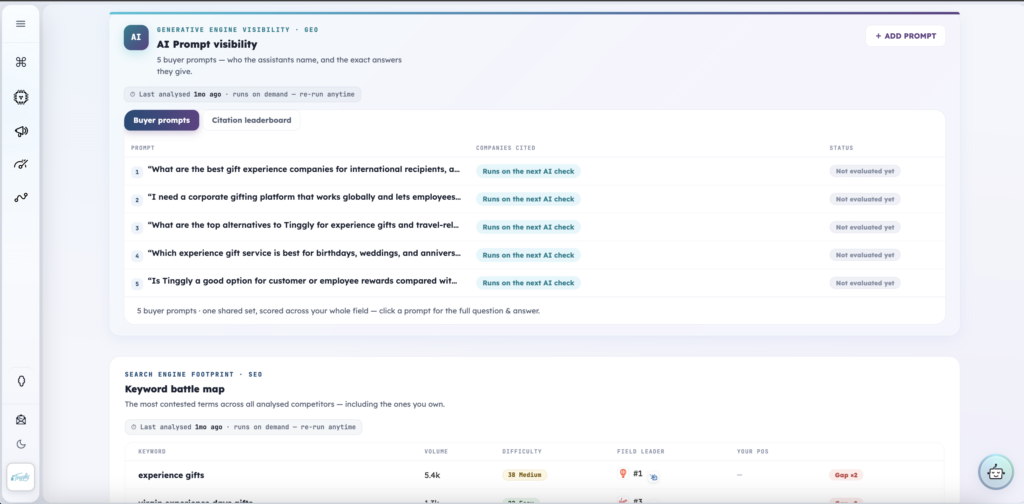
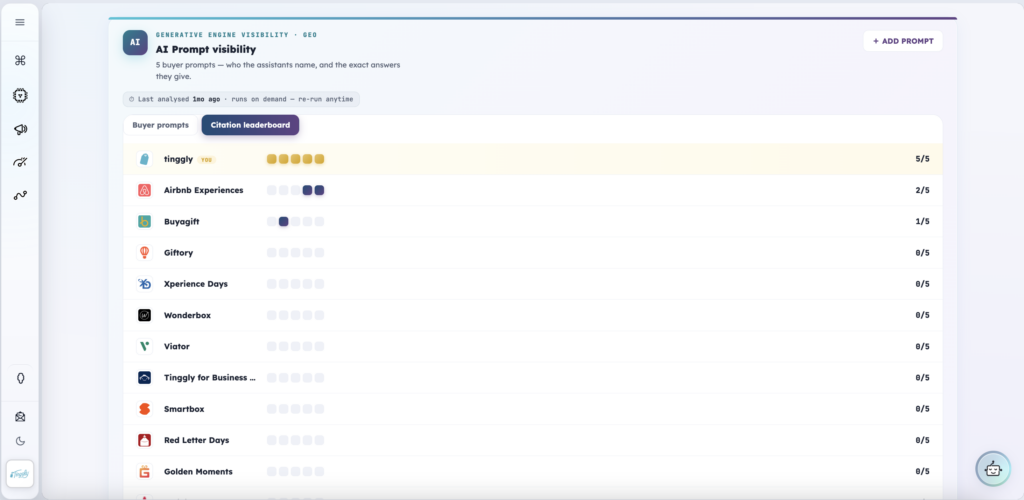
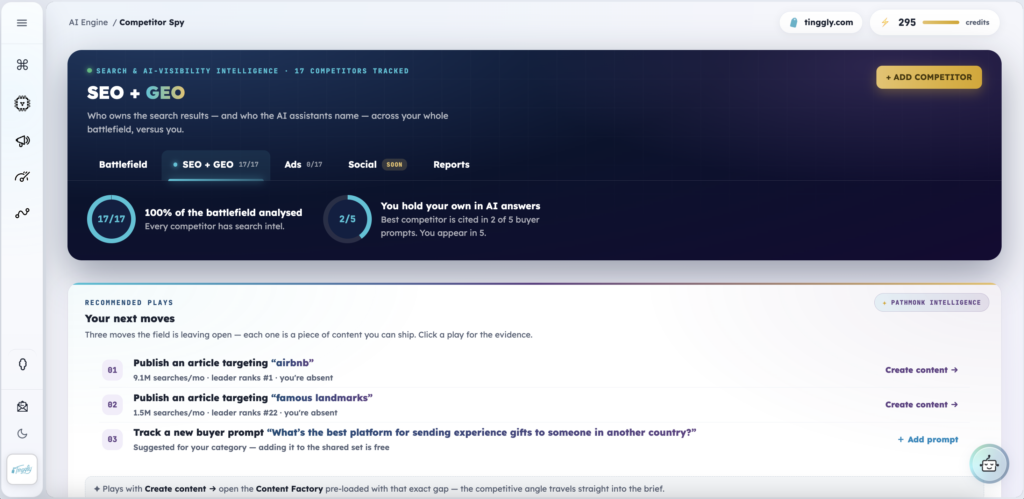
Nobody types keywords into an assistant, they describe a situation. Competitor Spy builds the buyer prompt set for the category, runs it against the assistants on a schedule, and records the answer that came back: who was named, in what order, and on what basis. The same scan runs for every tracked rival, so absence is a number rather than a suspicion.
- The buyer prompts for the category, re-run on a schedule
- The exact answer each assistant gives, not just a yes or no
- A citation leaderboard across the whole tracked competitor set
- New prompts proposed for the shared set, free to add
Content Factory: answers written the way models quote them, then checked
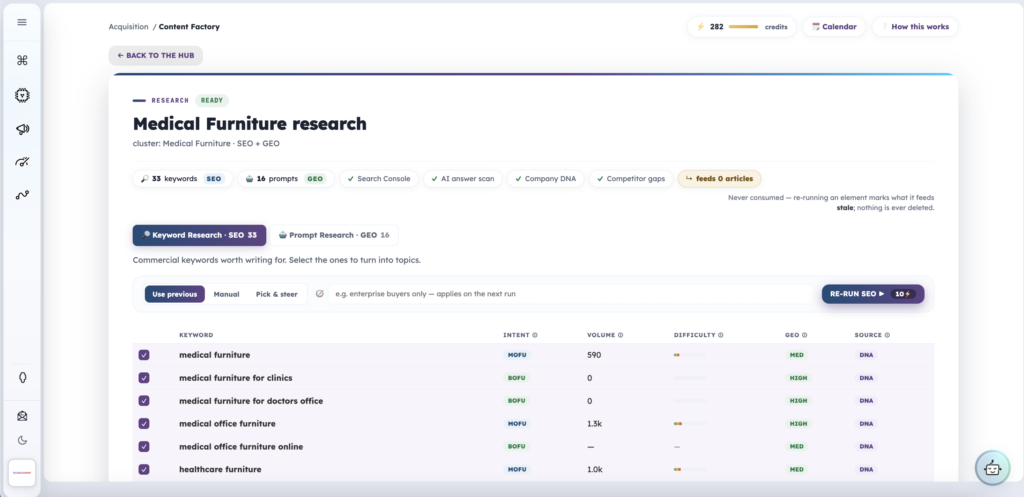
Assistants quote a passage, not a page. The engine writes to that: a question-shaped heading, the answer stated in the first two lines underneath, then the evidence. Before anything publishes, the GEO check scores the draft for AI-answer readiness, marks each prompt the piece targets as answered or only partly answered, and lists what would make a model cite it.
- Question-shaped headings with the answer stated first
- An AI-answer readiness score on every draft, beside the SEO check
- Each targeted prompt marked answered or partial, with the reason
- Keyword research and prompt research feeding one brief
Editorial calendar: everything scheduled on one board
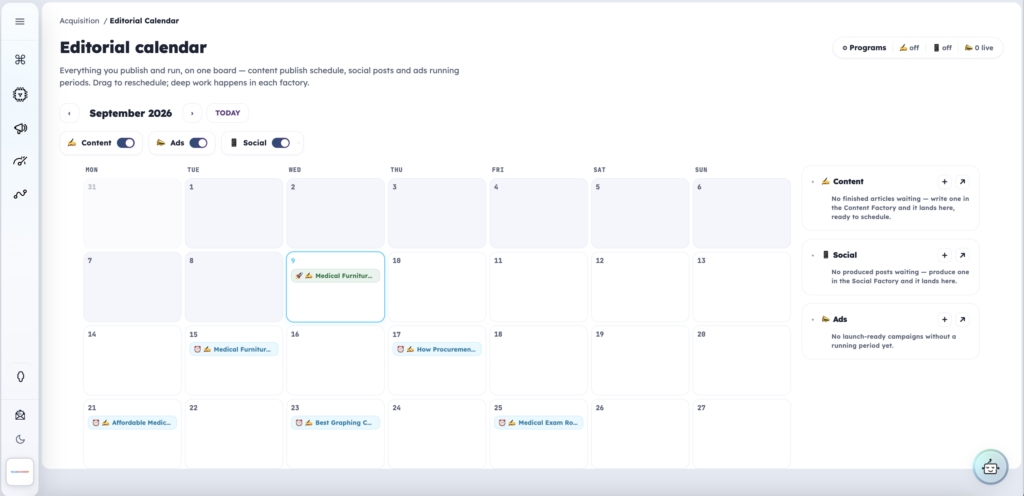
Finished pieces do not pile up in a queue with no dates on them. Each lands on a calendar with its publish date, next to the social posts and the ad periods, and can be dragged to a different day.
- A publish date for every finished article
- Content, social and ads on one board
- Drag to reschedule without reopening the article
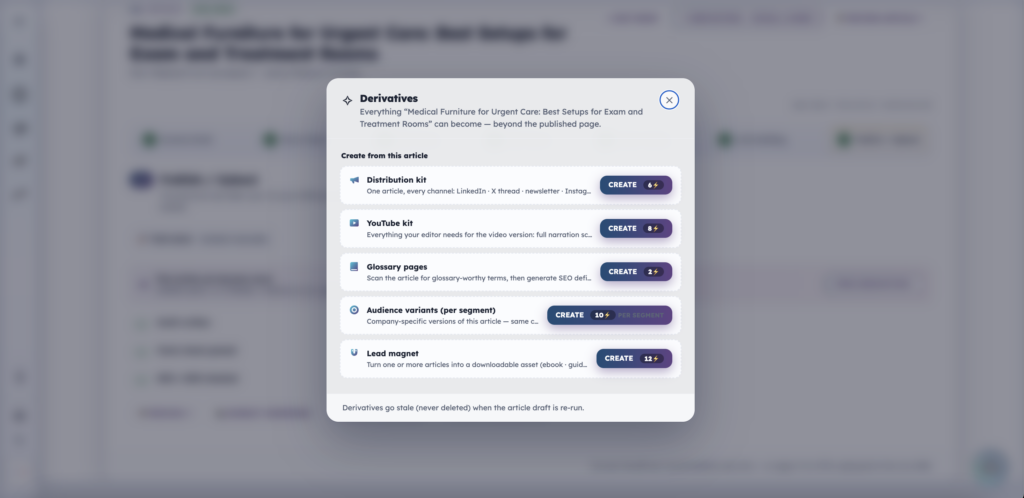
Derivatives: one answer, every surface it can occupy
Models weigh what they see repeatedly and in more than one place. From a published piece the engine produces the distribution around it, so a single well-sourced answer shows up across the channels an assistant crawls rather than on one page.
- A distribution kit: LinkedIn, X thread, newsletter, Instagram
- Glossary pages that answer one definitional question each
- Per-segment variants and lead magnets from the same source
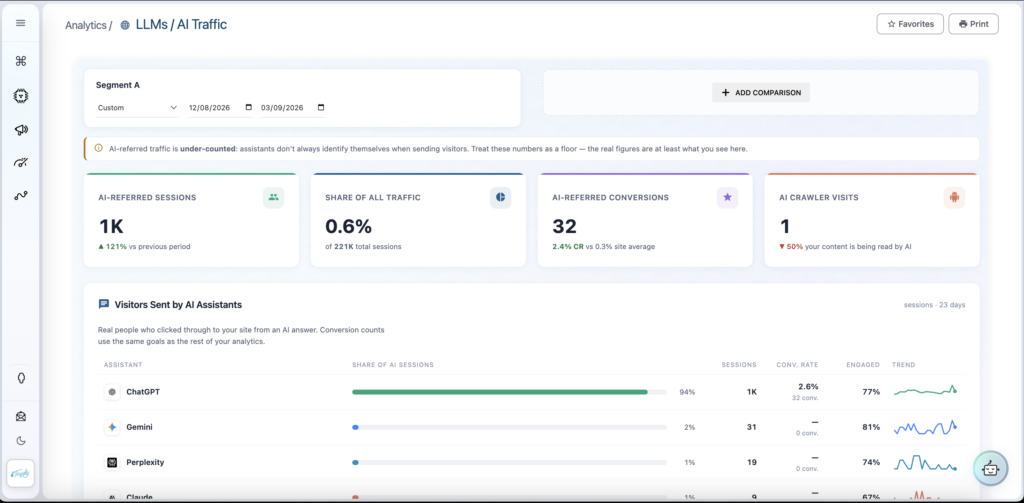
AI Search analytics: what the assistants actually sent you
Citations are the leading indicator; this is the report that shows what they were worth. Sessions arriving from each assistant, the conversions they produced, and the conversion rate next to the rest of the site, alongside how often AI crawlers came to read the content in the first place.
- Sessions and conversions attributed to each assistant
- AI conversion rate shown against the whole-site average
- AI crawler visits, so you can see what is being read
- The report states that AI referral is under-counted, so the figures are a floor
How much of it runs on its own is a setting
Why a model cites this and not the rest
Everyone can now generate an article about a topic in seconds, which is exactly why generated articles are not getting cited. Assistants are selecting for the opposite of what mass generation produces: specific claims, real numbers, a named point of view, and content that could only have come from one company.
Every answer is written against Company DNA
Before a single word is written, Pathmonk builds Company DNA: the brand, the audience, the offers, the positioning and the tone of voice, learned from the company's own website and kept current as that site changes. Every brief, every draft and every derivative is generated against that profile rather than against a generic idea of the industry.
It is not only brand knowledge. The same engine holds the first-party behavioral data from the site, the Search Console history for that exact domain, and the prompts where rivals are already being named. The result is content with something in it that a model cannot get from any other source, which is the only durable reason to be quoted.
That is the difference between content generated about a category and content generated from a company. Two Pathmonk customers competing for the same prompt do not get the same answer page, because they do not have the same DNA, the same visitors, or the same absence to close.
Across industries: the same engine, a different prompt set
Because the engine works from each site's own data, its competitors and its Company DNA, the same features produce a different prompt set per business. What changes is the question the buyer asks the assistant, and who is currently being named in the reply.
The results: citations, share of answer and what changed
Citations compound the same way rankings do, so the honest way to read them is over time and against a fixed prompt set. One pattern shows up early and repeats: AI-referred sessions are a small share of total traffic, and they convert several times better than the site average, which is why the number worth watching is not volume. Here is what the early customers have measured so far.
All figures come from the customers' own Pathmonk accounts, measured against a fixed set of tracked buyer prompts re-run on the same schedule across the assistants.
What the first months typically look like
Getting started: what happens in the first days
Pathmonk starts from what the website already knows about its visitors, and from what the assistants already say about the category. There is no migration and no content audit to run first.
- Day 1Install and connect
One SDK snippet through GTM, then connect Search Console, GA4 and the CMS through Data Connectors. Cookieless, no developer needed.
- Days 2 to 5Company DNA and the prompt set
The engine learns the brand, audience, offers and tone, then builds the buyer prompt set for the category and runs the first scan across the assistants.
- Week 1First answers, publish-ready
The prompts the brand is absent from become briefs, the first answer-first drafts land in the queue and run the GEO check. The team approves, the engine ships.
The Performance Suite add-on puts Pathmonk specialists on the account every month, working alongside the in-house team.
Find out what AI says about you
Run a free audit of your domain to see which buyer prompts name you, which name your competitors instead, and what it would take to be in the answer. No install and no dev work to get the audit.
More customer stories
How Alpine Dryers turned high-ticket browsers into consultation requests.
Read the story Education+87%How Ausbildung-Weiterbildung.ch lifted qualified leads in just one week.
Read the story Healthcare+82%How Doctoralia grew qualified B2B leads across three markets in two weeks.
Read the story