Skip GEO and your website becomes invisible online
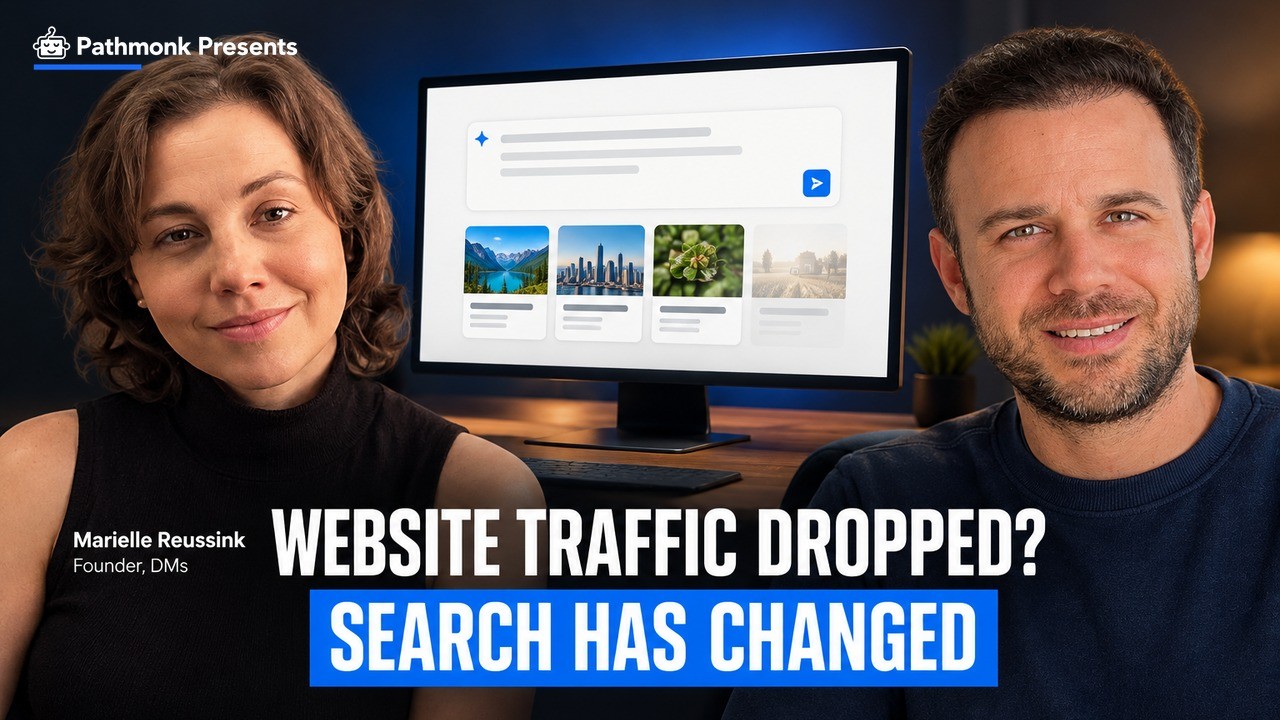
Traffic dropping? SEO and GEO now decide if your website gets found. Marielle Reussink of The Emms explains why search changed and how to use AI.
“I actually call AI my most inconsistent employee. It's awesome, but then sometimes you get to a point where you're like, okay, I guess this is how far we got with this today.”
at
- Company
- DMs, an award-winning boutique web development company
- Speciality
- Website development, brand tweaks, SEO and GEO
- Works with
- Entrepreneurs, SMEs and other agencies
- Deliverable
- Website builds, rescues, rebrands, maintenance and marketing strategy
- Based in
- Singapore and Toronto, serving clients worldwide
Too long, didn’t listen?
Marielle Reussink founded DMs 10 years ago after a corporate career in branding with companies like Unilever, GE and ExxonMobil. Today it is an award-winning boutique web development company. From Singapore and Toronto, it serves entrepreneurs, SMEs and other agencies, and handles everything from new builds and rescuing broken sites to brand tweaks and maintenance.
Her warning is that many businesses are losing traffic because AI search has changed how people find websites. Doing GEO well is now essential if you don't want to become invisible online, but it still has to sit inside a holistic, multi-channel marketing approach. She also explains how ads that don't match the website hurt conversion, and why she calls AI her most inconsistent employee.
Spend real time on the brief
Marielle sees briefing as the one thing broken in most projects. Spend time up front on the objectives, the company and where it wants to go before anything gets built.
A launch is not a strategy
A new website doesn't bring people in by itself. Pair every launch with a go-to-market strategy that takes the site to your audience.
Add GEO to your SEO
If traffic is falling even though you keep blogging and posting on social, AI search is probably the reason. Do both SEO and GEO, and keep email, social and networking in the mix.
Keep messaging and website aligned
When a LinkedIn post or ad promises something the website doesn't show, visitors lose trust and conversion suffers. Update the site whenever your pitch changes.
Some brilliant ideas
“The one thing that's broken in most projects is the briefing part. So we really spend a good amount of time upfront. And it's time well spent. It is not a waste of time.”
Companies launch a website and then they think, oh, we're done. We did the thing. Now everybody can find us. We're good. But of course, that's not the case.
I think the way we should be embracing this technology is by actually building more connection, and talking to each other about what we are doing with this technology, learning from each other, and then finding meaningful ways to do it, to augment what we're doing as professionals, not to replace us.
Full transcript
Introduction
[0:00:14] ADRIAN GARCIA RAMOS: So, welcome to Pathmonk Presents where we talk with growth and marketing leaders about what's actually working right now. I'm Adrian, your host, and today I'm joined by Marielle Reussink. Founder of DMs. Hi, Marielle! Great to have you on. How are you doing?
[0:00:35] MARIELLE REUSSINK: I'm so excited to be here today!
[0:00:38] ADRIAN GARCIA RAMOS: Fantastic! So, could you be so kind to tell me about yourself, and what is that your company does?
From corporate branding to founding DMs
[0:00:46] MARIELLE REUSSINK: Okay, where to start? So. You've clearly already shared my name. So my company is DMs. I founded the company 10 years ago. I used to live in Singapore. I'm originally from South Africa. And I also lived in the UK, and now I live in Toronto. So I've been a bunch of places. And, yeah, so I founded the company, 10 years ago after, having a career in corporate, where I worked in branding and worked on the very large, companies of this world, like Unilever. GE, ExxonMobil, etc. And after having that really in-depth experience of helping companies, those kind of companies go digital at the time, right? Like embracing social media, landing pages on websites, etc.
And building my own team successfully and really helping the company I was working for scale and grow in that space. I felt ready to launch my own business, which was always my, ambition.
[0:01:51] ADRIAN GARCIA RAMOS: some.
[0:01:51] MARIELLE REUSSINK: My father was an entrepreneur, a serial entrepreneur, actually. He has quite he had quite a few businesses. So I guess he was my inspiration. And, I just felt ready, like, there was nothing else I wanted to do, I just wanted to start my own business. But with my business, I really wanted to cater to a completely different audience. I wanted to cater to business owners, and, SMEs. Because I felt that is an underserved segment. Right? Like, they can work with freelancers. They can work with agencies. They can work with all sorts of people, but then at some point, you you know, you're working with 10 different people, and this also happens in corporate, and it's very hard to coordinate that dance. Right?
[0:02:31] ADRIAN GARCIA RAMOS: So.
[0:02:32] MARIELLE REUSSINK: So I wanted to bring everything under one hat. And over the years, the company's evolved, and today, we are an award winning boutique web development company. We offer a very comprehensive website development service. What I mean by that is we solve really complicated problems for clients. Anything from, I have, like, a really complicated brand story, and I don't know how to bring it to life on my website, or I worked with a developer, and they've somehow vanished, and now I don't know what to do with my website, or I had my website built, and actually it's broken, it's never really worked. Or like you know, I tried to do something myself and I can't really, you know, bring it to life now. Or you just want to do a rebrand, or you just want to build something from scratch, or you want to implement SEO and GEO. I think a lot of companies are looking at that right now. Or even maintenance, right, like we really tackle the full breadth of website development.
[0:03:34] ADRIAN GARCIA RAMOS: is.
[0:03:35] MARIELLE REUSSINK: We have a very in-depth background in branding and marketing. We don't just do this from a developer's lens, but actually also from a marketing and branding lens, right? So we also help companies, you know, tune up their branding to make sure it's relevant and contemporary and beautiful, and then also think about their website holistically in terms of how it is actually going to perform in relation to their business. business goals, as well as their marketing objectives in total. So it is a very comprehensive service that we offer, and I absolutely love it, because I get to work with amazing people that are founding amazing businesses, and they inspire me.
And, yeah, I've been doing it for many years and, you know, excited to do it now from two locations. So Singapore and, Toronto. And we service, all of the world, essentially.
Who DMs works with
[0:04:31] ADRIAN GARCIA RAMOS: Actually, that's what… that's the follow-up question, right? So, you mentioned that you had a kind of a background with corporate, but I don't know if, after 10 years running a business, that's much left within the customers that you're serving these days. So, who do you serve in terms of, like, you know, companies, not only just for you, but also for audience that might be interested in your services, to, you know, understand and realize if that could be a good fit for you?
[0:05:01] MARIELLE REUSSINK: Yeah, so we work with entrepreneurs as well as SMEs. That's that's really the majority of our clients, but we also work with other agencies actually. So sometimes we collaborate and and support them with their capacity, and and we have a few companies that we collaborate with in that way.
[0:05:23] ADRIAN GARCIA RAMOS: Yeah, I wanted to ask you, in terms of these cross-collaborations, I assume that that could be related to, let's say, your expertise on web design and development, right? Because those agencies, especially digital marketing agencies, are going to be more focused on the acquisition part, right? Whereas you are more focused on the conversion part, and what's happening… how's the magic, happening for that, let's say, budget and those resources spent on traffic to be converted on, right? So, maybe you can explain a bit of that.
[0:06:02] MARIELLE REUSSINK: Sorry, I didn't understand the question.
Partnering with agencies and why the brief matters
[0:06:04] ADRIAN GARCIA RAMOS: So, the question is how you collaborate with all agencies that might be related to the acquisition part of a business.
[0:06:12] MARIELLE REUSSINK: Yeah, I think the foundation to any good partnership is really, or any collaboration, even with a client, right, is to really understand what they want, right? And that's not so obvious, but actually, I think that's probably the one thing that's broken in most project is the briefing part, right? So, we really spend a good amount of time upfront. And it's time well spent. It is not a waste of time. It's time well spent to really understand the people that we're working with, the companies they represent, what are the objectives, what do we want to get out of this? Where do we want to go in future? And then, you know, translate that into a meaningful.
marketing activity, which in this case is, for example, a website, or a feature on a website, or a brand tweak, or whatever it might be, right? I think that's really the foundation, and really also, I think, then acting as a partner. Right? Which I think, especially in those, company cross-collaborations, is essential. Right? They're looking for somebody to, to essentially join the team, and then also act as a, as you are part of the team. So that's something we do. So we work with a lot of our clients for years. And, you know, it's a relationship that where, you know, people come in and out over years.
And it's kind of fluid that way, right? We just see each other as partners, and we treat each other with, you know, respect, and work with each other in that way.
Beyond the website: brand tweaks and go-to-market
[0:07:54] ADRIAN GARCIA RAMOS: Yeah, because when you say that you are focused on web design development, do you carry out like more services on top of that, or are you focused exclusively on just a website?
[0:08:09] MARIELLE REUSSINK: We do mainly website development today, but it comes up often that when we start working with a client that they do need a brand tweak. So we have those capabilities to sharpen a brand. So very often, our clients will just have a logo. And then they realize, oh, well, you know, the logo doesn't actually work on a website, or they don't have all the files they need, or the color palette doesn't work, or they don't even have a color palette, right? They just have a logo. Like, it depends on how much time they actually spent on getting the logo. So we are able to elevate brands as part of our projects, and then we also add on marketing strategy as an optional, because what happens quite often is that,
Companies launch a website and then they think, oh, we're done, right? We did the thing. Now everybody can find us. We're good. But of course, that's not the case, right? Like you do need to have a go-to-market strategy. You do need to have like a strategy to bring that to your audience, right? And so we also have the capability to help companies come up, develop those strategies, and then also
How AI search is changing website traffic
[0:09:16] MARIELLE REUSSINK: drive them internally.
[0:09:18] ADRIAN GARCIA RAMOS: Sure, absolutely. So, you know, given that you are so focused on on the web design and the rebranding or elevating the branding positioning for your customers, I'm wondering about like the trends that you have seen in the market in the last years. regarding not only SEO, but especially AI search, and the changes that that have… come, right? Or brought to the industry.
[0:09:46] MARIELLE REUSSINK: Yeah, it's a very, I mean, marketing or web development is always an interesting industry, right? Because it's always changing and you always need to be 100% on top of it to know what's happening, to be able to work in marketing, right? And yeah, it's a very interesting time with, of course, AI search really surging and really taking over search. Right? So, I mean, where a lot of companies and or, yeah, entrepreneurs have always been focusing or asking themselves about SEO and what do I need to do with this? And and, you know, actually kind of trying to keep up with that. Now there's an additional layer, which is obviously GEO, and you need to do both.
To, you know, capture, of course, those search and also these AI searches. And I would say currently what I perceive is people are realizing, oh, something's changed. Like I'm not getting the same traffic that I used to, I used to invest or I'm investing a lot in blogging, I'm doing a lot on my socials, but I'm I'm somehow not getting the same results. But then potentially not always entirely knowing why that shift is happening. And then but but knowing AI is obviously rising, but kind of not seeing that entire picture. And so, you know, like, what we're trying to do is, at the moment, is really educating the audience of, okay, like, there's a reason that you're…
your your traffic, your where your traffic is coming from or not coming from, has changed, and it's related to AI, and you can do something about it, and then, right, like, what they can do about it. And then now, of course, and we've sharpened our service in terms of SEO to now also include Geo to help our clients go there, right? Which then also actually involves a cybersecurity element as well. And so I think that's kind of what I'm seeing, like a lot of people are thinking about that. But then, of course, whatever you do in that space, and like it always needs to be complemented by a holistic view of marketing, right? So I think I don't hear these questions anymore as much, but I remember back in the day when I started my business, people would always ask me, like, what's the one thing I should do?
marketing, right? What's the one thing that's going to push the envelope? So I think This is probably the one thing you absolutely have to do for your website. Like if you.
[0:12:25] ADRIAN GARCIA RAMOS: don't.
[0:12:25] MARIELLE REUSSINK: Do this for your website, and if you don't do it well, it is going to hurt at eventually a lot, right? Because you're just going to become invisible online. But it doesn't mean that you can stop doing social media or stop engaging your audience on email marketing. You can maybe shift focus a little bit, but of course, marketing always needs to involve different channels and different touch points. Actually, personally, what I'm doing now is getting more in front of people again, so networking again, more so, and, you know, pushing that personal brand. Right, right. Yeah, yeah. So those are some of the things that I'm sort of observing.
[0:13:13] ADRIAN GARCIA RAMOS: Mhmm. Yeah. That that's one of, the reasons that we run the the podcast. Right? At the end of the day, we we want to reinforce human connection and
When ads and the website stop matching
[0:13:23] ADRIAN GARCIA RAMOS: And make that an advantage for the future. So, I'm wondering about a point that you mentioned before. You said something like holistic marketing, right? But how can you run holistic marketing? When, for example, you have a customer for which you are doing a rebranding, a new positioning, a new website, you do… all for them, according to some guidelines. And at the end of the day, or even while you are developing your work, it's going to be running campaigns on ads that have nothing to do with the problem, or the value that you are portraying, right, on the website. So, I would like to have your thoughts on that. Not only
upstream, but also downstream, right? The marketing campaigns. So, maybe you can explain or develop on those ideas, and what's the reality for you and your agency?
[0:14:21] MARIELLE REUSSINK: You mentioned that. I mean, if I've done my job well, that should not happen, right?
[0:14:27] ADRIAN GARCIA RAMOS: Okay.
[0:14:27] MARIELLE REUSSINK: I that should not happen if I did my job well, if I understood exactly what the company does and and that's really brought to life on the website. It should not happen. However, it does happen because, of course, companies go out and they start working with different people. And, companies are not always great at briefing. Companies are not always great at explaining what their value proposition is, or what is the messaging that they really, really need to get across. Or, especially in the ad space, you may have professionals who have a very specific way of delivering copy. It's not necessarily value-driven, but, right, like, value proposition-driven, but more, salesy. And it happens, and it happens all the time, and it's painful to see.
Because you've spent all that time to craft the brand, and get the story, and put it on a website, and, you know, stitch it all up so it makes sense, and it's beautiful, and it's awesome, and it makes sense. But it happens, and those are the realities of business. What's nice is if we have a long-term relationship with a client, you know, and they come back and they ask your opinion, you can, you know, help give that perspective, and perhaps bring that narrative back to what was the original concept. But what also happens, of course, is companies evolve. Companies change over time, right? And that happens especially with new websites, right? Where we help companies that just start up, create a platform, and then they go into market, and then, you know, a couple of months down the line after pitching a bit, they realize, we need to tweak this a little bit, right? And then suddenly you get that mismatch with the website. And then at some point, that will hurt in the conversion, right?
Right? Because client potential clients will see something online, like say LinkedIn post in B2B, and then come to the website and see, oh, but what I read, it's not here, and then like you don't get the trust. And then again, this will actually impact how you rank and search today, right? And then it becomes a problem, and then we can help our clients fix that again, right? Because we do deliver that all-encompassing service, and that sort of fluid relationship where people can come back as and when they need support again.
Using AI tools to push ideas further
[0:16:55] ADRIAN GARCIA RAMOS: Right. Yeah.
[0:16:57] MARIELLE REUSSINK: is.
[0:16:57] ADRIAN GARCIA RAMOS: That brings me to, you know, the web personalization, I wonder if you have, like, explored a field, or if you have tried anything, because at the end, what we're trying to do is to connect that attention grabber, that could be, let's say, a social post, or it could be an ad, or it could be a blog post. with the final value that you're trying to convey in your website, right? So, if you are able to connect those, your chances to, at the end of the day, sell your product or service is going to be much higher, right? So, I don't know if you guys…
[0:17:35] MARIELLE REUSSINK: happens.
[0:17:36] ADRIAN GARCIA RAMOS: Yeah, you have a story, and you need to connect it, and have the full arc, right? Then you need also to find the right people, and source that… You know, that people with, with different campaigns, but these are all with What is this about? In in a way, I wonder if you've done any kind of a You know, implementation or interaction, or if you have used any tool for personalizing the website or the websites that you work with.
[0:18:06] MARIELLE REUSSINK: Yeah, I mean, we use different kinds of tools. I would say the way we're using those tools is to augment our skills, so… so maybe, you know, have some ideas, but then to push those ideas further, or to validate those ideas. So it's very quickly versus, you know, having to run like a survey or so, right, I mean, if we're, for example, looking at an AI tool, right, like, if you take an idea, one of the things that I actually love about AI is that it has no filter, like it will take all the information that you give it and give it equal weight, which is different from a human brain, right, like a human brain will say, oh, this is not
important and just filter out the information it wants to, right? And so AI just looks at everything comprehensively and evaluates it all with an equal weight, and then actually it can uncover things that you got blindsided to, right? So then in messaging, for example, it could uncover like, oh, but certain people will interpret that in this way. Maybe that's not what you intended. So that's very valuable, right? So we use those kind of tools to, really go further, go in depth, very fast. And also just to sort of evaluate what we're doing and yeah, sort of make sure that it is actually on point.
[0:19:30] ADRIAN GARCIA RAMOS: so.
[0:19:30] MARIELLE REUSSINK: So I would say we I mean we're using Gemini a lot because you know it's on your computer, it's very easy. But of course, depending on platform, you have different tools built in. That you can use as well. And then you, of course, have specialized tools such as yours, right, that you can use in the different activities that you're, you know, driving. So I wouldn't say like we're like just using one thing. We're also continuously, I think we're just also kind of a company that is continuously always exploring and looking at, okay, what is the best tool? And, you know, like trying like, oh, okay, what does this do? And can we use that? And does it add anything? And if it doesn't add anything, well, then skip it, right?
[0:20:15] ADRIAN GARCIA RAMOS: Yeah.
[0:20:15] MARIELLE REUSSINK: Yeah.
Learning AI from other people
[0:20:17] ADRIAN GARCIA RAMOS: So you keep up with innovation by looking at the different kind of, technology, tools that you find, and then test them. That's interesting. Actually, that's my follow-up question. This is more… For audience, in terms of, like, a piece of insight, like, if you have a use case or something that you have discovered. by using AI or any other tool in your, you know, day-to-day work. That could be helpful for anyone else, something that you would like to highlight or, you know, point out, because that changed, in a way, the form, or how you run your work. That could be interesting.
[0:21:07] MARIELLE REUSSINK: I think it comes back to something I learned from an ex-colleague of mine. So when AI kind of came up, I'll be honest, I'm not one of those first adopters. I'm more of somebody like, oh, okay, this technology is coming our way. And then kind of seeing how that evolves a little bit and then.
[0:21:28] ADRIAN GARCIA RAMOS: Right.
[0:21:28] MARIELLE REUSSINK: Like, hearing from other people, like, what are you doing with it? How are you using it? And then starting to dabble into it and, you know, finding, our ways with it. So I had a conversation with an ex-colleague a couple of months ago, who's actually founded an AI company, and, you know, we talked about it, and then, you know, he explained to me all the ways in which he is using AI. And I was like, oh, wow, this is blowing my mind, this is amazing, right? I hadn't even thought about that, that you could use it in this way, right? And it kind of… what he does as a business is very different from what we're doing, but it kind of filtered into kind of creating those new processes around, you know, kind of taking our ideas and stretching them further through AI. So I think this is probably what I would say, is learn from other people.
[0:22:27] ADRIAN GARCIA RAMOS: Okay.
[0:22:27] MARIELLE REUSSINK: other people. I'm really not somebody who likes to. evangelize platforms or certain tools. I really think, talk to other people, hear from them, like, how are you using it? How is it helping you? Like, my husband, he's also working in marketing, but different field. He uses AI in lots of different ways, and it's very interesting. And then, you know, we kind of exchange ideas, and then I share, well, okay, I tried to do this today, and I got these results. But then also finding the limits within it, right? Because they're also like sometimes you can push this far and then you see, oh, okay, now we kind of got somewhere else. I actually call AI my most inconsistent employee.
[0:23:12] ADRIAN GARCIA RAMOS: you.
[0:23:14] MARIELLE REUSSINK: Yeah. Like, it's awesome. It's awesome, but then sometimes you get to a point where you're like, okay, I guess this is how far we got with this today.
[0:23:23] ADRIAN GARCIA RAMOS: Yeah, definitely we need to have some precautions with AI, because, especially depending on the field that you want to use it, you might have some drawbacks or serious problems, so… So, one of the…
[0:23:39] MARIELLE REUSSINK: Things that we are also implementing internally is sort of processes around how to use AI well, right? Safely and meaningfully. I think that's.
Telling signal from noise
[0:23:54] MARIELLE REUSSINK: something we're always trying to do and whatever we're doing is to do it meaningfully, right? Like, with purpose, yeah.
[0:24:02] ADRIAN GARCIA RAMOS: Okay, so, my last question goes, again, for the audience. It's. you know, experience that you might have, but the idea is that these days, we are surrounded by noise, in a way, in terms of information. And it's… it is… Every day, more difficult to differentiate a signal from a noise, right?
[0:24:26] MARIELLE REUSSINK: Yes.
[0:24:26] ADRIAN GARCIA RAMOS: So, I wonder if you have any tool, or if you would recommend any source That supports you having the best signal out of a noise.
[0:24:37] MARIELLE REUSSINK: Oh, yes.
[0:24:38] ADRIAN GARCIA RAMOS: That could be used for, by the people that are listening to us.
[0:24:45] MARIELLE REUSSINK: Well, I did like the content of this podcast. I think you're highlighting a really critical issue of our time, right? Like, it's really hard to know what is real and what is not real, especially because we're all… I mean, all of us are on social media, and you know, it's so fast, you're scrolling through something, and then there's this catchy image with this catchy, title, and you're like. Oh, this is amazing. This thing happened. It could be anything, right? And like, like, for example, something in marketing. And then you think, oh, this is real, this innovation or this thing happened. And then you go into the world and you tell this other person about it.
And then they'll be like, are you sure?
[0:25:35] ADRIAN GARCIA RAMOS: this.
[0:25:36] MARIELLE REUSSINK: Yeah. And then honestly, like, the best thing to do is to Google it. Yeah. Is did this and this happen, or is this innovation true? Right? And then Google will very quickly tell you yes or no. So I would say in our world, you just need to validate everything that you see. If it sounds too good to be true, it probably is.
[0:26:02] ADRIAN GARCIA RAMOS: I.
[0:26:03] MARIELLE REUSSINK: And and yeah, like you know, pick pick some if you want, you can pick some thought leaders or companies in a space that you're interested in, okay, and that you trust and and follow those, and then hopefully they will convey accurate information.
[0:26:20] ADRIAN GARCIA RAMOS: Right.
[0:26:20] MARIELLE REUSSINK: Like, we try to do that for our audience, of course. I'm somebody who, and this is kind of a theme in our chat, right? Somebody who likes to draw from different things, including talking to people. So, I wouldn't say that I can currently think of one specific source that I follow. I think I kind of follow a few things, and then I see the trend. If everybody's talking about the same thing, then I know, oh, okay, this is a thing.
[0:26:51] ADRIAN GARCIA RAMOS: If I could put it into words, it's not a tool, but rather a method.
[0:26:56] MARIELLE REUSSINK: symmetric, yes.
[0:26:56] ADRIAN GARCIA RAMOS: To rely on different sources to validate the information that you receive. Wait more human connections.
[0:27:05] MARIELLE REUSSINK: Yeah.
[0:27:06] ADRIAN GARCIA RAMOS: And not everything that you see on Instagram or TikTok, right?
[0:27:11] MARIELLE REUSSINK: And.
[0:27:11] ADRIAN GARCIA RAMOS: And I would say, but this is more me than yours, it's like a be curious, like, you know.
[0:27:17] MARIELLE REUSSINK: Yes.
[0:27:18] ADRIAN GARCIA RAMOS: yourself hungry on.
[0:27:20] MARIELLE REUSSINK: Yeah.
[0:27:20] ADRIAN GARCIA RAMOS: Different ideas and things that are interesting for you.
[0:27:24] MARIELLE REUSSINK: Yes, yes, and you've summarized that so well, right? But I think in a time where there is probably… A possibility for us all to become. very isolated from each other and just live in our little tech bubbles with our, you know, devices and, you know, chatting just with a chatbot and just finding all our information there. I think the way we should be embracing this technology is by actually building more connection. And talking to each other about what we are doing with this technology, learning from each other, and then finding meaningful ways to do it, to augment what we're doing as professionals, but not to… not to replace us, but to augment what we're doing.
And yeah, so that's kind of where I am at with tech at the moment.
[0:28:20] ADRIAN GARCIA RAMOS: Definitely. I mean, I think that those ideas goes beyond, go beyond this podcast, but anyway, it's nice to have them shared. If you create a LinkedIn group or any other tool, like, actually, this is a time in which I appreciate having the talk with you, Marielle. Thank you so much for coming on. I would like to pass in a word, in case you are doing any kind of, you know, get-togethers in Toronto, or, you know, you want to promote the agency or yourself, like, it's the time.
[0:28:54] MARIELLE REUSSINK: Todd, okay. If you have a website and you have discovered that your traffic has dropped significantly, it is because search has changed completely. And we are currently helping businesses fix this problem by implementing SEO, GEO integrated solutions that help you get found in line. again. So if you want to have a meaningful conversation about that, please reach out to me. Right. And the information is below, I'm guessing.
[0:29:30] ADRIAN GARCIA RAMOS: Yeah, so, just for audience, they can find you on LinkedIn, and then, of course, you are the founder of DMs. That's going to be within the description. They can get to the URL and find more about it. Perfect. So, once again, thank you so much for coming on. Marielle, let's stay in touch.
[0:29:49] MARIELLE REUSSINK: Thank you. Thanks so much for having me.
Got a growth story worth sharing? Tell it on the show.
We talk with founders and marketing leaders about what actually moves their pipeline. If you’ve built something other marketers can learn from, we’d like to hear it.
- 01Apply
Tell us who you are and the story you’d bring to the show.
- 02We get in touch
We review every application and reach out if it’s a fit.
- 03Record your episode
A remote conversation, published as video, audio and a full transcript.