Don't burn your ads budget while Google learns | Barry Rosen of WSI
Franchise marketing that works: why burn ad budget while Google learns? Barry Rosen of WSI explains his 70/30 split, phased spend and lead follow-up.

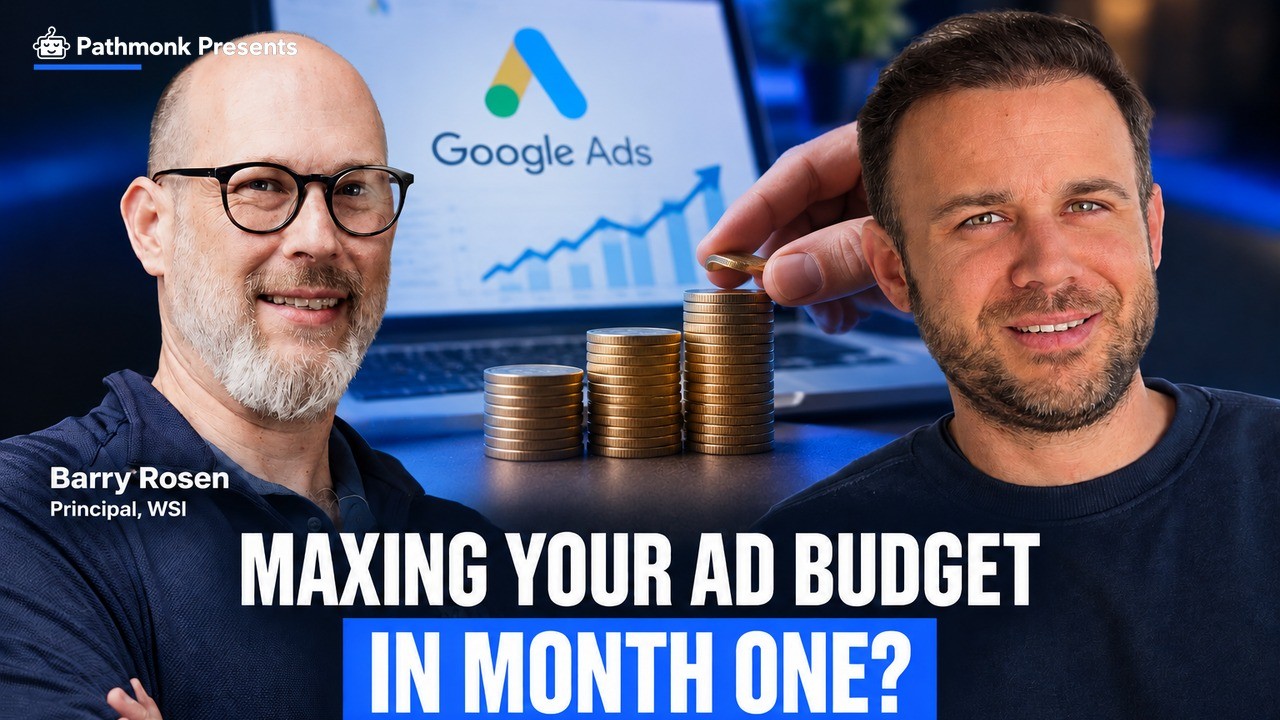
“I don't want someone to come in and burn their entire budget in month 1 and 2, where we're still training Google.”
at
- Company
- WSI
- Speciality
- Helping franchise owners and service businesses get found locally
- Works with
- Franchise owners across the U.S. and local businesses in Houston and Texas
- Deliverable
- Google and Meta ads plus campaign landing pages tied to the CRM
- Growth engine
- Certified marketing agency for several franchisors
Too long, didn’t listen?
Barry Rosen helps small and medium service businesses and franchise owners get found locally through WSI. He works in the gap between a franchise's national branding and its local marketing. Several franchisors have certified him, which gives him a steady pipeline of new owners. Franchises get a repeatable package, and other clients go through a consultative discovery process.
He starts ad budgets at a 70/30 split between Google and Meta and increases Google spend in phases while the platform learns. He also builds campaign-specific landing pages connected to the CRM. Before launch, he checks that owners follow up on every lead and have the capacity to take the jobs, so no lead goes to waste. His free 20-minute lead leak audit is built around that check.
Start Google below your target budget
When a new advertiser has a $10,000 budget, Barry starts Google at around $2,500 to $3,000 while it trains. He scales up after month 3 or 4, once cost per click and cost per conversion are steady.
Judge channels on lead quality, not cost
Start with 70% Google and 30% Meta, then use 90 days of data to see where conversions happen. A cheaper conversion does not always mean a better lead.
Build one landing page per campaign
Give each campaign its own landing page, like backyard turf, putting greens and pet turf. Connect the forms to the CRM and confirm tracking works before launch so you can show return on ad spend.
Audit follow-up and capacity before ads
Ask what happens after a lead comes in and require a CRM that tracks every contact attempt. Check that the business can actually handle 20 new leads before you send them.
Some brilliant ideas
“Just because one conversion is cheaper doesn't mean that they're getting better leads or better conversions.”
You can't just be like, they filled out a form, I called them once, never heard back, that's it, I'm done. You're not going to be in business very long if that's your sales flow and your process.
Let's say everything goes perfectly and we get you 20 leads. Can you do those jobs? Can you handle that business? If you're brand new, you may not have the capacity yet.
Full transcript
Introduction
[0:00:00] ADRIAN GARCIA RAMOS: Welcome to Pathmon Presents, where we talk with growth and marketing leaders about what's actually working right now. I'm with your host. I am joined by Barry Rosen, Principal and Digital the lead at WSI. Hi, Barry, how's it going?
[0:00:20] BARRY ROSEN: How are you? Doing well.
[0:00:24] ADRIAN GARCIA RAMOS: Doing well. Doing, doing very well, very well. So, Barry, what is, that you guys, doing here soon with,
The gap between national branding and local marketing
[0:00:35] ADRIAN GARCIA RAMOS: WSI. What is… what is it all about?
[0:00:39] BARRY ROSEN: Yeah, I basically help small and medium businesses grow their revenue, get found on the internet. And, you know, generally help them succeed. And what I found, is I found a little niche in, helping franchise owners, because what I found is that there's a gap when someone buys a franchise. between the national branding and then the local marketing. They have to get found locally with the Google business profile and the local, advertising, so that's where I come in and I help them get found locally. And help them grow their business, and start off strong.
[0:01:23] ADRIAN GARCIA RAMOS: Right. So, I wanted to ask you, you know, the kind of businesses that you support, because I'm reading over here that you are focused on, you know, plumbing, roofing, restoration, these kind of things. But, yeah, is that related to the franchise model that you were talking before? Are there any other kind of vehicles that you are approaching?
How franchisors certify marketing agencies
[0:01:47] BARRY ROSEN: Yeah, so I'm approaching mostly service, small service, businesses, and then franchises, and they kind of… there is some overlap. in there as well, so one of the… one of the franchises that I'm working with… a lot of the franchises, what they'll do is they'll certify a marketing agency, so that, when a franchise owner buys into the franchise. The franchise has several marketing agencies that they can use, that are certified, that they trust. And have vetted. So I've been certified by several different, of the, franchises, so that I can then provide my services to their franchise owners. And then some franchises also require that their new franchise owners do a certain amount of marketing, either the first 6 months of business.
and then require a certain amount of their gross to be put to that, because they want them to be successful, and they want them to build their pipelines, and they know that, you know, digital advertising, Google ads, meta ads, you know, those type of things will… really, get leads going and help small businesses kind of, like, take off and build their business.
[0:03:03] ADRIAN GARCIA RAMOS: Right. So, I didn't know about those, kind of a requirement from the franchisor, right, in order to have, new branches, coming up, but… I think that it makes a lot of sense, to put that on paper, and make sure that, you know, that things are going to work in the future. I wonder if that is, let's say, your focus? Like, you are… like, so with a franchise, or are you open to work with, you know, these kind of a service businesses? If they need any kind of support, are you up for it?
[0:03:41] BARRY ROSEN: Yes, any service business, any small, medium business, they don't have to be a franchise, I'm open to it. I've just found a little bit of a niche with the franchises, because I've been able to get in as certified marketing agency in those franchises. And, that's really helped me grow my business without the whole, you know, whole business outside of the franchise customers as well. What's nice about the franchises is those are national, so I have customers all over the U.S, and then I've got a lot of high local customers in Houston and Texas area as well, so…
Standard packages versus custom discovery
[0:04:20] ADRIAN GARCIA RAMOS: Yeah, absolutely. So, when it comes to, you know, the provision of digital marketing services, I wonder, how do you structure your proposal, right? Because, again, like, you might have a… a big franchisor that you know, and it's going to be pretty much the same in Texas or in California, but then maybe you have this Harper Local guy who's looking for I don't know, local people, and that's a different animal, right? So, I would like you to explain a bit on how you qualify your customers, and how you define what different services you might provide.
[0:04:59] BARRY ROSEN: Absolutely, that's a great question. So, for the franchises, I have a package. I have a standard package that I know that's.
[0:05:07] ADRIAN GARCIA RAMOS: to repeat.
[0:05:07] BARRY ROSEN: readable, scalable type of offer that works. That's, that I have built case studies on, so, so that's a little bit simpler. And that's, from my perspective, it's a nice pipeline, because the way that it works is when a new franchise owner comes on board, the franchise says, hey. so-and-so, congratulations on your purchase in the Florida Territory, you're now ready to do Google Ads. Here's one of our marketing agencies, Barry Rosen. Let's talk to him about Google Ads, you know, and then we have a discussion if they like me and they want to go with me. they can do it. If they don't like me, they can go with another agency, or not do Google Ads. They have a choice, right? So, and then for other… outside of that, I… my unique selling point is I have more of a…
of… of a unique… consultative approach due to my background in tech. I basically, you know. have a discovery process where I'll ask the customer a bunch of questions. You know, what is their budget? What is the outcomes that they're trying to achieve? What is their timeline? What have they done in the past that was successful? What have they done that didn't work? And then based on that, I would put together a custom a solution for them, you know, based on who the… are they B2B? Are they B2C? What is their budget? What is their timeline? What's working? What's not working? Do they need a new website? Do they need…
conversion optimization? Do they need Google campaigns? Do they need search optimization? Do they want to be found in AI? You know, depending on what… and really, a lot of times, they don't know, like, oh, Barry, I think I need PPC. I ask them a bunch of questions, and then figure out, out of the tool belt that are digital marketing strategies, which one is the best to achieve the goal that they're trying to achieve, right? So, versus going in and saying, oh, well, I just do PPC, and Google Ads work for everything, you know, I.
[0:07:13] ADRIAN GARCIA RAMOS: Right.
[0:07:14] BARRY ROSEN: a little bit more of a consultative approach with the non, non-franchise customers. Now, with the franchises, it's a little bit more formalized, because the thing about the franchise is that you have to… there's a lot of rules and procedures that you have to follow, because they have very specific branding requirements. They have rules about who can touch the website, who can not touch the website, who has access to what. You have to follow all of their… so you have to understand what are their… how do they want to work, and then work within their systems, their processes and procedures, whereas with a small business owner, we can
Kind of do what we want, and what's best for them.
The 70/30 split between Google and Meta
[0:07:55] ADRIAN GARCIA RAMOS: Sure. So, you know, for digital marketing, you can, or we can pretty much do two things. One is acquisition of traffic, and the other is conversion of that traffic, right? So, in terms of acquisition, I've… I've heard that you have mentioned a couple of times Google Ads, I guess that's for lead generation, service business, that's going to be the focus. But I wonder if, there is something beyond, right, Google Ads when it comes to paid acquisition? If you have used, for example, you know, Meta or even TikTok, of course, those are not going to be… in a way, transactional, they're going to be more focused on awareness. So, yeah, I would like to have your insights on the current landscape of the acquisition part and performance.
For… for lead generation businesses.
[0:08:51] BARRY ROSEN: No, that's… that's great, yeah. So, what I generally… and I say Google PPC just kind of like Coke, you know, like, people say Coke. Like, to me, it's like PPC, right? So, just, but, you know, really, it depends on kind of, like, who is… who is the customer that they're trying to reach? Where are they? Is it B2B? Is it BBC? Are they a visual? What is a product that they're trying to sell? Is it a visual product? But I do, just from a general rule of thumb, I always tell my business owners. at the beginning, we want to do both Meta and Google PPC, and to start. the starting ratio that I recommend is a 30.
70% of their budget, so 30% on Meta, 70% on Google, and then once we have, you know, 90 days of numbers, and we've got some data, then we can see where are the conversions happening, what are the most effective conversions, what is the cost per conversion, because just because one conversion is cheaper doesn't mean that they're getting better you know, leads or better conversions, so we want to do the data analysis, and then we can recommend, you know, a better split, but we start usually 70-30. Between, Meta and, and Google, and then also we're experimenting with, ChatGPT, with ads on chat. And then also TikTok as well, just depending on, you know, who the customer is, who their ICP is, you know, and what the product is, what… or the service that they're trying to sell is.
How much budget to start PPC with
[0:10:33] ADRIAN GARCIA RAMOS: Yeah. I was wondering… wondering… You know, for any kind of a service business that could be looking at the interview. When is the right time into account that you are so focused on position part of the equation? how much money would you think that it's a minimum requirement for these guys to, you know, just start operating in PPC? I'm talking about… survivors. And he's looking for leads, and he wants to post. What's,
[0:11:24] BARRY ROSEN: Yeah, you know, that's… yeah, that's the $24 million question. So, usually what I… my approach is… I… I… I say, what are the areas that you're trying to advertise in? And then I try to use the Google projection tool, to… Do a little bit of pre-research and see what the… in that… in those zip codes, based on just… very basic keyword research, what would be, you know, the budget, what would be the average, based on the past searches, what would be the average, you know, cost per click, cost per conversion, so at least I have a general idea of what to spend and what to recommend, and then generally what my approach is.
Let's say the customer comes to me and they say, I have a $10,000 budget, and they're brand new. They're brand new at Google or Meta. I would say, hey, let's not spend that 10 grand in months 1, 2, and 3 while we're still training, especially Google. Meta's different. Meta, you turn it on and the ads come in. But Google, I would say let's start with maybe, like, $2,500, $3,000 while we're training. And while we're getting, you know, the… while we're getting the data, and then after month 3 or 4, once we have a steady cost per click and cost per conversion, then we can start turning that lever, because I don't want someone to come in and burn their entire budget in month 1 and 2, where we're still training Google, and Google's learning, and they may not get
good leads, or a quantity of leads, and they're burning through that budget, and then they lose trust and faith in me, because they're like, I just… all this money, and I didn't get any good leads, or I didn't get any leads, so I usually have, like, a phased approach, where, like, first phase is, let's start with, like, to get, you know, what… what… how many leads do you want to get per month? Like, I ask them, like, what is your goal? How many leads do you want? And then we try to, like, you know, figure out what is that budget, and then start a little bit below that, so that we can build up to that while we're still learning. And then once in that day, 90, or, you know, that fourth month.
Where we understand, where we've got some data, and we're past the training phase. Then we have the conversation. We say, alright, here's the levers that we can pull. How many… what is your close rate?
[0:13:46] ADRIAN GARCIA RAMOS: Right.
[0:13:47] BARRY ROSEN: We get you this many deals. How many deals do you want a month? And then we'll do the backwards math. You know, what is your cost per acquisition? This is how much you're gonna have to spend to get that many deals.
[0:13:56] ADRIAN GARCIA RAMOS: What's going on?
[0:13:57] BARRY ROSEN: Based on your average cost per, you know. Per, per conversion. So that's… and then go from there.
Campaign landing pages tied to the CRM
[0:14:07] ADRIAN GARCIA RAMOS: Sure, absolutely. So, let's talk about the, you know, the conversion part, because I guess that that's a bit tricky. So, there are a couple of things here. First of all, of course, you need the money to run the ad. Once you have the ads, then you need to have a website that is going to do the job. I… amazing numbers in PPC, but they didn't have a website broken, and they have not made a change in 10 years. how would you expect to be converting with that website? I guess that's something that you get into it, and once you consider the customer, explore everything, it's part of your audit, is that correct?
[0:14:49] BARRY ROSEN: Yeah, so we… and yeah, so we'll look at their website beforehand, check it out. If they've got a decent… form fill, or see, you know, they've got a, you know, a decent call to action, then we'll use it. If not, we would recommend building a landing page. would be, like, the first step in for a small business, is we would, you know, for a small one-time fee, we would create a landing page that really is specific to the campaign that we're building. If we're doing several campaigns, we'd have several landing pages. So, for example, for the… for the, for the franchises, one of the franchises that we work with is a home and residential artificial turf installation company. So, we'll run several campaigns for them. We'll run a backyard turf, we'll run a golf
putting green campaign, we'll run a, pet Pet Green campaign, and then we'll have landing pages for each of those campaigns, and as part of the package, I create the landing page for them. Because we want them to be successful from the beginning, and so we know that the form, and we tie it back into their CRM so that we can track the form fills as well, and we make sure all of that is firing and set up before we launch the ads. And then so that we can measure everything, so that we're showing the value and the ROAS, you know, on their ad spend. So that's kind of the goal from us, is that we want to make sure that
We make it easy for them to see what they're… what they're getting for… for… for working with us.
[0:16:38] ADRIAN GARCIA RAMOS: Right. Sure.
Lead follow-up and sales capacity
[0:16:45] ADRIAN GARCIA RAMOS: I wanted to ask, you know, so… Sometimes, might be odd. It's not… But it's rather with, the one, having a call with the customer. I don't know if, also, in a way, provided advice to customers on how to treat the, the calls that they are having from the leads to.
[0:17:15] BARRY ROSEN: Yeah.
[0:17:15] ADRIAN GARCIA RAMOS: You know, advises on writing sales, and what if change, and what things to say, what things not to say, because you could do anything, but at the end of the day, you need to close it.
[0:17:26] BARRY ROSEN: Yes, 100%, and that's part of my initial discovery call, as well, is, like, I asked them what happens today. after a lead comes in. Like, you know, do you call them? Is it automated? Do you have a CRM? You know, all of these things, because we don't want them to leak leads. Because you're right. And then the other thing I asked them is, like, do you have the capacity? If we get you… if, let's say, everything goes perfectly, and we get you 20 leads, do you… can you do those jobs, right? Can you handle that business as well? If you're brand new, and you're brand spanking new, you may not have the capacity yet. So these are all questions.
that we're asking as part of our discovery process and our qualification process. But yes, we want to make sure that, A, they have a CRM, you know, I don't care what CRM they're using, we are a HubSpot reseller. I have HubSpot, I love HubSpot, but as long as they're using a CRM, they need to have something that's tracking the calls, that's… showing how many times that they've contacted. You can't just be like, they filled out a form, I called them once, never heard back, that's it, I'm done. You can't, you know, the business… you're not going to be in business very long if that's kind of your sales flow and your process. So, that's the other part. And what is nice about working with franchises is a lot of the franchise will train their owners. They have very specific, you know, processes and procedures.
For getting back to leads and handling leads, and they've got automations around it and sequencing around it, so that's the nice thing about working. with the franchise owners is that a lot of times the national franchise provides those services. With the local business owners, it's… it's an area where we have to be careful, because like you said, I don't want them six months later to say, hey, we didn't close any deals, and I'm, like, looking at their dashboard, and I'm like, I'm giving you… you're getting, you know, 20, 30 conversions.
[0:19:18] ADRIAN GARCIA RAMOS: Yes.
[0:19:18] BARRY ROSEN: Month. You know, so, that's kind of, you know, we don't know And that's a very common trap, you know, that an agency would get in with a small business owner.
The free lead leak audit
[0:19:33] ADRIAN GARCIA RAMOS: Absolutely. So, Barry, I know that you have a hard stop coming up, so thank you so much for joining the show. It's been a pleasure to have you in the interview. I would like to fasten the word in case you want to promote your business, or the audience wants to know what's the best way to contact with you.
[0:19:52] BARRY ROSEN: Sure, thank you very much, I really appreciate it. And yeah, just to… anyone who is listening or watching, go check out, you know, my LinkedIn, check out my, website, check out my… all the socials, all the things. You know, right now I am running a lead leak offer, actually, a lead leak audit. So, it's a 20-minute phone call. There is a link In my LinkedIn to sign up for that. If you want that, that is a free, lead leak audit where I go through with you and your business and ask you, you know, how are things set up on your end? We make sure that if leads are coming in, that you're not leaking them, and at the end of the call, you get a three…
three steps to take immediately that you can go and that will make a difference in your business. So, you know, no hard sell on that. So, if anyone's interested, check me out.
[0:20:46] ADRIAN GARCIA RAMOS: Fantastic. Thank you very much for joining, Barry. Let's stay in touch.
Got a growth story worth sharing? Tell it on the show.
We talk with founders and marketing leaders about what actually moves their pipeline. If you’ve built something other marketers can learn from, we’d like to hear it.
- 01Apply
Tell us who you are and the story you’d bring to the show.
- 02We get in touch
We review every application and reach out if it’s a fit.
- 03Record your episode
A remote conversation, published as video, audio and a full transcript.