ChatGPT ads: what the landing page has to do when the click comes from a conversation
Ads in ChatGPT are now buyable in 89 countries, and the person who clicks one has usually just filled in a form about budget and use case. Here is what that means for the page you send them to, and how to tell whether your site can do it.
- The click arrives with answers already given. In Rankscale’s October 2026 study, 79.4% of ChatGPT answers to buying prompts carried a follow-up form, and 87.1% of those forms asked for a budget before any recommendation.
- You never see the conversation. OpenAI keeps it private from advertisers, so the page has to read the visitor on arrival: source, price range they stop at, category they open, whether they have been before.
- A page per campaign matches the ad, not the question. The same prompt produced 3.8 different default budget bands on repeat runs, so the page has to adapt per visitor, opening on the stated band and use with price visible and one next step.
- Measure on a 50/50 control, read at the event. Half the ChatGPT visitors see the adapted page, half never do, bots removed first; purchases for a store, accepted demo requests for SaaS, never added together.
On 21 October 2026 OpenAI extended ChatGPT ads to 26 more countries, 89 in total, and said more than 100,000 advertisers had run campaigns in the eight months since launch. Those are the numbers in the headlines. The number that should decide your landing page comes from a different study: in Rankscale’s analysis of 7,313 ChatGPT answers to buying prompts, collected on 20 and 21 October 2026, 79.4% of answers carried a follow-up form, and 87.1% of those forms asked for a budget before the assistant recommended anything.
So the person who clicks an ad in ChatGPT is not a cold click. They have usually just told the assistant what they want it for, what they will spend and what they are unsure about, and the ad appeared inside that exchange. A landing page that restarts the pitch from zero loses that thread. The page has to open on the question the conversation reached, and because that question differs per visitor, it has to adapt per visitor rather than per campaign.
This article covers the post-click only: what the page has to answer, why a page per campaign cannot do it, how to get per-visitor pages without a page per prompt, and how to measure a small test. Being cited in ChatGPT answers is GEO, covered in GEO vs SEO; ad formats and pricing are out of scope. The conversion event is a purchase for an online store and a demo request for a SaaS company, kept separate throughout.
What the click already knows before it reaches you
Three facts from OpenAI’s announcement frame any test. Ads appear only on the Free and Go plan; Plus, Pro and Enterprise stay ad-free, so the audience is the free and low-cost tiers of a product OpenAI says more than 1.2 billion people use each week. Advertisers buy through technology partners or self-serve through Ads Manager. And OpenAI states that conversations are kept private from advertisers, so you will not see what the visitor typed. Custom audiences exist (OpenAI’s help centre sets a floor of 25,000 matched users for inclusion targeting and recommends at least 100,000), but a list tells you who the visitor is in your CRM, not what they just asked.
What you can know is the shape of the exchange, because Rankscale measured it. Across 765 buying prompts in the US, the UK and Germany, the forms averaged 4.4 questions, almost all single choice. 53.8% asked a category-specific question (operating system, household size, organisation size) and 40.2% asked for the use case. 86.5% of forms arrived with every answer already selected, and a “not sure, recommend for me” option, where offered, was the ticked answer 22.5% of the time. In the US running-shoe forms, the $100 to $150 band was ticked in 88.9% of cases, roads in 81.5% and beginner in 51.9%.

Read that as a description of your visitor. By the time the ad is shown, the assistant holds a budget band for them (often the one it chose), a use case, a constraint and, for roughly one visitor in five who saw the option, a request to be told what to buy. 70.1% of the follow-up prompts ChatGPT generated asked for current prices and 40.1% for purchase links. The visitor wants a price and a next step for a narrowed choice, and brand was almost never part of the narrowing. For a store, that is a shopper with a band and a use. For a SaaS buyer, it is an evaluator with an organisation size and a goal who has not typed a vendor name.
Why a page per campaign loses the thread
The standard answer to message match is one landing page per ad group, with the ad’s headline continued on the page. It works in search because the query is the message: “road running shoes under $150” tells the page what to say. A ChatGPT ad is served into a conversation you do not see, to a visitor whose budget, use case and constraint were set by a form you did not write. The ad can be relevant to that conversation (OpenAI’s example is a grocery delivery ad shown to someone planning marathon meals); the page cannot, unless it reads the visitor instead.
The second problem is variation. Rankscale ran each prompt repeatedly: 656 prompts had at least five forms each, 5,610 forms in all. Repeat runs of the same prompt matched the prompt’s most common form on the first question 74.2% of the time, on the ticked budget band 53.1% of the time, and on the full set of question types 37.2% of the time. One prompt produced on average 6.7 different question types, 21 different wordings and 3.8 different default budget bands. Two visitors who typed the same words arrive having answered different questions with different defaults. A page built for the campaign matches the ad. The page has to open on the question the conversation reached, not on the pitch the campaign was built around.
Common mistake: copying the ad’s headline into the page’s H1 and calling it message match. The headline matched the conversation’s category. The visitor’s open question is a budget band and a use case the headline does not contain, so the page names the right product and says the wrong thing. On a search campaign that is a minor loss; on a ChatGPT click it undoes the narrowing the visitor just paid attention for.
What the page has to show first
The brief for the page is short: above everything else, show the answer to the state the conversation reached. The table lists the states Rankscale’s data makes most common, what the visitor has already answered, and what the page shows first. The last column names the event. For a store it is a purchase, measured as revenue per paid visitor rather than conversion rate alone. For a SaaS company it is a demo request that sales accepts, measured as qualified pipeline. The two are not added together at any point.
| Conversational state | What the visitor already answered | What the page shows first | Store event and SaaS event |
|---|---|---|---|
| Budget stated (87.1% of forms) | A price band, usually the middle one the assistant pre-selected | Only the options inside the band, with the price visible. Not the catalogue, not a quote form | Store: purchase in the band. SaaS: demo request for the plan that band implies |
| Use case stated (40.2%) | What it is for: roads, a beginner, a team of a given size | The fit for that use in the headline and proof, not the feature list | Store: purchase of the variant for that use. SaaS: demo request from the right segment |
| Category constraint (53.8%) | Operating system, household size, organisation size, current setup | The option that satisfies the constraint, named as such, before anything else | Store: purchase of the compatible item. SaaS: demo request for the matching tier |
| “Not sure, recommend for me” (22.5% where offered) | Asked the assistant to choose | One recommendation with the reason, then two alternatives. Never a comparison grid | Store: purchase of the recommended item. SaaS: a guided demo request, not a self-serve trial maze |
| Asked for prices or links (70.1% and 40.1% of generated follow-ups) | Wants a current price and a place to act | Price and the next step in the first screen | Store: purchase. SaaS: demo request, or the published plan if prices are public |
The page has to open on the question the conversation reached, not on the pitch the campaign was built around.
Two consequences. Price is not optional: when 70.1% of generated follow-ups ask for current prices, a page that hides price behind a quote request answers a question the visitor did not ask with a step they did not want. A store that cannot show a price in the band should not run the test on that product. A SaaS company that does not publish prices should at least show the plan the stated organisation size lands on, and the demo request as the next step for that plan, not for the product in general. Second, the “recommend for me” visitor wants one option. A catalogue of 140 items or a feature matrix hands the narrowing back to the person who just asked an assistant to do it for them.
Per-visitor pages without a page per prompt
You cannot build a page per prompt. The prompts vary, the forms vary and you see neither. What you can do is let the page read the visitor. Source and ad are known from the click. Budget band, use case and stage show up within seconds on the page: which price range the visitor stops at, which category they open, whether they go to a comparison or to a single product, whether they have been before. A page that adapts to those signals answers the conversation without having read it, and it does so for the search visitor and the social visitor at the same time, which is the point of a landing page that continues the ad’s message rather than a page per message.
In practice this is what Pathmonk’s real-time personalization does with paid traffic. It personalises the page for every visitor by source, so the page opens on the promise the visit was made with, and it changes elements while the visitor browses rather than after a test. There are no segment trees or rules to maintain per campaign; it decides per visitor and learns from every conversion. Half the visitors see it and half never do, so the lift is read as a live A/B test against a control on your own traffic. Campaigns stay in the ad account you own, and the page is the only thing that changes.
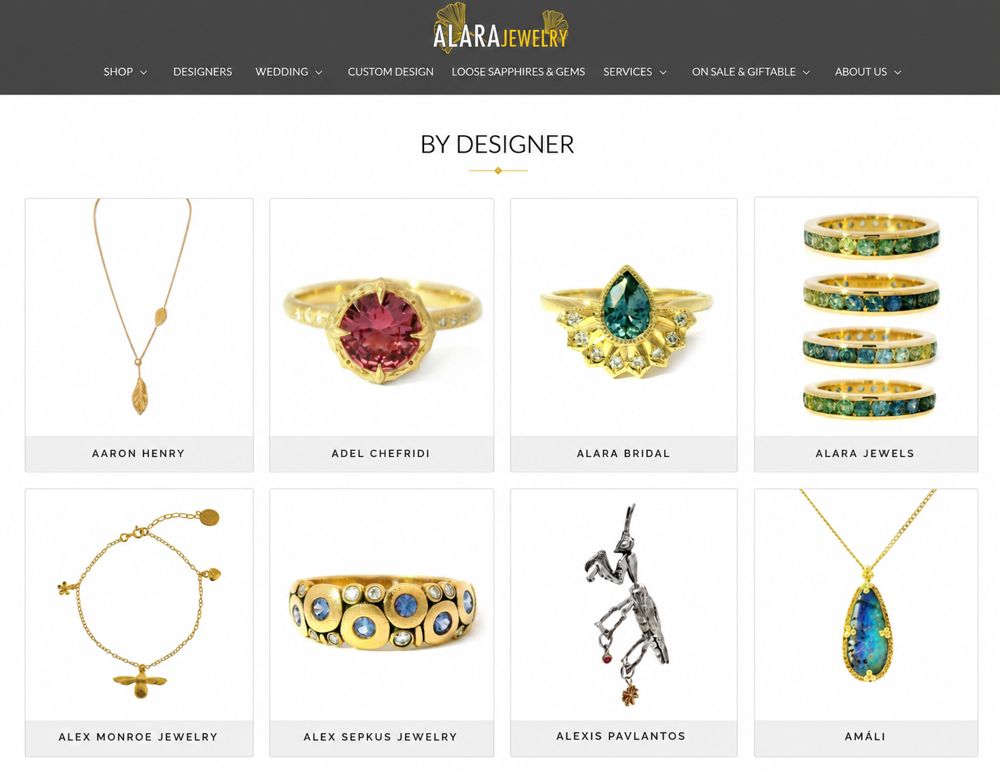
Alara Jewelry is the closest published example of a page answering a buyer’s stated constraints. Its paid visitors arrived with a recipient and a budget in mind, which is what a ChatGPT follow-up form captures. The experiences Pathmonk ran for it, as listed on pathmonk.com: a gift-finder survey that qualified visitors by recipient and budget, designer-specific video experiences for buyers researching collections, and returning-visitor recognition that matched each visit to journey stage.
The homepage result is labelled +498% high-ticket sales, from PPC traffic. The case study page gives the mechanism behind it: conversion rate from 0.18% to 1.08%, measured with a 50/50 split against the standard site over the same period, in the first few weeks, with $0 extra ad spend. The conversion event was a purchase and the ad budget was unchanged. That is the shape of a ChatGPT ads test done right: the same clicks, a page that answers what the visitor already said, and a control half to read it against.
Measuring the test without fooling yourself
A ChatGPT ads test is a new source into an existing page, so the question is not “did ChatGPT ads work” but “did the page convert ChatGPT visitors at a rate worth the click”. Four rules keep the answer honest.
- Write the pass criteria before launch. The conversion event (purchase or demo request, one per test), the revenue per visitor or pipeline per visitor that justifies the cost per click, and the number of conversions you need before you read the result. If that number looks unreachable at the test budget, the test is too small to say anything. Shrink the scope to one product band or one prompt family rather than shrinking the measurement.
- Track from click to conversion on your own data. OpenAI lists measurement capabilities among what is still to come, so do not let the platform’s number be the only number. Tag the campaign, follow each visit on first-party data to the event, and keep the ChatGPT source separate from search and social in reporting.
- Keep a control group. If the page adapts per visitor, split the ChatGPT traffic 50/50: half see the adapted page, half see the page as it is, bots removed before the count. The lift is the difference between the halves over the same period. It cannot be before and after, because before had no ChatGPT traffic.
- Read the result at the event, not at the click. A click that opens on the stated budget band and leaves is a page problem. A click that converts at a revenue per visitor below the cost per click is a channel problem for that product. Keep the two findings apart; they have different fixes.
This is also how Pathmonk’s guarantee is written: 20% more conversions against your own control group from month two, or your money back, measured as a live A/B test on the 50/50 split rather than before and after. It comes with Expert-Led Setup in month one, and the full terms are shared during the demo. Whether or not you use it, the shape is the one to copy: a control on your own traffic, bots out, read at the event.
- Event: purchase
- Metric: revenue per ChatGPT visitor against cost per click
- Read at the conversion count you set, not before
- Event: demo request that sales accepts
- Metric: qualified pipeline per ChatGPT visitor against cost per click
- Read at the conversion count you set, not before
- Adding purchases and demo requests together
- Before-and-after instead of a control
- Counting clicks the bot screen rejected
When not to test yet
Do not run a ChatGPT ads test yet if any of these is true. Ads are not live in your market: the 89 countries are OpenAI’s list as of 21 October 2026, and the list changes. Your buyer sits on Plus, Pro or Enterprise, where no ads are shown; for a technical B2B audience that may be most of them. The paid traffic you already buy converts below a rate you would fund again, because a new source lands on the same leak at a new cost per click. You have no first-party tracking from the click to the purchase or the demo request, so the result would be the platform’s number only. A customer list under 25,000 matched users is not a reason to wait; it only means no inclusion targeting, and the test does not need it.
Two signs that you are ready: the paid traffic you already buy converts at a rate you would fund again, and the page already shows a visitor from an ad something different from a visitor from search. If neither is true, the fix is on the site and comes before the test, which is the argument of why CRO lowers your ads’ CPL and CPA and the reason the future of PPC is decided after the click. The campaign side, from brief to launch kit staged for sign-off, is a separate Pathmonk PPC product with its results in the PPC case study; the page work here does not depend on it.
Key takeaways
- A ChatGPT ad click arrives mid-conversation. In Rankscale’s October 2026 study, 79.4% of answers to buying prompts carried a follow-up form, and 87.1% of forms asked for a budget.
- You will not see the conversation. OpenAI keeps it private from advertisers, and customer lists tell you who the visitor is, not what they asked.
- Defaults do most of the answering: 86.5% of forms arrived fully pre-selected and 89.7% of budget questions had the middle band ticked. The visitor often arrives with the assistant’s choice, not their own.
- A page per campaign matches the ad, not the question. The same prompt produced 3.8 different default budget bands and 21 wordings on repeat runs.
- The page shows first: the options in the stated band with price visible, the fit for the stated use, one recommendation for the “not sure” visitor, and one next step.
- Per-visitor pages come from reading the visitor on the page, by source and behaviour, not from building a page per prompt. Campaigns stay in the ad account.
- Measure on a 50/50 control with bots removed, at the event: purchase and revenue per visitor for a store, accepted demo request and qualified pipeline for SaaS, never added together.
- Do not test yet if ads are not live in your market, your buyer is on an ad-free plan, the paid traffic you already buy converts below a fundable rate, or you cannot track click to event on your own data.
FAQs on landing pages for ChatGPT ads
Where should a ChatGPT ad click land?
On a page that opens on the state the conversation reached: the options inside the visitor’s stated budget band with price visible, the fit for their stated use case, and one next step. Because that state differs per visitor and you never see the conversation, the page has to adapt per visitor from source and on-page behaviour rather than being built per campaign.
Can I see the conversation that led to the click?
No. OpenAI states that conversations are kept private from advertisers and that advertising does not influence the answers ChatGPT gives. What you can know is the typical shape of the exchange: in Rankscale’s October 2026 study, 79.4% of answers to buying prompts carried a follow-up form, 87.1% of forms asked for a budget and 86.5% arrived with every answer pre-selected.
Do ChatGPT ads need a separate landing page per campaign?
A page per campaign continues the ad’s headline but not the visitor’s question, because the question was set by a form that varies even for the same prompt. Rankscale found repeat runs of one prompt matched its most common form on the ticked budget only 53.1% of the time. A page that reads the visitor and adapts per visitor serves every campaign; a dedicated page is worth building only for one narrow prompt family with enough volume.
Which ChatGPT plans show ads?
Ads appear only on the Free and Go plans. Plus, Pro and Enterprise subscriptions remain ad-free, according to OpenAI’s announcement of 21 October 2026. If your buyers sit mostly on the paid tiers, a test reaches a small share of them.
How do I measure a ChatGPT ads test?
Write the pass criteria before launch, including the conversion event and the number of conversions you need before you read the result. Track each visit from the click to the event on your own first-party data. If the page adapts per visitor, split the ChatGPT traffic 50/50 with bots removed before the count, and read the lift as the difference between the halves over the same period, not before and after.
Should an online store and a SaaS company measure the test the same way?
Same method, different event. A store measures purchases and revenue per ChatGPT visitor against the cost per click. A SaaS company measures demo requests that sales accepts and qualified pipeline per visitor. Purchases, demo requests and revenue are never added together or used interchangeably.
When should I not test ChatGPT ads yet?
When ads are not live in your market, when your buyer is on an ad-free plan, when the paid traffic you already buy converts below a rate you would fund again, or when you cannot track click to purchase or demo request on your own data. A customer list under 25,000 matched users is not a reason to wait; it only rules out inclusion targeting.
- ChatGPT Ads expands to 26 new countries as over 100,000 advertisers have used the platform, OpenAI, 21 October 2026 (openai.com)
- ChatGPT follow-up form study, Rankscale, 21 October 2026, data collected 20 and 21 October 2026 (rankscale.ai)
- Set up custom audiences for your campaign, OpenAI Help Center, accessed 26 October 2026 (help.openai.com)
- OpenAI blocks ChatGPT ad audiences under 25,000 matched users, PPC Land, 14 July 2026 (ppc.land)
- Alara Jewelry case study and pathmonk.com, accessed 26 October 2026 (pathmonk.com)