Google Ads in AI Mode: when the ad is personalised and the landing page is not
Google is testing ads in AI Mode shaped by what a user’s connected apps reveal. If the ad is tailored to the person and your page is tailored to nobody, the click is where the next leak opens. What to change before the formats settle.
- The leak moves to the click. Google’s test personalises the ad from summaries and inferences drawn from connected apps that advertisers never receive, so a one-size landing page becomes the weakest link between a tailored ad and a purchase or a lead.
- It is a test, with known limits. Ads appear for users who connect apps such as Gmail and Google Photos through Personal Intelligence; ads are not based directly on inboxes or photo libraries, sensitive categories are excluded, and advertisers get no access to the connected apps.
- Your site has one signal of its own. The advertiser is left with the click source and what the visitor does on the page, which is first-party, cookieless and enough to open the page on the promise the ad made.
- Change the page before the formats change. Decide what each ad promises, let the page adapt per visitor from source and behaviour, and measure it against a 50/50 control; the campaigns stay in the ad accounts you own.
On 16 October 2026 Google told Search Engine Land it was starting to test ads in AI Mode for users who connect apps such as Gmail and Google Photos through Personal Intelligence, and the help page behind the test says the summaries and inferences Search uses to tailor an answer may also be used to show ads. Advertisers get no access to the connected apps. So the ad will be chosen with information you never see, and it will land on a page that treats every click the same.
The ad fits the person more closely than anything you could write per campaign. The page fits the campaign. The distance between those two fits is where paid budget leaks next, whether the conversion you are buying is a purchase or a lead.
What Google is testing, precisely
The facts come from two places: Search Engine Roundtable’s report of 19 October 2026, which quotes Google’s statement to Search Engine Land, and Google’s own Search Help page on connecting content apps. Everything below is on one of those two pages.
- It is a test. Google told Search Engine Land it had begun testing ads in AI Mode for users who connect their apps through Personal Intelligence. As recently as March 2026 its help page said the opposite: no ads were shown to people who connected their apps with AI Mode.
- What the ad can draw on. Once a user connects content apps, Search can use summaries, excerpts and inferences from them to personalise the answer, and the help page says that “same info may be used to show you ads”. Relevance to the query, the response and the user’s interests still applies.
- What it rules out. The ad is not built directly on the contents of the inbox or the photo library, sensitive categories (race, religion, sexual orientation, health) are excluded from personalised ads, and the advertiser is never given access to the connected apps.
- What the user controls. Connecting an app is a choice, and the user can disconnect it whenever they want.
Optional. Can be disconnected at any time.
Used to personalise the AI Mode response, and, per the help page, to choose the ads shown with it.
Still tied to the query, the response and the user’s interests. Not built directly on the inbox or photo library. Sensitive categories excluded.
The advertiser’s side of the wall. No access to the connected apps, no view of the summaries or inferences, no way to know which of them shaped the ad a given person saw. What you keep is the click, the landing page and what happens on it.

What is not confirmed matters as much: when the test widens, what the ads look like, how they are labelled in reporting, whether an advertiser can opt out. We covered the wider direction in the future of PPC in an AI world; the description above is the whole of what is known about this layer.
The new gap: a personalised ad on a static page
Message match has always been a campaign-level job: you wrote the ad, so you could build a page that repeated its promise. That assumption breaks here. The ad is assembled per person from the query, the context of the response, the user’s interests and inferences from apps you cannot see, so its promise varies from one click to the next and your page cannot repeat a promise it never saw.
The leak itself is not new. Pathmonk’s homepage puts the baseline plainly: you pay for 1,000 visits, 970 leave, and the page showed every visitor the same thing. Its ads example is 1,000 clicks at $3.40, which is $3,400, of which $3,298 is spent on visitors who left, at a 3% conversion rate. Google has published no click price or conversion rate for AI Mode, so take that example as it stands. What the test changes is the distance: the 970 who leave will have seen an ad that fitted them unusually well, then a page that fitted them no better than anyone else.
At the lead end, $3,400 buys 30 leads at $113 each. At the purchase end, it buys 30 orders, and revenue per paid visitor, not conversion rate, is the figure to watch. In both cases the 970 are the lever: 3% to 4% on the same 1,000 clicks is ten more leads or ten more orders for no extra spend, which is why conversion rate sets CPL and CPA before any bid does. The test does not alter that logic. It raises the price of ignoring it: the ad will have done its half of the matching, and the page is the only half left undone.
The ad fits the person more closely than anything you could write per campaign. The page fits the campaign.
Common mistake: answering a per-person ad with a per-campaign fix. Briefing a dedicated landing page per AI Mode campaign matches the ad group, not the ad. The variation Google describes is per response, so a page per campaign leaves exactly the gap it was built to close. The unit of matching has to be the visitor.
What each party can know
The gap is hard to close with the usual tools because the three parties see three different things, and the ad side sees the most. The website’s view starts at the click and is the only one of the three the advertiser owns outright.
Everything the website knows, it knows from the visit itself: where the click came from, which page it landed on, what the visitor did next, and whether a purchase or a lead followed. That is first-party and cookieless by construction. It is also enough, because the question is not “who is this person” but “what did this visit come for”, and behaviour answers it within seconds.
- Source: ad, search, AI answer, social
- Campaign and landing page
- Time of arrival, new or returning
- Scroll, pages viewed, time on each
- What the visitor interacts with
- Whether a purchase or a lead follows
- The connected apps
- The summaries and inferences
- Which of them shaped the ad
| Party | Can use | Cannot use or cannot see | Where it is stated |
|---|---|---|---|
| Google, choosing the ad | The query, the context of the response, the user’s interests, and summaries, excerpts and inferences from connected apps | The inbox or photo library directly; sensitive categories such as race, religion, sexual orientation or health | Google Search Help page; Google statement, October 2026 |
| The advertiser, in the ad account | Campaign, keyword, ad, click, cost, and the conversions the platform reports | The connected apps, the inferences, or which of them shaped the ad a given person saw | Google Search Help page (advertisers get no access to connected apps) |
| Your website, after the click | Click source, landing page, on-site behaviour, return visits, and the purchase or lead that follows, all on your own first-party data | Anything about the person before the click, unless they tell you on the page | Follows from the two above |
Read the third row as the brief for the page. If the ad’s personalisation is built from data behind a wall, the page’s has to be built from data in front of it, and the only data in front of it is the visit. The same constraint already applies to visitors arriving from AI answers.
Adapting the page from the signal you are allowed to have
The page has to open on the promise the visit was made with and keep adjusting as the visitor shows what they came for. Neither needs the signals Google holds. Both need the page to change per visitor, not per campaign.
This is how Pathmonk handles it in practice. It personalises the page in real time for each visitor from the two inputs the site is allowed to have: the source of the visit (ads, search, AI answers or social) and what the visitor does on the site. It runs on the company’s own first-party data, cookieless, with no third-party data, so nothing in it depends on what Google inferred from a connected app. The page opens on the promise the visit was made with, and elements change while the visitor browses rather than after a test. Half the visitors see Pathmonk and half never do, with bot traffic excluded before the count, so the lift is read against a 50/50 control group on your own traffic. Personalization only changes what the page shows; campaigns stay in the ad accounts you own.
 The click: from an ad whose promise was “a free review of your case, today”
The illustration borrows its shape from a real case. Avrek Law is the lead-generation example on Pathmonk’s homepage. The experiences chosen for its visitors were a case-type qualification flow that filtered casual browsers early, practice-area-specific testimonials and settlement results, and an attorney-match experience for high-intent searches. The homepage reports +175% case-qualified inquiries, from cold traffic. None of those experiences knew anything about the person before the click.
The same approach works where the conversion is a signup. Doctoralia reports +82% professional signups across 3 B2B sites in two weeks, measured on a 50/50 split in each market, with experiences shown only when a visitor showed business interest on the page. Two conversion events, one input: behaviour after the click.
- Avrek Law: case-type qualification, practice-area proof, attorney match for high-intent searches
- Doctoralia: experiences shown only on signs of business interest, 50/50 split per market
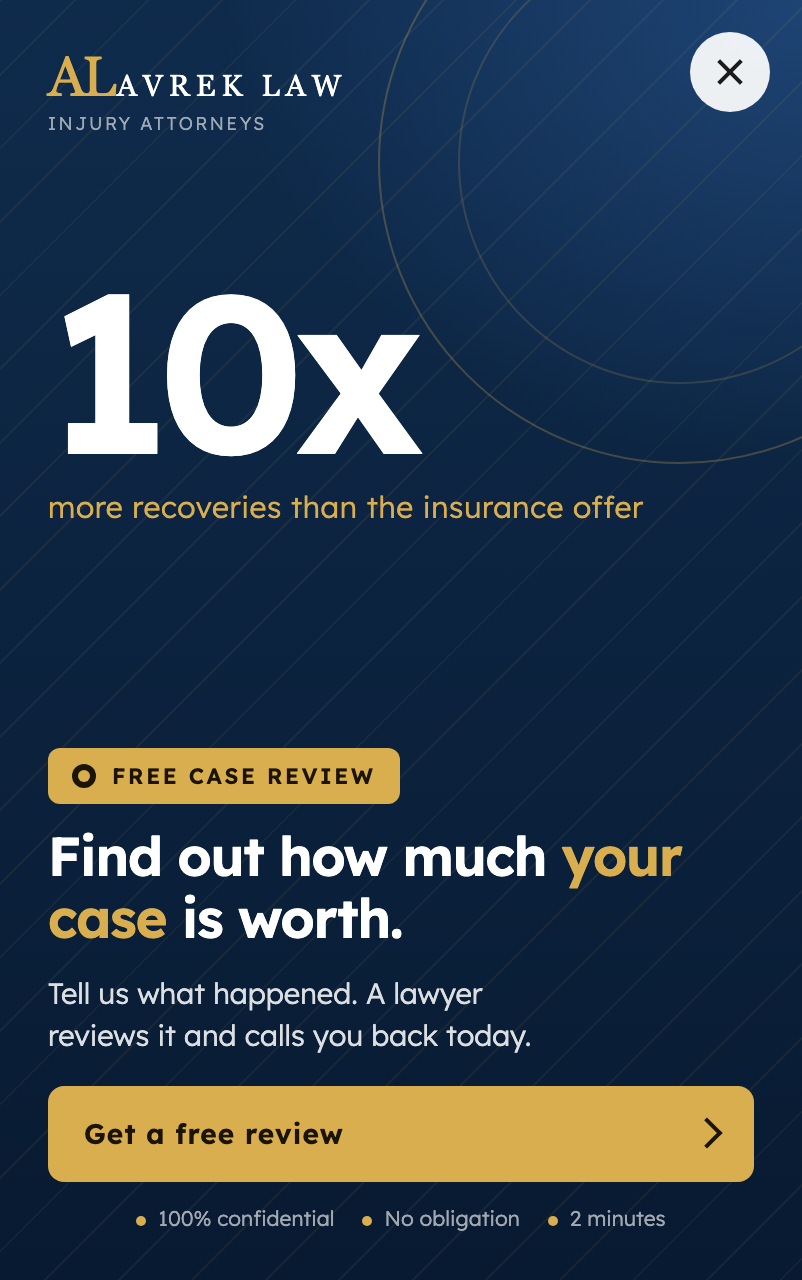
The second half of the job is knowing which clicks were worth buying. Pathmonk follows every visit from the click to the conversion on the company’s own first-party data, so you see which campaigns, keywords and ads bring customers and which only bring traffic. That is the only place you can tell a well-matched ad from a well-matched page: the platform reports the first, and only your site can observe the second.
Because the comparison is a live split rather than a before-and-after, the result is one you can hold someone to. Pathmonk’s terms are 20% more conversions against your own control group, or your money back: from month two, if the Pathmonk half has not beaten the control by at least 20%, every dollar is returned. The guarantee comes with Expert-Led Setup in month one; full terms are shared during the demo.
What to do before the formats change
None of this waits on Google. The gap already exists on every paid click you buy today, and the steps that close it now will matter when these placements reach your account. In order:
- Write each ad group’s promise in one line and check the first screen keeps it. If the headline could sit under any of your ads, it matches none of them. This is the baseline from the Google Ads conversion rate work, and it still comes first.
- Separate AI Mode traffic in reporting as soon as it is distinguishable. Google has not said how these placements will be labelled. Set up the segment by source and landing page now, so you can compare its behaviour and conversion rate against standard search clicks instead of blending them.
- Instrument behaviour, not just the conversion. Scroll depth, next page, time on the first screen and return visits are the signals the page has to read. Get them into your first-party analytics now.
- Let the page adapt per visitor from source and behaviour. Decide what the headline, proof and next step should be for a visit from an ad against one from search or an AI answer, and let those elements change per visitor. Build one page per ad only where volume justifies it.
- Hold back a control and write the pass criterion first. Half the paid visitors see the adapted page, half do not, bots out before the count. Decide what lift counts as success before you look at a number.
- Leave the campaign alone while you do it. Campaigns, bids and budgets stay in the ad account, so the page change can be read on its own.
Step five matters most. When the ad is personalised from data you cannot see, conversion rate on those clicks can move for reasons unrelated to your page. The control is the only way to separate what Google’s matching did from what yours did.
What this does not change
Three limits are worth stating plainly.
The test may change or never ship as described. Google describes it as a test that is only starting, the help page says its settings are being updated, and nothing about formats, markets, reporting or an advertiser opt-out has been published. Build the page for the gap that already exists on every paid click, not for a placement that may not exist in its current form.
Search intent still rules. Google lists the query, the response and the user’s interests before it mentions connected apps, and a user who connects nothing sees the ads they would have seen anyway. The per-visitor page is not a response to inferences; it is a response to the fact that every paid visitor arrives with a different reason, which shows in behaviour, not in a profile.
Below a few thousand paid visits a month, a per-visitor page cannot learn fast enough to beat a single page matched to the ad group’s promise, and a 50/50 split takes too long to read. At that volume, do steps one and three and spend the rest on reaching the traffic where the split means something.
What the test does change is the order of work. The ad side of message match is being taken out of your hands. The page side is still yours, and now the only side you control. Whether the event is a purchase or a lead, that is where the next point of conversion rate, and the next dollar of the $3,298, comes from.
Key takeaways
- Google is testing ads in AI Mode for users who connect apps through Personal Intelligence. It is a test; formats, timing and reporting are not published.
- The ad may draw on summaries, excerpts and inferences from connected apps, not the inbox or photo library directly, with sensitive categories excluded. Advertisers get no access to any of it.
- A per-person ad landing on a per-campaign page opens a new gap: the page cannot repeat a promise it never saw.
- The baseline leak is already there: 1,000 clicks at $3.40 is $3,400, of which $3,298 goes on the 970 who leave, at a 3% rate, whether the event is a purchase or a lead.
- The website’s own signal is the click source and on-site behaviour, first-party and cookieless. It is enough to open the page on the ad’s promise and adjust as the visitor browses.
- A dedicated page per campaign matches the ad group, not the ad. The unit of matching has to be the visitor.
- Read any change against a 50/50 control with bots excluded, and leave the campaign untouched so the page effect is legible on its own.
- Search intent still decides most of what an AI Mode ad shows, and the test may not ship as described. Fix the page for the leak you already have.
FAQs on Google Ads in AI Mode and landing pages
Are Google Ads showing in AI Mode now?
Google has shown ads in AI Mode for some time. What is new, as of Google’s statement reported on 16 to 19 October 2026, is a test of ads for users who connect apps such as Gmail and Google Photos through Personal Intelligence, where the ad may draw on summaries and inferences from those apps. It is described as a test, and no rollout date or format has been published.
Can advertisers target users by their Gmail or Photos content?
No. Google’s help page says advertisers will not have access to a user’s Gmail inbox or Google Photos, that ads will not be based directly on either, and that personalised ads are not shown based on sensitive categories. Any personalisation happens on Google’s side, from summaries, excerpts and inferences, and the advertiser sees only the usual account data.
What should the landing page do differently for AI Mode clicks?
Open on the promise the visit was made with and keep adjusting as the visitor shows what they came for. Because the ad varies per person, a page built per campaign cannot match it. The page has to change per visitor from the click source and on-site behaviour, the two signals the advertiser is allowed to have.
Should I build a separate landing page for AI Mode campaigns?
Only where the volume justifies a dedicated page for the ad group’s promise. A page per campaign still shows every visitor from that campaign the same thing, which is the gap the personalised ad exposes. For most traffic, let the headline, proof and next step adapt per visitor on the page you already have.
How do I know if AI Mode clicks convert worse because of the ad or because of the page?
Hold back a control. Show half the paid visitors the adapted page and half the standard page, exclude bot traffic before counting, and compare the two halves from month two. If both halves move together, the cause is upstream in the ad or the audience; if they diverge, the page is doing the work.
Does this test change anything for lead generation versus e-commerce?
The arithmetic is the same: the visitors who leave are the lever in both cases. A store should read the result as revenue per paid visitor, a lead-generation site as cost per qualified lead. The experiences differ, a qualification flow for a law firm, a product match for a store, but the input, behaviour after the click, is identical.
Does personalising the page per visitor affect my campaigns or my Quality Score?
Personalising what the page shows per visitor keeps the URL and the indexed content stable and does not touch the campaign, the bids or the budget, which stay in the ad account you own. Google has not published any connection between the AI Mode test and landing page policies beyond its existing rules, so nothing in this article relies on one.
- Google Ads now in AI Mode with Personal Intelligence, Barry Schwartz, 19 October 2026, quoting Google’s statement to Search Engine Land of 16 October 2026 (seroundtable.com)
- Connect your Google content apps to get a Search services experience that’s tailored to you, Google Search Help, accessed 26 October 2026 (support.google.com)