Introduction
Anne-Sophie Ribeiro, Growth Marketing Manager at Grey Parrot, joins the show to discuss how the company is reshaping the waste industry through AI-powered waste intelligence.
Grey Parrot provides real-time insights from material recovery facilities and delivers packaging recyclability data to major FMCG brands, helping them understand true end-of-life performance.
Anne-Sophie breaks down how the team built brand awareness, why events remain crucial for acquisition, and how retargeting and customer engagement drive long-term growth. She also shares her perspective on balancing technical complexity with clear messaging and staying ahead of emerging trends. This episode is especially valuable for marketers navigating niche industries and long B2B sales cycles.


Increase +180% conversions from your website with AI
Get more conversions from your existing traffic by delivering personalized experiences in real time.
- Adapt your website to each visitor’s intent automatically
- Increase conversions without redesigns or dev work
- Turn anonymous traffic into revenue at scale
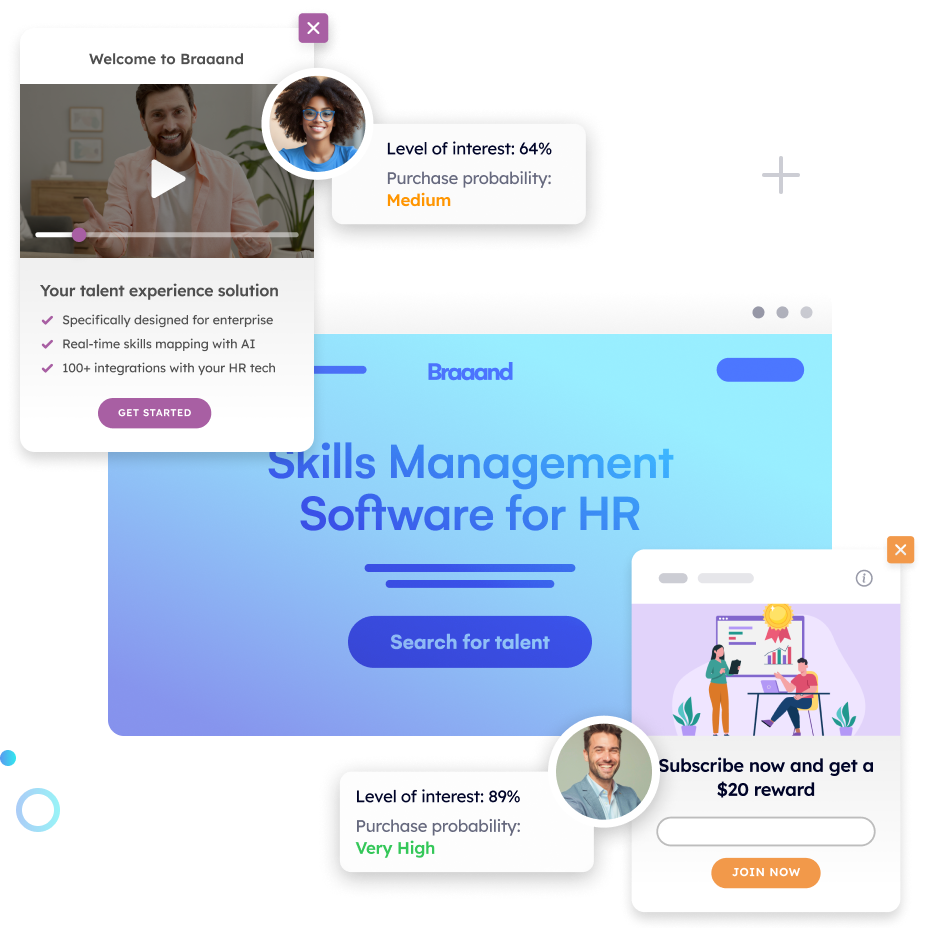
Kevin: Hey everybody. Welcome back to Pathmonk Presents. Pathmonk is the AI for website conversions. With increasing online competition, over 98% of website visitors don’t convert. The ability to successfully show your value proposition and support visitors in their buying journey separates you from the competition Online. Pathmonk qualifies and converts leads on your website by figuring out where they are in the buying journey and influencing them in key decision moments with relevant micro experiences like case studies, intro videos, and much more. Stay relevant to your visitors and increase conversions by 50% by adding Pathmonk to your website in seconds, letting the artificial intelligence do all the work. Increase conversions by 50% while you keep doing marketing as usual. Check us out on Pathmonk.com. Hey everybody. Welcome back to another episode of Pathmonk Presents. We’re really looking forward to today’s episode because we’ve got Anne Sophie, growth marketing manager over at Grey Parrot joining us today. How you doing, Anne Sophie?
Anne-Sophie Ribeiro: Hi, I’m good. Thanks Kevin for inviting.
Kevin: Of course, we’re really looking forward to having you and having an awesome conversation. I wanna dive right into things about how, what you guys are doing from a marketing and growth perspective, but before we get a little bit too detail oriented, I’m hoping you can give our audience a little bit of a, blanket statement about who great payer is and what it is that you guys do.
Anne-Sophie Ribeiro: Sure. So Great Parity is a startup, and it’s a startup that actually invented a new category. so it created the waste intelligence category. so what is waste intelligence? So it basically data about the waste industry and more specifically, what we call MRF. So material recovery. Facility. so basically the idea is we have an analyzer that we put on top of a conveyor belt where you have all the waste coming through, and basically this analyzer has a camera, inside and it basically takes videos of everything going through, every day. Every week. and this data basically is linked to an AI model that gives the waste, information of basically what’s coming through the facility. And hopefully with this data it can then like improve, efficiency and productivity of. Facility.
Kevin: That’s a really interesting concept. at just as myself, as a regular consumer, I always think about, okay, so I try my best to put the, my, my garbage, my plastic recycling, my paper recycling all in the correct bins. you never really know like after that, like what happens and how accurate is the actual waste management facility actually handling all of that stuff. You don’t know if your neighbors are doing something similar. So it’s really interesting to hear that you’re putting together a solution that has both technology onsite as well as the AI data kind of processing to give the facility managers that information afterwards, which is a really interesting idea when you say you created like this new, market of ai. That’s really interesting. I’m looking forward to learning more. also as we dive deeper, maybe you can give us an idea like, what is the name Grey Parrot? Where did that come from?
Anne-Sophie Ribeiro: Yeah, it’s a question that we have often asked because it’s usually in this sector is sorted AI, or, it’s all linked to like those words. But Grey Par is quite unique in that sense. So it basically linked to, nature and to parrot and basically Grey Par is a. For anyone like, who is interested in bird or has any knowledge about birds in this podcast, it’s basically the one that repeat like the language, like closer to the human language. and it’s also the idea of integrating ai, the fact that AI is, here to support human and there is like all the LLM like behind it too, so it’s the idea behind the name prepared.
Kevin: I like that a lot. A neighbor in my, in my living area that has a parent and it’s constantly repeating all of the things that it hears in the neighborhood. yeah, I understand. I understand what you’re talking about. Okay, so let’s dive a little bit deeper into kind of the marketing aspects of what you guys are doing over there. number one, I’d like to understand who are the companies and industries that you’re serving? I think it’s pretty straightforward. Gonna be, waste management facilities and managers. How do you approach them in terms of here are the problems that we can solve for you. Maybe you can help frame that for me.
Anne-Sophie Ribeiro: Yeah, so we have two sets of companies and they’re very different. So we have first, as I explained at the beginning, the waste management companies, so they can be, small or very big. So in the UK we have Beef aton. We work with, we have Case I recycling in the Netherlands. So all different size, but they all like basically process waste and sort waste. And some of them even With the material that they get at the end of the process, they can, reuse, like basically like work with producer to be able to reuse this material. So that’s like the first part. And then the second is actually linked to a new product that we launched this year called Deep Nest. And basically with all this data that we have on packaging. we can also inform the producer, so the material, the manufacturer of the products that we consume. So it’s basically F-M-C-G-C-P-G, and they are very interested in improving the recyclability of their products. Because we have kind of information about, okay, we know that aluminum or cardboard usually have a better recycling rates than plastic. And plastic is very complex to recycle. And there are different types, but, you without the data. you can’t really know for sure what’s happening in a facility if it’s indeed being sorted because it depends also on the facility itself, the location, the type of product. So those are very different set of companies that we serve at the moment.
Kevin: Very different. So just so I’m perfectly clear, it seems like one is the facilities themselves, right? And another one is the actual companies that might be selling something that they want to end up being recycled, let’s say Coca-Cola, for example, or something exactly like that. And if you can be the one that actually provides them with the information about here’s how well your products are being recycled, or how often, or how frequently. That helps them not only be able to process that information internally, but also be able to say, Hey world, here’s how much, our product is being recycled.
Anne-Sophie Ribeiro: Exactly, you summarized very well. So basically we act at the end of life of the product helping, recycling facilities, but also from an insight perspective at the very beginning when they are thinking about either a new product, an innovation, an NPD as we call it, or thinking about changing the packaging. And that’s very linked with my background because I used to be an FMCG. we wanted to do good and change and improve our packaging, but we didn’t have this level of details in terms of, starting from where we are with our current packaging and assess okay. With the change, is it actually making it significantly better?
Kevin: And without the technology and tools that you guys are creating, they wouldn’t necessarily be able to collect that data and learn did it actually make a difference or not?
Anne-Sophie Ribeiro: Exactly.
Kevin: Really, interesting. Really, interesting. Okay, I think that’s very, clear. I wanna talk a little bit more about the audience and how they find out about you, because you guys are a startup, so every, I’m sure you guys are doing everything you can to try to get as many of these companies aware of who you guys are and what it is that you do. So maybe you can tell me like, how do your audiences, audience members typically find out about you, and what are some of those top acquisition channels currently?
Anne-Sophie Ribeiro: Yeah, I would say there are three main ones. So as a startup, we really worked on building the brand, so by. participating to awards, PR is a very big, channel for us too. So it’s building this brand and bear, brand awareness. And now we start having people being like, oh, great pair. I’ve actually heard of you and I know what you do. So this is like the work of six years behind, like building the brand. the main one is still events and conferences and just like having a face-to-face approach. We do a lot of trade shows and Q3, Q4 is actually the big, busy period for us. so across Europe, but also in the us. and the final one is through partnerships. So we have partnerships in Europe, in the US and the US one with Van Dyke, which is part of polygraph, actually opened the US market for us. So this is how, ’cause they’re very well known in the industry. So you know, having them as exclusive distributor really help us. as prepared.
Kevin: Okay. Interesting. And I’m not surprised to hear that events are really big for you because it’s, like a niche. Area that you’re marketing towards. And I’m imagining there’s probably some events where all of these types of companies are all in one place all at one time. It’s not like there are a billion waste management companies out there, right? and so if there are these industry specific events that you guys can attend and get in front of all of them, there’s gotta be some really good opportunities for you guys. So yeah, that to that totally makes sense. Of course anyone that hears, about you guys is probably gonna go over to your website, do a little bit of research, figure out who it is that you are, what are you guys doing. And so when we talk about the website itself, what role does that play in terms of client acquisition and how do you feel the website performs? Are, there any sort of major strengths or weaknesses at the moment?
Anne-Sophie Ribeiro: It’s something that we try to constantly improve, so it’s not like a project that we do at the beginning of the year and we finish it and that’s it. It’s something that we constantly look at, and I think one of the challenges that waste industry is, very much still like a face-to-face industry. because we are trying to digitalize the sector, so it means that also some operator, don’t really have LinkedIn or are not like, as active as other sector online. So one of the thing is, as I was mentioning, the brand really help us. So we have more and more like people coming to the website, so we have more and more quality inbound. So I think it is building the brand. That in like within event conferences, like in the right publication, like then people like reach out to us and wanted to know more. One of the thing we did is on the contact page we added like some link to FAQ or to like questions that were not really self like specific, but more about in general what we do. So it really help us to actually filter. People who just wanted generic information about what we do and people who actually wanted to have a chat and potentially explore the solution. So that’s one thing. And I would say acquisition, like people coming to the website is potentially 20% of the total acquisition. Then something that we did this year that worked really well is retargeting. Because we have a lot of leads coming through. and they download some content, especially case studies, works really, well, because then they can put in perspective and maybe a customer that has the same pain point as them, and then they get interested and then we basically nurture them by sharing like more content that could be relevant for them. But sometimes, like basically our last call is to have a chat with them, but sometimes they just. They’re happy with the information that they have at the moment. Yeah, sure. Retargeting is like a year after or two years after when the situation has changed on their side. They are actually ready to talk and to have more of a sales conversation. So it’s re-engaging those leads. And we have so many via our CRM, so it’s, building campaigns that basically reengage them when they are ready.
Kevin: Nice to hear. I think anyone that’s utilizing any sort of retargeting is really smart. making sure that you squeeze as much juice out of those leads as possible. because it, maybe you didn’t get ’em today, maybe you don’t get ’em tomorrow, but if you can capture those sometime maybe a year from now, that’s really good. Exactly. I want to switch the conversation a little bit away from Grey Parrot and a little bit more over to Anne Sophie, as the gro growth manager and marketing professional. so the next couple questions will be about that. and to get started, since we were just talking about websites, I wanna know what do you think makes a great converting website? are there any sort of tools or tips or tricks that you might recommend, in your experience?
Anne-Sophie Ribeiro: Yeah, we try to have the website as much as lined to our value proposition, so like basically focusing on our customer or potential customer and their pain point and how we can solve their issue versus, having a list of everything that we can do and all the products that we have. So I think it’s really understanding their pain points and then link it straight away to a solution. I think that’s key and that’s one of the changes that we have implemented this year in shifting this narrative. And then our product is very complex. It’s very new, it’s very technical, especially in an industry that has not historically been focused on digitalization. So it’s also finding this balance between giving them enough information but without overwhelming them. And becoming too technical. So it’s finding this narrative that is gonna tease them and potentially convince them that this is the solution for them and to have a conversation with us, but without. sharing too much information.
Kevin: Yeah, that’s a really interesting balance. you have such a, technical product which has onsite, mechanisms and, but it’s also utilizing an AI that, is measuring all of the data on the backend, connecting all those dots for an industry that’s, traditionally pretty old school. that’s a little bit of a tough balancing act. So I can totally see where you’re coming from. next I wanna talk a little bit about. What does a typical day look like for you? Like I, I’m sure at a startup that’s, been up and running for about six years, you’ve got a lot of things on your plate, I’m sure growth marketing’s probably just one of the things that you do. I, imagine. But maybe you can tell us like, what does a typical day look like and what are some of those things that you’re focusing on?
Anne-Sophie Ribeiro: It’s very, it’s a very hybrid role, which I love, to be honest. so there is a part that is strategic planning and in B2B we have longer cycle and definitely longer cycle than what I’ve had before in B2C. So it’s about, planning Q3, Q4 in Q2 instead of planning everything in the same quarter. So there is a lot of that. and then a variety of events that are basically after the strategy planning, make sure that. they are well executed and implemented. So there are a lot of site visits that we do, but even invite prospect to customer and then customer are very proud to share what they do and how they’re using our solution. a lot of campaigns I mentioned, retargeting website, make sure that, we are the most optimized to lead gen and make sure that we keep on top of like those trends, especially when it comes to AI and how to automate. More of what we can do. and then a lot of stakeholder management and customer engagement, I would say. So stakeholder management is both from a partnership time standpoint that I mentioned, but internally, and then customer engagement is really like a key focus for us. Make sure that our customer are very, have all the information that they need, all the updates, like the sup, the technical support that they need, but also that they feel part that, we are always available for them. we also invite them to invent to trade shows. so it’s one of the key elements of my role too.
Kevin: Yeah, the customer engagement seems interesting because with any sort of solution like this, you always have to show them, not just, okay, it’s up and running, but is it successful? Is it actually happening? And for such a technical product, it might be difficult to Show, okay, how is this actually happening in effect, and how is this improving our processes? And how is this making us more efficient and helping us recycle more and waste less, as you guys say, right? yeah, I How do you deal with that part of it specifically in terms of like the customer follow up, the customer engagement and making sure that they understand, okay, the product is working, because I, imagine it takes a little bit of time to show what these results look like.
Anne-Sophie Ribeiro: Indeed. So there is like a full onboarding. So as soon as they are ready to try repair, there is like a full onboarding which can last months, and there is like a whole team dedicated to that. And they’re gonna calibrate the data, understanding, work on the accuracy with the customer, but the customer needs to be on board from the beginning. They need to have. All the material equipment, the uni itself installed as well. So it’s basically make sure that they are on the journey from the beginning. So we send them checklist, we talk to them every week. so it’s really like a step-by-step process, starting with installation. And then the team, the onboarding team is gonna explain them, okay? This is step one, step two, step three. Once we have that, once we have the data that are correct and running smoothly. This is basically what we are gonna start tracking, like from an alert, from, like basically looking at all the material that go through. So it’s, basically like there is a lot of, support from our team and basically, they talk. To them every week and, they just pick up the phone and they call our team when they need something.
Kevin: Yeah, that makes sense. okay, so I want to ask you one last question before we move on to the final part of the conversation. and that one is a little bit more related to yourself. I wanna know, everyone’s always trying to learn and grow and stay up to date and get smarter, better at whatever it is that they do. But there’s a lot of different places that you can go to consume content or learn or, learn what it is you need to learn. Where are you going to improve upon yourself when it comes to the content that you’re consuming?
Anne-Sophie Ribeiro: Yeah, I would say two things is like, first if I have an issue, and I don’t know how to solve it. just talk to an expert and sometimes can be just looking at LinkedIn, my LinkedIn network or even someone I don’t know yet, but I know they might have, an answer for me and just outreaching and have a conversation with them. So I think that’s the first thing is if you don’t know something, just talk to someone who has been there or have an answer for you. Then the second thing is keeping up to date with all the trends, especially as a marketing. there is a lot happening in terms of AI and all those new tools and you need to know how to filter what works, what doesn’t work. So yesterday actually I was at an event, for Mar dedicated to market here. on all the AI tools. So we talked about chat box, we talked about getting insight from different website. We talked about many different things. Reporting how to automate something that, is not necessarily the best use of your time or your talent. So I think it’s just being, aware of all the changes, what’s going on, and just being curious.
Kevin: Yeah, knowing what’s at your disposal, what sort of tools do you have at your fingertips, right? Because you might be capable of using all of these. You might, they might really help you, but if you’re not aware of them, then you’re just doing, the same old work that you’ve always been doing. So I think that’s really, smart. Is Don’t just grow for the sake of growing, grow, knowing what is out there and what can actually help with your role. that’s really interesting. Okay, so we’re moving on to the final section of the conversation. It’s a little bit of what I like to call a rapid fire round where we’re looking for a little bit shorter, crisp answers, first thing that comes to the top of your mind. And they’re also a little bit more playful as we close out this conversation. I’ll get things started with a nice easy one. What’s the last book that you read?
Anne-Sophie Ribeiro: It’s called, the Rubbish Book by James Piper. It’s linked to the industry, but it’s also very accessible. So if you’re a consumer and you want to know what’s happening on the recycling words, just, read it. It’s very easy. And they also have a podcast called Talking Rubbish. If you don’t like reading, I
Kevin: like that talking rubbish. And the rubbish book. I’m gonna have to add that to my list. okay, next one. If there were no boundaries in technology and snap your finger, anything is possible, make a wish and it’s done, what would be the one thing that you would wanna have fixed for your role as a marketer today?
Anne-Sophie Ribeiro: One thing I struggle with when I join is having the background for each customer so we don’t have thousand of them, but I needed to know what’s the journey, what’s happening, what has happened with them. And we don’t have this type of automated reporting that basically gives you information, but the right level of information because you also want to have detailed enough information, but basically a simple reporting about each of them.
Kevin: Ah, so like. How did they find out about you? What pieces of content did they consume up until this point? What ultimately got them to convert? Kind of everything that they experienced along the journey until ultimately reaching out to you guys,
Anne-Sophie Ribeiro: their customer journey before and since they work with square Parts.
Kevin: Ah, that would be really, yeah. Then you have everything you need to know at your fingertips and what have they seen, what haven’t they seen, and you can put the pieces together to make sure that they fully understand everything. Yeah, I think that’s really, good. Okay. Next one. If there was one repetitive task that you could automate out of, I’m sure lots and lots of repetitive things that you probably work on a regular basis, what’s like that one repetitive task that you would wanna have fully automated for you?
Anne-Sophie Ribeiro: I would say when we talk about retargeting, it’s like flagging, okay, you should talk to this person, like this contact you have talked to in a year ago. And I think they might be interesting. Might be like a good time to reengage them. Now,
Kevin: I, totally 100% agree. if that could be automated, like you don’t have to remember who, right? Yeah. and yeah, there are obviously tools within basically every CRM where you can like flag something or say follow up with this person at a certain time in the future, blah, blah, blah. But if you could just drop that person into a bin, and it, and the t whatever automated tool you have doing this. Identifies who it is, knows what content to show them, gets the process started in terms of retargeting and does all of that. And all you need to do is just click a button at the beginning and it’ll do all that six months down the line or one year down the line. That would be really, nice. I think that’s a great answer. okay, so last one. what is one piece of advice that you would give yourself if you were to restart your journey as a marketer today?
Anne-Sophie Ribeiro: It is a bit linked to what I was saying about stinkers and embracing new trend. I think when digital social media came, I was not like the most curious about it. But now that I’m, we, in an AI company and hearing so many things about ai, it’s something that I want to be, I want to be part of the journey. I want to be part of what’s coming next. So I think it’s really important to kind of embrace. What’s happening, even, if you like it or not, but just having an understanding and yeah, stay ahead.
Kevin: Try to be an early adopter, in whatever those new trends are. The ones that usually jump on the ball early are the ones that take advantage the most, right? And the ones that get in late, they’re, all the values already been sucked up by somebody previous, and we’re already moving on to a new trend towards the end of it. So yeah, be an early adopter. Be curious, identify those new trends. Get on top of ’em. I think that’s really, well said. and Sophie, thank you so much for joining the conversation today. We really enjoyed having you on our podcast. before we sign off and before we end, why don’t you tell everyone that’s listening, tell us one more time about Grey Parrot, who you guys are and how they can find you.
Anne-Sophie Ribeiro: Of course, but thanks for having me, Kevin. and, the gross marketing manager at Great Paris and great Paris’s, AI power waste intelligence platform.
Kevin: Awesome. Thank you very much. Talk to you soon.