Introduction
In this episode, Barry Rosen, Principal at WSI, breaks down how AI-powered marketing helps small and midsize businesses turn chaos into clarity. He explains how smarter SEO, sharper ad campaigns, and conversion-focused systems drive measurable growth.
Barry shares practical insights on attracting quality traffic, improving website performance, reducing friction in funnels, and using data to guide better decisions. He also highlights his hands-on approach with clients, from understanding their numbers to refining user experiences that actually convert.
Listeners will gain clear, actionable tactics for boosting lead generation, leveraging AI beyond simple automation, and creating meaningful value that helps them outthink the competition.


Increase +180% conversions from your website with AI
Get more conversions from your existing traffic by delivering personalized experiences in real time.
- Adapt your website to each visitor’s intent automatically
- Increase conversions without redesigns or dev work
- Turn anonymous traffic into revenue at scale
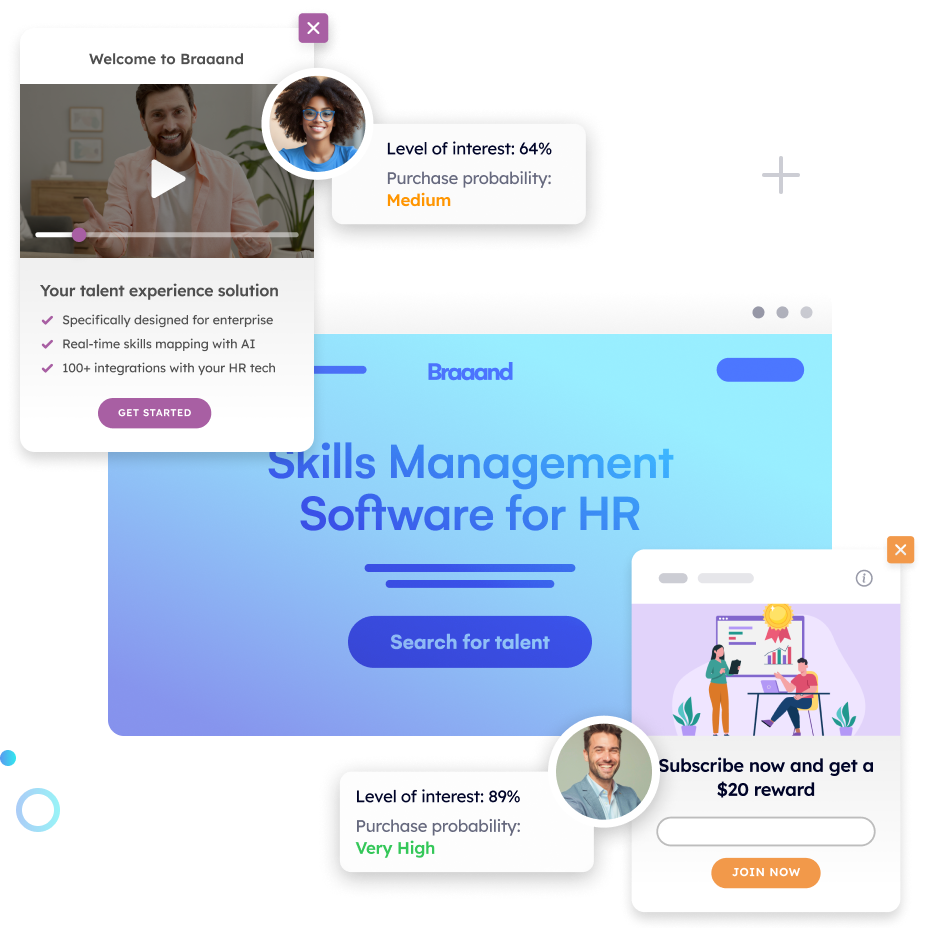
Rick: Pathmonk is the AI for website conversions. With increasing online competition, over 98% of website visitors don’t convert. The ability to successfully show your value proposition and support visitors in the buying journey separates you from the competition Online. Pathmonk qualifies and converts leads on your website by figuring out where they are in the buying journey and influencing them in key decision moments with relevant micro experiences like case studies in videos, and much more stay relevant to your visitors and increase conversions by 50%.
By adding Pathmonk to your website in seconds, that indeed I do all the work and increase conversions while you keep doing marketing as usual. Check us out on Pathmonk.com. Hey everybody. Welcome back to today’s episode of Pathmonk Presents. Today we’re joined by Barry Rosen is the principal at WSI.
Barry, welcome to the show.
Barry Rosen: Hey, great to be here. Thanks, Rick.
Rick: Great to have you, Barry. And, I wanna start about, talking about, WSI, obviously, and, understand what’s the big idea behind, your company, your branch, if you will. And if you were explaining it to someone, to a friend over a coffee, let’s say, what, how would you describe what you do exactly?
Barry Rosen: Yeah, basically what I do at WSI Digital marketing is help mid and small sized businesses turn that chaos into clarity. And we use AI powered marketing. So think about smarter SEO, sharper ad campaigns and systems that actually convert leads. And not just Chase clicks. we’re driven by over 25 years of growth worldwide, and I bring that experience to the Houston entrepreneurs who are ready to scale faster, work smarter and outthink their competition.
Rick: Okay. I love it. I love it. You definitely have that, have that down Barry. I wanna ask you about the people you work with, right? And again, as I said, people, of course, there’s businesses, industries, verticals that I’m sure, you work with. But what do you feel your, services really shine, and what kind of people do you work with?
Barry Rosen: Yeah. I love that question because, as a business owner myself, part of what we do when we’re, looking for customers is we’re qualifying them and we’re looking at do we wanna work with that person as well? So for me, my background is, I have a, global.
Perspective on enterprise and marketing and SaaS. So I like to work with people who understand their numbers in their business, have a growth mindset, and then understand the power of marketing, but just don’t have the time or the expertise to execute and need a valued part. Partner who can help them achieve their business goals.
And so that’s what I do. I go in and I understand who are they? What is their target audience? what is the goal that they’re trying to achieve? Is it get more leads? Is it grow revenue? Is it build a brand? Is it launch a new product? and then based on that, with my toolkit of digital marketing tools, whether that’s SEO.
Paid advertising, social, an ad campaign, whatever it is, then I can decide what is the best tactic to achieve that outcome that they’re trying to achieve. So my thing is I want to think strategically for my customers. And so I’m looking for customers that have that kind of mindset and a lot of times customers.
They think they know social media, they think they know SEO, they think they know PPC, but I’m looking for someone who’s also willing to learn and to grow as well. and then to work together as a team to achieve those goals.
Rick: Okay. I, love that you brought up tools, right? ’cause my next question was gonna be more about, the role that your website might play in all of this.
’cause I’m sure there’s a lot of word of mouth that typically that’s how it is, right? When you work well. People will talk about you, even when you work the, when you don’t work so well. And that’s, that, that’s the double-edged sword, word of mouth. But, if you do your job right and your customers and your clients rather are happy with what you do, then you’ll get referrals.
now what does your website say and how much of a role does it play in pulling in new clients?
Barry Rosen: Yeah, so I use my website for SEO purposes as well. So my website is very heavily worded on the local market. So it’s like local Houston, Texas, ai. S-E-O-P-P-C. So that is what the focus of my website is.
and it does pull in a lot of searches. What I also do is, the other channels that I use for lead generation is. presenting and so I go to a lot of conferences and so I do a lot of education on, ai, in general. And then lately I’ve been focused on AI and SEO and the changes to try to educate people of like how people are using, LLMs for their searches, versus Google.
And then how they can take advantage of that. that’s what I’m seeing the strength of the websites too. And then, helping customers educate customers on how they can use that. And then also, not abandon the SEO work that they’ve done, but augment it to capture the new AI traffic as well.
those are the lead. And then what I do is when I speak, I also have a QR code with a link to my website. A link to my LinkedIn, and then I have, eBooks, free downloads, lead magnets like that, that, when people fill that out, it goes into my CRM. So those are all just sources where I go.
And my CRM is also connected to my website. So when someone goes to my website, I can see how many visits they’ve been and what pages they’ve been to. And then I can also, see the forms that they filled out from, there as well. So it’s all connected.
Rick: Yeah, but that’s, sounds like a pretty smart strategy and, sounds like you know what you’re doing right now.
you’re mentioning these resources, right? your eBooks and a few other things. and I wanna understand a little bit more about from your experience working with, with clients and for yourself, what actually makes a, website convert. And, if you can share any. Any tools, any tactics, frameworks, even if you will, that worked wonders for you as well as, the things that you just mentioned maybe, that would be great.
Barry Rosen: Yeah. So the first thing that you wanna start with is the top of the funnel is just getting the clicks to the website. So that’s what, where we start. then once we’re getting the volume of clicks, then we’ll do the CRO and we’ll look at what is, how can we optimize, those clicks and how can we optimize those conversions?
And, so what we’ll look at is. How is the vi, how’s the website performing? Number one, how does it perform on a mobile device as well? those are two very important factors because a lot of people will bounce if they come to a website and it’s just non performant or it takes too long to load or it’s really busy or there’s too many things going on the website.
We really try to simplify it and. Really clarify, what is the call to action? Is it a book now? Do you want them to call? What are you trying to get them to do? Are what is the action that you’re trying to get the customer to do? And then we wanna make that very clear and simple and reduce any friction around that.
So generally what we’ll do is put a button on the webpage and we’ll make sure that it’s, it’s sticky. So when you’re scrolling up and down, it stays. It’s on every page. Those are minor things that we can do, and then we’ll look at the form, if there’s too many fields in the form. I had a customer that is a SaaS company and we were doing some, looking at their full funnel and we saw a lot of people would start the form, but they were just asking too many questions in that initial form and I said, Hey, let’s just simplify it.
Let’s make all, what can we make optional. Can we just make, the majority of these questions optional rather than required? And that started to help their conversion rate as well. And I’m like, Hey, just get them in your contact system and then you can ask some of those questions once you get them into your funnel to set up a demo or to, talk to them about your solution.
But to, get the contact, to get that initial, conversion we need to. Reduce the friction there. So those are some tactics as well. So we’re tracking all of those. We look at how many page views, which page views, how long are they spending, are they going to the form, are they starting to fill out?
And then how many are they submitting? So we’re looking at that entire kind of flow of the funnel and just trying to reduce any friction around that. And then obviously, any kind of. Search engine optimization. So we’re doing the front end and the back end, so making sure that the, it’s performant and it’s got the content so when people search that it’s coming up.
So those are the things that we’ll do.
Rick: That’s, a great approach. I would say I love the emphasis on the ux, right? So it’s not just about optimizing for marketing and, all that, which is obviously great, but at the same time, what is the experience like for the person on the other end, right?
So it’s, the form is too long, can I make it shorter? Can I take out a few fields? And, if I’m looking for a CTA, it’s always, excuse me, it’s always sticky there. What can I do?
Barry Rosen: And oftentimes what I’ll do is I’ll ask the business owner or the sales leader to go through the process themselves, pretend like they’re a customer, go to their website and do that, and then go to a competitor’s website and then compare the experience so that way they can see what.
The customer is going through so that they understand the flow of that themselves. And it’s not just a conceptual thing where we’re talking in a meeting about, oh, the form or the clicks, or the CTA. I want them to experience that for themselves and put themselves in their customer shoes and go through that process.
Rick: Okay. That’s, as I said, great approach and, I love the, thought behind it right now. I wanna switch gears for a second. Mary. I wanna talk about you as a leader and, I wanna ask you a few questions. we try to keep things, obviously professional and, relevant and contextual, but at the same time, we wanna know more, about you, what you do on a daily basis.
the next few questions will be more, rapid fire style, if you will. Sure. And I’ll just understand a little bit more about you. Is that okay? Let’s do it. All right, sweet. So what are the three main things that you focus on, on a typical workday?
Barry Rosen: Yeah. So the first thing that I, when I wake up, I’m just going through project updates.
so mostly in the morning is a lot of project management, so status updates. is there anything outstanding that I need to do? Is there anything outstanding that my customers need to do? after that’s completed. Then I’ll focus a little bit on social engagement. So I’ll go to LinkedIn, I’ll look at other people’s posts.
I’ll like, I’ll comment, I’ll connect with people. So I do that a little bit as well. That’s part of my sales process. Then typically, I do try to do, a couple of networking events per month. Not very many, but like a couple. that’s something where I can just go out and talk to people and, meet people in a casual setting, and talk, really what I do is I approach them and ask them about their business and what are their pain points, and then if it’s something that I can help with, I’ll introduce myself as what I do, if not.
Move on. and then also the other thing is, I look for speaking engagements and, other opportunities like that. So I’m looking to speak. So for example, next week, which will be, in the middle of November, I’ll be in San Jose speaking at the Digi Markon Conference, on AI and a agentic. Search. that’s the other thing that I do. And then also just, talking to my customers as well. So I’ll meet with my customers on a regular basis, my existing customers. So a lot of times what I’m doing is checking in how is their business going? What’s the quality of the leads, what is the feedback that they can give me?
’cause I don’t just wanna show them dashboards where, hey, this is how many clicks you got. My thing is to understand like, how are they feeling as a business owner? What is their temperature? what are their pain points? Are we helping, how can we help? How can we add value to what we’re doing?
So those are the things that I’m doing and I’m thinking about. So it’s In three ways. It’s, working existing project, looking at sales for future projects, looking at opportunities, for generating leads, and then dealing with existing customers and making sure that they’re happy and that their projects are going smoothly and making sure that they’re getting the results that they’re paying for.
Rick: I love that you, that you spend a lot of, there’s a lot of face time there, right? Whether it’s through speaking or, visiting clients. you got that connection with people. It’s not just behind the screen. kudos to you. ’cause I think that’s of a, lost start, in a way.
but it makes a huge difference.
Barry Rosen: What I find is with the, small owners, especially the local owners, it is a huge difference because they’re getting inundated all the time by agencies from all over, from global, and a lot of times they just want someone to put a face to a name and if they want to have a coffee.
We can go and do that. If they want to meet on Zoom, we can do that. I can go and visit them in their local business, and I think they appreciate that. It’s just nice to know that there’s someone that they need. They can either pick up the phone or we can meet locally or just jump on a Zoom call.
whatever is convenient for them.
Rick: Yeah, absolutely. this, might be peculiar, but, let’s try it out. So if you had a magic wand, Barry, and you could fix one frustrating thing in your marketing life with tech, what would it be?
Barry Rosen: So is it, my marketing life or is it in my business?
I would say it could be for your
Rick: clients too, right? What, as a, as a recurrent problem.
Barry Rosen: Yeah. so for me. When I’m talking to smaller business owners, it’s just about understanding their numbers and really understanding their business fundamentals and ’cause when you’re talking to a solar entrepreneur, maybe they’re an expert in plumbing or they’re a baker, but they don’t know their.
Numbers or their marketing. So if there was a tool where it could really just easily display like, here’s your, what your gross is, here’s what your, recommended marketing budget should be. Those are questions that a lot of people ask me. I’m asking like, what is your budget? what should it be?
haven’t you thought about that? it should be a certain percentage of your gross. Have you I haven’t thought about that. So just for the small business owners, just a little bit deeper understanding of their business and then the value of marketing. I think they they understand it, but they having never really seen or dealt with it themselves and just trying to do things here and there and maybe not had very much success.
that’s where I can come in with my expertise and really show them, that, hey, this does work when a professional is doing it. Just like I wouldn’t try to fix my own. Toilet. If it’s leaking, I would call a plumber if you’re a plumber, and you probably should not try to be doing your own social media, or running that, focus on your business and I’ll focus on helping you grow your business with the things that you know, I know how to do.
Rick: Yeah, no, that’s, that’s a great example. And, it shows to the level of care that you have, for your clients too, right? So you’re asking the right questions, making them think as opposed to. I’m just gonna teach you. they also get on board with it. You get their in that sense.
That’s, a really interesting approach. Lot of times when someone
Barry Rosen: asks for something, my first question is, why do you want this? Not that it’s right or wrong, I just wanna I wanna understand why they want that and what their goals are. Yeah. Because they’ll come at me. I saw someone do this.
Can we do this? how do, why do you want to do this? Do you think it would, why? And then, hey, if I agree, we’ll do it. But I just want to understand what is the outcome that they’re trying to achieve versus the tactic that they saw that someone else is using.
Rick: Yeah, of course. Barry, look, I love the gem so far and I want to thank you.
As we wrap things up, I wanna thank you for being on the show with us today. I also wanna give you the last word, so if someone forgets everything about the interview today. Yeah. What is the one thing that you remember about your company?
Barry Rosen: Yeah, I’m gonna give a little two things actually. and we didn’t really get too much into the AI aspect of what I do, but about the company is that, look, at the end of the day, it’s all about the human at the end of the chain, right?
So we want to embrace digital, but remain human. That’s our motto, right? So we are going to use AI tools, we’re gonna use that to help you, but there’s always a human in the loop and that’s us. And we’re making sure that your best interest is always in mind, not just relying on AI or other tools.
And then the second little Jim is from an AI perspective. ’cause we also do AI consulting. Just from a small business owner perspective when thinking about AI in your business, I think most people think about how I can save time operationally using ai. Like I can, reduce the time to do a certain thing.
I think the other flip thing that I’ve been trying to impress on my customers is use AI to. Analyze the data that you have about your customers so that you can come up with new offerings, new products or features or services that will solve your customer’s problems because you already have all of that data because you’re so close to them.
So use AI to. Create new value within your business as well as saving money operationally. So that’s the mindset flip that I want to impart to my business owners and my customers is, hey, we’re not just focused on using AI to record a meaning for you so you don’t have to take notes or automate a process.
We’re focused on how can you take the data that you have and then turn that into value, both for you as a business, and then provide that back to your customers.
Rick: But I think that’s great. That’s, certainly how we approach AI here at Pathmonk and how we use it for conversion rate optimization. love to hear that from you as well in a way that you care for your clients.
So that’s amazing, Barry. if someone wants to get involved in that, wants to get the ai, AI consulting, or maybe wants to work with you on a different capacity, how can they do that?
Barry Rosen: Yeah, reach out to me on LinkedIn, or on my website. On LinkedIn there’s a link to my, directly to my calendar. So schedule a free 30 minute consultation.
We’ll chat about, either digital marketing or ai, and then we can come up with a plan and decide if we wanna move forward together and we can help each other.
Rick: Beautiful. Barry, thank you again for being on the show with us today, and, I wish you a wonderful day.
Barry Rosen: Thank you, Rick. Thank you for having me.
Have a good one.
Rick: Of course. Bye everyone.
Barry Rosen: Bye-bye.