Introduction
I’m Souhail Alaoui, marketing and e-commerce manager at Vaonis, pioneers of smart telescopes that blend optics, robotics, and software into a seamless user experience. In this episode, we explore how Vaonis removes technical friction from astronomy, making stargazing accessible for beginners, families, educators, and experienced amateurs alike.
We discuss positioning premium hardware online, using the website as both showroom and education hub, and why visual storytelling is critical for high-consideration products. Souhail also shares leadership insights on global messaging, community-driven growth, and focusing relentlessly on user experience over tools or tactics to drive long-term revenue and advocacy in modern fast-moving marketing environments.


Increase +180% conversions from your website with AI
Get more conversions from your existing traffic by delivering personalized experiences in real time.
- Adapt your website to each visitor’s intent automatically
- Increase conversions without redesigns or dev work
- Turn anonymous traffic into revenue at scale
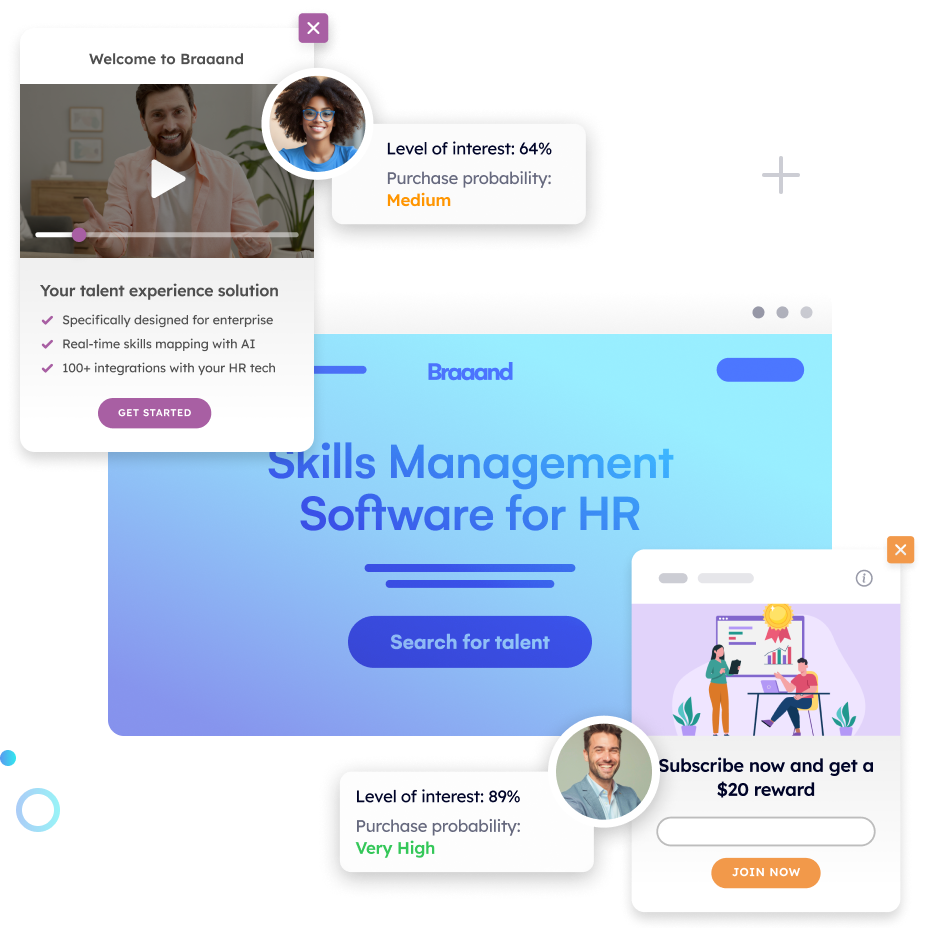
Rick: Pathmonk is the AI for website conversions. With increasing online competition, over 98% of website visitors don’t convert. The ability to successfully show your value proposition and support visitors in the buying journey separates you from the competition Online. Pathmonk qualifies and converts leads on your website by figuring out where they are in the buying journey and influencing them in key decision moments with relevant micro experiences like case studies in videos, and much more stay relevant to you visitors and increase conversions by 50%.
By adding Pathmonk to your website in seconds by letting the AI do all the work and increase conversions while you keep doing marketing as usual, check us out on Pathmonk.com. Hey everybody. Welcome to today’s episode of Pathmonk Presents. Today we’re joined by Souhail Alaoui, the marketing and e-commerce manager at Bayes. How’s it going, Souhail? Hi. Hi. Nice to meet you and thank you for having me at your show.
Yeah, of course. I’m happy to have you and we are also excited to know a little bit more about the work you guys are doing and what’s the big idea behind your company. So maybe we start with that. If you were explaining what you do to a friend over coffee, how would you describe what you do?
Souhail Alaoui: If I had to describe it in one sentence, what we do is we pioneer the field of smart telescopes. It’s a hybrid between a camera and a telescope.
And actually when you are into astronomy and traditional astronomy, it’s really powerful because what you get with it and what you get with the equipment, but there are a lot of hurdles to it because it requires technical skills, manual knowledge, patience, especially like the devices are bulky, et cetera.
And what we do at Bone is that we remove all the complexity by combining optics, robotics, software and everything—master it from an app. So all you have to do is just place your smart telescope outside, you turn it on and you have an app that we have specially designed for it.
And you can just point the objects you want to see on the night sky and it does everything for you—from the tracking, alignment, image processing, et cetera.
And the idea is making astronomy really accessible not only for beginners, but even for amateurs, et cetera. So the idea behind it is really reconnecting people to the night sky and the sky wonders with an easy way and really accessible way for it.
Rick: That’s awesome. Look, I’m gonna admit, even just looking at your website, I was wondering—just like looking at it—and I’m like, it feels like I’m looking at the night sky right now.
But I’m curious, you just touched on it briefly, right? You said the amateurs—what kind of customer is the best fit for your product? Is it the expert? Is it the person that’s just getting into things? Is there a product range for all kinds of customers? How does that work for you guys?
Souhail Alaoui: Actually, our user range is really from complete beginners to experienced amateur astronomers. So what these users have in common is frustration with traditional astronomy or only curiosity because you can be an advanced astronomer but you are a bit fed up of the bulky and complicated to set up devices, or you can be hooked by curiosity to space and the wonder of it—and we can create this one too.
And the problem we solve targets a technical and psychological problem. We remove this fear that everybody has—doing it wrong or not doing it in the right way. And we replace everything with confidence and enjoyment because with our app and the device and the way it’s designed, you just click one button and you just take time to wonder.
So you can focus more on the outcome rather than the settings and the setup, et cetera. So they can both find a good fit for them.
That’s why our products are really used by families, educators, or even people who just want to learn more about space without barriers.
Rick: That’s amazing. And I guess in a way, I’m thinking about it as a father. Back in the day, my dad had this big telescope. We went to buy it together, and it was pretty expensive. And these days, you could still spend a lot on a telescope.
But I remember the feeling of being able to just look into the sky and into space. It was amazing.
And I guess in a way your products might be able to help that—maybe even myself—when my kids are old enough to be interested. And I think you can start this at a pretty young age, just to look into that and not have to worry about the settings or the setup as much.
Would that be a use case, do you think?
Souhail Alaoui: It’s typically a use case. And me, the first as a dad, it’s something really cool because you spend quality time with your kids. You don’t focus on the tool itself, but you focus on the outcome.
And the outcome is really something wonderful. And we are really focused on the user experience. So when you have something like this, we try to make it as easy as possible, especially as flawless as possible in terms of experience—which is really cool when you try to spend some quality time with your kids or your family, or even with friends sometimes on the nights to practice something that is a bit different from what you are used to do on a daily basis.
So of course we typically have this use case scenario with our users.
Rick: Okay. That’s interesting. I touched personally on this. I asked you about the website because I think it’s very beautifully done as far as aesthetics.
Now I’m curious: how much of a role does your website play in pulling in new customers? And is there anything about it from a conversion perspective that you think really works—or anything you’ve got your eye on improving?
Souhail Alaoui: You get the right point there because our website is really a central piece in our acquisition strategy and even our brand awareness strategy.
Our products are innovative and it’s not something usual. When you see the shape or you see even the field of smart telescopes, it’s something new—many people don’t know about it. And also it has a positioning that is really premium. So people need time to understand the products and especially to see how it works, whether they are right for them or not.
And our website serves as a showroom first and also as an educational platform because we don’t only explain products, but we explain how it works, what you get, what you will get when you are using them.
And we go even further explaining what you are seeing in the night sky.
So the website really is a central piece in our communication and all the things we do—whether it’s for us as a P2C, direct to consumers from our website, or even for our resellers who find a lot of info for the products there.
One of our strengths at Ionis is our visual story, because as you can see, it’s really immersive. We spend a lot of time adjusting details of the visuals and all the shots and illustrations and situations of the products, et cetera.
So it’s a key challenge for us, but we spend a lot of time on the website. And by the way, it’s one of my missions that is the most time consuming on all the things that I do on a daily basis.
Rick: Yeah, I can imagine. And the visual storytelling is spot on because you don’t really need to explain what they’re looking at when they’re looking at the starry sky, right? We all look up at some point.
And especially if you live in a city, I noticed you forget how much in awe you can be when you look at an actual starry sky.
Souhail Alaoui: Some cities are so light polluted, so you even lose this connection you have with the sky. You can see it by day, but by night it’s just not even dark enough to see the stars.
When you use these telescopes, the first thing we hear people say is: “wow, I couldn’t imagine we had things on top of us like this.” And that’s something really cool. That’s the first satisfaction we get from users.
So yeah, for sure in the city it’s something like we are losing in our daily lives.
Rick: I love it. Let’s switch gears for a second and talk about you as a leader as well. What does a typical workday look like for you and what are the main things you focus on day to day?
Souhail Alaoui: I want to say that I focus more on strategy and execution, but on a daily basis I’m more hooked into performance and revenue.
Strategy is good, but we are in a fast paced environment, so things keep moving very quickly. We have innovations from everywhere and opportunities right now with AI and all the things launched day to day. So we try to keep up with it.
But day to day, I focus a lot on testing things, adjusting stuff on the website, acquisition channels and funnels, the messaging.
And as we operate globally, it’s a challenge to get the message streamlined for all countries and cultures. It’s not easy because we might think it’s just translation—text or visuals—and you just spread them across channels. But we spend a lot of time adjusting things.
We are based in France, but we operate globally. Our main market is the US. And we can see the difference even between producing French content and English content. Even if everyone speaks English in the company—and I speak French too—we see the difference when you don’t use the right wording.
Wording is really important for storytelling. We need the right words and the right image to make the message spot on. So it takes time.
And I also have things about strategy: how to position products, how to keep the user experience flawless—whether you are top of funnel or already a client. How to turn clients into ambassadors.
One of our main channels is the community we created with our smart telescopes and early adopters. I spend time seeing how they’re doing—we have groups, forums, et cetera—and keeping an eye on insights: to improve products, or potential opportunities for innovation.
And on top of all this, we have last-minute things or emergencies or product launches. We don’t have enough time in a day to do all this, but it’s fun and that’s why we like this fast-paced environment.
Rick: Yeah, it’s a blessing and a curse, right?
Souhail Alaoui: Exactly. Sometimes you want to learn and stay up to date with trends, but as a leader you don’t have enough time. So you take minutes everywhere to try to keep up.
Rick: That’s a good point. How do you stay up to date? Anything you turn to for inspiration—books, videos, courses?
Souhail Alaoui: It’s weird for my role, but I’m not really into social media. I spend more time on LinkedIn and on podcasts.
There are quality podcasts that bring a lot of value. I follow The Futur by Chris Do. It brings a lot of insights about positioning, perception, leadership, et cetera. They invite people from different backgrounds, so you can compare what you do with what others do.
In France we also have a big scene of entrepreneurs across domains that produce podcasts, so I try to keep up. And of course, you read specialized stuff: acquisition, conversion, magazines, et cetera.
When it comes to books, I read more books that bring value globally rather than only on my field. One is Delivering Happiness. I love it because it helped me reconnect to the idea that everything should start with the user, not the product.
You can transpose this to any domain—not only customer support, but acquisition, retail, stores, et cetera. It shows how company culture, customer experience, and long-term success are deeply connected. I try to take insights and implement them daily.
It’s easy to read. I recommend it to everyone.
Rick: Thanks for the recommendation. That mindset—focus on the user—trickles down into everything: product, selling, marketing.
And it matches what you said about Chris Do. With him being a designer by background—personally I can relate because I’m also a designer by background.
Souhail Alaoui: Oh, sweet. There you go.
Rick: Yeah, so we speak the same language. Focus on user first.
Souhail Alaoui: Exactly. And if I can invite young marketers—even me when I was young—fall in love with the user, not the tools and tactics. Tools change, tactics and strategy change depending on countries and cultures, but the user—if you focus on them—you get insights and you know what to do to bring more value, better products, better website experience, better delivery.
Chris Do is powerful, and as you said, design background—it resonates with me.
Rick: Love it. We have a rapid fire segment—do you mind if we do a couple questions?
Souhail Alaoui: Yeah, sure.
Rick: If you had a magic wand and could fix one frustrating thing in your life with tech—marketing or your role—what would you pick?
Souhail Alaoui: First one: attribution. A lot of marketers say this, but it’s really complex. Knowing what really drives conversion is hard.
In high-ticket fields like ours, you have a multi-touch journey. You never know where it starts and what led the user to become a customer. If I had a magic wand, I could click on the user and say: this one comes from here—not last click, but the whole journey.
And maybe another one: a tool to describe the emotion of the user. We measure behavior—clicks, funnels, conversion. We have tools like Hotjar to see heatmaps and movement. But we still struggle to understand how content makes people feel.
When you see an image on a landing page, when you see the price, colors, when we reveal the product—we can’t measure joy, happiness, frustration. If I had a magic wand, I’d love to know those emotions to get better positioning, better message, and better customer journey.
Rick: That’s a great one—the emotional journey. As we wrap up, I want to thank you for being on the show. Last word: if someone forgets everything today, what’s the one thing they should remember about your company and the work you’re doing?
Souhail Alaoui: First of all, thank you too. It was a real pleasure.
If I got to finish with something: we created products starting from the user experience rather than optics. Our products are made to reconnect people with the sky—and that’s something we’re losing in our cities, in light pollution, in hectic lifestyles.
Even if you don’t have time to relax and wonder, our products help you do this. We make smart telescopes that reconnect you to the universe and the cosmos, and we try to make them as accessible as possible.
If you want to take a look, go to our website so.com. And if you have questions, reach us.
Rick: Perfect. I’m going to spend some more time checking out the website. It’s an emotional one for me—it takes me back.
So if you want to measure that emotion, there you go, you have at least one.
As I said, thank you for your insights. Interesting company you’re building. If in 2026 we can reconvene and talk again, I’m more than happy to do it. In the meantime, I wish you a wonderful day and I’ll see you again soon.
Souhail Alaoui: Sure. With pleasure. We’ll be at CES starting 2026, so if ever you are there, we’ll be glad to meet you there. And yeah, we will definitely catch up next year. Thank you, Rick. Thank you for having.
Thank you. All right. Bye everyone.