Introduction
In this episode of Pathmonk Presents, we welcome Brett Stanton, Social and Content Manager at Bolt, a game-changing checkout technology provider for e-commerce. Brett discuss how Bolt is tackling the critical issue of checkout conversion for online retailers. With a focus on enterprise clients, Bolt offers a unique, merchant-friendly approach that allows businesses to customize their checkout experience while maintaining brand identity.
Brett also shares valuable insights on Bolt’s marketing strategies, including their shift towards targeting senior decision-makers and leveraging LinkedIn ads. Listeners will gain a comprehensive understanding of the e-commerce landscape and innovative solutions for increasing conversions and revenue.


Increase +180% conversions from your website with AI
Get more conversions from your existing traffic by delivering personalized experiences in real time.
- Adapt your website to each visitor’s intent automatically
- Increase conversions without redesigns or dev work
- Turn anonymous traffic into revenue at scale
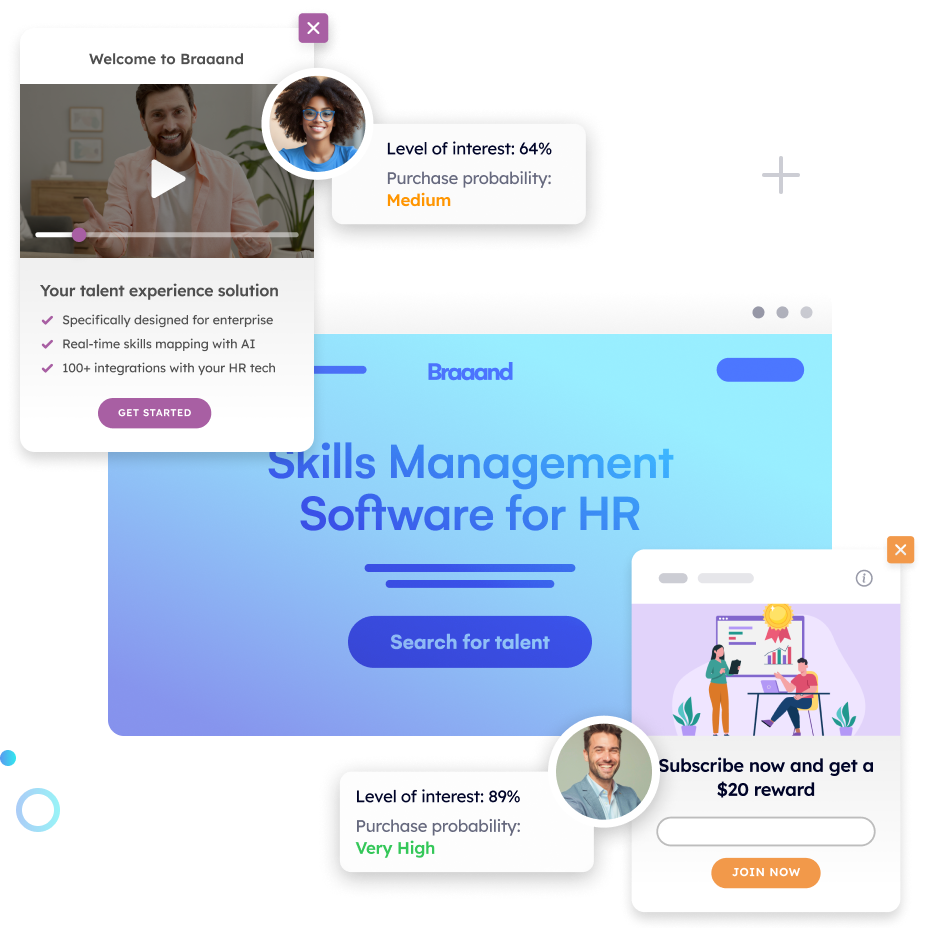
Ernesto: Pathmonk is the intelligent tool for website lead generation. With increasing online competition, over 98% of website visitors don’t convert. The ability to successfully show your value proposition and support visitors in their buying journey separates you from the competition. Online, Pathmonk qualifies and converts leads on your website by figuring out where they are in the buying journey and influencing them in key decision moments. With relevant micro experiences like case studies, intros and testimonials, stay relevant to your visitors and increase conversions by 50%. Add Pathmonk to your website in seconds. Let the AI do all the work and get access to 50% more qualified leads while you keep doing marketing and sales as usual. Check us on pathmonk.com. welcome to today’s episode. Let’s talk about today’s guest. We have Brett Stanton from Bolt Comm, social and content manager with them. how you doing today, Brett?
Brett Stanton: I’m doing well, Ernesto. Thanks so much for having me.
Ernesto: It’s, great to have you on and, well, I’m sure, Brett, our listeners are tuning in, wondering what Bolt is all about. So, let’s pick it up with that. In your own words, can you tell us a little bit more?
Brett Stanton: Yeah, absolutely. So Bolt is really solving, one of the most critical problems for online retailers, which is checkout conversion. So we see is like, roughly 75% of shoppers are going to get all the way to that, like, last critical moment before buying. Right. You go online, you add some into your carta, you’re ready to purchase, and then they drop off, again right at that last moment. And that happens for a lot of reasons. It could be like, complicated checkout, distraction, added costs, any of those things. And what we’re really trying to do at Bolt is solve that problem for particularly enterprise retailers, in a really merchant friendly way. And what that means is a lot of kind of competitors in the space, like, larger e commerce technology platforms, have really restrictive ecosystems. So you either have to use all of their technology and all of their tools or you can’t use it at all. So at, Bolt what we do is we basically allow retailers to plug and play the aspects of our checkout technology. that makes sense for their unique business needs. so again, you could use just payments or just fraudental or just checkout. You don’t have to use everything. And then also we allow them to retain their kind of brand look and feel. So we work with enterprises like revolve, Casper, Saxoff, fifth. And if you go, like, check out with any of those merchants, you won’t see Bolt all over the checkout. It’s the brand and that is the focus. And you can kind of go through and have that checkout experience in a really seamless way while like owning that, branding for the retailer. So that’s really what we do at Bolt and again, we’re really just trying to solve that checkout conversion problem for online businesses.
Ernesto: Definitely. And I don’t want to assume here, but, would the e commerce be the only vertical that you guys like to focus or is there maybe another segment that sometimes you’ll go into?
Brett Stanton: Yeah. So today it’s certainly e commerce focused. We, do that with a network of 80 million shoppers. So we have a really strong, account base that works across retailers. So again, if you’re shopping at one particular retailer and you create a Bolt account, then the next time you go use any other retailer in the Bolt network, we’re going to automatically recognize you and give you that really seamless one click experience. So we are really building primarily right now just an e commerce identity network that allows retailers, to recognize and better connect with more shoppers.
Ernesto: Okay, perfect. And so that way, then say, I’m in the e commerce business, I’m a retailer. How would I usually find out about bolt? Is there a top client acquisition channel for you guys?
Brett Stanton: Yeah, so, again, we really are focused on, kind of bringing the biggest enterprise merchants, live right now. And I think from an acquisition standpoint, what we found is that historically we did a lot of, work just to generate marketing qualified leads. So we were really going broad, mid and top of funnel and we weren’t seeing that those lead generation efforts actually converted to sales momentum for our team. So we’ve sort of shifted our focus to be a lot more lower funnel. so our kind of our primary acquisition channel is going to be LinkedIn ads, because we can get very targeted with our accounts. so like our key kind of 100 to 150 target accounts. And not only that, but we can make sure we’re targeting the right people at those accounts. again, like, we used to do a lot of work where we were hitting kind of like junior or mid or even like lower senior level people and trying to influence the buying cycles that way. What we found was that checkout is the lifeblood of these businesses and they are only allowing really senior decision makers to impact those buying decisions. So now it’s looking at how can we use channels like LinkedIn ads that allow us to target those target companies and the right titles. So we do a lot of work with, chief digital officers, cmos and information systems teams, and use those kind, of targeted ad formats to make sure that they’re understanding our business, to help unblock those sales conversations, when they happen.
Ernesto: Okay, awesome. Great to hear that. That way our listeners who are tuned in then could go ahead and visit you. They could always check you out@bolt.com. dot what role does a website then play for client acquisition? Brett?
Brett Stanton: Yeah, I think, again, because we are really targeting these senior enterprise decision makers, I think what we really try to do with the website, and this has actually been a little bit of a shift for us, is just use that as a place to really outline not only our differentiation in the market, but why are, platform is really valuable for them. we used to use the site and it was a little bit more consumer focused. We would talk about how one click checkout is beneficial for shoppers, but I think what we realized is that they’re just not shoppers are just not really our target, audience right now. We’ve really repositioned the website to focus on, the conversion and revenue boost that we can give for these businesses. we actually just launched a campaign today, that will basically highlight how, we are guaranteeing any new retailer that signs on with Bolt a 5% increase in their overall e commerce revenue. And I think thats just an example of up leveling the content on the site to be really enterprise decision maker focused as opposed to what it was historically, which was, a lot more focused on shopper and other value props.
Ernesto: Okay, awesome. Awesome to hear that then from you. I mean, that guarantee is really nice, right, for retailers that are always looking to get something guaranteed. So awesome to hear that from you. and so is there any tools or tips or methods that you would recommend to your listeners as far as some website? Ah, lead generation.
Brett Stanton: Yeah, I think in terms of specific tools, I think it’s very business, to business in terms of like, what can be valuable there. I think in terms of tips, what I would say is just like really making sure that your website is designed not only to kind of highlight your general value props as a business, but again, like really getting hyper targeted on who your audience is. I think it’s easy to just try to make your website kind of like a brain dump of all the different things that you can offer, different groups, different people, different demographics. But I think the best sites get really intentional with who they’re targeting and design everything in a way that kind of optimizes for conversions for that very specific audience.
Ernesto: Okay, thank you so much opera for sharing that with our listeners, Brett. And, well, let’s switch gears a little bit. Brett, let’s talk about you as a leader. You being the comm, social, and content manager there for Bolt What are some key tasks you like to focus on your day to day work?
Brett Stanton: Yeah, for sure. So, I mean, again, it really comes back to kind of three things, is, is the way we think about it at Bolt And it, it is almost tiered in this way. So we think about everything that we do across like, every team, whether that’s marketing, product engineering, sales. As first, how did it benefit the merchant? So thats going to be both, our existing and new merchants. Then second is the shopper. So how can we design, merchant friendly tools that allow them to provide better experiences for the shopper? And then third, how do those things like benefitbull add to our revenue, increase our bottom line? So I think everything Im doing day to day is really focusing on, like, kind of those three key pillars, and I think a few examples of that. Managing just a few different, like, marketing disciplines, is really just making our content strategy, like, super focused and designed around that enterprise target. we are constantly kind of, looking at like, what else is out in the market from competitors, from like analyst relations firmsen, and anyone talking in the space and measuring our strategy against that, and also really trying to pick areas where we can be owners. so a good example of that would be, I’ve touched on it a little bit, but the power of our shopper networks, we do have really strong, both numbers and Kwalee in our network. And all of that focuses on the idea of shopper identity. So when retailers can log in and recognize more customers, they can actually provide a really personalized one, to one experience. So again, a lot of our content social, NPR efforts are around being the thought leader and owner in that space, both from our brand and our executives. So I think just to kind of summarize, really looking at how we can benefit merchants, shoppers, and bulk, and then doing so in a unique way, which for us is like, really focused on that, like, shopper identity recognition and network validation.
Ernesto: Okay. I mean, it sounds like you have a full plate there on your hand spread, but in the cracks when you do have some available time, how do you stay up to date with all the trends, strategies in the marketing world? Is there a preferred channel that you like to go with?
Brett Stanton: Yeah. So I think obviously, as a social professional, it’s really important to be what they say chronically online. So I’m constantly, on all of the social platforms, both to understand what is trending on each platform from a content and, formatting perspective, but also because I think there’s just so many impactful conversations happening on social, if you kind of know where to look. So I would say, like, when I have a free moment, I have a Twitter tab, a Reddit tab, and a TikTok tab at all times. And I’m like constantly kind, of seeing what’s out there, trying to understand, where the conversations are going. And then I think newsletters are another really good way. I get a few of them, two that I really like. Linus’s newsletter covers the fintech space. So it’s a daily deep, dive into whether it’s m m and a or new features, or just all the happenings of fintech. That’s a great one to stay up on our sub industry. And then, I really like the information, for the general Teqtivity side, and especially their coverage on AI has been really impactful, as I just try to stay up on the incredibly fast moving space that is aihdenite. so I think, yeah, those social platforms and a few newsletters are kind of my key targets and really help me, be the most informed marketer that I can be.
Ernesto: Actually, some great channels there for our listeners. Like you mentioned, AI is here to stay after what we saw last year, and it’s just going to keep on getting a lot better. and let’s jump into our next section then, here, Brett, which is our rapid fire question rounds. Are you ready for them?
Brett Stanton: Let’s do it.
Ernesto: Awesome. All right, first off then, Brett, is, what is the last book that you.
Brett Stanton: Read, how I built this guy, Raz.
Ernesto: Okay, right, great read there for our listeners. Next up then, if there would be no boundaries in technology, what would be that one thing that you want to have, fixed for your role as a marketer today?
Brett Stanton: Yeah. So it’s interesting how I really see what the kind of customer identity tools that we’re building for e commerce, I see how they could be incredibly valuable, just like for marketers in general. Right. So when we talk about customer identity, like, what we’re really trying to help these online businesses do is not instead of treating you or Nesto like people like you, we want to treat people, or we want to treat you like you specifically. Right. So it’s getting from that, like, demographic based bucketing to really like one to one personalization. And I think if we can get there from a marketing perspective too, where like we just have like more obviously with permission and keeping like data and privacy at the forefront, just like more ability to personalize your specific online experience across like both e commerce and just like your general browsing. I think that can really help marketers to create like an AI powered world where we just know more about our customers, our audience, and are creating like really one to one content. So I think I’ve touched on a little bit, but just like knowing who you’re marketing to down to that individual level and being able to kind of add that impactful AI technology is an area that I think blue Skie and honestly, we’re probably not too far away from that is something I’m really looking forward to and would help make every marketers or life easier.
Ernesto: I think so too, definitely. All right, so, that next is if there’s one repetitive task that you could automate, what would that be?
Brett Stanton: Yeah, so I think like, I was thinking about this one. I think really for me, one of the biggest challenges is the state of like analytics and marketing reporting today. we use like so many different channels. we have different goals, different key metrics that we use on each channel. And granted, there are like, you know, aggregators that are out there. Like we use HubSpot as a company and that kind of pulls in like certain success metrics from different channels. But I think the reality is like, any aggregated platform that’s really focused on like, performance marketing is just coming up short in terms of like comparing them to, for example, like, I can see way more in the LinkedIn ads background than I can see with my HubSpot account linked to LinkedIn analytics. Right. So I think one thing that would really save a ton of time and be a really interesting tool to build is like hyper targeted marketing, analytics reporting that allows you to see everything with a high level of like granularity in one place. Because we do these like monthly or even bi weekly analytics calls to kind of obviously measure our marketing performance against, are key performance indicators and it just takes so long to grab all the data from all the different sources. So I think in again, aspirational world, it would be very easy to find in one area and you’d also get that same level of depth because I think right now you have to trade off. It’s like you either go to each platform to get the depth or you see a high level view in one place. So combining those would be really exciting.
Ernesto: For a lot of marketers out there. So, so great.
Ernesto: and, well, lastly, I mean, Brett, what is one piece of advice that you would give yourself if you were to restart your journey as a marketer today?
Brett Stanton: Yeah, I think, and you’ve probably, like, heard this as a theme in our conversation so far, Nesto, but just like, really getting focused on the audience and making sure that you’re asking the right questions as a junior marketer, I think for me personally, I have just sort of a strong bias to action in the work that I do. And I think what has happened, or maybe happened earlier in my career is that I was working in early stage startups or with other junior marketers, and we would be so focused on just sort of like checking the box of getting a post out or updating a, ah, landing page or whatever the case was that we weren’t asking each other. And then our senior leaders, like, who is this really for? What is the goal? and really, what are we measuring performance against? So I think my advice for young marketers is just ask a lot of questions. Obviously, it’s still important to do the work and show up and be present, but I think you can really get ahead and grow quickly as a marketer by just always being critical and asking the right questions about the projects, and products that you’re working on.
Ernesto: Definitely would agree with you on that. Some great advice from you. Bread for those young marketers out there. and, well, Brett, we are coming to the end of the show today, but before we do end, I do want to give you the last word. Say someone forgets everything about the interview today. What is that one thing they should remember about Bolt?
Brett Stanton: Yeah, I think what you should remember about Bolt is that we are the only, merchant friendly checkout technology provider in the market with enterprise case studies. We work with Casper, revolve, Saxoff fifth, and not only that, we guarantee new retailers can see a 5% increase in their overall e commerce revenue, ah, when they come on board with us. and I think that’s. Yeah, that’s really how I would. How I would leave it.
Ernesto: Definitely important. All right, awesome. And for our listeners, you could always check them out at bolt.com. boost e commerce revenue guaranteed bread. Thank you so much for, for being part of today’s episode to our listeners. Thank you so much for tuning in, and I’m looking forward to our next episode at, Pathmonk Presents. Thanks a lot, Brett.
Brett Stanton: Thanks, Ernesto.
Tom Levers: Great, thank you for inviting me.
Ernesto: It’s uh, great to have you on and uh, I’m sure our listeners are tuning in wondering what digital levers is all about. So uh, Tom, in your own words, can you tell us a little bit more?
Tom Levers: Sure. Uh, we have narrowed the discipline from broader specializing in technology all the way down to fractional software as a service marketing channel, business development and equity advisors. So everything’s about grow your SaaS sales funnel, improve your SaaS partner channels and most importantly, create good content that celebrates the genius of the company itself and the people that have developed it that I would work for in that engagement, definitely.
Ernesto: All right, great to hear that from you and on that then, so that way our listeners could get a good understanding of your company. Tom, what are some key problems that you’d like to solve for your clients then?
Tom Levers: Well, I can give you three different examples. Um, very quickly, a large Linux based company that needed additional resources above and beyond their marketing department because they were going to be doing a global roadshow. Um, so that I, myself and others that work with me, um, facilitated basically an ad hoc part time marketing department where we would build brochures and data sheets and success stories and uh, some other more unique types of content, um, that’s more visual and less words. And uh, it would uh, be at the show trying to grab interest supporting the existing marketing department and sales. Uh, organization that was one another is a small niche, uh, erp company where uh, it’s sort of fallen between the cracks that it’s the last place in manufacturing or warehousing where paper is still used. And um, that’s a company called Smart Vol where they create electronic Bill of waiting that came out of the COVID where no one wanted to touch anything that another person knew. And, uh, built an ebol solution that some of the largest Fortune 500 here in the US are using. Um, those are standard process automation, digitization and workflow. That’s specifically for, uh, when a truck leaves a shipping dock. Uh, it’s an interesting little niche that, uh, the larger companies somehow just went, uh, dock to dock and then transfer the information in paper. And then the next company, after the shipment got there, would pick up the paper and turn it digitized again. So, um, this is an electronic form that takes it from the beginning to the end of a typical long ltl carrier that fills a whole container full of, uh, anything from pet care, food to computers, dell computers, as an example. So another type of company that I’ve been working with, or it’s not a company, it’s a university that is funded by the Department of Defense. And they needed someone that wasn’t very smart, like me, to translate what, uh, they did in their quantum mechanics tool sets for quantum computing. They’re building a number of different, uh, tools and solutions. Not the physical quantum computer, but, uh, the tool sets that support that. And since I was in the software tool business, uh, they met us to track me down and I did some dod work, ah, for them and translated what they do. Choose a common person. Those are three different examples also related to software.
Ernesto: Definitely. So then would that be your ideal ICP or is there another type, uh, of vertical that you like to go with on?
Tom Levers: That’s it. And it’s any industry because when I started, I worked for chale company that, um, had over 200 different software partners. Everything from fisheries to, uh, furniture software, uh, to library management, to traditional warehouse and manufacturing. Uh, it was across the board. There seems to be workflow and software requirements for every single business globally at this point.
Ernesto: Okay, perfect. Awesome. Great, great to hear that. Then, uh, and so then how would somebody usually find out then about digital levers? Is there a top client acquisition channel for you, Tom?
Tom Levers: Um, well, I have a website which is digitallevers.com dot. Um, most of it is, uh, I don’t do a lot of outbound, I do a lot of content so that best practice documents that people may, uh, be interested in, that want to use themselves. Uh, so that on LinkedIn maybe I’ll write a little hook that says, gee, are you doing micro surveys in your software? And, uh, most companies that aren’t large are not doing small micro surveys right within their software. And it’s a great tool to learn. Hey, is this feature working or how do you feel in general about the software? Um, you’ve probably answered some quick questions without uh, even knowing that it’s an embedded micro survey, right. Within the software itself. That’s one of the best practice, uh, documents that I wrote. I’ve many others that uh, don’t uh, aren’t the traditional, right, it’s not what is your sales cycle and where does it stack? Even though that’s mom and Apple pie and everybody needs to know it and it’s all embedded into what is the CRM solution that you’re using as an organization. There um, are also nuances on how to get higher quality prospects, uh, that are already asking the right questions because maybe they’ve been ah, pointed out to go find a ah, certain type of software company. So that’s why I work with these companies. We try to find out what their requirements are and then myself or someone else has um, a role to assist them and we move forward all fractional. So rarely is it extremely expensive, it’s not big agency, um, numbers where to get started we need a uh, retainer of uh, $20,000 a month or something like that. It could be as small as we have a little project, let’s see how you do. And it doesn’t even have to be more than $1,000. So we work with, we understand that the entrepreneur in a software company is the very first time, it’s their idea of what software they have and they’re still testing and trying to grow the business so that one day maybe they will flip it to a larger company that will acquire that.
Ernesto: Uh, okay. Uh, awesome, great, great to hear that from, from you and well, like you mentioned, so that way our listeners 14 dean could go ahead and visit you, they could always check you out@digitalleverage.com. dot what role does the website then for plan for uh, client acquisition? Tom?
Tom Levers: I’m sorry? Uh, what role does my website or the prospects website?
Ernesto: Well uh, in this case both, right? I mean what would you say does a website have in order to clearly.
Tom Levers: Um, if it is not written for um, mobile, it needs to be uh, sometimes people built websites a few years back and the performance of the website, uh, doesn’t respond to mobile. Um, and so as a result, that very first on a phone thinking about or looking at a business card, uh, it has to have a very quick response time. Otherwise, no matter what you say on it, they’re not even reading it. And moving on, um, so that um, the very first homepage is extremely important. Um, once you get up to the homepage, you can communicate, uh, so that there’s no abandonment, uh, what you do, ah, if they’re looking, if the prospect’s looking for you and uh, drilling down into a, ah, fairly robust back end, uh, with resources and who you are and contact us and the various capabilities that you provide, whether it’s uh, development services or straight software. And what type of software, um, that homepage is really important.
Ernesto: Definitely. Okay, great. And on that note then, is there any tools or tips or methods that you would recommend to our listeners, Tom, as far as some website lead generation?
Tom Levers: Yeah, if you want to get them, if they don’t have a lot of time. Right. And they’re just looking. Real quick, who is this company? Uh, a call to action could be not we want to sell you software, but something that you could give them so that you could educate them about the topic that you specialize in. For example, um, uh, the ebol solution that I was talking about, there are all types of why, uh, ebol, uh, is not. Bill of lading is uh, an important time saving, uh, reducing paper, being able to access some documents that can convince them that it’s pertinent to learn more about.
Ernesto: Definitely.
Tom Levers: All right.
Ernesto: Thank you so much for sharing that with us, Tom. Uh, well, let’s switch gears a little bit, Tom. Let’s talk about as a leader, you’d be the owner there. For digital levers. What are some key tasks like to focus on in a day to day work?
Tom Levers: My day to day work, correct. Relationships, uh, uh, whether it is me working on a blog and talking to some people, uh, because I like to demo in putting a value proposition into a blog rather than just transactions. Um, this way, uh, there’s an elevator pitch in every single conversation, and it can be one topic or another. But those relationships with partners, and that’s the other leg of the stool that I have, that I deliver, is developing partner channels. And how you go about doing that. Sorry.
Ernesto: No worries.
Tom Levers: Go ahead.
Ernesto: Oh, okay, perfect. Um, and so, um, with that, right, I mean, you like those relationships, and it sounds like you’re really busy on your day to day. How do you stay up to date with the overwhelming data that’s out there with marketing?
Tom Levers: Right.
Ernesto: Every year there seems to be something new. Every month there seems to be something new. Uh, is there a preferred channel that you’d like to go with?
Tom Levers: Uh, tomorrow the number of touch points are infinite, and they vary over time. Um, uh, one of the things that I’d really like to do is read the marketing of the vertical market of my customer, because what I do is I learn what is prevalent in that business or industry. Who’s the leader? What are they doing? I look at the tactics and strategies of the customer’s prospect and what else is out there that their prospect may be looking at. As a result, it gives me a sense of the maturity of that industry. Some are not as mature, some are more. I mean, when you explain ah, ebol, it’s in supply chain. A fancy name for it is warehouse, uh, management. Or the documents are in a truck with coffee stains on them. It’s not as luxurious as it, uh, loves to make it sound. And, um, it can go all the way to the very complex, like the DoD example where I had to do huge amounts of background research just to learn how to ask the right questions.
Ernesto: Definitely. All right, great to hear that. And, well, let’s jump into our next section here, Tom, which is a rapid fire question round. Uh, are you ready for them?
Tom Levers: Sure. I’ll try to keep my words limited.
Ernesto: Awesome, great, great, great to hear that. Uh, well, first off then, Tom, is what is the last book that you read?
Tom Levers: I’m, um. Pardon?
Ernesto: What is the, what is the last book that you read?
Tom Levers: Oh, the last book that I read. Uh. Uh, it was, uh, a challenge for puzzles. And I don’t even know the title of it. You got me on that one. Um, it was, uh, how a puzzle maker makes puzzles. And what I’ll do is I’ll send it to you and I’ll list it. My apologies for not remembering the title.
Ernesto: No, no worries. Thank you so much for that. Uh, then next up is what is one single thing that you’re focused on at the moment the most with your company?
Tom Levers: Um, understanding time management, which, um, is really important. Uh, I’m a morning person. I know I get more done and the right things done and the creative things. Ah, during that period of time, I’m like a clock that you wind up by the end of the day. The spring’s pretty tired.
Ernesto: All right, uh, next then is, um, if there would be no boundaries in technology, what would be that one thing that you want to have fixed for your role as a marketer?
Tom Levers: Um, boundaries of technology? Well, the marketing stack is always changing. Uh, and one of the temptations is that the larger companies want to bundle everything. Um, I personally, I’m not sure I’m answering the question, but I prefer best of breed because often no one company can do all of the marketing stack as well. So the best of breed is a better approach.
Ernesto: Yeah, definitely.
Tom Levers: All right, awesome.
Ernesto: Great to hear. And, uh, is there one repetitive test that you could automate? Um, what would that be?
Tom Levers: Documentation. Um, not just documentation for my customers, but something that would automate process as I refine it and document it so that it’s more easily transferable to other people in my organization as well as my clients. Um, yeah, it’s, you know, it’s the classic management consulting workflow environment. Um, yet in the marketing area, it’s often start, doesn’t start in the same place all the time. Uh, you get the foundation, you understand the background, and then you jump around that documenting of workflow.
Ernesto: That’s, I think that’s super important. Right. Um, so thanks. Thanks for that. And, well, lastly, Tom, I mean, like you, like you mentioned before, uh, you have over 30 years of experience in the marketing world. But what is that one piece of advice that you would give yourself if you were to restart your journey as a marketer today?
Tom Levers: Um, be the expert. Your brand as a person is your most important brand. And early days, you forget that you are a brand and you’re just trying to make your way and impress the CEO of at the time that you’re working for and recognize, um, that, uh, your strengths and weaknesses should be put into some type of productization. So you need to product yourself early on, and that can change. Uh, the product can adapt and change, but, uh, in the beginning, I had no clue that that was even possible, to position and productize and create verticals of what you can do.
Ernesto: Okay, perfect. Awesome. Great. Thank you so much for that advice. And, ah, well, Tom, we are coming to the end of the show here, but before we do end, I do want to give you the last word. If someone forgets everything about the interview today, what is that one thing they should remember about digital levers?
Tom Levers: Okay. Um, really, uh, software marketing experts, uh, and it’s not off the shelf. Every single one of the projects is unique to that business.
Ernesto: Perfect. Awesome. Well, thank you so much, Tom, for being with us today in today’s episode and to our listeners. Thank you so much for tuning in, and, um, I’m looking forward to our next episode at Pathmonk Presents. Thanks a lot, Tom.
Tom Levers: Thank you very much. It was great talking to.