Introduction
Meet Abdul Rastagar, Head of Marketing at Lexitas Pharma Services, a CRO specializing in ophthalmology clinical trials.
Abdul shares his expertise on pharmaceutical marketing, emphasizing the importance of brand awareness and targeted content for lead generation.
He also discusses the crucial role of LinkedIn and website development in client acquisition, highlighting the significance of website accessibility in the digital age.


Increase +180% conversions from your website with AI
Get more conversions from your existing traffic by delivering personalized experiences in real time.
- Adapt your website to each visitor’s intent automatically
- Increase conversions without redesigns or dev work
- Turn anonymous traffic into revenue at scale
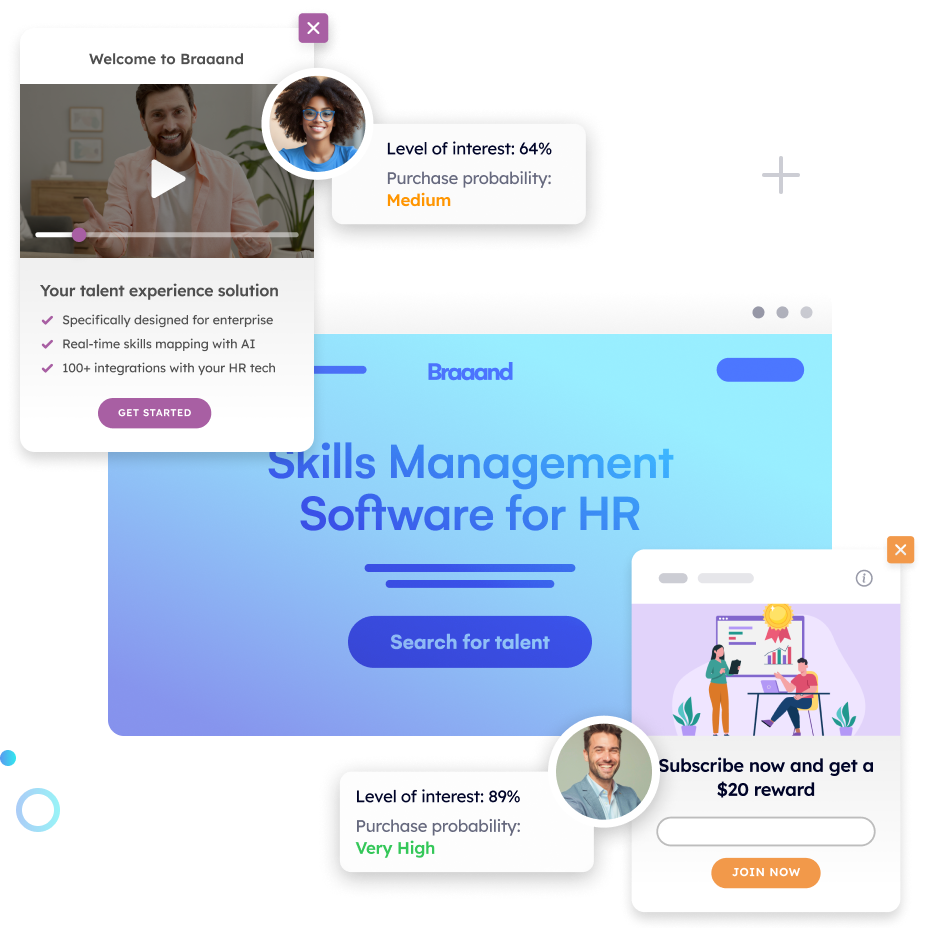
Ernesto: Pathmonk is the intelligent tool for website lead generation. With increasing online competition, over 98 percent of website visitors don’t convert. The ability to successfully show your value proposition and support visitors in their buying journey separates you from the competition online. Pathmonk qualifies and converts leads on your website by figuring out where they are in the buying journey and influencing them in key decision moments with relevant micro experiences, like case studies, intro videos, and much more.
Stay relevant to your visitors and increase conversions by 50 percent. Add Pathmonk to your website in seconds, let the AI do all the work and get access to 50 percent more qualified leads while you keep doing marketing and sales as usual. Check us on Pathmonk.com.
Welcome to today’s episode. Let’s talk about today’s guest. We have Abdul from Lexitas Pharma Services. How are you doing today, Abdul?
Abdul Rastagar: Hey there. Nice to see you.
Ernesto: It’s great to have you on today. And I’m curious to know what Lexitas is all about. So we can go ahead and kick it off with that—fair enough?
Abdul Rastagar: Absolutely. Yeah. So thank you for having me on. I’m pretty excited to be here.
So my name is Abdul Rastagar. I’m the head of marketing at Lexitas Pharma Services, and we are a CRO, which is a clinical research organization. We do clinical trials for pharmaceutical companies. And we specialize in ophthalmology—so only studies, new therapies and therapeutics for the eye.
And that’s a pretty exciting area because you can imagine the debilitating loss of quality of life if you’re losing your vision or if you’re born with some diseases.
Our customers are predominantly—or entirely—pharmaceutical companies and medical device manufacturers who develop some pretty amazing therapies to help people see better again. It’s incredible work that they do, and we’re pretty excited to be part of that journey.
Ernesto: Awesome. So that way our listeners get a good understanding of Lexitas—what would you say is a key problem that you guys solve?
Abdul Rastagar: Our clients develop the science behind the medicines or whatever therapeutic intervention, but in order to get those drugs to market and to the patient requires proving to regulators—whether that’s the FDA in the United States or the European Medicines Agency in Europe and other places around the world—that these medicines are both effective and safe.
And in order to do that, you have to study it in human beings. Those are called clinical trials.
So we manage those clinical trials. A clinical trial is extremely complex, requires a lot of patients across many sites around the world in order to have statistically significant data available.
A lot of these companies don’t have the bandwidth or capabilities to manage that many sites. So we work with investigators in ophthalmology who bring in patients, and we work with them on developing a protocol to study some of these drugs and see the efficacy.
These studies take a year and a half—sometimes two years or more—so it’s an incredibly complex undertaking, and we’re proud to be part of that journey.
Ernesto: Definitely awesome. And when you were talking about your clients—would it be fair to say your vertical is pharmaceutical companies and you’re only focused in ophthalmology?
Abdul Rastagar: Absolutely. Yeah. We’re quite niche. There are a lot of CROs out there who do rheumatoid arthritis or CNS or oncology or whatever it may be—we are focused 100 percent on the eye.
That gives us a unique ability because we have a lot of expertise in just that one area. Every one of our service team members is very experienced with ophthalmology studies.
Ernesto: Definitely. So how does your audience typically find out about you guys? What would you say is your top client acquisition channel?
Abdul Rastagar: It’s an interesting question because of the journey we’ve taken in the last year or so. Lexitas has been around for over 12 years, but it was pretty small—almost like a little mom and pop shop. We did a few studies a year.
About a year and a half or two years ago, we were acquired by a private equity company with the goal of growing quite significantly because we have a lot of expertise.
When I first came here a little over a year ago, brand awareness was virtually non-existent. We didn’t do much outreach in the past. And how can you participate in more studies and get more clients if clients don’t even know you exist?
So one of my big priorities has been raising brand awareness. And the answer is: go where the customer is—LinkedIn.
We put a tremendous effort into LinkedIn over the past year with incredible results. We started with around 400 followers last November, and by December 31st we had 12,000 followers. And beyond the volume, we track brand awareness through followers, but also increased RFPs and MQLs and how many clients cite LinkedIn.
All those measures tell us the strategy has been incredibly effective.
Ernesto: Wow—that’s an incredible uplift. So what role does the website play for client acquisition?
Abdul Rastagar: The website up until last summer was—let’s call it what it was—it was terrible. Very basic, no possibility to capture information, bland informational site.
We redesigned it significantly since then. Phase one is done and phase two and three are coming. In phase one, we wanted a modern, clean, friendly site with more information, and most importantly the ability to convert—so people can subscribe to our newsletter, contact us, and so on.
Traffic was very low early in the year. It’s grown quite a bit, and December was our highest month to date in visitors.
We also added scheduling directly on the website—so if someone wants to meet with us, they can click and book through a Calendly-type tool and it drops right into the business development person’s calendar.
And one thing we did last month that I’m very happy about: we installed a plugin for accessibility. People with low vision or vision impairments can adjust the site based on their needs. And when you’re an ophthalmology company, that should be a no-brainer.
But even beyond that, I think every website should have this because it’s the right thing to do.
Ernesto: I totally agree with that. That’s awesome to hear.
Let’s switch gears a little bit and talk about you—being head of marketing at Lexitas. What are some key tasks you focus on day to day?
Abdul Rastagar: Day to day is very tactically oriented, but I try to keep the long-term vision too—balancing strategy and tactics regularly, which is complex.
I do a lot of the content as well because content marketers with ophthalmology expertise are hard to find. So I work with internal experts who know ophthalmology deeply, but aren’t content people, and together we develop content. That’s a big part of my job.
Another big focus is being strategic about leads. I don’t really count leads, and I don’t even count MQLs. I focus more on MQLs that convert into RFPs.
I’d rather have a handful of high-quality leads that convert into RFPs than millions that don’t.
And it’s complex because the volume of studies is low—there are only so many ophthalmology studies each year—and the sales cycle is over a year. So tracking and learning from that data is a different beast than a high-volume SaaS model.
Ernesto: Definitely. Sounds like you’ve got a full plate. And you’re right—nobody wants a million leads that don’t convert.
Let’s jump into our rapid fire question round. You ready?
Abdul Rastagar: Sure. Let’s do it.
Ernesto: First off—what is the last book that you read? And it can’t be yours.
Abdul Rastagar: I wasn’t going to plug my own book—I appreciate that though.
It is January, and every year on January 1st, I read Rudyard Kipling’s The Jungle Book. That’s the one I just read recently.
Ernesto: Interesting. Is there a reason you start the year with that?
Abdul Rastagar: There is. I read Mark Twain’s autobiography—Sam Clemens—and there was a sentence in there where he said the greatest book he ever read was The Jungle Book, and he made a point to read it every year.
And I’m like—if it’s good enough for Sam Clemens, it’s good enough for me.
Ernesto: Awesome. Now—what is one single thing your company is focused on at the moment the most?
Abdul Rastagar: Developing our website. Taking the next steps—phase two and beyond—and making it the top-notch website in our space. That’s a big focus for us.
Ernesto: Perfect. Now, if there were no boundaries in technology, what would be one thing you’d want fixed for your role as a marketer today?
Abdul Rastagar: Bringing in the thought leadership from our clients and internal experts and packaging it into customer-facing content.
I wish there was a tool that could just “click” and do it all—download the thoughts from experts and package it up into five different formats. That would be a tremendous time saver.
AI and GPTs can help, but not at the quality level I’d want—at least not yet.
Ernesto: Definitely. Now, if there’s one repetitive task you could automate, what would that be?
Abdul Rastagar: We’ve done a fair bit of automation, but the analytics behind it is still very complex.
I’m continuously surprised at how much time we spend cleaning up analytics so the data actually means something. If there was a better way to automate that cleanup, it would save a lot of time.
Ernesto: Totally agree—every marketer would love that.
Now—what’s one piece of advice you would give yourself if you were to restart your journey as a marketer today?
Abdul Rastagar: Focus on results. Absolutely focus on results.
Most marketers focus on tactical activities—how many blogs they wrote, how many people clicked, things like that. Those are not results.
Results are outcomes: how much revenue did you bring in, how many customers did you retain, how much growth did you drive. Those are what matter.
In life sciences, we don’t look at the number of tests we do—we look at whether the patient can see better. As a marketer, you should think the same way.
If you start thinking like that early in your career, you’ll distinguish yourself from most marketers out there.
Ernesto: Great advice. Thank you so much for that.
Abdul, thanks a lot for being on the show with us today. Last word—if someone forgets everything about the interview today, what is that one thing they should remember about Lexitas?
Abdul Rastagar: Honestly, what I said earlier about the website plugin—let’s not worry about Lexitas so much. Let’s worry about making websites more accessible.
Talk to your IT team, talk to your digital marketing team—can you build a plugin into your website that increases accessibility for vision-impaired people?
Ernesto: Definitely. Thank you so much, Abdul, for being on.
Guys, you can always check them out at lexitas.com. Run your ophthalmology trials with a true partner. Abdul, thank you so much for being on. To our listeners, thank you so much for tuning in and looking forward to our next episode at Pathmonk Presents.