Introduction
Shivani Airi, Chief Strategist at AltVibes, joins Pathmonk Presents to share how curated ecommerce experiences can dramatically improve website conversions. AltVibes operates at the intersection of experiential luxury and ecommerce, bringing globally sourced homeware, coffee, wine, and kitchen products to Indian consumers. In this episode, Shivani explains how intentional curation reduces choice paralysis, why website structure matters more than endless product listings, and how tools like behavioral analytics inform smarter merchandising decisions.
She also breaks down how performance marketing, word of mouth, and customer trust work together to drive sustainable growth. This conversation offers practical insights for marketers and founders looking to improve conversion rates through smarter UX, data driven decisions, and meaningful customer experiences.


Increase +180% conversions from your website with AI
Get more conversions from your existing traffic by delivering personalized experiences in real time.
- Adapt your website to each visitor’s intent automatically
- Increase conversions without redesigns or dev work
- Turn anonymous traffic into revenue at scale
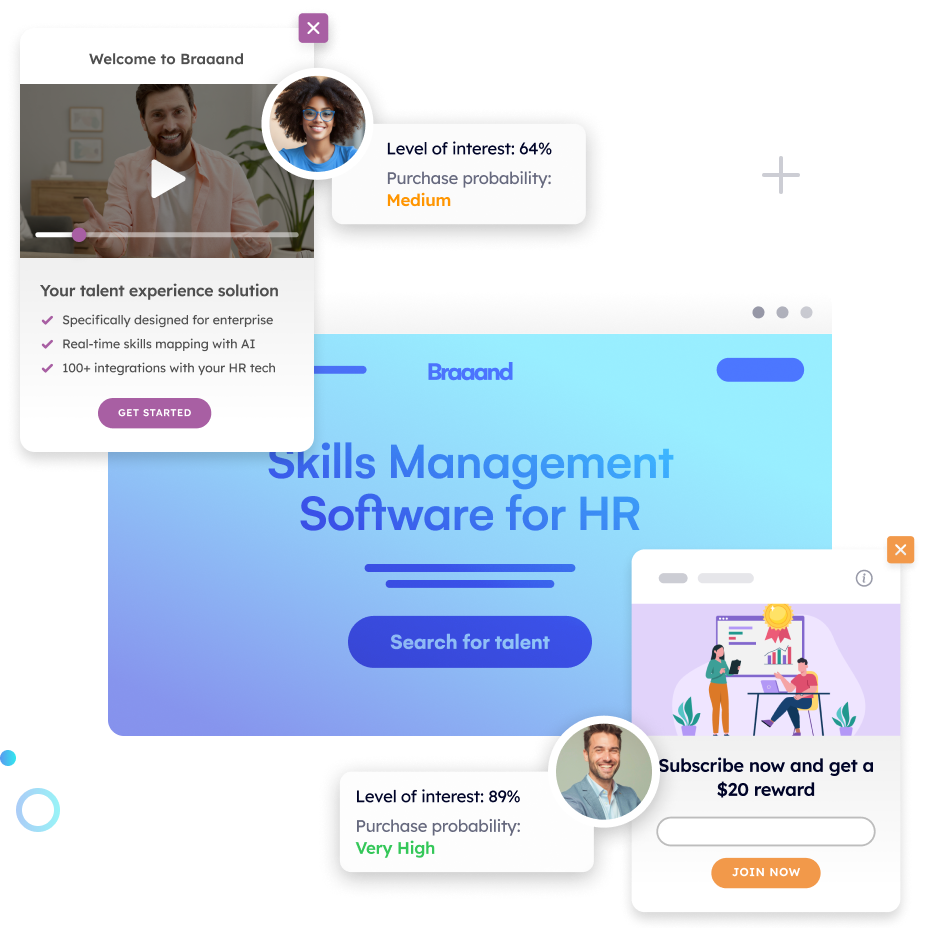
Rick: Paathmonk is the AI for website conversions. With increasing online competition, or over 98% of website visitors don’t convert. The ability to successfully show you value proposition and support visitors in the buying journey separates you from the competition online. Paathmonk qualifies and converts leads on your website by figuring out where they are in the buying journey and influencing them in key decision moments with relevant micro experiences like case studies, intro videos, and much more stay relevant to your visitors and increase conversions by 50%. By adding Pathmonk to your website in seconds by letting the AI do all the work and increase conversions while you keep doing marketing as usual. Check us out on pathmonk.com everybody. Welcome to today’s episode of Pathmonk Presents. Today we’re joined by Shivani. She’s the chief strategist at AltVibes.com. Shivani, welcome to the show.
Shivani Airi: Thank you for having me.
Rick: more than happy and excited to, to get this going, Shivani. People don’t know this, but it’s been a long time coming. We’ve had a couple reschedules, behind the scenes and then, but I’m happy and I’m excited to have you here today. And maybe, maybe hanani, we start with the basics a little bit. What’s the big idea behind AltVibes? And, if you were explaining this to a friend over coffee, how would you describe what you do?
Shivani Airi: so I usually do that a lot. I do ex describe my business to a lot of friends. I describe all tribes as a curated e-commerce platform, which operates in India, but we do global scouting. And the idea is to bring the best in homeware, to Indian homes. So we operate in four categories, which is kitchenware, barware, home decor, and tea and coffee products. So you can think of brands like Hario for coffee lovers and Oxo for the home chefs, or Riedel for the wine connoisseurs.
when we started, we set out to solve a very specific problem, which was the education gap in the Indian market about why a glass shape matters. the traditional business that we started with was importing glassware brands to India, specifically Riedel, which is, as you might know about, wine varietal grape glassware—so educating wholesalers and retailers, and then B2B and B2C customers alike about why a glass shape really matters. It’s not just about aesthetics. It’s about how a Bordeaux breathes or how a Riesling hits the palate.
and over the years, as India’s wine and coffee markets grew, AltVibes also grew with them. today we’re not just a trading company, we’re more about experiential luxury. the idea is that more and more people want to bring luxury home and you want to experience little joys in the little things inside your house—be it a nice colorful Oxo pot, or whether it is Hario’s V60 kind of coffee gear for those who really enjoy their coffees at home.
So our goal is to help bring you the same level of sophistication and joy inside your house that you would probably feel when you go to a cafe or a hotel. And that’s where AltVibes came.
Rick: Nice. I love it. And just as a side note, I’ve studied over the holidays—Ox came out a lot ’cause I gifted my wife with a set of pans and pots and it’s one of the best brands. So I’m glad to know that you guys treat that and, in a way, have it as an option, right?
Yeah. You touched on this for a second, and maybe we can deep dive just for a minute about your customers, right? Which type of customers are the best fit for your products, would you say? And is there anything that you think sets them apart as in, maybe they have a specific product or there’s something that’s more popular among your website—just overall, just to get an idea of who buys from AltVibes.
Shivani Airi: so we have two parts of the business, one which deals with the offline segment in India, which is traditional retail, modern retail. And then there’s the online part of the business called AltVibes.com, where we of course deal with the end consumer ourselves.
But if we were to look at the industries that we touch, it ranges from stores in India, which would be an equivalent of a HomeSense in North America—so it’s called Shoppers Stop—to all the way up to five star chains that are looking for high-end products without really getting into the logistical nightmare that is that when you’re bringing in products from across the world.
So we solve the access gap essentially for our end consumers, and we say, okay, we’ll make it happen. We’ll keep the inventory and whether it’s a client or whether it’s a retail shop in Delhi, or whether it’s the end consumer who just wants to have something they saw online, but they don’t know whether it’ll be available in India or not—we try to bring such products to India once we know that there would be a demand for the customers.
Rick: Got it. Okay. And how do these people discover you? ‘Cause many times whenever I speak to leaders like yourself, there will be a specific marketing channel that’s outperforming all of the others. And so is there anything that has become your go-to for bringing in more clients?
Shivani Airi: Yeah. it’s very popular to say that, oh, we did it organically, but that was not the case for me at all. I’m gonna be very honest. India’s very competitive and you have to pay to play.
So there are two parts of how I would see how people find us. One would be through precision, and precision meaning reaching out to people where there’s an intent to buy. So we focus very heavily on Google performance marketing and we haven’t really pivoted into creating really high quality video content yet. So I don’t spend a lot on social media just as yet because I know that’s a very visual platform. plus we import almost 20, 30 brands from across the world, so it’s a lot of heavy financial investment when we get into video production. So we haven’t really gotten there. But Google performance marketing does really well for us.
On the other side, we’ve been lucky that we get great word of mouth referrals. So people who have already come to our website—one of the problems in India is that people don’t know whether what we’re selling is authentic because the market has flooded with spurious products. So once they do get to know that we’re selling them authentic products, then you’ll hear a lot of my customers coming and saying, oh, a friend recommended or a family member recommended your website.
And one of the most surprising things we saw end of last year was some random person had posted on Reddit about a deal that was going on our website. We haven’t promoted ourselves on Reddit at all. But the communities are so highly engaged. So let’s say there’s a subreddit called India Coffee Lovers, and then they saw a deal and we actually had a viral moment where we sold out of a very popular product within 24 hours.
So Reddit is something I would like to experience in the future for sure and explore how we can use it more. But yeah, that’s been a great way for people to find us.
Rick: Wow, that’s amazing. Congrats. And I’m sure you wanna explore more now, ’cause especially after that first virality moment, that gives you confidence.
But I’m curious—how much of a role does your website play in your overall e-commerce strategy? Where do you see it? And in terms of this virality example coming from Reddit and pointing to a specific product or a product line—where does your website sit in terms of importance in all of this?
Shivani Airi: Yeah, it’s extremely important I feel like. so India has a lot of third party e-commerce platforms on which we’re available as well. So your Amazons and then the indigenous platform players like Tata Cliq, et cetera. And they all have their niche audiences. Amazon is a little more price conscious people. Tata Cliq is probably more luxury people. So we have those presence in the market and it’s great for discoverability.
But one of the things the website does for us really well is what to do once somebody has come to our website for the first time—how do we bring them back again? So that’s where the website plays a great role because then you can implement loyalty points. You can give them emailers if they’ve agreed to that.
And another thing is then the website becomes a tool for me to actually learn about the products that are working. What are people seeing, the reviews that they’re leaving, what are they not buying? So of course there’ll be products that sell really quickly, and then there’s some products that sit in my inventory for a very long time. So it also helps me understand what kind of new products should I be launching, what kind of categories should I be looking at, what kind of categories do I now need to retire.
using a tool like Microsoft Clarity is great because it also helps me understand how my users are actually journeying through the website and what are they really searching for. yeah, I’d say it’s one of the major places where I get a lot of feedback without really speaking to my customers or my target audience.
Rick: Based on behavior. So you understand what they’re doing. Yeah, totally.
From your experience now, you just touched on it—loyalty points and how do you bring people back—but what do you think actually makes a website convert in the first place? How do you get those first visitors (or returning visitors) to convert? Any tools, frameworks, or tricks you can share?
Shivani Airi: one of the things I’ve found out in the last three years and how we differentiate ourselves from other people who are selling similar products online is through curation. And that has been one of the things that we’ve always focused on. Understanding the fact that people don’t really know what they’re looking for most of the times, especially if you come to buy a wine glass in India—you don’t really know what a Bordeaux glass should look like, you don’t really know why a bellini should be drank in a certain place in a certain container.
we use that insight to actually divide the whole website—all four categories—in heavily curated segments. So you can go on the website and you can search our products through rooms. So you might be in a mood to redo your living room. So you’ll find products according to that.
you can do it through interior vibes—wabi-sabi versus boho versus zen, anything, right? So if you have that kind of a set mindset and you’re looking for products that match those things, you can do it through that.
we’ve also bifurcated our products through activities. So whether you’re going picnic, barbecuing—there are certain things for that. We also have a wine tasting kit. So then now we’ve created an activity saying, “Hey, if you wanna host a wine tasting event at home, these are the products you should probably have.”
And then of course there is curation through drink types—champagne cocktails, et cetera, et cetera. And the same goes for coffee, kitchen, meal preps, right?
So all of that has really helped our customers find our products in an easier manner. we’ve always tried to keep our products very limited so that our customers don’t experience choice paralysis, and that’s what we’re trying to avoid compared to a place like Amazon.
But at the end of the day, it is a business, so you do want to add more products. So the only way you can do that, according to me, for my business is to make it as curated as possible—and that’s really worked.
the other thing is using tools which help us get feedback from customers—using a review tool on the website, loyalty points, Microsoft Clarity.
And lastly, one of the biggest problems we have is traffic—figuring out how to get rid of bot traffic, because the website has just been bombarded with a lot of bot traffic off late. So we use a tool to block bot traffic, and it’s been doing well for us.
Rick: Okay, thanks for sharing. And the “rooms” idea is really brilliant. From a UX perspective, that’s super strong.
Shivani, let’s switch gears a bit. I want to talk about you—day in the life. What are the top three things you focus on day to day?
Shivani Airi: What gets me excited is seeing reviews from customers. every now and then. So that’s probably the first thing I start my day with. usually they’re great, so I get a kick and I feel good about the work that I’m doing, which I think is very necessary when you’re running a business because there’s very few things that you’ll get that give you that validation. Unlike a job, which gives you a promotion every now and then.
So I make it a habit that whenever I start work, the first thing I see is whether I have any emails or DMs or reviews from customers. That’s my first priority to get sorted.
The other thing is that I’ve realized that a website literally works like a human body. So you need to do checks almost every day to ensure that it’s still going on fine. Because initially when I started I was like, “oh it’s set up and it’s all good, and now I can focus on other things.” And then you get to know—no, it’s lagging, or something broken, or a link is not working.
initially I wanted somebody else to be in charge of the QA, but I realized that now I’ve just figured out how to do it very quickly. So the second thing I do is I’ll just go on the website and I’ll make sure: is everything working fine? Are people able to make the purchase? No links are broken. Doesn’t really take a lot of time, but it gives me that satisfaction that, all right, everything is nice, good out there.
So there’s one part of my work which I really like, which I do maybe on a weekly basis, and that’s to go out on the websites and look at new products in my categories. So which new product has gotten the red.design award? Do I want to introduce it to the Indian market? Are there any other products which are really unique which fall under the segments that I sell which would be of interest to my customers? Once a week, I’ll put them down and I’ll see if I can reach out to the companies and see if they’re interested in entering the Indian market with me.
The last thing is ensuring that my financial status looks good. So I have to look at where am I giving too much discount? Why did something happen? Sometimes some things are broken—we’re already giving a discount, and then there’s an additional coupon code and you realize that, oh, you actually ended up making a loss on that sale. So yeah, that’s the more heavy part of my job, but I have to do that as well.
Rick: Got it. And that QA point is super real—most people underestimate it.
Now, there’s a flood of content out there. Do you prefer watching, reading, or listening?
Shivani Airi: All three.
Rick: What’s the latest piece of content you consumed that really stuck with you?
Shivani Airi: Yeah. I read this book called The E-Myth by Michael Gerber, and I hope I’m pronouncing the name right. And it was highly recommended.
It talks about how most founders aren’t building businesses, but they’re just creating high-stress jobs for themselves. And the core idea is that you have to build your business as if it were a franchisable blueprint from day one. So it should be able to work even if the founder or the person who is most attached to the mission of the business is not there. It should be able to work with the lowest skilled person in your company.
So how you do that is you create systems in place and you create blueprints and then you ensure that the business works through that. I’m sure something that you would’ve seen in that movie about McDonald’s—The Founder.
Currently I’m trying to apply this to my work, because one of the traps that founders fall into is that they’re almost always too obsessed with doing things right by themselves. So now I’m focusing on creating systems so that even if I’m not there, even if I’m out and away, things are very consistent and my customers continue to get exactly what they would’ve expected if I was doing it.
Rick: Love it. E-Myth is a classic.
If you had a magic wand and could fix one frustrating thing in your life with tech—could be marketing, ops, anything—what would you fix?
Shivani Airi: I’m actually glad you said magic wand because what I’m gonna say is a little further away in the reality of things, but one of the struggles that I have is that I sell a lot of products which need to be seen and felt, and there’s a sensory gap that comes into play when you’re selling things online.
So I don’t know whether it’s AR/VR, haptic feedback—I don’t know. But I would ideally love for my customers to be able to feel what the products feel like while sitting on their screens. because that’s one thing that retail has that online retail doesn’t. And that would be a great use of technology.
Rick: Totally. That would be game-changing.
I want to thank you for the conversation and for being on the show with us today. I want to give you the last word: if someone forgets everything about the interview today, what’s the one thing they should remember about the work you guys are doing?
Shivani Airi: Oh, I think they should just remember that we very strongly believe that happiness begins from home, and little things can spark joy like Marie Kondo says. we’re just helping you scout the best things to put in your house so that you feel joy every time you look at them.
Rick: Amazing. And if someone wants to check you out, where can they go?
Shivani Airi: Altvibes.com. A-L-T-V-I-B-E-S.com.
Rick: Too easy. All right, go there, everybody. Shivani, appreciate you being with us. Thank you.
Shivani Airi: Yeah. Thank you for having me, Rick. It was nice to finally be able to connect.
Rick: Likewise. All right. Bye everyone.