Introduction
Peter Velardi, CEO and Founder of Refer Me IQ, joins Pathmonk Presents to break down how referral-driven growth can outperform traditional acquisition channels when supported by the right systems. Drawing from decades of experience in financial services and enterprise leadership, Peter explains how companies can turn referrals from an unpredictable bonus into a repeatable, scalable growth engine.
The conversation covers building a referral culture, aligning systems with human behavior, and using automation to reduce acquisition costs while increasing conversion quality. Listeners will gain practical insights on ICP focus, customer journey design, and why predictable referral workflows are becoming a competitive advantage for modern growth-focused organizations.


Increase +180% conversions from your website with AI
Get more conversions from your existing traffic by delivering personalized experiences in real time.
- Adapt your website to each visitor’s intent automatically
- Increase conversions without redesigns or dev work
- Turn anonymous traffic into revenue at scale
Kevin: Hey everybody. Welcome back to Pathmonk Presents. Pathmonk is the AI for website conversions. With increasing online competition, over 98% of website visitors don’t convert. The ability to successfully show your value proposition and support visitors in their buying journey separates you from the competition Online.
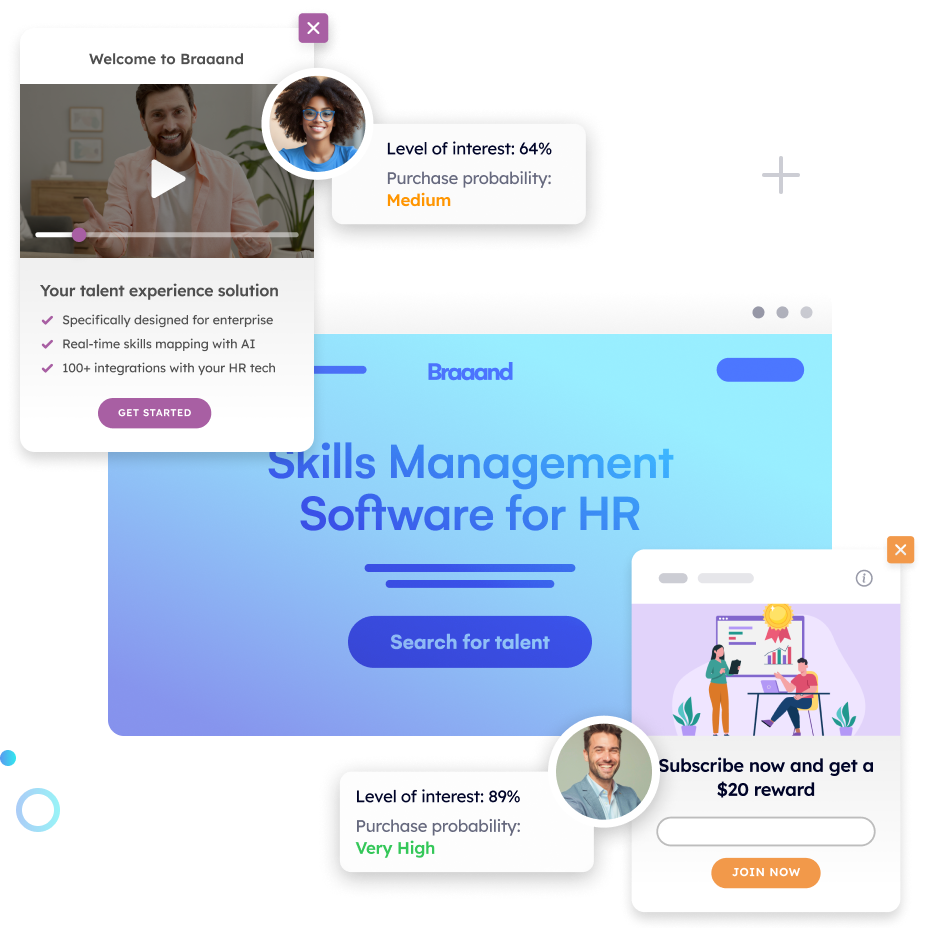
Pathmonk qualifies and converts leads on your website by figuring out where they are in the buying journey and influencing them in key decision moments with relevant micro experiences like case studies. Intro videos and much more. Stay relevant to your visitors and increase conversions by adding Pathmonk to your website in seconds.
Letting the artificial intelligence do all the work and increase conversions while you keep doing marketing as usual. Check us out on Pathmonk.com. Hey everybody. Welcome back to another episode of Pathmonk Presents. We’re really looking forward to today’s episode. We’ve got CEO and Founder over at Refer Me IQ, Peter Velardi, how you doing today?
Peter Velardi: Hey, I’m doing great, Kevin. Great to be here with you and your audience.
Kevin: I’m really excited to have you on. before we dive into everything and get too, deep into the nuts and bolts about what refer me IQ is, why don’t you just give us a little bit of a overlaying statement about who you guys are and, what you’re looking to solve?
Peter Velardi: Yeah, absolutely. again, great to be here. We basically work with leaders of small and medium sized organizations that are growth oriented. that want to grow faster, acquire more clients, but do it at a lower cost per client acquisition, which of course spells referrals. And what we do for these companies is we completely automate through AI and workflow management.
a very successful proven referral process, but more importantly, helped the leadership team build a referral culture, and basically save them a lot of time, money, and effort, and spend that they’re currently doing. And our deliverable seems to be quite unique out there for a software company, Kevin.
It’s not only software that we can prove that works. we have a hundred percent retention of enterprises and average ROI is 10 times plus in the first year. But we deliver not just the software, but we wrap it with tons of value add to get traction. Things like onboarding, training, quarterly workshops, dashboard reviews with the leaders.
and we do, we play a lot in regulated spaces like financial advice and wealth and insurance. And so we’re also really good at making sure it’s all tightened up from a compliance perspective. So that’s what we do and we’re here to help.
Kevin: Awesome. You had mentioned a few kind of verticals or a few different types of individuals who might be utilizing this.
Maybe you can tell us a little bit more about that audience. Are there any specific industries that you think you’re working with most at the moment, and what are the most common issues that Refer Me IQ is looking to solve?
Peter Velardi: Yeah, I would say that 50% of our client base are companies within the financial advisory, wealth management insurance space.
’cause that’s my background. I’ve been in that space for 40 years, starting as a financial advisor, senior guy, entrepreneur, investor. So I know that space really well. I have a lot of C-Suite contacts and so that group, what they’re trying to solve is profitable growth. and they know they need to acquire clients.
It’s the most valued thing that a company can do for a financial advisor to attract, retain, and train them. And that’s to help them acquire clients. So we help those companies acquire talent and recruit people who want to be supported with client acquisition systems at scale, and help them retain them, help ’em become more productive.
The other half is a mix of all sorts of verticals. Everything from health spas to a real estate company to technology companies like yours, companies that just have tried everything possible to fish in the stranger pond, and with the low conversion, high cost, high churn, and all those things tend to produce a lot of leads that take a long time to convert.
I think companies like yours are starting to emerge now that can really help that process along faster. and I’m curious to explore that with you as well.
but they know that the best businesses are built on building a hundred percent referral-based businesses, but they just lack a system. They have no workflow system or structure to make what is unpredictable, predictable, and they miss the whole 50% world of referrals that they would get if they just asked.
So our system basically does all the human behaviors that we wish that a producer would do. But what ends up happening is it doesn’t happen because people get in front of people and they have all these hangups and lack skill and courage to do it.
So our system does all the key steps that we would wish a human sales producer would do for them in a personal, authentic way and manages the whole workflow.
Lastly, for some companies, it’s the first time they even get visibility on how many referrals they get, what the engagement of people are, and all the restrictions in their conversion path.
I’d say it’s a mix of wealth financial, but also all sorts of cool companies with cool people that just want to grow at less costs and actually scale. Build valuation by having installed systems that don’t depend on perfect human behavior.
Kevin: Yeah, I think I would say the digital marketing agency to technology partner. This is something that we see all the time, right? How can Pathmonk work with digital marketing agencies to provide them with more value and ultimately more conversions for their clients?
And yeah, it’s something we see all the time. Some smaller agencies who haven’t really dabbled in the referral area for too long. Maybe they’re really looking forward to handling more referrals and building up that referral side of the business.
But if you don’t have a system in place, it can lead to longer and longer sales cycles. Some of those referrals end up fizzling out because they’re not on some sort of conversion path, and you don’t know how to manage that process.
I think the agency to technology partner relationship is definitely one that could utilize something like Refer Me IQ.
Peter Velardi: Yeah. And you’re so right, Kevin. In fact, we’re seeing more interest than ever from actual marketing agencies.
One is, they want more tools to help their clients, and they’re struggling to become relevant right now because so much of what they do can be outsourced through AI agents. So they’re trying to grasp for relevancy and value, and if successful, they will not only survive, but they’ll thrive.
But what they’re seeing second is they’re seeing all the marketing systems and tools that they help orchestrate and deploy. It’s harder and harder to get return from that, but it’s all that fishing in the stranger pond.
What they’re starting to wake up to is that the gold really is relationships. The gold a company has is all the relationships cumulatively: their clients, their networks, their strategic partners.
And what they lack is a gold mining system. That’s why we’re becoming very relevant.
We have this thing off the shelf you can take, and let’s nurture those relationships, add more value, and create an easier path so that they can actually refer 10 people in two minutes instead of one person in 15 minutes.
Because today, the number one way people refer is through email. And that takes time. We need to make all that way easier, and that’s exactly what we do.
Kevin: I would agree. Moving on, I wanna focus a little bit more on the website itself for Refer Me IQ. I checked it out. That’s a really nice looking website.
Maybe you can tell me what role does the website play in terms of current client acquisition?
Because ultimately, someone’s gonna go to the website, they’re gonna say, is this the right website for me? What sort of major strengths or weaknesses do you think your website has currently?
Peter Velardi: Yeah, that’s a good question. I would say our website has played historically a supporting role. It’s a supporting cast. It wasn’t intended to convert clients. It was more intended to support all the other channels that we use with being clear on the ICP, being clear on our story, and having lots of content.
Our strength is we’ve got tons of value added content and tools in the resource center. White papers, tools, calculators, all sorts of things that can help them fish in the relationship pond and mine that gold.
So the strength historically has been clear messaging, great support, great resources, and very good branding.
Our weakness, though, I would say is conversion. Where we’re shifting now is we’re starting to say: we want our website to play a more primary role.
We want to create a more clear, precise customer journey, improve conversion, and shift toward enterprises that have 10 to 20 to a hundred to a thousand producers.
Kevin: Yeah. Sounds like you’re doing the right thing as you guys grow.
Kevin: Okay. So I want to change the focus of the conversation a little bit away from Refer Me IQ and a little bit more over to Peter Velardi, the marketing professional.
In your history and experience so far, what have you learned about what makes a great converting website?
Peter Velardi: Yeah, I’ve learned a ton about that. First and foremost: get narrow.
Get super clear on your ICP, ideal client profile. Get crystal clear on what the problem is you’re trying to solve and what that means emotionally to that person.
Once you get that, everything becomes easier.
Second: get really clear on the customer journey. People convert after an average of six to eight touches, and that journey has to be built with proof, trust, and relationship building at the right pace.
Third: get clear on what you want the customer to do. Your CTAs and calls to action have to be obvious.
Your homepage is everything: clear messaging, a great hero statement, modernized design, SEO — all of that supports conversion.
Kevin: I think it’s really well said. There are so many little things people mention — hero banners, call to actions, SEO — but it really comes down to pillars: communicate to the right person, make the message clear, and make conversion easy.
Peter Velardi: Exactly. And the headline for me is: don’t try this at home. There’s so much nuance, and the sand shifts constantly. Something that works today might not work tomorrow. It’s a game of constant adaptation.
Kevin: Never get too complacent with your website.
Kevin: Being a CEO and founder, what does a typical workday look like for you?
Peter Velardi: It starts with grounding principles. First: we’re either growing or we’re dying. Growth requires curiosity, discomfort, and continuous improvement.
Second: life is one big optimization exercise. The question is: what are you optimizing?
Right now, I’m optimizing relationships, health, and business.
I slice time into three categories:
Focus days: playing the game, calls, Zoom meetings.
Buffer days: preparation, strategy, planning.
Free days: recharge, hobbies, no work.
I love fly fishing — it’s extremely hard, but it’s a way to grow through challenge.
And I plan quarterly, weekly, daily. I always know what I need to do, and I try to execute consistently.
Kevin: That’s time management to the extreme.
Kevin: Final section: what’s the last book you read?
Peter Velardi: Walter Isaacson’s book on Elon Musk. Complex man, but an incredible example of human potential. It reminds you that even at 100%, you’re really at 40 or 50%.
Kevin: If there were no boundaries in technology, what would you fix for your role as a marketer?
Peter Velardi: I would automate everything possible. Humans should focus on what only humans can do: thinking, judging, strategizing, connecting. Automation should handle everything else.
Kevin: We have a similar philosophy at Pathmonk.
Kevin: One repetitive task you’d want automated?
Peter Velardi: Two things:
First, AI-agent onboarding for enterprise setup.
Second, an optimization agent that rides along with users and constantly suggests improvements, like which clients produce the most referrals or which messaging converts best.
Kevin: That continuous optimization loop is huge.
Kevin: Last question: what advice would you give yourself if you restarted your marketing journey today?
Peter Velardi: Trust my gut more. Marketing is test and learn, but sometimes your gut tells you sooner what’s working or not. Compress the learning cycles and move faster with confidence.
Kevin: Gut decisions get better with experience.
Kevin: Peter, thank you so much for joining the show today. We really enjoyed having you.
Peter Velardi: Sounds great. Thank you so much, Kevin. Thanks for the invitation. It was really fun.
Kevin: Of course.