Introduction
In this episode of Pathmonk Presents, Joe Starnes, CEO of Ombre, shares how his direct-to-consumer wellness brand uses gut health and microbiome testing as an entry point to lifelong health. He breaks down how Ombre educates customers on the “second brain” and connects digestive health to sleep, mood, and performance.
Joe dives into practical growth tactics, from Meta ads to precise landing pages that mirror ad intent. He explains why A/B testing fundamentals still win, how attribution challenges impact marketing decisions, and why small habits compound into massive health and business results. This conversation blends wellness insights with actionable lessons for marketers focused on conversion and clarity.


Increase +180% conversions from your website with AI
Get more conversions from your existing traffic by delivering personalized experiences in real time.
- Adapt your website to each visitor’s intent automatically
- Increase conversions without redesigns or dev work
- Turn anonymous traffic into revenue at scale
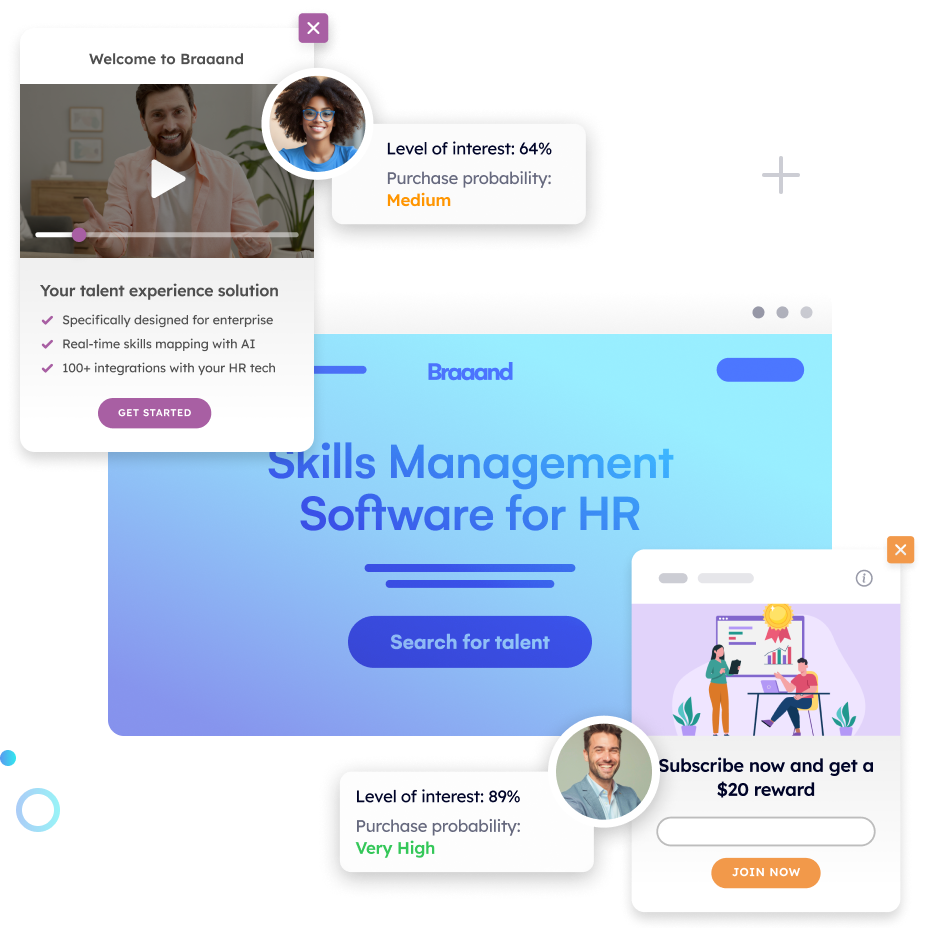
Rick: Pathmonk is the AI for website conversions, but increasing online competition. Over 98% of website visitors don’t convert the ability to successfully show your value proposition and support visitors in their buying journey separate you from the competition Online. Pathmonk qualifies and converse leads on your website by figuring out where they are in the buying journey and influencing them in key decision moments with relevant market experience. Experiences like case studies in videos, and much more stay relevant to your visitors and increase conversions by 50%. By adding Pathmonk to your website in seconds by letting the AI do all the work and increase conversions by 50% while you keep doing marketing as usual. Check us out. I’m Pathmonk.com.
Hey everybody. Welcome back to Pathmonk Presents. Today we’re joined by Joe Starnes. He’s the CEO of Ombre. Joe, welcome to the show.
Joe Starnes: Thanks, Rick.
Rick: Most welcome. Maybe we get started. Joe, we start with the basics a little bit. Tell us a little bit about your company and if you were explaining it to a friend over coffee. How would you describe what you do?
Joe Starnes: Yeah, so I’m CEO of Ombre and we are a wellness company, and we focus on gut health kind of as a pathway into wellness. I talk to people about it— a lot of people don’t really understand how much impact their gut microbiome has, right?
So you have all these bacteria that live in your gut, and they absolutely impact everything. Starting with digestive issues, but really like your sleep, your performance, your mental clarity. That can impact your heart, like all kinds of things. The immune system is hugely tied to gut health, or very closely tied to gut health.
We really use that—your microbiome, having a healthy microbiome—as a way to promote overall health and kind of a reflection of who you are in that moment, right? Because if you are healthy, you’re eating healthy, you have healthy habits, you’re gonna have a healthy microbiome, right? If you get off the rails a little bit, or a lot bit, you’re gonna have an unhealthy microbiome, and you can see that in our test.
Rick: Of course. And don’t they say the microbiome is like your second brain? It’s like actually acts like the brain or… maybe I’m getting… yeah.
Joe Starnes: It releases a ton of neurotransmitters in your bloodstream. So that’s where it has an impact on mood. That’s where things like when you eat sugar, you get a sugar buzz or you feel happy. Yeah, absolutely. Second brain.
A lot of people also call it like an extra organ or like the newest organ that’s been discovered. Yeah. It just has a huge impact on every aspect of your life.
Rick: It’s impressive. I think a product like yours, or even the test, just understanding how it works, what works for you, what doesn’t, that will really help. Personally I’m interested, but as far as the people who use your product, who’s the best fit?
We get into the marketing lingo: who’s your ICP, the ideal customer profile? Who are they? What do they need? What problems can you solve for them?
Joe Starnes: Right now, we tend to target more women just ’cause women tend to be more open to the test, right? So generally 35 to 45.
But where we look at is anytime there’s a transition in your life and your body’s kind of changing and feeling different, people get curious or they’re not feeling as good as they want to. And so those transitions are really good times to take a look and see how healthy you are—particularly as you get older. Things just… we’ll just say get a little bit looser, right? Specifically some parts of your digestive tract.
We also focus on athletes—again, athletic performance. Really, we have a very broad subset of people we target.
Rick: Yeah, that makes sense. I’m curious, how do these people discover you? Are there any channels that you go to for bringing in more of them? How’s that working on your side of things?
Joe Starnes: Meta is really how we like to introduce people to the brand. But word of mouth is probably the holy grail, right? We really focus on service. We like to focus on our product. We like to talk to our customers.
AI has actually been great for that. So we have a coach that we’ve developed. We can talk to people much more often. We run webinar series. So any way that we can talk to people—because it is a really complex topic—any way that we can grow that understanding, we find that’s a great way to get new customers in the door.
Rick: That makes sense. So you mentioned meta, right? How does your website play in all of this? How much of a role does it play in pulling in more business, getting more tests done?
Joe Starnes: Yeah, I think the website’s obviously huge, right? But it’s one component. When I look at the website, what I try and look at is: am I telling a comprehensive story from beginning to end?
In the beginning of the story often is meta, or maybe a friend saying “Hey, I tried Ombre and it’s great, here’s why you should try it.” Then when they go to the website, they need to see that reflected back to them, right?
So if they clicked on an ad that said reflux, we want to talk a little bit about reflux. If they clicked on an ad that talked about heart health or some of these other issues, we want to be able to talk about it on the website. The website absolutely is that central reflection of everything else.
It depends on where and how you get to us—are you going to a landing page or the homepage? So yeah, we take a huge amount of time making sure the website matches what we’re saying and how we’re saying it. I’m trying to get the right people to the right place so that we can talk about the issues that are important to them or impacting them, right? Because gut health is so broad.
Rick: Yeah, of course. I like that you put things into context. People are looking for reflux, you take them to a page that explains and educates, gets them on the same page, so to speak. And then maybe they understand why the test is valuable.
Joe Starnes: Yeah, I think reflux is a great example. Most people think, “Oh, I ate something spicy” or something like that. But I was talking about transitions before. A lot of times it’s just inflammation, or something downstream—maybe not in your stomach, maybe in your gut, like your small intestine, interacting with bacteria, whatever it is. And that can have upstream impacts, right?
A lot of people with reflux think it’s what they’re eating. And it can be what you’re eating. It can be when you’re eating. It can be all kinds of things.
Rick: Yeah, it’s pretty cool that you’re able to speak to these people. I’m sure there’s a lot of thinking and studying behind what to say to them. But as far as the website goes, what actually makes that page or the website overall convert? Any tool or tactic that worked wonders for you?
Joe Starnes: Yeah, we’re all about the fundamentals. So A/B testing, right? You need a coherent landing page.
If I’m gonna deliver an ad to you, or bring you from Google or wherever, I probably want the same person—if it’s an influencer or whoever—I want that same face to be the first face that you see. If you clicked on something that said reflux, I probably want them talking about reflux, ’cause that’s why you clicked the ad.
That’s the basics: what you clicked on needs to match where you land. You don’t want to click on a gut test and then we start talking about heart health and you see a different person. I think we lose a lot of people that way.
Beyond that, it’s testing: does this line work better, does that line work better? If we embed video here, does that work better? We iterate really quickly. We look, we say “this is clearly the winner,” eliminate the loser, and promote another test. Try a different tagline, a different image. That’s been really successful in getting us to good conversion rates.
But really it’s basics and fundamentals, and being diligent about that.
Rick: Okay. Keeping it simple, right? Sounds like that’s the best strategy most often.
Joe Starnes: Yeah. AI’s been great—being able to help us do that so much more quickly. I don’t necessarily know HTML code, and with vibe coding or some of the tools out there, I don’t need it. I can do things I probably couldn’t do before, or it would’ve taken me a lot longer. Now I can do them quickly.
Rick: That’s really good. You mentioned you’re focusing on a lot of things—perfect segue. What’s a day in the life like for you? What do you focus on each day? What keeps you excited?
Joe Starnes: We’re a small team. We have a marketer, we have our chief operating officer—he’s really like a chief technology officer, focused on the digital product—and then we have an ops person. So a little bit of everything.
But a ton of marketing, right? We’re a DTC consumer brand. Marketing is huge. It’s how we talk to consumers, it’s how we get out there, because I don’t have a storefront.
So: marketing metrics, landing pages, ad performance, conversion rates—spend a ton of time there. And then all the boring stuff: supply chain, do we have enough product, financials, numbers.
Rick: It’s gotta be done.
Joe Starnes: It’s gotta be done.
Rick: As far as staying up to date, there’s a flood of content out there. How do you stay focused and keep learning among all of this chaos? Any routines, places, people?
Joe Starnes: I don’t know that I go to a routine, but you’re right, there’s so much. My peer groups send me things and I send things back. I have Google alerts set up. Our COO is always sending me things.
But one thing I’ve really focused on is trying to get out there and not sit in front of a computer all day—actually talk to people. Human interaction, face-to-face interaction. You get so much more from that, even if you’re talking about an article somebody sent.
Rick: Love it. There’s something about being in a room together. Even a quick chat or brainstorm. Glad people are going back to it—shaking hands, conferences, all that.
Joe Starnes: Yeah. So many people spend so much of their day just the eight inches in front of their face—staring at their phone or a computer screen. And again, being a wellness company: eating, moving, sleeping… that human interaction is hugely important.
Rick: Joe, we’re going towards the back half of the episode. I want to do a rapid fire segment—few questions, light and quick. Are you ready?
Joe Starnes: Yeah, I don’t know how… I get excited about books, so I’ll try to be quick. But I get excited.
Rick: What’s the latest book you picked up, and what stuck with you?
Joe Starnes: Atomic Habits—re-read it. It aligns very well with our philosophy. Those small habits and gut health are gonna build and build. Drinking water, colorful plate, fiber, probiotic-rich foods.
That’s the best way to have a healthy gut: kombucha, kimchi, fermented foods. Our probiotics and fiber are tools for people with busy lives who maybe can’t do that every day, or don’t like fermented foods.
The other one is The Body Keeps the Score. I’m gonna butcher the author’s name—Bessel van der Kolk, I think. It’s a great book. It talks about trauma, how it rewires your brain, and things you can do to be healthier. Again: eat, sleep, move—holistic wellness.
Rick: Makes sense. Atomic Habits is great. I’ll check out the other one. By the way, I eat kimchi for breakfast every day, so I’m hoping I’m doing something right.
Joe Starnes: Oh yeah, you’re absolutely doing something right. Any kind of fermented food, especially if it agrees with you, is great. It’s a great book, but it’s dense. I listened to it while jogging—it’s 16 hours long.
Rick: If you had a magic wand and could fix one frustrating thing in your life with tech—marketing, ops, whatever—what would it be?
Joe Starnes: Attribution. Where are my customers coming from? I want to know exactly. Meta doesn’t match what I see in my store. Store data isn’t comprehensive. There are tools that say they’re comprehensive, but they’re not—exactly. The more granular the better. We spend a lot of time on attribution for A/B tests and figuring out what’s working and why.
Rick: Yeah. Not surprised.
Rick: What’s one repetitive task you’d love to put on autopilot forever?
Joe Starnes: Reporting. We spend a lot of time pulling numbers from disparate places. If I could automate reporting and just have those numbers, beyond attribution, that’s what I’d automate.
Rick: Fair enough. Reporting is a big one. Joe, thanks a lot for being on the show. Last word: if someone forgets everything, what should they remember about the work you guys are doing?
Joe Starnes: Small habits built over time will make a huge difference. Stick with it.
Rick: Amazing.
Joe Starnes: Absolutely.
Rick: If people want to check you out, where can they go?
Joe Starnes: ombrelab.com is our website. Please stop by, take a look. If you have feedback, there’s a chatbot—please give us the feedback. We’re always trying to improve. We’re very open to feedback. Let us know what you think.
Rick: Joe, thanks again. Best of luck with Ombre. Maybe we exchange notes offline about books. Great conversation—appreciate your insights. Have a wonderful day.
Joe Starnes: Oh yeah, thank you. And if you got any recommendations, I’m always looking for my next read, so I appreciate it.
Rick: Amazing. Alright, bye everyone.
Joe Starnes: All right. Bye.