Introduction
In this episode of Pathmonk Presents, David Murimi, Co-Founder and CEO of TrueHost, shares how his team helps small businesses launch, grow, and convert online without overspending. TrueHost goes beyond traditional web hosting by offering an AI website builder, Google Business profile optimizer, and practical go-to-market tools designed for early-stage founders.
David dives into why conversion optimization matters more than pouring money into ads, how content marketing drives qualified traffic, and why fast, functional websites often outperform flashy designs. If you’re a founder or marketer focused on extracting more value from your existing traffic, this conversation will reshape how you think about your website’s role in growth.


Increase +180% conversions from your website with AI
Get more conversions from your existing traffic by delivering personalized experiences in real time.
- Adapt your website to each visitor’s intent automatically
- Increase conversions without redesigns or dev work
- Turn anonymous traffic into revenue at scale
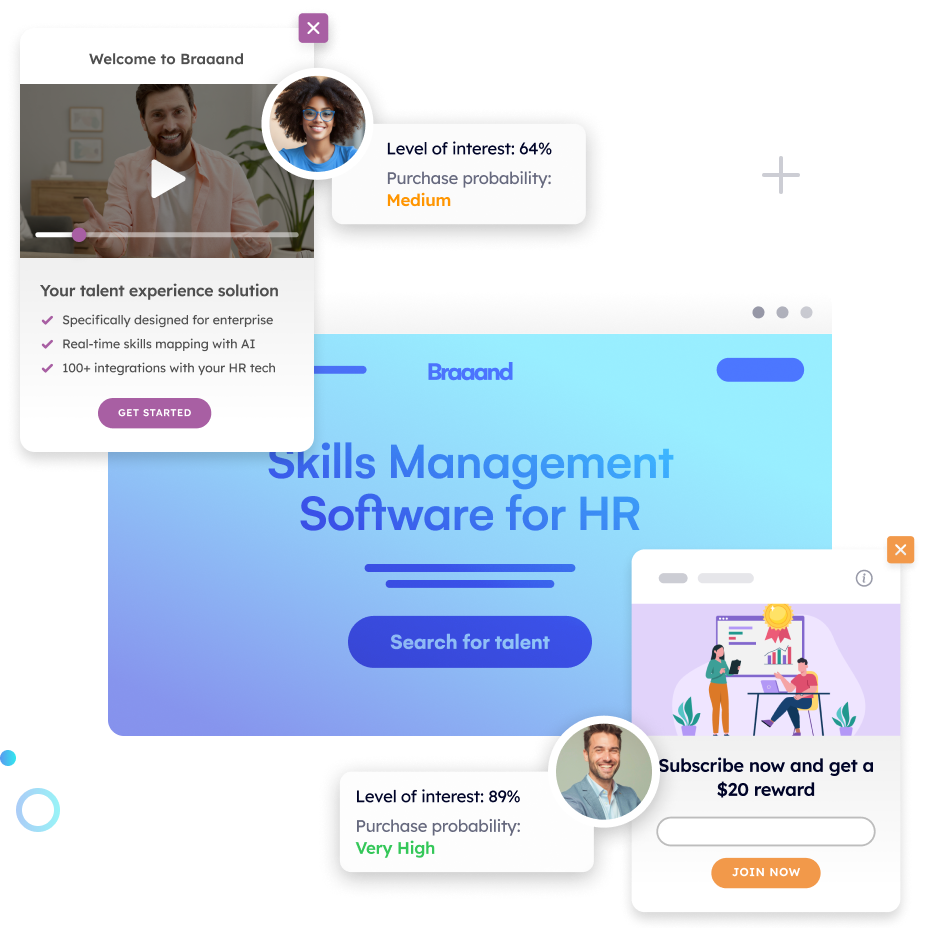
Rick: Pathmonk is the AI for website conversions. With increasing all in competition. Over 98% of website visitors don’t convert. The ability to successfully show your value proposition and support visitors in their buying journey separates you from the competition Online. Pathmonk qualifies and converts leads on your website by figuring out where they are in the buying journey and influencing them in key decision moments with relevant micro experiences like case studies in videos, and much more.
Stay relevant to your visitors and increase conversions by 50% by adding Pathmonk to your website in seconds. Letting the AI do all the work, increase conversions while you keep doing marketing as usual. Check us out on Pathmonk.com.
Everybody. Welcome back to Pathmonk Present. So today were joined by David Murimi is the co-founder and CEO of TrueHost. David, welcome to the show.
David Murimi: Thank you, Rick. I’m so glad to be here and, especially the fact that you guys do something close to what we do. And yeah. Can’t wait to engage in this discussion.
Rick: Of course. And likewise, more than excited to learn about you guys, learn something from you, the insights. I’m sure our audience is also excited about this, so maybe we start the basics. David, what’s the big idea behind TrueHost? And if you were explaining it to a friend over coffee, how would you describe what you guys do?
David Murimi: TrueHost is basically a web hosting company, but how we came to be is that we were software developers and we found that we didn’t find good tools that we could spin our ideas affordably and fast and have 24 hour support. So that’s how we came to be.
We just wanted to ensure that businesses can spin ideas, put them online in the most affordable manner and also get 24 hour support from the providers.
Rick: Of course. You make it sound so simple, but of course that’s the nature of business. At the same time, it must be the challenge to put all the pieces together.
Are there any businesses or industries where you feel this product really shines? Maybe because it’s affordable, or because of the key problem you solve—what can people expect when they work with you?
David Murimi: Ideally, we think of ourselves like a platform that helps people to go to market, like a go-to-market product. So ideally we work with a diverse range of industries because it’s almost any small business that is thinking of taking your business online.
So we provide them with tools like AI website builder. We provide them with tools like Google Business profile optimizer, things like scheduling of social media posts and some email marketing. Normal web hosting.
So we work with a diverse… mostly we work with people that have an idea, they want to get it online, and maybe smaller businesses. So that is our sweet spot.
And so what we solve is the ability that we provide you with almost all the tools you need at a point you want to get people to know about your idea, want to be able to collect your first money, or to build your first contact lists. So we are the guys that give you that ability to do that without breaking the bank.
Rick: Of course. And how do these people discover you? Are there any marketing channels that become your go-to for bringing in more of them?
David Murimi: Yeah. For us, our website is our key channel. And what we do to get our customers to discover us: we do a lot of content marketing, actually.
We have several websites, and each website focuses on certain issues that people are having. So if you are Googling or you’re on ChatGPT searching like how to optimize my Google business profile or how to rank on Google Map, you likely going to land on one of our articles.
And on our articles, we will explain to you and we’ll give you options of who else is doing this, but also us—we have this tool. So ideally that’s how we get our customers: by just writing solutions. Then some of them trust TrueHost and use our service.
Rick: That’s good. You just touched on it—you mentioned the website, or the websites even. How much of a role do you think they play in pulling in clients?
And from your perspective as a CEO, what do you think really works about your website at the moment? Or is there something you’ve got your eye on improving—strengths and weaknesses?
David Murimi: Okay. Yeah. Sure. I’ll try to answer, if I don’t, please just repeat the question again.
For me personally, the most important thing with my website is the ability to convert—the ability to get a customer to get what they want the easiest way.
And also from my background as a go-to-market engineer, I’m thinking about how I grow my website without having to spend money to do Google ads. I want to ensure that my website has maximum value.
So when I’m thinking about that on my website, I want to see if I can ensure the visitor does more and probably leaves me with a little bit more information that I can reach out to them later if they’re not buying.
We have three tools, some free tools, that when you try that free tool, somehow we give you a sense of what we offer, you may convert. If you don’t convert, we can as well do a follow up.
So the idea is trying to ensure the maximum percentage of web visitors do something extra—they just don’t bounce off. So personally, that’s what I try to do.
Occasionally, when I’m trying to do that, the looks might not be the best because I want a website that is fast and also ensure that you see everything you want to see.
Do you know Craigslist? I like Craigslist for the fact that you can see almost everything you’re looking for so easily. It doesn’t look the most flashy, but it converts. Personally, I’m more inclined to once-click Craigslist. But of course there are people in my team that want more good-looking websites.
So yeah.
Rick: I hear you. That’s a great example. Even Amazon—it’s not the best looking or most appealing, but it’s so effective. A conversion machine.
David Murimi: Yeah.
Rick: Let’s switch gears for a second. You as a leader—what’s a typical workday look like for you? What are the main things you focus on day to day?
David Murimi: Right now I try to… I do have what I like doing and what is my functional role with the business, but also I have responsibilities I have to balance with.
Responsibility is leading the team and ensuring that we are… so I have direct reports who I ensure every morning we meet and we go through whatever challenges they have and whatever opportunities we have, and try to make fast decisions around that.
But as soon as I’m done with that, I need to focus on my work. What I like doing myself is the go-to-market part—the ability to capture customers or also help customers convert on their websites.
So either I’m reviewing our promise to the customer—what are we saying we are doing and are we doing it effectively—or I’m working on tools that would help us convert more on our website, or testing what we have told the customer.
So just playing around with web tools to see whether we are effective in our communication, our promise, whether we are following through, and whether we are able to capture and maximize our conversion. So basically that’s where I spend my day.
Rick: Nice. That aligns with our philosophy. Conversion focus.
We’re going towards the back half of our episode. David, we do a rapid fire segment: a few questions about habits, magic wands, etc. Are you happy? Okay.
David Murimi: Yeah.
Rick: All right, let’s do it. When it comes to content, do you prefer watching, reading, or listening?
David Murimi: I prefer reading.
Rick: What’s the latest thing you picked up? Book or article? Any ideas or gems that stuck?
David Murimi: My latest business book that I read is Amazon Unbound. It’s a lot about Amazon. It’s almost like a biography of Jeff Bezos, but not official, so it’s not sugarcoated. It tells you the inner workings of Amazon.
It is very interesting to see how crafted the Amazon guys have to be in different scenarios. When I look at things out here, I see Amazon as this well-polished machine, but again there are people in there making very crafted decisions.
Rick: I love that. I need to check that book out.
David Murimi: Yeah, I recommend it. I read it and I even gave a colleague to read it because it will help you open your eyes about the practicality of business.
Rick: If you had a magic wand and could fix one frustrating thing in your life with tech—conversions, marketing—what would it be?
David Murimi: Oh boy. If just one… I would love to have much more.
But one thing right now I’m obsessed with is: if I would be able to ensure that AI tells our story the way we would like it to tell. When I read AI summaries—ChatGPT summary or Gemini summary—of our product, it is fed from different sources like customer reviews, directories, and others. But it’s not exactly how we would want to tell our story.
I wish it tells our story how we would want, not as it appears everywhere. So I keep pushing the team: can we do some things so we can share our story as we’d want?
Rick: I hear you. It’s frustrating when your brand language is clear internally and the AI doesn’t reflect it right. Hopefully it improves sooner rather than later.
David Murimi: Yeah. Yeah. Sure.
Rick: What’s one repetitive task you’d love to put on autopilot forever?
David Murimi: Right now we automate a lot of stuff with us, but there is one thing we’ve not found a way: creation of content for TikTok.
We have a TikTok account where we record normal things, do challenges with people out there, and post it. I was imagining a scenario: if you had maybe those Meta glasses and they are always recording, always looking for the best shot and posting it to TikTok automatically.
So whoever is doing it can just do whatever they do without worrying about getting the content, editing it, and posting—because TikTok you have to keep feeding it. We’ve not found a way to automate that.
If there will be just one thing—maybe those Meta glasses you put on and they’re always sharing on TikTok—my goodness, that would be so good for us.
Rick: Absolutely. Takes a huge weight off. TikTok is a machine you have to constantly feed.
David Murimi: Yeah.
Rick: David, thank you for being on the show. Last word: if someone forgets everything, what should they remember about the work you’re doing at TrueHost?
David Murimi: Thank you for the opportunity. What I can say is that there is so much value in paying attention to conversion.
Instead of spending so much money on ads, there is a different way: optimizing your website. You can optimize your website and you can get better value. So that when you do the ads and people come, you are able to extract more value from those visitors. So it’s important for people to pay attention to that—making their website like a conversion machine.
Rick: I like it. If people want to check you out, where can they go?
David Murimi: They can go to our website, truehost.com or olloliw.com. Olloliw is O-L-L-O-L-I-W dot com. Or TrueHost on any social media—Facebook, LinkedIn. Yeah, we welcome them.
Rick: Amazing. David, thank you again for joining us. Best of luck with TrueHost, and have a wonderful day.
David Murimi: Thank you so much, and have a lovely day too.
Rick: Bye everyone.