
Introduction
In this episode of Pathmonk Presents, Philip Aguib, VP of Sales and Marketing at Vantree Systems, breaks down how electronic data interchange (EDI) powers global supply chains—and why a human approach wins complex B2B deals. Vantree Systems delivers integrated EDI solutions that connect ERPs like SAP, Microsoft, and NetSuite across manufacturing, distribution, logistics, and CPG industries.
Philip shares how referrals, trade shows, and partner ecosystems drive growth, and why outbound sales is becoming essential in an AI-shaped buying landscape. He also dives into accelerating long sales cycles, leveraging CRM data segmentation, and building trust through empathy. A practical conversation for growth leaders navigating technical markets.


Increase +180% conversions from your website with AI
Get more conversions from your existing traffic by delivering personalized experiences in real time.
- Adapt your website to each visitor’s intent automatically
- Increase conversions without redesigns or dev work
- Turn anonymous traffic into revenue at scale
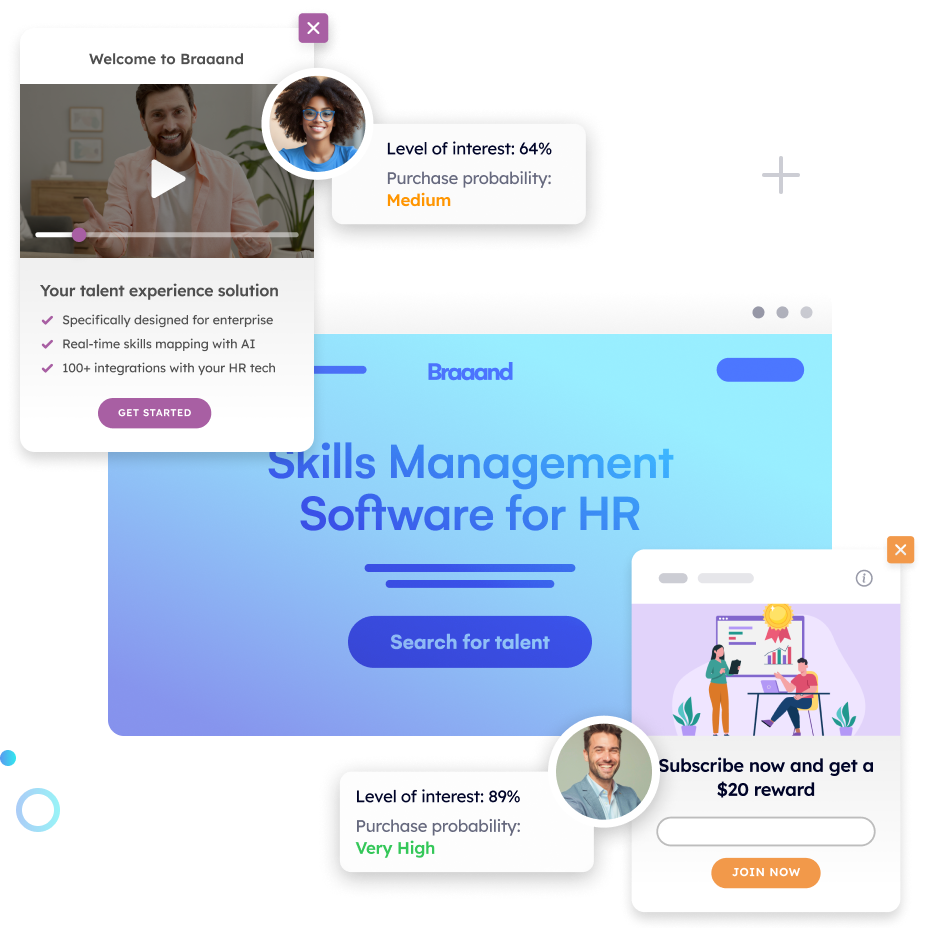
Rick: Pathmonk is the AI for website convergence. With increasing online competition, over 98% of the website visitors don’t convert. The ability to successfully show your value proposition and support visitors in their buying journey separates you from the competition Online. Pathmonk qualifies and converts leads on your website by figuring out where they are in the buying journey and influencing them in key decision moments with relevant micro experiences like case studies, int videos, and much more stay relevant to your visitors and increase conversions by 50%.
By adding Pathmonk to your website in second by letting the AI do all the work and increase conversions while you keep doing marketing as usual. Check us out on Pathmonk.com.
Hey everybody. Welcome back to Pathmonk Present. Today we’re joined by Phil. He is the VP of Sales and Marketing at Vantree Systems. Phil, welcome to the show.
Philip Aguib: Thank you so much for having me, Rick.
Rick: Of course. Glad to have you here. It’s been a long time coming for people that don’t know, and I’m glad we finally made it happen. Phil, why don’t we start with the basics. What’s the big idea behind your company? And if you were explaining it to a friend over coffee, how would you describe what you do?
Philip Aguib: Yeah, sure. Basically over the years as globalization efforts grew from the 1970s, companies and governments needed to find a way to streamline their supply chain. And so they needed to find a standard way of exchanging business supply chain transactions so that companies that have one type of system and other companies that have a different type of system can communicate together.
And so you can think of this as: how do my products show up on the grocery shelves? How do my clothes show up in clothing retail stores?
So over the last three decades, Vantree Systems has developed an all-in-one encompassing electronic data interchange integration solution that allows organizations to adopt this platform, integrate it into their ERP, and connect to anybody in the supply chain, no matter the industry, no matter the type of business—whether that’s manufacturing, distribution, logistics.
So look at us as a business-to-business data integrator to facilitate the exchange of supply chain transactions so that you have food on the table.
Rick: Okay, thanks. I like that last bit because I think that explains it in a nutshell. Of course there’s complexity behind it, but as you’re talking about the businesses you work with, are there certain types of businesses where you feel your product really shines? And is there a key problem that you help them solve?
Philip Aguib: Yeah, so companies that are adopting this kind of technology are usually companies that are producing a physical good—think manufacturing—and then distribution companies who are distributing these products across the global supply chain. And that’s why I also mentioned logistics.
We have a lot of clients in the food and beverage space. We have some in the consumer packaged goods space. We also do automotive, pharmaceuticals. So all of these unit-based, case-based, and sometimes even serialized items that travel all over our supply chain across the world.
Rick: Okay. How do these people find you?
Philip Aguib: So we have been in the industry for three decades, so that helps a lot. When it comes to word of mouth, a lot of our business happens because we’ve helped companies successfully implement this technology with their core enterprise resource planning systems.
And because that is a small community of partners—particularly in North America where we are, and expanding into Europe—it’s very easy for one of these implementers and one of these IT directors or VP of IT to be like, “Hey, I had a good experience working with you,” and then they bring us over to either a colleague’s company, or when they move from one project to the next, they like to bring us over.
So that’s one way. Word of mouth is extremely strong in this space.
And then of course you have your industry trade shows. Being that we integrate with like 20 different ERPs, we like to go to some of the biggest ERP events hosted by SAP, Microsoft, Acumatica, Sage, and some industry events around food or consumer packaged goods, or the NRF show happening in New York every year.
Trade shows are huge for us because it allows us to build a good relationship with either partners or customers directly. And in this space, unfortunately there’s a lot of pain and lack of trust. So being in person and talking about those difficult things proves to be important as a foundation to future discussion. So trade shows are huge.
The third I mentioned is partners. These ERPs are implemented by actual ERP implementers and consultants, and they rely on an independent software vendor like Vantree to complete the supply chain integration piece. So another channel is through this partner ecosystem that has grown in referral business over the last three decades.
And then the last ones are your typical online presence. We have a website we invest in SEO and paid ads. That brings some inbound leads, and social media as well.
And then of course you have existing customers who refer us business when they network in their industries.
So there’s at least five or six there, but the top three are the ones I mentioned earlier.
Rick: Got it. Referrals are big, trade shows, shaking hands, being in the same room—hard to beat.
We talked offline about how you’ve been successful with a channel ecosystem, and you mentioned the partner ecosystem. But you’re now moving toward direct outbound sales, am I correct?
Philip Aguib: That’s correct. Yeah. It is something we are looking to invest more in. As competition increases, ease of finding solutions out there becomes more difficult. Buyers are confused, perplexed by the options. So outbound is like a defensive effort to maintain growth.
Rick: What was the “aha moment” that made you realize it was time for that shift?
Philip Aguib: The aha moment was probably when we found that organizations weren’t able to find us as easily as before.
Being in the industry for so long and organizations knowing who we are—eventually, as competition increases and buyer behavior changes… a lot of buyers are now looking for advice from artificial intelligence, for example.
So when you’re relying on AI to either refer your business or not, you realize that the ease that organizations can find you is changing. A lot of people have felt this over the last six to nine months.
So efforts shifted to: how do I make sure buyers can find me using AI? But also, what happens if they don’t? What happens if the algorithm changes?
We need to be proactive and understand who our ideal customer profile is and go find them before they even look. We cannot wait to have people come to us—we need to go to them.
Rick: Thanks for the explanation. There’s a lot of thinking behind it.
Aside from trade shows, you mentioned the website. What role does your website play in pulling in new clients? Is it a brochure website, a qualification tool, how are you using it?
Philip Aguib: We look at our website as our single source of truth on our company. It’s the easiest way to guide a buyer to contacting us and getting the basic information they need.
In the technical space, you have to provide enough information for a technical buyer to feel comfortable that your solution will meet their basic needs.
In other industries, surface-level advertising works. In our space, we have to embrace the complexity because buyers expect it.
Now some may see that as a double-edged sword: if you share too much, does it alienate your potential client? We see it as: if we can give them confidence that we meet their basic requirements before they reach out, we can move that out of the way and focus on the rest.
And today it’s all about accelerating the sales cycle. In our space, sales cycles can last three to nine months, especially when tied to larger projects.
So for me, it’s: provide as much helpful information as we can. The website becomes a library, a lens into everything we can accomplish for you.
Then we add testimonials for credibility, demo videos that show the UI and UX to get a sense of functionality. We’re hoping they’ll engage and say, “I’ve seen enough. It seems like you can help me. Let’s hop on a call so I can explain the challenges I’m facing,” and then we move into a more fruitful discussion rather than covering basic things upfront.
Rick: Got it. It’s a fine line between embracing complexity and still sounding human—there’s a person reading. You still want some emotion, not all sterile. I like how you framed it: library + credibility + demos.
Speaking of the human touch, let’s switch gears. Phil, give us a glimpse into your day in the life as a leader. What do you focus on day to day, and what makes you excited to get to work?
Philip Aguib: One of the reasons why I love Vantree Systems is that our whole mantra is delivering electronic data interchange solutions with a human approach.
As a leader and as a sales professional, you have to be empathetic with the person you’re speaking to. It doesn’t matter who it is—small business leader or Fortune 500 leader. Everyone is human and experiencing their own challenges.
Some people are dealing with personal challenges, and we have to be empathetic. Most sales professionals follow up too aggressively and don’t consider vacations, personal time off, emergencies.
If sales is building relationships, how could you ignore the personal side? That’s the foundation of a relationship. Then you shift to the professional side—leaders facing challenges in their organizations. That’s where you come in and solve.
So a day in the life is speaking to a lot of people: partners, potential customers, existing customers—being empathetic, understanding their challenges—then rallying the troops and putting together clear, understandable, sustainable solutions so they can live a better life personally and professionally, grow their organizations, and help the people around them grow.
As a leader speaking to a leader—what do you want from your team? You want to see them grow. If you equip a company with a tool that lifts the organization, then we could be friends forever.
Rick: That’s a great point. Work problems come with emotions. People take this stuff home. Empathy matters—sales, marketing, leadership. Thanks for that.
How do you stay focused and keep learning with so much content out there? Any routines, people, sources for inspiration?
Philip Aguib: Everyone has activities that drain them and activities that charge them. If I’m tired, I feel drained, but if I spend time with my family, I feel charged. You have to find the balance.
What charges me is physical activity: running, yoga, competitive sports. Growing up, tournaments and travel playing at a high level in soccer, volleyball, tennis shaped me. I look up to professional athletes—Olympics, training, competing—years of practice is inspiring.
Then inspiration from books. I’m reading The 5 AM Club recently—waking up early when there’s no noise. It’s motivating, helps you prioritize yourself and stay focused.
I’m also reading The Laws of Human Nature by Robert Greene. It reminds you to be empathetic—the buyer isn’t ignoring you, they’re busy.
And then speaking to like-minded people. Trade shows help because you engage with so many people in a condensed period. Don’t stay in your bubble. So for me: physical activity, books, networking.
Rick: Body, mind, and soul.
I love The 5 AM Club—Robin Sharma, right?
Philip Aguib: Yes, that’s right.
Rick: The storytelling is great—fiction and nonfiction at the same time.
Philip Aguib: Yeah. I like how he keeps you on your toes in the beginning with the story. And the quotes in that book are worth printing and putting on the wall. I highly recommend it.
Rick: Nice. We’re coming to a wrap, but we’ll do it in style with rapid fire. Ready?
Philip Aguib: Let’s do it.
Rick: If you had a magic wand and could fix one frustrating thing in your marketing life with tech, what would it be?
Philip Aguib: Data segmentation.
Rick: Okay.
Philip Aguib: Background: one challenge when attacking various markets is organizing your data so you can classify it and take the right approach with the right segment.
Think industries, organization sizes, ERPs they’re using. Are they C-level executives or users? If that data is not organized in your CRM, how will you market to them?
You’re not going to sell a banana to an elephant. You want to sell the banana to a monkey. You want to tailor each message by user, industry, ERP. The opportunities are endless if your data is organized.
Rick: Thanks for the context. What’s one repetitive task you’d love to put on autopilot forever?
Philip Aguib: Booking meetings with me. I always have to share that link and make it very clear for someone to click on, or else they won’t find it. If someone could always just find time to talk whenever an issue takes more than 10 minutes, that would be great.
Rick: You’re not the first.
If you could go back and give your past self a quick pep talk at the beginning of your career, what advice would you give?
Philip Aguib: Patience is a skill that comes with practice and time. Great things don’t come fast. Be strong, be patient, persevere, but understand that good things come with time.
Rick: Good things take time. Applies everywhere.
Phil, thank you for being on the show. Last word: if someone forgets everything, what should they remember about the work you guys are doing?
Philip Aguib: Vantree delivers complex EDI solutions easy in a humanistic way. If you’re in manufacturing, distribution, logistics, and you’re struggling to integrate your supply chain data and your core ERP systems like SAP, Microsoft, Acumatica, Sage, NetSuite, give us a shout. Let’s see what we can do to help.
Rick: Amazing. And where can we send them?
Philip Aguib: vantree.com.
Rick: Too easy. Phil, thanks again for the insights. Loved the book recommendations, the human connection philosophy, trade shows, partner ecosystem… great stuff. Maybe we do this again soon. In the meantime, have a wonderful day.
Philip Aguib: Thank you, Rick. Thank you for inviting me on the podcast. It was a pleasure to get to know you and learn more about Pathmonk, and looking forward to our next podcast together.
Rick: Absolutely. Bye everyone.