Introduction
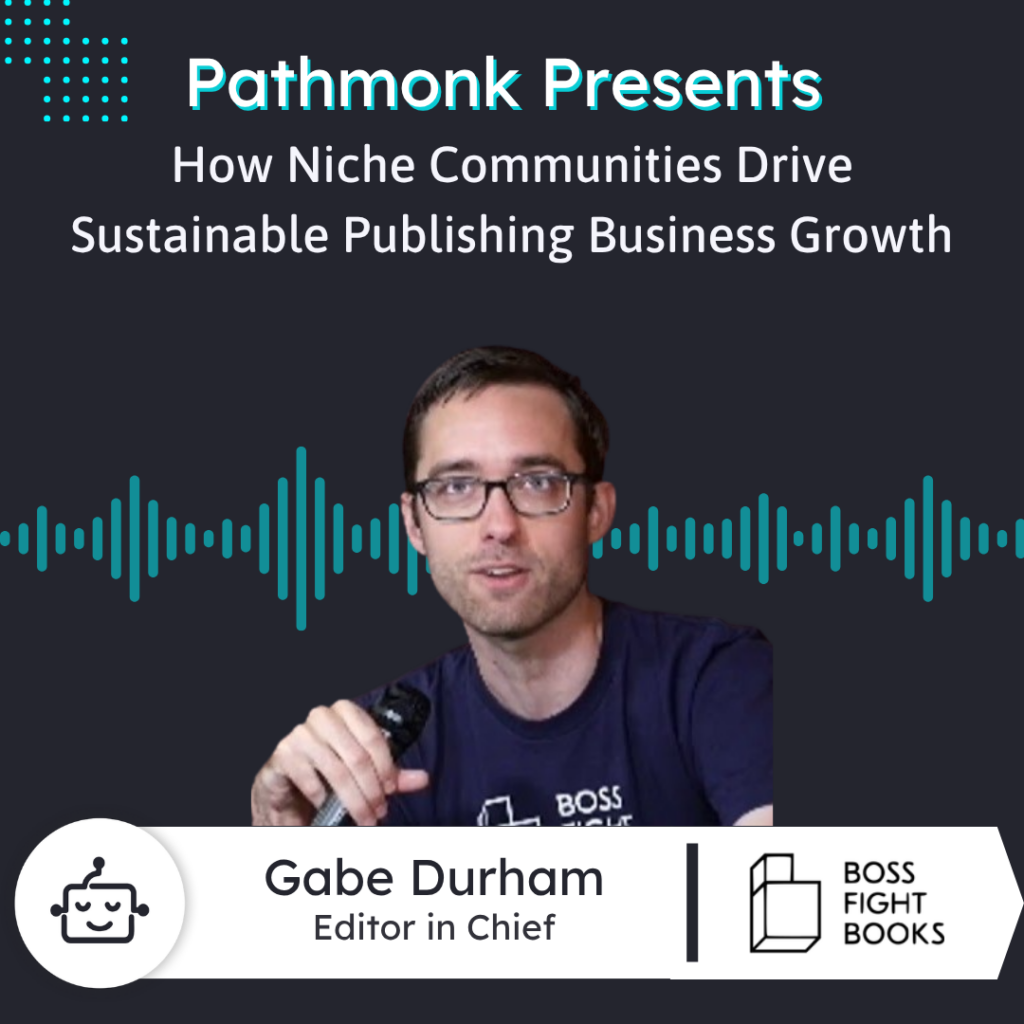
In this episode, Gabe Durham, editor and publisher at Boss Fight Books, shares how a niche publishing company thrives by deeply understanding its audience. He explains how blending community passion with smart marketing—like email lists, Kickstarter campaigns, and live events—drives sustainable growth. Gabe highlights the importance of tapping into nostalgia, leveraging evergreen content, and building meaningful moments around product launches. He also reveals practical insights on balancing creativity with operational realities, from managing workflows to finding efficient marketing wins. This conversation is packed with actionable lessons for founders and marketers looking to grow through authenticity, audience focus, and long-term thinking.


Increase +180% conversions from your website with AI
Get more conversions from your existing traffic by delivering personalized experiences in real time.
- Adapt your website to each visitor’s intent automatically
- Increase conversions without redesigns or dev work
- Turn anonymous traffic into revenue at scale
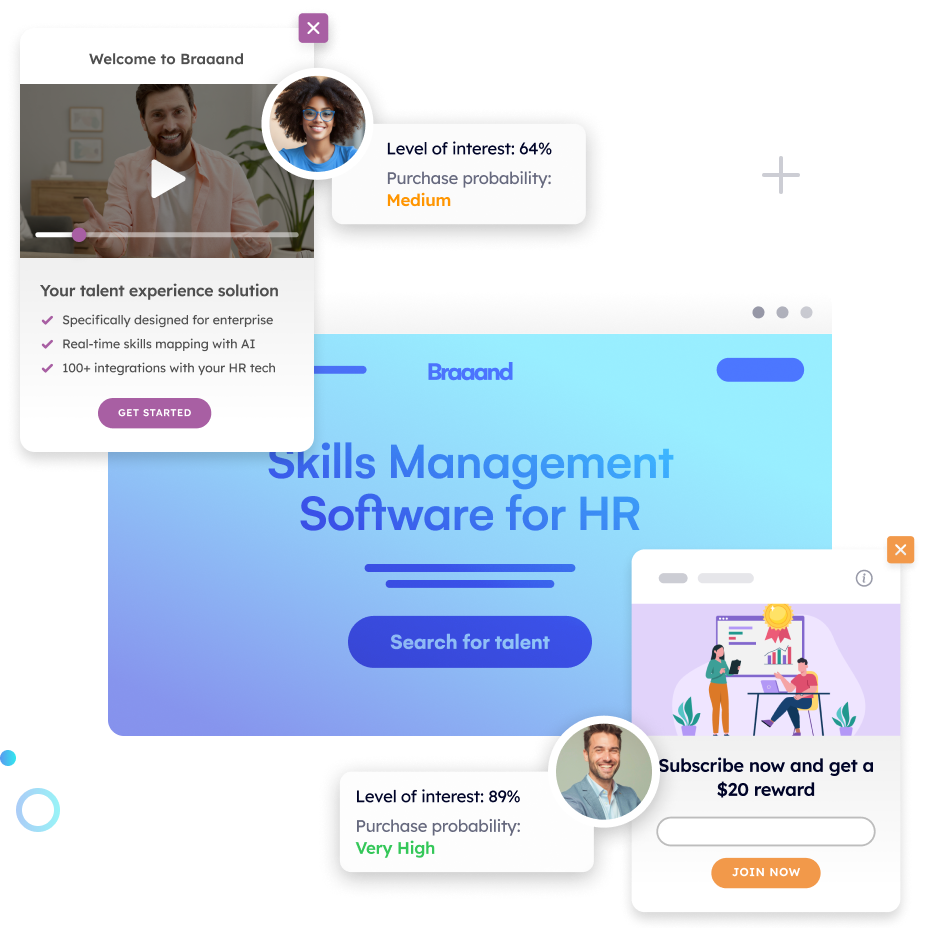
Rick: Pathmonk is the AI for website conversions. But increasing online competition, over 98% of website visitors don’t convert. The ability to successfully show your value proposition and support visitors in their buying journey separates you from the competition. Online, Pathmonk qualifies and converts leads on your website by figuring out where they are in the buying journey and influencing them in key decision moments with relevant micro experiences like case studies and videos, and much more. Stay relevant to your visitors and increase conversions by adding Pathmonk to your website in seconds. Adding the AI to do all the work and increase conversions by 50% while you keep doing marketing as usual. Check us out on Pathmonk.com.
Hey everybody, welcome back to Pathmonk Presents. Today we are joined by Gabe. He is the editor and publisher at Boss Fight Books. Gabe, welcome to the show.
Gabe Durham: Thanks for having me.
Rick: Glad to have you, Gabe. And let’s start with something basic. Maybe we talk about Boss Fight Books a little bit. Tell us about what’s the heart of what the company does. How would you describe to someone new, and if you were with a friend over coffee, how would you describe what you do?
Gabe Durham: You bet. So we publish nonfiction, documentary-style books about classic video games. What that means practically is we work with different authors—usually one per book—who each pick one game or a series of games and really dig into that topic.
Sometimes they approach it from a historical angle, interviewing developers and telling the story of how the game was made. Other times it’s more of a deep appreciation or critique, analyzing artistic choices and the experience of playing it. Often, authors also bring their own personal connection to the game.
Most books combine these elements, much like documentaries. We’ve been doing this for 12 years. The idea came from wanting to create something I personally wanted to see, inspired by series like 33 1/3, which focuses on music albums. We thought—what if we created that kind of space for video games?
Rick: That’s amazing. I love the concept. It’s like going behind the scenes. I’m the kind of person who finishes a movie and wants to know how it was made.
From a more marketing angle, who is your ideal reader? What do they care about?
Gabe Durham: Curiosity is the biggest factor. People want to learn more about things they love. Our audience sits at the intersection of gamers and readers.
Not all gamers read books, and not all readers play games—but there’s a strong overlap. Nostalgia plays a big role too. People often connect most with games they played between ages 10 and 20.
Our ideal reader is someone curious—either revisiting something meaningful from their past or exploring something they’ve always been interested in.
Rick: That resonates. I’ve recently gotten into retro gaming again, and it really makes you think about how much the industry has evolved.
How do people discover you? What marketing channels work best?
Gabe Durham: The retro gaming community is huge for us, especially at in-person events like the Portland Retro Gaming Expo. Those audiences are passionate and very aligned with what we do.
Physical books also act as advertising when placed in stores. But the biggest driver is online.
Kickstarter was key early on—we launched the company that way and still use it for every book. Now, our email list is probably the most important channel. It gives us direct access to readers without relying on platforms that can change overnight.
We also sell through our Shopify store, run bundles (like Humble Bundle), and partner with other platforms. And I always ask people how they found us—it’s super valuable insight.
Rick: That’s really interesting. Events, email, community—it all ties together.
What makes a high-converting e-commerce experience for you?
Gabe Durham: I come from an arts background, so I’ve learned marketing on the fly. One key thing is building momentum around each book—making it feel like an event.
You also need to show that you care about your product. If you seem detached, people won’t connect with it. I’m passionate about what we do, and that shows.
We also take advantage of natural moments—like when a new game in a series launches, we promote related books. Our content is evergreen, so older books can perform just as well as new ones.
And of course—sales, promotions, and email campaigns help a lot.
Rick: Sounds like sticking to fundamentals and letting the product shine.
Gabe Durham: Exactly. And since it’s a small business, I have to focus on efficient wins. I’m doing everything—from editing to customer support to fixing broken links on the website. It’s a lot, so I prioritize what works.
Rick: Makes sense. Let’s talk about your day-to-day. What does a typical day look like?
Gabe Durham: Every day is different, but I spend a lot of time in Google Docs and Gmail.
I work closely with authors—reviewing drafts, giving feedback, refining content. It’s very collaborative. I also manage communications, coordinate with designers, editors, and artists.
A lot of my job is project management—keeping everything moving and organized. I rely heavily on systems because otherwise things fall through the cracks.
Rick: That creative side is fascinating, especially in gaming.
Gabe Durham: Totally. One of the motivations behind Boss Fight Books was to focus on the creative side of games—not just the business side.
Games are made by people collaborating, experimenting, and expressing ideas. That’s what we want to highlight.
Rick: Love that. Before we wrap up—what’s one thing people should remember about your company?
Gabe Durham: Think of us as fans, critics, historians, and appreciators. There’s no single “right” way to talk about video games.
Our books show a wide range of perspectives, just like games themselves. We want to explore all of that.
Rick: Great answer. Where can people find you?
Gabe Durham: Go to bossfightbooks.com. All our books are there, with excerpts so you can explore before buying.
We’ve got new releases coming like Life is Strange by Kaitlyn Trimble and Dragon Age II by Charlotte Reber, plus an upcoming Age of Empires book by Richard Moss.
Rick: Amazing. Thanks so much, Gabe.
Gabe Durham: Thanks for having me.
Rick: Bye everyone.