Introduction
Ondrej Fridrich from Idea Statica joins Pathmonk Presents to discuss how specialized software helps structural engineers solve complex steel and concrete design problems that broader platforms often miss. He explains how Idea Statica complements major engineering tools by improving accuracy and speed in the detailed parts of structural analysis, where failures often happen.
The episode also dives into the company’s growth engine, including website-driven lead generation, organic search, paid advertising, content creation, and customer journey mapping. For marketers, SaaS teams, and growth leaders, this conversation offers practical insight into turning technical pain points into valuable content and stronger conversions in a highly specialized B2B market.


Increase +180% conversions from your website with AI
Get more conversions from your existing traffic by delivering personalized experiences in real time.
- Adapt your website to each visitor’s intent automatically
- Increase conversions without redesigns or dev work
- Turn anonymous traffic into revenue at scale
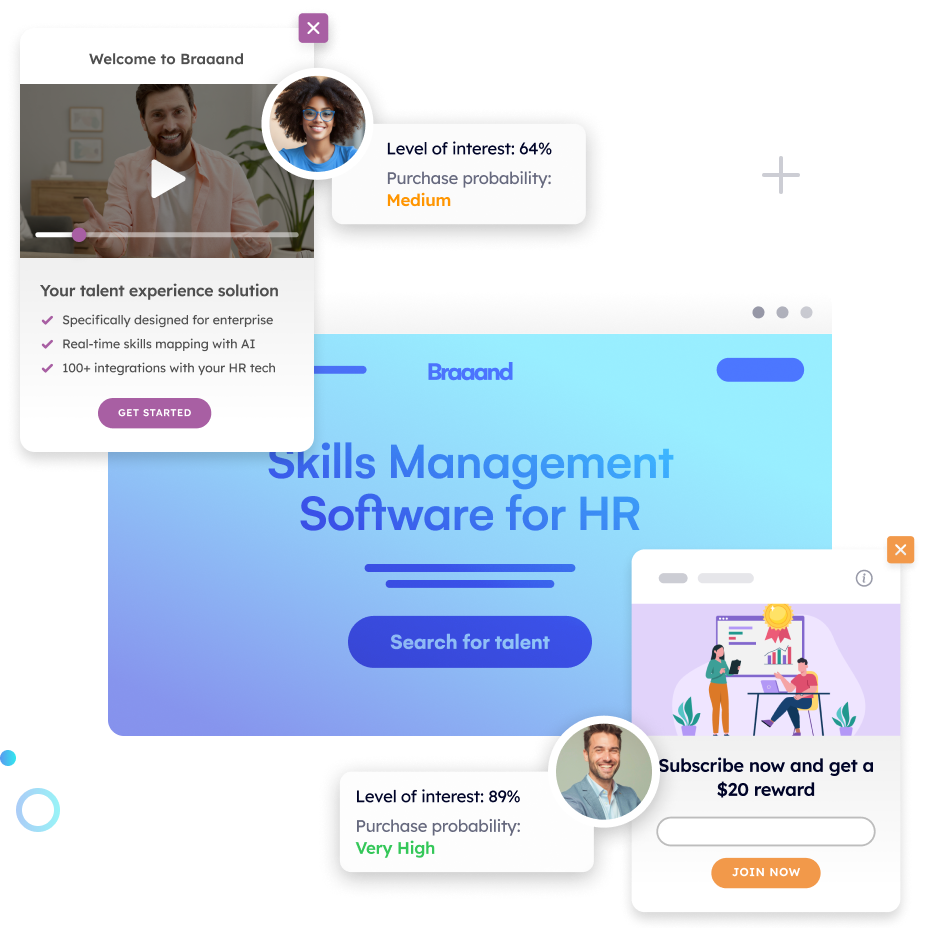
Rick: Pathmonk is the AI for website conversions. With increasing online competition, over 98% of website visitors don’t convert. The ability to successfully show your value proposition and support visitors in the buying journey separates you from the competition online. Pathmonk qualifies and converts leads on your website by figuring out where they are in the buying journey and influencing them in key decision moments with relevant micro experiences like case studies, intro videos, and much more.
Stay relevant to your visitors and increase conversions by 50% by adding Pathmonk to your website in seconds by letting the AI do all the work and increase conversions while you keep doing marketing as usual. Check us out on pathmonk.com. Hey, everybody. Welcome back to Pathmonk Presents. Today, we are joined by Ondrej Fridrich.
He’s the growth marketer of Idea Statica. Ondrej, welcome to the show.
Ondrej Fridrich: Hello. Welcome. Thank you very much for being here.
Rick: Of course, and glad to have you and excited to get things going with you, Ondrej. Maybe we start with the basics. We talk about Idea Statica.
What are you guys all about? What’s the heart of what your company does, and how would you describe it to someone new?
Ondrej Fridrich: Idea Statica is a software developer, and we focus on a kind of niche market maybe. We focus on structural engineers, fabricators and people in the construction industry who are performing the structural analysis for mostly steel and concrete structures.
And we provide them with the software which helps them basically every day to solve their issues maybe in a different way than the other softwares in this industry do.
Rick: Okay, fair enough. And it sounds, yeah, I think you did a great job at describing what it does, and it sounds very simple, but I’m sure simple doesn’t mean easy, right?
So, what can these companies essentially experience? What can they expect when they work with you? Is there a specific problem? I know you touched on it a second ago, but is there a specific problem you help them solve? And what’s the experience like once they get in touch with you guys?
Ondrej Fridrich: Exactly. You hit the nail. Idea Statica is trying to help the structural engineers to solve the issues other softwares are not able to solve them, which even defines Idea Statica as not a competitor to even the biggest softwares in the industry like Autodesk, Bentley Software, but we are complementing them.
We start where these software are starting to fall short. Showing the example, the structural engineer is designing the structure. He’s designing the building with something what is called FEA software, finite element analysis software. It’s a design software where he designs the whole structure, whole building.
But the devil is hidden in the details, right? And where the structure fails most often are the detailed parts of the structure which are not covered by these softwares. And this is exactly where we step in. We take the model from these big softwares, and the user can basically remodel it, remodel the detail, and analyze the detail in our software.
What it means for him, his work, his designs are more accurate. They’re much faster because usually they used to do it with pen and paper or Excel spreadsheets, while we offer them much more.
Rick: Okay. Well, you touched on a couple things, accuracy and speed. That by itself, if you help anyone really just improve those, you’re in for a treat. Especially in the software world, especially in the construction industry, and I’m sure that’s a great benefit of working with you guys.
I wanna get a little bit more maybe not so technical, but understand a little bit about your, if we get into the marketing lingo, about your ICP, right?
So who’s the person that’s reaching out to you guys? Is there a difference between that person and the person that actually ends up using the software? Maybe give us an idea of the people that you work with and if there are any channels that are working well for you guys as far as getting them to try it out and work with you.
Ondrej Fridrich: That’s a perfect question. As I mentioned at the very beginning, our biggest target group is our structural engineers. These people are reaching out to us directly. They are actively searching for a solution. They have a pain. They don’t know how to solve things. They are too slow. They have some complex issues they don’t know how to pass, and they are searching for solutions.
So they are approaching us. In most cases, a structural engineer is approaching us directly. Of course, in some cases, we are approached also by some additional role in the buying process, which might be IT departments of structural engineering companies because they have to understand the setup of the project, of the software.
We might be approached also by, let’s say, leading managers. But very often these leading managers are former structural engineers. They are just not designing anymore, but they understand the issue, and they are searching for the pain, for how to heal the pain they have in the team.
So we have several, let’s say, target personas. We have different types of clients, and also we have different industries. As I said, we are focusing mostly on steel and on concrete, which have different workflows, and also these personas and companies might be slightly different.
Rick: Okay. That makes a lot of sense. So it varies within the industry itself. It will vary based on their needs and their know-how, their technical knowledge, I’m sure, and a bunch of other factors.
But I’m also curious about the channels that have been working for you and maybe the growth marketer in you will give us a glimpse into what’s become your go-to for bringing in more business, for bringing in more people in front of the product and in which ways are you doing it?
Ondrej Fridrich: I wouldn’t be probably living in the 21st century if I wouldn’t say website is the core channel for us, right? No matter all the AI hype nowadays and all the AI impacts we can feel and see as marketers, the digital presence is the core. For us, the website generates hundreds of or let’s say definitely more than 100 leads per day globally.
Of course, the level of leads is different. The quality starting with, let’s say, very hot leads like quote requests, ending up with super cold leads from students asking a free version of our software. However, the amount of leads we generate is really, I would say, really tremendous.
And for us, the most powerful channels always used to be organic, paid ads, and maybe surprisingly, also word of mouth. The engineers share their experience within their offices with their colleagues. When they change job, they bring the software they used to be happy in the former job to their new job.
So these channels work pretty well for us as well.
Rick: That’s amazing. Of course, you mentioned the website, so I now have to ask, from your experience, Ondrej, what actually makes a website convert?
We can talk about, of course, your website specifically, but even drawing from all of your experience, are there any, let’s say, tools, any tactics, any frameworks you work off of to improve conversions? What have you seen that’s really working lately?
Ondrej Fridrich: Marketing is a multi-touch business. We face it every day that there is not a single silver bullet, which the customer can, or which you can get or use to get the customer. Every piece of the puzzle has to click in.
Since I joined the company seven years ago, we focused on creating valuable and actionable content. We were trying to find the pains of the customer and try to propose how to heal them. And of course, how to convert them, it’s just natural. You have to lead them through the process.
Okay, you acquire them, you get them on your website. You have to enable them to convert quickly, easily, depending on their stage of the customer journey.
And actually, this is also one of the biggest challenges we definitely are facing, to recognize what is actually the stage of the customer journey from.
Rick: Okay. Yeah, it’s a big challenge, and admittedly, that’s something that we’re working on, and we see a difference in conversions whenever you’re able to actually pin down what people are looking for, right?
But that’s very interesting, and it sounds like you’re focusing on the basics in a way, just trying to understand what are the pain points, right? Maybe even speaking to those people and it’s good old marketing 101, right? Just understand what their pain is, and then market to that pain, and you’re the solution, essentially.
But I wanna switch gears for a second, Ondrej. Maybe we talk about you as a leader, to understand a little bit of how you go about your work, right?
Let’s say that, of course, you’ll have your routines set and everything, but what does a typical work day look like for you?
Give us a glimpse into what are the main things you focus on a day-to-day to achieve what you set out to achieve and to help the company essentially grow.
Ondrej Fridrich: I would say there’s never a single day same as the other one. That’s what I like about the work. Of course, at least for myself, I always start my day with data analysis. I always go back to the previous day, to the lead data, to conversion rates, to regions which converted or did not.
Also focusing on sales data even though there is an obvious gap in the impact of leads to business.
So I always start my day with some kind of data analysis, and then it depends. Our work, or at least my work, is seasonal. We have two major releases. One is in April, soon coming, and the other one is in October.
And basically everything is then wrapped around these software release dates which always brings me, okay, here we have to prepare the release. So it means, okay, create release notes, create a set of collaterals, create a set of blog posts, webinars, live events. Share it with our, let’s say, sales networks. Share it with our customer network. Share it with our prospect network, with our future customers.
And for everyone we have to prepare different communication. We have to prepare different messaging. So this keeps me busy and there is no really one day same as the previous one which, as I said, is great.
Rick: Yeah. There’s a lot of variety in that and this is something that I promise you we hear a lot from marketers, right?
No two days are the same because of the nature of the job and it’s just whatever you need to do essentially to get people to convert or to get people to the website in the first place. You’re wearing so many different hats that I think that’s what makes it fun in a way.
It’s hard, of course, but it’s also what makes it fun. So, I’m sure there will be a lot of listeners right now listening and just like, “Yeah, that’s what I do.”
Ondrej Fridrich: Yeah. Yeah. And it’s always fun to follow the impacts or it’s always joy to follow the impacts of your work.
You create a blog post together with your content team. You see how it’s converting. You create supportive channels like an email, social media, and you see how people interact with this. I always find the joy in the data analysis. I always find joy in trying to figure out what we can do better next time to make the content performing more and converting more.
Rick: Yeah. And I’m sure it’s, in that sense, fast-paced also, right? It’s, as you said, no two days are the same, and things are moving quickly, and you have to move quickly also.
And, speaking of which, this leads us to the last segment of this episode together. Before we wrap things up, Ondrej, we have a rapid fire segment. I would love us to go through it. It’s to keep things light and engaging.
So just wanna check, are you ready for it?
Ondrej Fridrich: I’m definitely ready.
Rick: All right, let’s do it. So when it comes to consuming content, Ondrej, do you prefer watching, listening, or reading?
Ondrej Fridrich: That’s a tough one. Probably I prefer most watching.
Okay. However, I’m old school, and the best way for me to consume or to learn things is like one-on-one to one.
Rick: Okay. No, that’s a good one, too. Well, then the next follow-up would be what’s, when it comes to watching or reading or being with someone, what’s the latest thing that you picked up from a piece of content that you consumed?
Could be an article you read or a book or a YouTube video or a course, whatever the case, and was there something that really stuck with you in it?
Ondrej Fridrich: My fresh experience was vibe coding, vibe coding website. So, actually that’s even the way how a lot of people are now consuming the content, learning from AI.
Rick: Right?
Ondrej Fridrich: Having a chat, trying to fix the things. Meanwhile, in the other window, having, I don’t know, a YouTube channel, just to find out the specific case or something. So combining these resources is, for me, probably the most common way to learn new stuff nowadays.
Rick: Okay. Thanks for sharing that. And I’m sure that, again, here people will relate a lot.
If you had a magic wand, Ondrej, and you could fix one, only one frustrating thing in your marketing life with tech, what would you pick?
Ondrej Fridrich: I mentioned it already. I’m frustrated of not being able to figure out the stage of the user in the customer journey funnel.
Trying to figure out what is his probability to convert, what is his probability to buy, what is his intent to buy, without asking him tons of questions in forms and stuff like this. So trying to find out from his past behavior, current behavior, from, let’s say, enrichment of the data we can nowadays have to find what might be his intent, what might be his status.
Rick: Okay. That’s a really good one. What’s one repetitive task that you’d love to put on autopilot forever?
Ondrej Fridrich: Interestingly, there are not that many. Well, as I said, our work is unique every single day, and sometimes I might acquire an AI tool to do for me the data analysis.
However, I feel like sometimes the devil is hidden in the detail and I would like to see some of the data myself, so I’m not missing these details and I’m not missing the context.
However, what I like on the possibility of the automation is no limits in the possibilities. We automated our translations of our website. That’s amazing. It was not purely my job, but it was painful for the whole marketing department.
And, yeah, as I said, vibe coding, yes, it’s also something what we used to do in some way, and now we have new options how to do it faster. Maybe in some cases faster, and easily done.
So these things I love to automate. However, there is not a single automated task I would really every single day use.
Rick: Okay. That’s a good place to be, by the way. Some people say email or scheduling or whatever, but sounds like you got that down. So that’s perfect.
Ondrej, I wanna thank you again for being on the show with us today. Before we wrap things up, I wanna give you the last word. If someone forgets everything about the interview today, what is the one thing that they should remember about the work you guys are doing at Idea Statica?
Ondrej Fridrich: There is one thing I learned as a marketer, and it’s focus on your customer. Listen to him, go to him and create the content around his pains.
And that’s what we try with Idea Statica, sometimes better, sometimes worse. But this is my message to all the marketers. Go to market, ask your clients what they need, and give it to them.
Rick: What a way to close. That’s closing with wisdom, so I appreciate that, Ondrej. And, again, I wish you a wonderful day.
If people want to check you guys out, where can they go?
Ondrej Fridrich: Definitely ideaStatica.com. This is our website, and of course, we are very active on LinkedIn. So find Idea Statica on LinkedIn. You can get connected with me or my colleagues, especially if someone from the structural engineering environment is watching us, that’s definitely where you can connect with us.
Rick: Amazing. Ondrej, thank you again for your insights and for your contribution, and I wish you a wonderful day.
Ondrej Fridrich: Pleasure to talk to you, Rick. Thank you very much for inviting me.
Rick: All right. Bye, everyone.
Ondrej Fridrich: Bye.