Introduction
Nicholas Fisher from Nuvei joins Pathmonk Presents to explain how a global payments technology platform helps medium-sized and enterprise businesses accept payments with more flexibility, reach, and control. He highlights Nuvei’s ability to support hundreds of payment methods, enable international expansion, and serve more complex sectors such as iGaming and crypto.
The episode also explores how brand awareness, Google Ads, LinkedIn campaigns, contact-level marketing, and strong website messaging contribute to conversion in enterprise B2B environments. For growth leaders and performance marketers, this conversation offers practical insights into paid acquisition, value proposition clarity, customer psychology, and the ongoing optimization needed to improve campaign results.


Increase +180% conversions from your website with AI
Get more conversions from your existing traffic by delivering personalized experiences in real time.
- Adapt your website to each visitor’s intent automatically
- Increase conversions without redesigns or dev work
- Turn anonymous traffic into revenue at scale
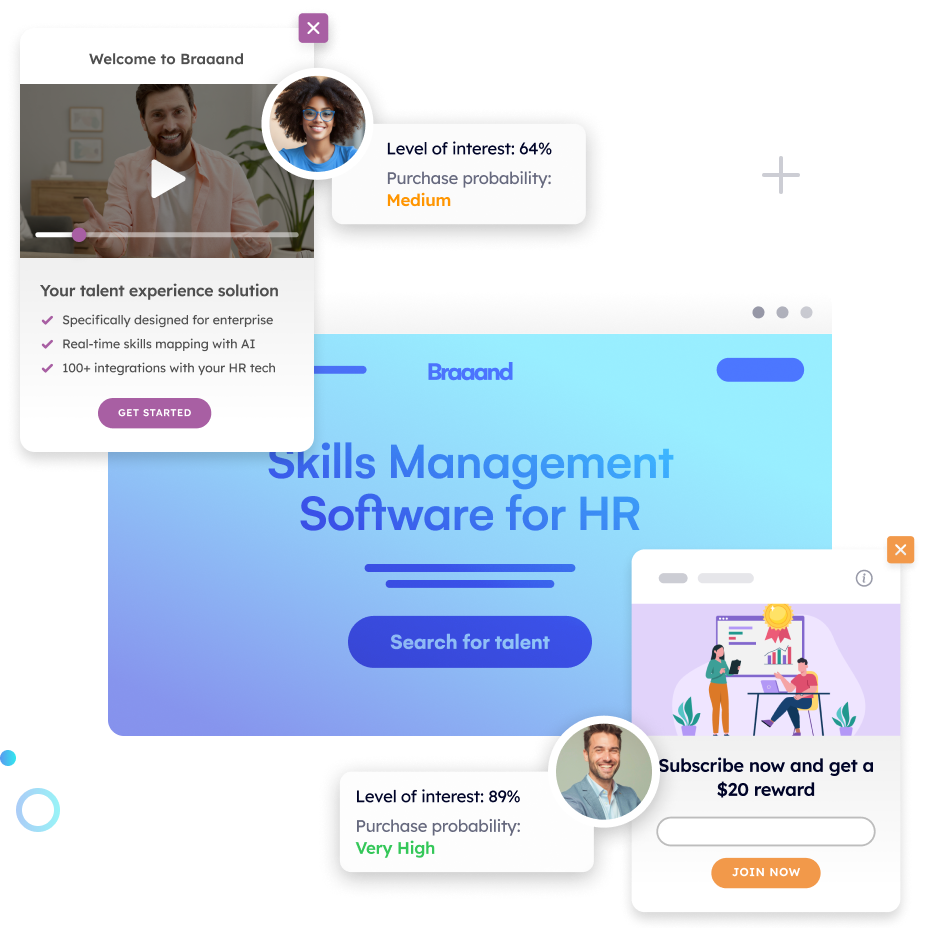
Rick: Pathmonk is the AI for website conversions. With increasing online competition, over 98% of website visitors don’t convert. The ability to successfully show your value proposition and support visitors in their buying journey separates you from the competition online. Pathmonk qualifies and converts leads on your website by figuring out where they are in the buying journey and influencing them in key decision moments with relevant micro experiences like case studies, intro videos, and much more.
Stay relevant to your visitors and increase conversions by 50% by adding Pathmonk to your website in seconds, letting the AI do all the work, and increase conversions while you keep doing marketing as usual. Check us out on pathmonk.com. Hey, everybody. Welcome back to Pathmonk Presents. Today we’re joined by Nicholas Fisher.
He’s the global digital PPC manager at Nuvei. Nicholas, welcome to the show.
Nicholas Fisher: Hey, Ruben. Thanks very much. Hey Rick. Thanks for having me. Yeah. It’s good to be on the show. Excited to get started.
Rick: Nice. I’m excited too, Nicholas. Maybe we jump into it and we start with the basics, right?
So tell us a little bit about Nuvei. What’s the big idea behind your company? And, if you were explaining this to a friend over coffee, over a drink, how would you describe what you do?
Nicholas Fisher: So basically Nuvei is a global payments technology platform. So basically if you as a company want to process payments, or accept payments, usually you probably have to use a payment processor like Nuvei or Stripe or Adyen, et cetera.
And so we’re basically that. Like, we give companies the ability to process and accept payments. So that’s more or less what we do. What makes us different is that we don’t just process transactions. We provide the infrastructure, like the connectivity to hundreds of different payment methods that people can use.
Like whether or not you’re using Bisum or any other local payment method or like PayPal, et cetera, we basically give companies the opportunity to be able to accept those payment methods as well. And we also, not only cater to mainstream markets as well, but also like high-risk markets too, which is like, for instance, iGaming or crypto.
If you’re in that sector and you’re looking to get your payments processed, it’s a little bit more difficult, but we also offer that possibility as well. So yeah, I think it’s just more so it’s about giving businesses control, flexibility and performance at a global level to where if they want to expand to Asia or if they wanna expand to Mexico or Brazil, et cetera, to be able to do that, you need to have a proper payment infrastructure, and we offer that.
Rick: Okay, amazing. Thanks for the overview. That was really clear. But I’m also curious about the people inside these companies. They are the ones that are actually, they might be reaching out, they might be looking for you guys, and of course, they’re gonna be looking at your competitors and then making a choice, right?
So the point of that is, are there any channels that have become your go-to for bringing in more business at the moment? How are they working? If you could give us glimpse into what’s working for you guys at the moment and why, that would be really interesting.
Nicholas Fisher: Yeah. I would say the people that are looking for us or a solution like ours, our solution works best for medium to large sized businesses, to enterprise sized businesses. So usually, when people come to us, they usually come in because they’ve heard of us before.
So when you’re catering to that type of demographic, the most important thing in marketing at that level is honestly brand reputation and awareness. You wanna be a known company, ’cause if you’re not, then chances are people are not gonna really want to work with you, especially if you’re at that level.
So I guess the types of people that are looking for us would be medium to large sized businesses, and the way we go about that is primarily through our paid channels. We use LinkedIn, we use Google Ads. We use several other different marketing platforms as well, but a lot of it is top of funnel, but then we also focus a lot on bottom of funnel as well.
And I would say our main driver for conversions would be Google Ads, or search ads in general. I think that’s typically for any B2B SaaS, that’s the case. But yeah, that’s where we see most of our conversions.
Rick: Fair enough. And, of course you being the PPC manager, I wouldn’t expect anything else.
But as far as people getting to your website then, right? I don’t wanna assume really, but let me rephrase that in such way that I wanna know a little bit more about how much of a role does your website play in all of this, right?
So you get people from, say, a search, an ad, right? And they land on your website. Now, is there anything about it that you think is working great as far as getting conversions or maybe something that you have your eye on improving?
Nicholas Fisher: Well, overall we’re looking to improve the, like, typically within our company’s infrastructure, we try and refresh the brand as often as possible just to stay relevant.
Websites can get stale and old and go out of date very quickly, so we try and stay on top of that. We try and revamp that as much as possible. But I think the main thing that causes people to convert on the website would just be, you wanna be clear in what you’re saying, you don’t wanna over explain it, and you wanna keep things brief and to the point and really cater to your USPs because chances are the person who’s looking at you isn’t gonna spend like a full hour on your website.
They’re probably gonna maybe skim the front page, and then later on afterwards if you have something interesting to offer like a blog or white paper, they’ll come back to it. But you really wanna make your value proposition clear from the get-go, and just have that very concise, and make it as easy as possible to be able to further contact with the sales team or whoever, if they wanna get in touch with you.
So I think having a clear CTA also always helps, clear and direct. That’s something not only do we work on the webpage, but on landing pages as well, just where there’s like a clear, decisive CTA that doesn’t allow the user or offer the user an opportunity to kinda get lost.
It’s more just about providing that CTA that, “Okay, hey, I came here for a reason. I’m not gonna get distracted. I’m gonna do that reason.”
Rick: Okay. Thanks for that. I’m curious in all of this, right? Do you rely on any specific framework, let’s say, as far as conversions or maybe even, our audience, myself included, love a tech stack, right?
So do you have any tools that you can recommend as far as getting more conversions, getting people through that funnel, being able to present them the right information at the right time?
Nicholas Fisher: Yeah, definitely. So we’re working with a number of different tools, and we’re also gonna be starting to work with a few different tools as well.
Some of the main tools that we use, we try to be in the user journey as much as possible just so we stay fresh on the user’s mind. So one of the tools that we like to use is 6sense. So basically that displays banner ads, but across a large network. It also uses networks like LinkedIn as well.
We also use LinkedIn ads as well, but 6sense also uses LinkedIn ads. We use AdRoll. That’s a big one. We also started on Reddit ads as well, which is another one. But we’re gonna be working with… And this one we haven’t worked with yet, but it’s showing a lot, like we see a lot of promise in it.
It’s called Influ2, and that’s more like contact level marketing. So when we go after these bigger accounts, like the Walmarts or the Targets or whatever have you, the bigger companies, the very huge companies, when we go after those, it’s very difficult to target the right people since they’re such huge companies.
So with contact level marketing, it’s very easy to go in there and be like, “Okay, I only want to display to…” With Influ2 it’s very easy to be like, “Okay, well, I want to display to product marketing manager or CFO or whoever within the company, and I wanna display them this ad.”
And what Influ2 does is it works across a number of networks, including Taboola, LinkedIn, Meta, to be able to display those ads to those people. So basically, working off of the agreements that those ad platforms have, or those platforms have by users using them, it’s able to market to contacts on a contact level instead of on an account level, which makes things a lot more direct.
And that’s really key in enterprise-level marketing, just because you wanna be able to reach the right people. I think reaching the right people is the most important thing.
Rick: Amen to that. Now, Nicholas, speaking about people, right? We wanna switch gears for a second. Let me talk about you, right? Let’s talk about you as a leader. Let’s talk about you as a manager.
What’s a day in the life like for you, Nicholas? What do you focus on day to day? And, in other words, what keeps you excited when you go to work and just sit at your desk?
Nicholas Fisher: Yeah. I’d say the thing that excites me the most, or I guess kinda gets my brain working the most, would just be, well, for one, human psychology has always fascinated me, so that’s something that I always look forward to, finding out how people’s minds work and how that can apply to what I’m doing.
Trying to understand the customer, ’cause I think that in itself will make your campaigns make or break really. Just understanding your ICP, I think is one of the most valuable things you can do. And then also day to day would probably be continual optimization. That’s what I would describe my job in a nutshell, ’cause it’s never 100% with campaigns.
You start with something, you see what works, you improve on that, and then you go month after month just improving on that until you have a well-polished machine.
So I would say that is at the base of everything. Mostly strategic optimization, but also hands-on work on the platforms themselves.
Rick: Fair enough. And I love that mentality. I love that focus on improvement, right? Now there’s a flood of content out there, right? It’s really hard to stay focused. It’s really hard to learn even these days ’cause there’s so much.
How do you do that? How do you stay focused, and how do you keep on improving? Is there maybe a routine or certain places or resources that you turn to for inspiration or even staying ahead?
Nicholas Fisher: Yeah, like for me it’s a lot easier to consume my media through podcasts ’cause I found that I’m already very busy with work.
I have a family as well, so it’s kinda hard to have that work-life balance. But if I have a podcast going on at the same time that I’m working, whether it’s a task that’s repetitive, usually I’ll have a podcast on in the background, and that helps me keep up with it too.
I also subscribe to a few influencers on social media as well that kind of help out with that too. Long form content, I’m subscribed to a few newsletters. Usually I try and have the newsletters be as concise as possible, with just the main headlines and a brief article.
Books I haven’t been as into these days just because, yeah, it’s not really a very short form of content that I can get into, but I do love a good book. It’s just hard to get around to reading one. But I would say the main ways that I keep abreast with these things would probably, main source podcast, secondary like newsletters with really concise information that I’m able to consume quickly.
And actually a lot of just peer conversation, just talking with my peers in the company or talking with other marketers as well I think actually really helps. ‘Cause usually if you have a conversation with someone about marketing, they’ll have a tool or an idea or like a campaign that they’ve been working on, and I think that actually really helps the most just because they have their feet on the ground and they know what they’re talking about.
So it’s nice to have a reliable source.
Rick: Right. Right. Of course. Well, thanks for giving us that overview, just really understanding how you think and what you turn to really for learning more and just, as I said, staying ahead, right?
As we’re going into the back end or the back half rather of our conversation here, Nicholas, we have a rapid fire segment that I’m excited to get into.
And just so you know, just to set the expectations, we wanna talk about, again, maybe content a little bit. Maybe there’s a question about magic wands in there, but I don’t wanna spoil it for you. Would you be ready for it?
Nicholas Fisher: Yeah. Sure.
Rick: All right. Let’s do it. So, when it comes to content, you said you listen to podcasts, right? You prefer maybe even listening to things or when it’s about reading, it’s gonna be something that’s short form, correct?
Nicholas Fisher: Yeah.
Rick: Now, what’s the latest piece of content that you consumed? It could be a podcast again, it could be a newsletter issue that you consumed, and were there any ideas or gems that really stuck with you that you thought about maybe for a couple of days or more?
Nicholas Fisher: Good content. Well actually, like what pops to mind the soonest would be Alex Hormozi. He has a book called, I think it’s 100… What was it again?
Rick: There’s always 100 million something, right?
Nicholas Fisher: 100 million, yeah. I need to see if I can find the name here. It was like 100… 100 Million Offers, yeah.
It was actually really good. I like things that delve more into the psychology of what consumers are actually looking to do. And I think that this book really does a really good job of delving further into that. And just like giving a more structured approach to it.
‘Cause a lot of times when you read books or you listen to podcasts or anything, there’s always like a vague kind of like, oh, this specific concept is good. Like we’re supposed to create a good user journey, et cetera. But I like the way Alex breaks it down because he gives you clear structured steps as to, okay, this is this part of the user journey.
This is this part, this is this part, this is this part. And so having those guided steps like that I think is very helpful.
Rick: Yeah, super practical. I can confirm I read it and it’s a really good book. I read it at least twice and there’s always something new in it that you can learn.
If you had a magic wand that you could fix one frustrating thing in your marketing life with tech, what would you pick?
Nicholas Fisher: Yeah. I would have to say, AB testing. Just the amount of work that goes into it, whether it’s campaign creatives or just copy, et cetera, and just the whole rigmarole that you kinda have to go through to be able to produce these things on basically what has to be a monthly or bi-monthly basis to where you can be continually optimizing things.
A lot of bigger companies, it’s not just one guy pumping out, “Okay, I’m gonna make the creatives for the ad and I’m gonna write the copy, et cetera.” So usually what you’ll have to do is you’ll have to go through several departments to where like, okay, hey, I’m gonna use the creative department or work with the creative department to be able to make a bunch of different ads.
And then you have to go to them again next month or the month after that, et cetera. Or go to your content department and you have to get your content from them, et cetera. So it’s this continual struggle ’cause you have to make these things in bulk basically, and it’s hard to just…
When there’s such a big company and you only have one creative department to be able to constantly be refreshing those ads and those creatives and those landing pages, et cetera.
Something I did find that was actually pretty cool, so I’m looking into automation tools for that, but something that I found that looks pretty promising that I’ll probably be working with in the future is called Banner Bear.
It’s a site basically to where you can dynamically insert text or images onto a template background. So say for instance you have your branding or what have you that you want inside the ad, the typical things that you would need for an ad.
But by attaching it to a CRM or a Google Sheet or Excel sheet, you can dynamically insert basically the names of the industry you want or the name of the position you want, like a manager or a CFO, et cetera, and you can have that dynamically inserted to the ad, so it could be like a custom ad as well.
So I think that’s promising. So yeah, hopefully that will help automate some of these tasks in the future.
Rick: Yeah, absolutely. Well, please do share with us. What’s the name again?
Nicholas Fisher: Banner Bear.
Rick: Banner Bear, okay. I’m sure this is gonna be useful for many listening. Okay, so if you could go back and give your past self a quick pep talk at the start of your journey, at the start of your career, what advice would you give yourself?
Nicholas Fisher: I would say, probably not to focus so much on the… Like, it’s good to learn the platforms. Yes, that’s good for a foundation, but I think the most important part beyond the platforms is understanding the psychology and the strategy that goes into marketing, because that’s timeless.
That’s gonna be around forever. And as long as you’re studying that and keeping abreast of that and really trying to understand people, you’re gonna have successful campaigns regardless of the platform that you’re gonna be using.
Because as we know with all these changes with AI and all these things that are happening, it’s really important to be able to understand that psychology because you’re gonna have to pivot. You’re gonna have to learn a new platform. You’re gonna have to go with the flow, and maybe the platform that you’ve been using for 10 years becomes obsolete because, hey, times change.
But really understanding the psychology and the strategy behind marketing I think is the most fundamental part.
Rick: I like it, yeah, and that’s the focus, right? That’s the fundamentals that you’re talking about, and that’s timeless, right? That’s evergreen for sure. So, I like that. That’s really wise.
Again, Nicholas, I wanna thank you for being on the show with us today. I wanna give you the last word.
If someone forgets everything about the interview today, what is the one thing that they should remember about the work you guys are doing?
Nicholas Fisher: Yeah, if you’re a medium to enterprise size business and you’re looking for a global payments provider that offers human support at every level of your journey, amazing customer support 24/7 anywhere you are in the world, that offers hundreds of payment service providers, like local payment providers as well, give Nuvei a look up.
And we’ll be happy to talk to you.
Rick: Yeah. Nice. Check out nuvei.com, right? And that’s how they can get in touch. Very good.
Nicholas, again, thanks for your insights. I was particularly interested in the content and from a personal standpoint, right?
So understanding a little bit about what you read and what you listen to, that was insightful. But overall, I just enjoyed our conversation. Hope our listeners did too. I’m sure there’s something valuable in there. With that, Nicholas, I wish you a wonderful day and maybe we get to do this again soon.
Nicholas Fisher: Thanks so much. Really appreciate it.
Rick: Of course. All right. Bye everyone.
Nicholas Fisher: Bye.