
Is cheap lead generation always a red flag? No, cheap lead gen is not always a red flag, but it usually deserves scrutiny. Low-cost leads can be perfectly fine when they come from high-intent or owned channels, simple offers, or situations where the goal is top-of-funnel growth rather than immediate revenue. In those cases, cheap often just means efficient.
The problem appears when low CPL is disconnected from business outcomes. If you are selling a complex or high-ticket product and leads are extremely cheap, it often signals weak intent, over-incentivized offers, vanity-metric optimization, or low-quality traffic. A cheap lead that never moves forward in the funnel is actually expensive.
The real measure is not the cost per lead, but whether those leads match your ICP, progress through the funnel, and turn into revenue. Cheap lead gen is a win only when it holds up once you look beyond the first conversion.
Table of Contents
If your leads are incredibly cheap, are they actually good?
Cheap lead generation looks great on paper (at least for marketing teams). CPL goes down, volume goes up, and suddenly a campaign feels like a win. It’s easy to point at the numbers and move on.
The problem is that CPL is one of the most seductive metrics in marketing. It shows activity, not impact. And once teams start optimizing for cheap leads, that number tends to stick around in reports long after it stops reflecting what really matters.
But cheap leads don’t automatically mean poor results. Sometimes they’re exactly what you should expect. Branded search, warm audiences, simple offers, or top-of-funnel goals can all drive low-cost leads that actually make sense for the business. In those cases, cheap doesn’t mean low quality, but efficient.
In this article, we’ll break down when cheap lead gen is a real win, when it’s a red flag, and how to tell the difference without hiding behind vanity metrics or gut feelings.
Why do we obsess over cheap leads in the first place?
If you work in a marketing team, you will easily understand why cheap leads become the obsession.
Us marketers are under constant pressure to show results, and CPL is one of the fastest ways to do it. It updates in real time, it fits neatly into dashboards, and it gives you something concrete to report every week. When leadership asks how campaigns are performing, “we’re generating more leads at a lower cost” is an easy, defensible answer.
There’s also the expectation problem. Some stakeholders don’t ask for better leads. Volume can feel like progress, especially when it’s paired with a declining cost. So marketing optimizes for what’s being requested, not necessarily for what the business needs downstream.
On top of that, most acquisition platforms are built to reward volume. Algorithms learn faster when conversions are easy. Lower friction means more data, more signals, and cheaper results. From the platform’s point of view, cheap leads are a feature, not a bug.
None of this is about bad decisions or lack of expertise, but about incentives. When teams are measured on CPL, when tools optimize for conversion volume, and when reporting stops at the first touchpoint, cheap leads become the default goal. Not because they’re always right, but because they’re the easiest thing to optimize for.
Turn website traffic into sales-ready leads
- Identify high-intent visitors automatically
- Qualify leads before they reach your sales team
- Convert traffic without adding friction or forms
Why optimizing for cheap leads can break your funnel
Cheap leads can hurt your sales when cost becomes the main signal instead of intent.
1. The first impact shows up in sales, and it’s usually immediate. When lead volume increases but intent drops, sales teams spend more time qualifying and less time selling. This isn’t just a feeling.
Multiple studies show that sales teams spend less than 30 percent of their time actually selling, with the rest going to admin and lead qualification. Cheap, low-intent leads increase that overhead even more. Calls get shorter, follow-ups drop, and pipeline reviews start to include phrases like “not ready” or “just browsing.” The funnel is full, but momentum is gone.
2. The second issue happens inside the ad platforms, and it compounds over time. Advertising algorithms learn from the conversions you feed them. When most of those conversions are low-quality leads, platforms optimize toward people who convert cheaply, not people who buy.
Meta and Google both rely on conversion feedback loops. If your primary signal is a form fill, the system will find more people likely to fill out forms, even if they never become customers. This is why teams often see CPL improve while cost per opportunity or cost per customer quietly gets worse.
3. The third problem is budget distortion. Cheap leads make certain channels look artificially efficient, so they receive more budget, more attention, and more confidence. Meanwhile, channels that generate fewer but higher-intent leads look expensive and get questioned or cut.
Over time, this shifts spend away from demand capture and toward demand dilution. It’s not unusual to see teams scale a channel based on CPL, only to realize months later that revenue didn’t scale with it.
What makes this especially dangerous is that none of these problems show up instantly. Dashboards still move in the right direction and reports still look positive. But sales efficiency drops, platform learning degrades, and budget decisions drift further away from revenue impact.
This is how cheap leads can quietly break a funnel. Not through one bad campaign, but through a series of (apparently) reasonable optimizations that prioritize cost over intent.
But is this always the case? Not necessarily.
When cheap lead gen can actually work
You’ve probably seen cheap lead gen work just fine when intent is already there. And in those cases, low CPL isn’t suspicious at all. If anything, it’s actually expected.
Think about things like:
- branded search
- retargeting
- warm audiences that already know the product or the problem
Here, you’re not creating demand, you’re just capturing it. So yes, leads are cheaper. And no, that’s not necessarily bad.
Cheap leads also make sense when the offer is intentionally easy to say yes to. We’re talking newsletters, free tools, waitlists, early access. You’re not asking for commitment at this point, you’re just asking for curiosity.
In these cases, the goal is simply to get people in the door. A low CPL doesn’t mean the leads are bad. It just means the barrier to entry is low.
If your objective is awareness, list growth, or seeding future demand, cheap leads can actually be a healthy signal. You’re buying reach with light conversions. That’s fine, as long as everyone agrees on what success looks like at that stage.
Where teams get into trouble is not with cheap leads, but with expectations.
Cheap lead gen works when:
- intent already exists, or
- low intent is acceptable by design
It breaks when low-cost acquisition is expected to behave like high-intent demand.
Cheap isn’t the issue. Misaligned expectations are.
Increase +180% conversions from your website with AI
Get more conversions from your existing traffic by delivering personalized experiences in real time.
- Adapt your website to each visitor’s intent automatically
- Increase conversions without redesigns or dev work
- Turn anonymous traffic into revenue at scale

The metric shift most teams avoid: from CPL to lead score
Cost per lead is a useful metric. It tells you something about efficiency at the very top of the funnel. The mistake is treating it as a success metric instead of what it actually is: an input. On its own, CPL says nothing about whether those leads are worth anything to the business.
What actually matters happens after the form is filled.
Marketing leaders should care about whether leads can be qualified, whether they turn into real conversations, whether those conversations become pipeline, and whether that pipeline converts to revenue. If a lead is cheap but never makes it past the first sales touch, it’s just low-cost noise.
This is usually where the tension shows up between marketing and sales. Marketing reports on CPL. Sales reports on outcomes. When those two views aren’t connected, both teams are technically right and strategically misaligned. Marketing did its job. Sales can’t do theirs.
The shift most teams avoid is following the money instead of the metric.
That means asking harder questions. Not just “how much did this lead cost?” but “what happened next?” How many of these leads were qualified? How many turned into meetings? How many into real opportunities? And at what cost?
You don’t need a new framework to do this. You just need to extend the measurement window beyond the first conversion. When CPL is viewed alongside qualification rate, cost per opportunity, and revenue contribution, it stops being misleading and starts being useful.
Cheap lead generation options in conversational AI
Conversational AI is often associated with expensive chat platforms, complex bot logic, and ongoing maintenance. In reality, there are several cost-effective ways to use conversational AI for lead generation, especially when the goal is to extract more value from existing traffic rather than increase acquisition spend.
Most low-cost approaches fall into three broad categories.
1. Basic chat tools
Free or low-cost live chat and chatbot tools replace static forms with simple conversations. They work well for capturing email addresses or answering basic questions, but typically rely on predefined flows and manual rules. This keeps costs down, but limits personalization and often results in low-intent leads.
2. Rule-based chatbots with light AI
Some affordable platforms add basic automation and qualification questions on top of traditional chat. These tools can help pre-qualify leads, but still require manual setup, ongoing tuning, and sufficient traffic volume to perform well. As the logic becomes more complex, so does the operational effort.
3. Intent-driven experiences
The most cost-effective option in the long term is CRO-driven AI that adapts automatically to user behavior. Instead of forcing visitors into full chat flows, these tools trigger short, contextual interactions based on intent. This reduces setup effort while improving conversion quality from the same traffic.

How to acquire cheaper leads from your existing traffic with Pathmonk
If there’s one place where cheaper leads actually make sense, it’s when they come from better use of traffic you already have.
Most teams focus on lowering CPL by changing channels, bids, or audiences. Pathmonk approaches the problem from a different angle. Instead of trying to buy cheaper traffic, it helps you convert more of the right visitors by adapting the experience based on their behavior.
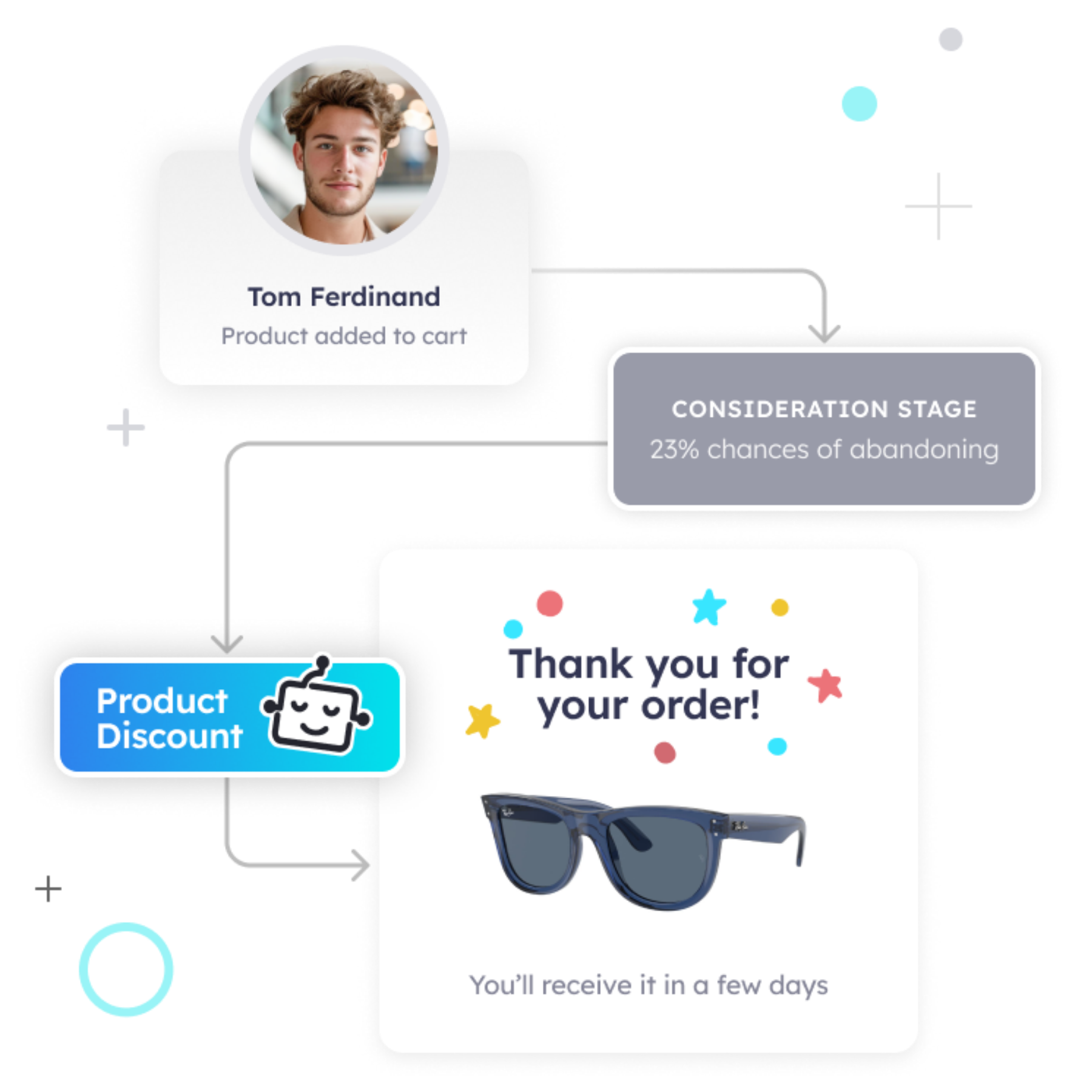
Pathmonk is an AI-powered, behavior-based lead generation tool. It analyzes how visitors interact with your site in real time and predicts their intent. Based on that behavior, it shows different personalized experiences designed to move each visitor toward a conversion that makes sense for them.
The important part is this: the traffic doesn’t change. The experience does.
Someone who is clearly in exploration mode shouldn’t see the same message as someone comparing options or showing buying signals. With Pathmonk, those visitors don’t get pushed into the same generic form. They see different prompts, different messages, and different conversion paths based on what they’re actually doing on your site.
The result is more conversions from the same traffic. And when you convert more of the visitors who already have intent, your effective cost per lead goes down.
This is where Pathmonk fits naturally into paid and organic acquisition. If you’re running ads, investing in SEO, or spending on content and partnerships, improving on-site conversion immediately makes those initiatives more efficient. You’re not asking platforms to find cheaper clicks. You’re making better use of the clicks you already pay for.
That’s the difference between cheap leads that break your funnel and cheaper leads that come from higher relevance. One comes from lowering the bar. The other comes from aligning intent, experience, and timing.
How Avrek Law Firm made their leads 63% cheaper without increasing traffic
Avrek Law Firm is a US-based personal injury law firm. Like many firms in the legal space, they were already investing in traffic acquisition, including paid channels. The issue wasn’t traffic volume, but conversion.
Visitors landed on the site, but very few were ready to immediately submit their case for review. Trust was the main barrier. And in legal services, that hesitation is expensive. Every unconverted visit increases the effective cost per lead.
Instead of pushing harder on ads or expanding budgets, Avrek focused on converting more of the traffic they were already paying for.
With Pathmonk, the website experience adapted in real time based on visitor behavior. Early-stage visitors were shown an introduction video from the firm’s founder to establish credibility quickly.

Visitors showing higher intent were exposed to real client reviews and testimonials. When users reached decision-ready moments, Pathmonk presented multiple contact options, including a case review form and a call option.
The experience changed based on intent. The traffic didn’t.
As a result, Avrek increased qualified website conversions by 175%. That uplift had a direct impact on lead cost. With the same traffic and media spend, the effective cost per lead dropped by up to 63%.
This is the difference between chasing cheaper leads and making leads cheaper. Avrek didn’t lower their targeting standards or flood sales with low-quality contacts. They increased relevance, trust, and timing.
FAQs about cheap lead generation
Are cheap leads always low quality?
No. Cheap leads are not inherently low quality. Low cost per lead is often expected in high-intent channels like branded search, retargeting, or warm audiences, and for low-friction offers such as newsletters or free tools. Cheap leads become a problem only when low cost is treated as a success metric without evaluating intent, qualification, or revenue impact.
Why can cheap leads hurt sales performance?
Cheap leads can hurt sales performance when they lack intent. Sales teams spend more time qualifying and filtering instead of selling, which reduces efficiency and morale. Over time, sales may lose trust in marketing-generated leads, creating misalignment even if lead volume remains high.
How do advertising platforms optimize when leads are cheap?
Advertising platforms optimize based on the conversion signals they receive. If most conversions come from low-quality leads, platforms learn to target users who convert cheaply rather than users who are likely to buy. This can improve CPL while worsening cost per opportunity or cost per customer.
Is cost per lead a bad metric?
Cost per lead is not a bad metric, but it is incomplete on its own. CPL only measures top-of-funnel efficiency and does not reflect lead quality, intent, or revenue contribution. It becomes misleading when it is used in isolation instead of being evaluated alongside downstream metrics.
What metrics matter more than cost per lead?
Metrics that matter more than CPL include lead qualification rate, cost per qualified lead, number of sales conversations, cost per opportunity, pipeline value, and revenue generated per channel. These metrics help connect marketing performance to actual business outcomes.
Can conversion rate optimization reduce ad costs?
Yes. Improving conversion rates directly reduces effective ad costs. When more visitors convert from the same amount of traffic, cost per lead decreases even if click prices stay the same. This makes paid acquisition channels more efficient without changing targeting or budgets.
Key takeaways
- Low acquisition cost is not a problem by itself, but it becomes misleading when evaluated without considering qualification, pipeline progression, and revenue impact.
- Focusing purely on acquisition efficiency can reduce sales productivity, train advertising platforms on the wrong signals, and skew budget allocation toward low-value channels.
- Cheap lead generation performs well when demand already exists or when early-stage engagement is the goal.
- The most sustainable way to improve acquisition efficiency is to convert more of the visitors you already attract, rather than expanding targeting or chasing cheaper traffic sources.
- Long-term growth depends on aligning acquisition metrics with intent and business outcomes, not on optimizing top-of-funnel cost in isolation.
Calculate your increased profit in just a few clicks
Easily find out how many conversions and revenue you can expect once Pathmonk is installed on your website.
Calculate your gains