
Introduction
Meet Samantha Degennaro, Head of Growth at Dimo, a company making waves in the Web3 and automotive data space. In this episode, Samantha discusses the innovative ways Dimo empowers car owners with data ownership and control. Discover the potential of Web3, the challenges of data attribution in modern marketing, and the importance of a multi-channel approach to reach target audiences. Tune in to gain valuable insights into the future of car data and technology.


Increase +180% conversions from your website with AI
Get more conversions from your existing traffic by delivering personalized experiences in real time.
- Adapt your website to each visitor’s intent automatically
- Increase conversions without redesigns or dev work
- Turn anonymous traffic into revenue at scale
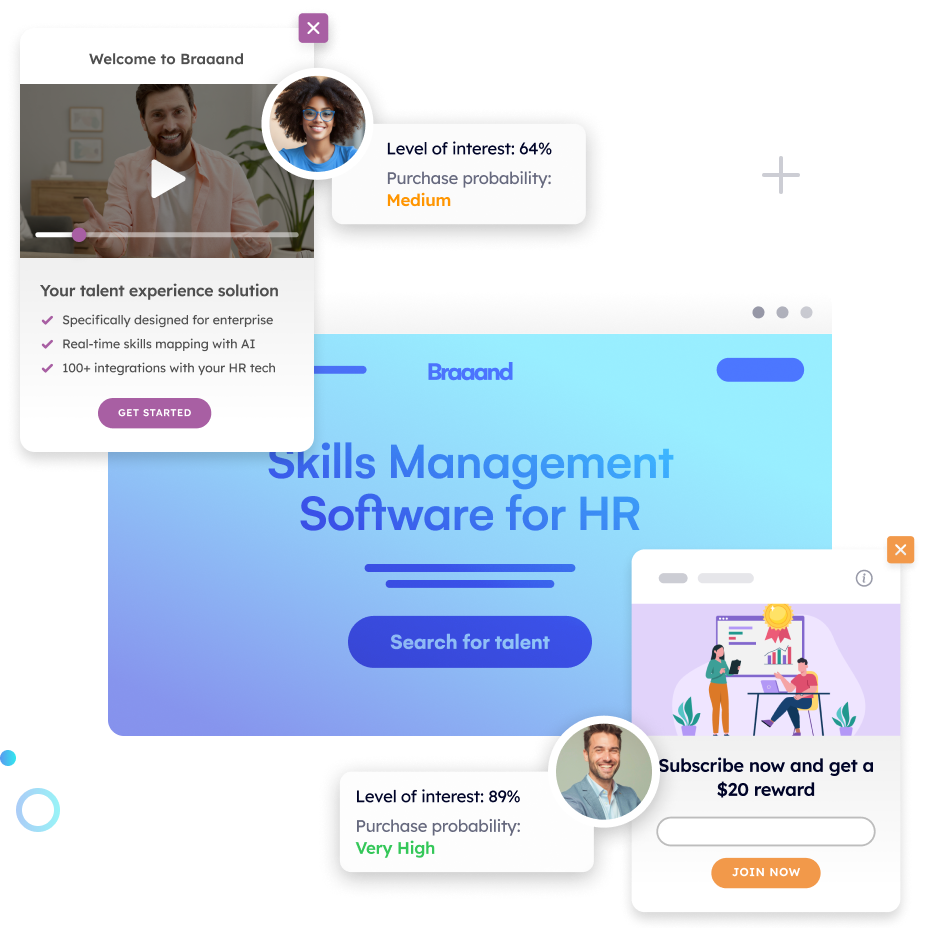
Ernesto: Pathmonk is the intelligent tool for website lead generation. With increasing online competition, over 98 percent of website visitors don’t convert. The ability to successfully show your value proposition and support visitors in their buying journey separates you from the competition online. Pathmonk qualifies and converts leads on your website by figuring out where they are in the buying journey and influencing them in key decision moments with relevant micro experiences, like case studies, intro videos, and much more.
Stay relevant to your visitors and increase conversions by 50%. Add Pathmonk to your website in seconds. Let the AI do all the work and get access to 50 percent more qualified leads while you keep doing marketing and sales as usual. Check us on Pathmonk.com.
Welcome to today’s episode. Let’s talk about today’s guest. We have Samantha from Dimo, Head of Growth. How are you doing today, Samantha?
Samantha Degennaro: I’m great. Thank you for having me.
Ernesto: Oh, it’s great to have you on today’s show. And for our listeners curious—what is Dimo all about? So let’s start it off with that. In your own words, can you tell us a little bit more?
Samantha Degennaro: Dimo is the easiest way to turn your car into a smart car and enter the world of Web3.
Now, Web3 is one of these terms that has been attached to a lot of buzzwords—NFTs, crypto, blockchain. It can seem really unapproachable, but at its core, Web3 is about acknowledging where consumers are and where they’re going.
So many consumers today have become acutely aware of the value that they contribute to the companies that they interact with, and they have higher expectations and standards for where they’re going to put their time, eyeballs, and money. They want transparency. They want a two-way relationship, not a one-way relationship.
And at its core, Web3 is about sharing in the value that’s being created, providing ownership, and providing transparency. And that’s what making your car smart allows you to do. You are able to own your data, choose who has access to it, and get the most value from your vehicle.
Ernesto: All right, interesting. So that way our listeners could get a good understanding of Dimo—what would you say are the problems that you solve for clients?
Samantha Degennaro: Yes. So I think a lot of people recognize that your car is collecting data. There are insurance companies that will give you discounts every month to have a copy of it by plugging in a device under your steering wheel, but drivers don’t actually get a copy of that information and they’re not able to use it for themselves.
So we give you access to the data that your car already collects so that you can be smarter about your maintenance decisions and use it to get preferential relationships with different service providers through our marketplace. We provide discounts and we also provide weekly rewards—like an airline point, airline mile for your car—to all of our users for participating in the network and contributing their data on a large scale.
Ernesto: Definitely, that’s great. So then, who would you say are your clients? Is there a vertical or niche segment that you guys like to go after?
Samantha Degennaro: Yeah, so our current niche is very much an overlap between people who are excited about data, excited about Web3 principles, and cars.
So we have fleets who are on the network who are looking to track their vehicles inexpensively. We have individual drivers who want to avoid a trip to the mechanic—if they could just use our device to read an error code and skip that inconvenience.
And then we have people who are really interested in earning the weekly rewards. Our reward is actually a cryptocurrency token that’s listed on Coinbase, and we reward our early adopters with weekly distributions.
Ernesto: Great. And you being the Head of Growth there—how do you get those people in the door? What would you say is the top client acquisition channel for you guys?
Samantha Degennaro: We have a lot of word of mouth and are very active on organic social—Twitter, YouTube, Instagram. We also do paid advertising to retarget and emphasize those efforts.
But one of the really wonderful parts about this new Web3 community is that it is a community and there is a two-way relationship. So our existing users are our best evangelists and advocates. They’re frequently mentioning us, not necessarily even incentivized—they’re just talking about the project and developments they’re excited about.
And that multiplies our marketing efforts in a way that I think is unique to this new view towards your relationship with an organization. It’s almost like instead of buying something from a company, you’re joining a club—there’s more loyalty than if we were just a gadget.
Ernesto: That’s awesome to hear. And while I am here on the website, dimo.zone, what role does the website play for client acquisition?
Samantha Degennaro: Our website is definitely trying to serve a lot of different constituents, and that’s been one of the challenges. We have people who want to just take care of their car.
So I think the first thing our website does is it gives a sense of trust. It’s designed, we’ve got some fun animations, and especially in the Web3/crypto world there can be a lot of hype—so you want to show that we’re a real company, we’re going to stick around whether prices go up or down. We’re here about the technology we’re building—we’re not just trying to hype in the short term. So there’s trust-building through the professionalism of the website.
But also, it’s about segmenting users and allowing them to segment themselves quickly. So whether you’re a developer interested in making an app on the network, a partner who wants to offer services to our customers, or a potential customer who wants to buy a device—we try to give you those options at the top.
Ernesto: Awesome. Are there any tools or methods, as far as marketing strategies, that you’d recommend to our listeners?
Samantha Degennaro: One important lesson is that you can’t build an entire startup on one channel anymore. Ten years ago, you could do it just on Facebook—people were in one place. Now there’s fragmentation.
Even for our audience—which tends to be niche and a lot of them are on Twitter—we still have to be in a lot of channels. Not just because people are in different places, but because trust requires more touch points. It can’t be five ads. It has to be an ad plus a piece of press, plus something organic, plus a video, plus an influencer.
So we’re really active in every channel you can think of, even though we’re early, because we want to make sure someone finds us five times in five different places.
Ernesto: Awesome. Let’s switch gears a bit and talk about you as a leader—Head of Growth. What are some key tasks you focus on day to day?
Samantha Degennaro: I spend a fair amount of time on our social listening tools. I start my day looking at social listening to get a sense of what opportunities are already happening organically in the marketplace that we can emphasize.
I started my career in early-stage acquisition—I actually started in direct mail—and it used to be very ad-first and then educate. Now I think it’s educate and then ads to help push people across the line and make it through the noise. They often need to discover you organically first.
So it’s about identifying the strongest organic touch points that should be repeated, boosted, or expanded.
Ernesto: Perfect. Let’s jump into our rapid fire question round. You ready?
Samantha Degennaro: Sure.
Ernesto: First off—what is the last book that you read?
Samantha Degennaro: A book called All the Beauty in the World. It’s a memoir by a security guard from the Metropolitan Museum of Art.
In my world where everything’s changing and it’s all about progress and fast—his career was spent where everything staying the same was success. That different perspective was really fun to listen to.
Ernesto: Great read. Now, what is one single thing that your company is focused on at the moment the most?
Samantha Degennaro: We’re very focused on our technology and the app experience—making sure users find something that keeps them coming back.
There are a lot of trends that come and go, but we want to create everyday, real-world utility for our customers.
Ernesto: Now, if there would be no boundaries in technology, what would be the one thing you’d want fixed for your role as a marketer today?
Samantha Degennaro: Attribution. It’s just a nightmare—especially when you have the luxury of a lot of organic mentions out there. Really figuring out whether those ad dollars were well spent or just extra—if we could get true attribution, including view-through, it would be amazing.
Ernesto: Totally. Now, if there’s one repetitive task you could automate, what would that be?
Samantha Degennaro: Updating Linear and Asana and all those task management tools. My life is so much better when those are clean, but it takes a lot of time to keep them up to date.
Ernesto: Definitely. And lastly—what’s one piece of advice you would give yourself if you were to restart your journey as a marketer today?
Samantha Degennaro: Don’t be scared of new channels.
People think, “Oh, I’m this kind of marketer or that kind of marketer.” But at the end of the day, because I started in direct mail, when I first entered digital it was scary—like, am I going to be able to do it?
And then weeks in, I was like, “Oh, this is the same stuff with different words.”
If you have core principles and a core understanding of what it means to communicate a message, it doesn’t matter where you’re communicating it—you just need to think about the user and their needs, problems, and bandwidth.
Ernesto: Awesome. Great advice. Samantha, thanks a lot for being on the show with us today. Last word—if someone forgets everything about the interview today, what’s the one thing they should remember about your company?
Samantha Degennaro: Web3 is not scary. It’s not hype. It’s not fraud.
There’s a lot of fantastic technology being built, and if you don’t have control over your data and the technology you rely on every day, it’s going to keep getting tougher.
And your car—most of us are in it every day—so it’s a great place to start. You can connect very easily either for free or really inexpensively.
Ernesto: You heard it. You can always check them out at dimo.zone. Samantha, thank you so much for being on. To our listeners, thank you so much for tuning in and looking forward to our next episode at Pathmonk Presents. Thanks, Sam.
Samantha Degennaro: Thank you.