
Introduction
Katie Canton, Marketing Leader at Goosechase, joins Pathmonk Presents to break down how interactive experiences outperform passive content across marketing, education, and internal programs.
Katie explains how Goosechase evolved from a simple scavenger hunt app into a powerful platform for active learning, employee onboarding, fundraising, and customer engagement. The conversation explores why people remember experiences—not slide decks—and how brands can design participation-driven moments that drive real emotional impact.
Katie also shares practical insights on website conversion strategy, product-led growth, and how marketers should adapt to a rapidly changing, AI-influenced search landscape. This episode is a clear reminder that engagement isn’t told—it’s experienced.


Increase +180% conversions from your website with AI
Get more conversions from your existing traffic by delivering personalized experiences in real time.
- Adapt your website to each visitor’s intent automatically
- Increase conversions without redesigns or dev work
- Turn anonymous traffic into revenue at scale
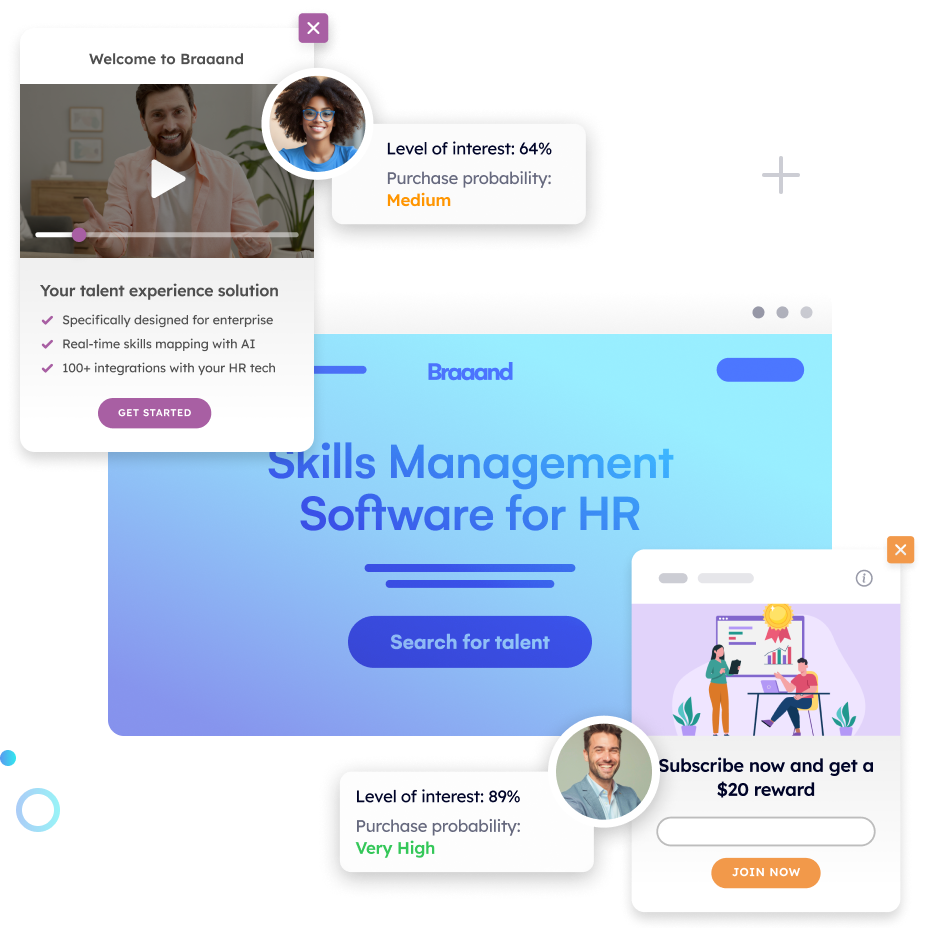
Rick: Pathmonk is the AI for website conversions. With increasing online competition, over 98% of website visitors don’t convert the ability to successfully show you value proposition and support visitors in the buying journey separate you from the competition Online. Pathmonk qualifies and converts leads on your website by figuring out where they are in the buying journey and influencing them in key decision moments with relevant micro experiences like case studies, intro videos, and much more stay relevant to your visitors and increase conversions by 50%.
By adding Pathmonk to your website in seconds, letting the AI do all the work and increase conversions while you keep doing marketing as usual, check us out on Pathmonk.com. Hey everybody. Welcome back to today’s episode of Pathmonk Presents today we are joined by Katie. She’s the head of Brand Experience at Goose chase. Katie, welcome to the show. Thanks, Rick. Good to have you here, and we finally made this happen. People don’t know this, it was a long time coming.
Katie, why don’t we start with talking a little bit about Goose chase and maybe in your own words, what’s the heart of what Goose Chase does and how would you describe it to someone new?
Katie Canton: Sure. Yeah. So Goose Chase, we always describe ourselves as a small startup that happens to have been around for 15 years. So we’ve been going at it for quite a while. We started at a hackathon. Our CEO created an app to help people run scavenger hunts at a hackathon when he was in university. So that’s our origin story.
And in the last 15 years, Goose Chase has grown from a scavenger hunt app to a tool that really helps people turn kind of any passive moment into experiences that people really remember and really wanna participate in. So think scavenger hunts, but for kind of the modern digital world. And think any sort of boring thing that you have to do turned fun.
Onboarding at a new company, in class lessons, mandatory team building—we use Goose Chase to turn those events into interactive experiences that honestly people just go wild for. I’ve been at the company for four years now and I’m still constantly surprised by how into a Goose Chase experience grown adults will get.
So a lot of people see Goose Chase and think it’s for kids and students in classrooms—our biggest market—but watching a CEO run around an office building trying to do air guitar to get points on their Goose Chase is the highlight of my year always.
Rick: Wow. Wow. Okay. Now that’s pretty cool. And it’s cool to know that after four years you’re still finding new things or surprising ways that it’s entertaining people that use it. You’re gamifying the experience of whatever mundane things people are going to do.
Now you mentioned you have a big market in classrooms and students. Are there any other businesses or industries where you feel Goose Chase really shines? And maybe is there a problem that you think you help them solve more than anyone else?
Katie Canton: Yeah, for sure. So classrooms is our bread and butter. But going back to being surprised by our customers—our customers have really been the drivers of where Goose Chase went from there.
So we had people use us at their kids’ schools who then were like, “Hey, I work at a museum. Using Goose Chase could really help drive foot traffic through different exhibits.” So we’re used by a lot of tourism institutions now—ski hills, national parks, that sort of thing—to drive people to explore parts of those locations that they haven’t explored before.
And then nonprofits have started using Goose Chase to run fundraising events. I did a case study just last week with a teacher who ran a Goose Chase to drive a fundraising event. They were like, “We could do the same old bake sale, the same old 50/50 raffle, but let’s do something people actually wanna participate in.” And it ended up driving way more funds than they expected.
And then large enterprises—we’re used by a lot of people and culture teams and HR teams to drive employee onboarding programs, employee health and wellness programs. Both gamifying them, but also creating interactive moments that people will remember.
We talk a lot about passive learning and active learning at Goose Chase. Our big thing is we really wanna drive active learning. People don’t remember slide decks, they remember experiences. They remember having a laugh with their colleague, not just answering a multiple choice question.
Honestly, one of our hardest marketing problems is that Goose Chase can be used by so many industries and so many different people. Focus is always our biggest challenge. But those are the biggest ones to highlight today.
Rick: That’s definitely a double-edged sword, right? It works for so many use cases. Now, within those companies—nonprofits, enterprises—you mentioned HR teams. Who typically is reaching out or trying to discover a tool like Goose Chase? Do you have a specific persona?
Katie Canton: Yeah. The person who reaches out to us across all industries is usually not the person making the buying decision, which I think is standard in B2B.
In the K-12 space, we have teachers reaching out, and then they need to convince their principal or district. In large enterprises, it’s often the person running learning and development or onboarding programs, and then they need to get sign-off. Sometimes they bring in the CIO, CTO, tech people. Sometimes it goes up to department heads.
We often have very vocal champions of Goose Chase. They’re the ones creating and running the experiences and seeing the magic. But they’re not usually the ones holding the wallet, so we usually talk to a few different people.
Rick: Of course. Are there any marketing channels that have become your go-to for bringing in more of those people?
Katie Canton: Yeah. We’re pretty lucky because we’re totally inbound. Our greatest acquisition channel is the product itself. If you’re a parent participating in a Goose Chase run by a PTA or your kid’s school and you think, “Hey, I could use this in my own business,” honestly that’s where most of our leads come from.
It’s participants who see the spark and realize they can use it in their own world. Oftentimes leads come to us having already experienced it, which makes the discussion so much more fun and easier.
Huge hat tip to our product team—especially in the last couple years—they’ve made the product really sing. And then the next step is: people participate and then come to our website. So our website is the other huge pillar in our marketing strategy.
We’ve been doing a lot of work on it. There’s still work to be done, especially in terms of conversion and making sure people get the right content at the right time. Right now the website looks amazing, but to be transparent, it could probably work a lot harder for us.
Rick: That’s any marketer’s goal—having the perfect website. From your experience, what makes a website convert? Any tactics, frameworks, or principles you’ve seen work?
Katie Canton: There are two ethos or principles I think make a good website.
One is “show me, don’t tell me.” Don’t tell me how great your product is—show me. People come to the website and want to experience it. Whether it’s an easy demo, a sample experience—whatever it is—they want to see it for themselves.
And the other is the balance of emotion and ease of use. If your website can inspire someone to feel something and you make it really simple to act on that inspiration, then you’ve crushed it. A lot of companies overcomplicate things. I think we’re good at the emotion side, but then it’s about making it easy to click, pay, get in—whatever the action is. No confusing pricing pages. Just make it easy.
And the last thing: test everything.
Rick: I love that—emotion plus ease, and keeping the wave going. Now I want to switch gears and talk about you. What does a typical workday look like for you and what are the main things you focus on day to day?
Katie Canton: We’re a really small team by design, so I wear a ton of hats. We’re doing a lot of work in SEO and GEO at the moment. We’re redesigning all our email campaigns. We’re working on conversion rate optimization on the website.
One of the nice things about Goose Chase is we’ve de-siloed the company. Product and marketing work really closely together, which is amazing. Product supports conversion and acquisition activities in a big way.
Personally, I just got back from mat leave a couple months ago. So part of my day-to-day is catching up on all the progress the team made while I was gone and figuring out how to amplify that without getting in anyone’s way.
I was on mat leave for just over a year—Canadian company—and the whole digital search landscape changed in that time. When I left, people used AI to write a blog or two. When I came back, people use AI to search everything.
So a big part of my day is catching up on how people use the internet now, how AI is impacting marketing. It’s exciting, it’s overwhelming, but it’s like figuring out how to do this right—learning from the early wild west days of SEO but not making the same mistakes. It’s an exciting time for marketing.
Rick: Absolutely. Things are moving fast. Speaking of moving quickly, we’re getting towards the end, so let’s jump into our rapid fire segment. Is that okay?
Katie Canton: Okay. Perfect.
Rick: When it comes to content, do you prefer watching, reading, or listening?
Katie Canton: Listening. Listening. I’m a big podcast gal.
Rick: What’s the latest piece of content you listened to—podcast, clip, social—anything that caught your attention?
Katie Canton: Yeah, actually there was a video from SparkToro that hit my inbox this week. It talked about the notion that the marketing funnel doesn’t exist anymore. They’re rebranding the journey as a marketing pinball machine, which I really liked—users come in and bounce around, there’s no linear path. And what can we do to optimize for this new chaotic world.
Rick: If you had a magic wand and could fix one frustrating thing in your life with tech—especially related to marketing—what would you pick?
Katie Canton: Reporting. Reporting everything we do with total accuracy. Not just paid ads, not just easy stuff to report on. Tell me from a podcast how many customers we got. Tell me from… and then to build on that, I’d also love a measurement tool that accurately measured the emotional impact of our marketing, not just clicks and purchases.
Rick: Many marketers will relate to that. What’s one repetitive task you’d love to put on autopilot forever?
Katie Canton: Any sort of formatting or reporting, formatting or cleaning data. These are things I do not want to ever do again.
Rick: Katie, thank you so much for being on the show. As we wrap up, I want to give you the last word: if someone forgets everything from today, what’s the one thing they should remember about the work you’re doing at Goose Chase?
Katie Canton: If there’s one thing to take away—whether you’re a marketer, educator, event planner, leader—is when running events, experiences, or training, don’t just tell people what you want them to know. Do something that creates something they can participate in, that they’ll remember, and engage with. Great experiences.
Rick: That’s a great one. If someone wants to check you guys out and see what the experiences are like, where should they go?
Katie Canton: The website is our front door. Please come, give us any feedback on how we can improve it. Goosechase.com is the best place.
Rick: Perfect. Katie, great conversation. I appreciate your insights and I wish you the best of luck navigating this new world of AI. You’re not going crazy—we all are.
Katie Canton: Thank you.
Rick: Thank you again, Katie, and I wish you a wonderful day. Alright, thank you everybody. Bye.