
Introduction
In this episode of Pathmonk Presents, Ernesto sits down with Kyle Hamer, Senior Vice President of Marketing at HH2, a company focused on simplifying construction operations. HH2 bridges the gap between ERP systems and construction management tools, offering digital timesheets, labor tracking, and AP routing solutions.
Kyle shares insights on how HH2 helps contractors streamline field and back-office workflows, ensuring accurate financial data and smooth project management. Discover how HH2 serves mid-sized contractors and why it’s a game-changer for construction companies looking to enhance efficiency and productivity.


Increase +180% conversions from your website with AI
Get more conversions from your existing traffic by delivering personalized experiences in real time.
- Adapt your website to each visitor’s intent automatically
- Increase conversions without redesigns or dev work
- Turn anonymous traffic into revenue at scale
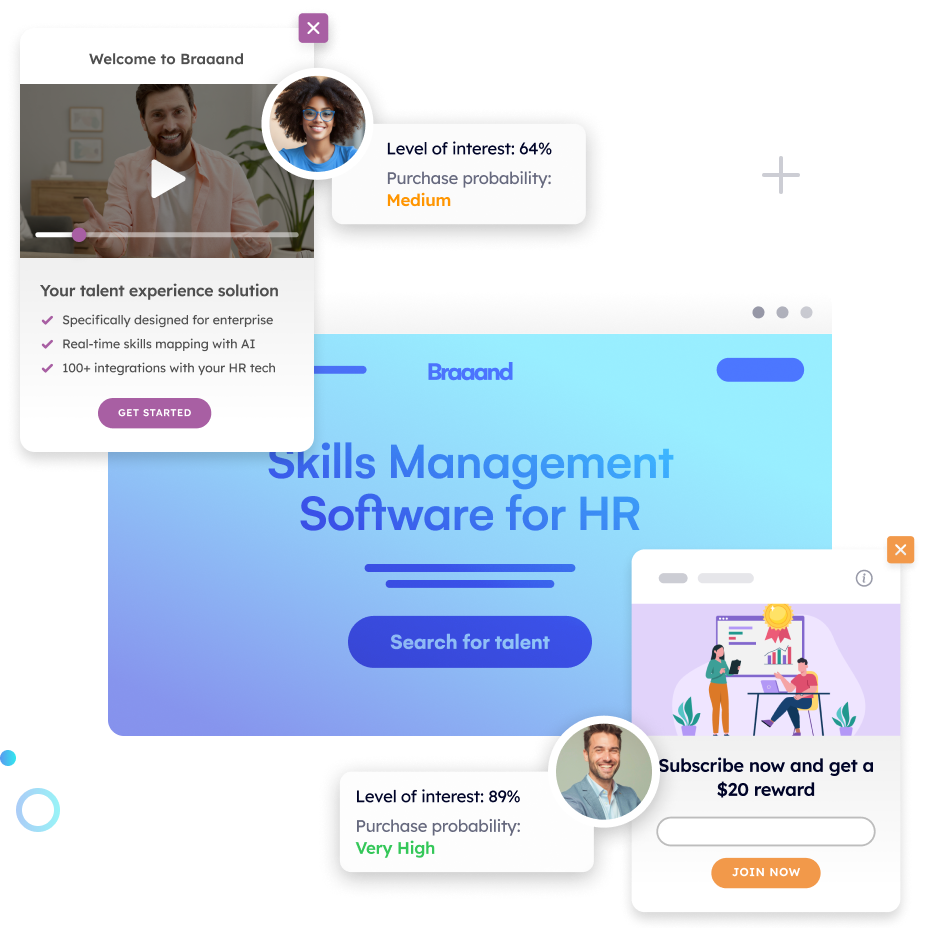
Ernesto: Pathmonk is the intelligent tool for website lead generation. With increasing online competition, over 98 percent of website visitors don’t convert. The ability to successfully show your value proposition and support visitors in their buying journey separates you from the competition online. Pathmonk qualifies and converts leads on your website by figuring out where they are in the buying journey and influencing them in key decision moments with relevant micro experiences.
Like case studies, intro videos, and much more stay relevant to your visitors and increase conversions by 50 percent at Pathmonk to your website in seconds. Let the AI do all the work and get access to 50 percent more qualified leads while you keep doing marketing and sales as usual. Check us on Pathmonk. com. Welcome to today’s episode. Let’s talk about today’s guest. We have Kyle Hamer from HH2, senior vice president of marketing with them. How are you doing today, Kyle?
Kyle Hamer: Wonderful. Thanks for having me on the show today, Ernesto.
Ernesto: It’s great to have you on and I’m sure our listeners curious to know what H2 is all about. So let’s kick it off with that. Kyle, in your own words, can you tell us a little bit more?
Kyle Hamer: Yeah, I’ll tell you what, one of the, one of the most unique and hidden spots inside of SAS today. And computer in the computer world is the construction technology. Similar to what in transportation, construction technology has been underserved for years.
And HH2 focuses on marrying the, the ERP and the accounting information to the construction management. And then covering off with specialized tools to make back office operation or back office administration and field operations partner more smoothly as projects get built.
So we’ve been around for about 20 years and we focus in the niche that sits uniquely between what your ERP does and doesn’t do and what your construction management tools do not do.
Ernesto: Okay. Awesome. Great. And so that way our listeners could get a good understanding of your company. Is there a key problem or some problems that you like guys like to
Kyle Hamer: Solve for your clients? Yeah, I think one of the, one of the biggest challenges that a lot of contractors have is, managing time and being able to keep track of crews as they’re in the field.
Sometimes you’ve got guys working on different, different trades. They’re doing different things, bidded out at, Hey, I’m, pouring concrete and we’re installing rebar that’s different than running footers. And so understanding what my costs are as it relates to specific trades, what the functions that they’re doing.
That’s a little hard to track manually, because if I’m in the middle of pouring concrete, I got to stand up and walk over and be like, now we’re actually going to delay rebar. And I have to recode that. It’s not very easy for, owners of those companies to get accurate time attendance and understanding of where does my labor production actually go?
And so the tools that we provide is a digital, a digital time sheet and punch clock that allows the time to be coded as it’s entered. So if I’m taking a break and we, Hey, we did it before the break. We were pouring, we were pouring slabs and we were pouring footing. And now after the break, we’re going to go do rebar work.
I can actually make those adjustments on my clock in and my clock out. Or if I want my foreman to be able to manage that, I can do it. And so for us, we help some of those. What I’ll call, manual processes inside of the environment to give you accurate and exact information.
So for us, we help them with, we’ll have contractors with their time collection. We’ll help them with their AP routings. So credit card expenses, stuff I have on the job site, we’re going to fill up a truck with gas. That receipt oftentimes has to get taken back to the office to then be coded. Maybe it gets lost. We can let them capture it right on the fly.
As you see with other, groups, or in the event that it’s materials, it’s been dropped off and you’re getting an invoice for, I need to be able to prove that, Hey, I got that invoice. I got the material, how much was actually used, did we return any of it?
That stuff can be classified by your foreman without actually having to go physically deliver the contract, the physical invoices back to the office.
So we allow to actually mobilize that field office back off or that field operations back office administration piece and really keeping your financial data and hygiene clean.
And for some organizations that use Sage and use Procore or you Sage Autodesk. Trimble, Procore, we have connective tissue that allows the construction financial data.
So how am I progressing on what I bid versus what I’ve actually paid out or what is actually outstanding to be paid, that information to be pulled into your construction management.
So I have near real time financial data that allows your project managers, your foreman, the different guys on the job site to be able to make really good decisions of, hey, we’re outside of scope here. And that was a, that was something that we should have built a change order for, or Hey, we built the change order for that. Has it actually been approved? Can I go ahead and release this, work to be done? And then what’s the financial impact to the job?
So it’s really taking what the teams do on a weekly basis as they go and they scope through their, they scope through their project. Hey, what, what materials did receive, what labor got done, what was our actual cost versus what we had budgeted.
And they’ll have conversations about that. It’s typically handled in either spreadsheets, or some level of, email communication back and forth. And it’s all housed in a single place for them to go look at a report and everybody’s looking at the same data.
So if that, that gives you an idea, it’s like we, we have little tools that sit in that a unique spot between those two systems.
Ernesto: And that’s really nice, right? Because I’ve heard, I have friends who, are architects and they just go crazy, right? With so many things going on at the same time and not knowing exactly budget costs, it went over or it’s, there’s something missing. So great to streamline, those jobs throughout, everything back office and work.
So great stuff there. So then would it be fair to say that you guys just, focus on construction companies? Is that your clients? Is it medium, enterprise?
Kyle Hamer: No, we think we’re really, we’re really, built for companies who are commercial contractors. You’ll find that we have a more success with general contractors who self perform their work.
They’re typically organizations that are between 20 and 50 employees up to about 500. You get North of 500, some of the sophistication and tech demands. they’re not that we’re not a good fit. It’s just a lot of in house teams have already solved it with their own custom piece of technology or wired it into a in house ERP or data system that they built themselves.
And so for us, we try and focus on that, mid tier guy in the construction space where I’m not small enough to be chucking a truck, but I’m not large enough to be a Bechtel, a Turner and have 37 divisions across the entire globe.
Ernesto: That’s funny. All right. Awesome. And, how does your audience typically find that about you? What would you say is your top client acquisition channel?
Kyle Hamer: It’s, it’s evolving for HH2. I think for the first 20 years and I tease our team and saying, one of the best kept secrets in the industry, I’ve been in the industry on construction technology for, just, just under 10 years. And it wasn’t until about eight months ago that I’d heard of HH2.
So and it’s, a great software. We have almost 4, 000 customers, across the United States, but it’s a best kept secret because when it was initially born, it was born out of a construction company. It was built by contractors for contractors. Guess what? They’re not really great at marketing or selling construction technology that they build, but they were really good at partnering.
And one of the partners that they had early on was Sage. And so Sage, 100, 300, their Timberline product, and now Intact, that business partner network and channel is really great about helping spread the word of what HH2’s point solutions would do for enabling some of these challenges that contractors are having.
Over the last three years, as HH2 has received investments from private equity, they’ve professionalized their go to market organization. So we now have, you’ll see us in LinkedIn. You’ll see us at trade shows. You’ll see us on Google when you search. And so we’re starting to show up digitally and in people’s inboxes in a way that, during the first probably 18 years of the company, you didn’t know about us unless you knew somebody who knew us.
Ernesto: All right. Awesome. Great. Great to hear that. And I am here again on you guys’s website. So that our listeners to get, where are you guys to visit you? It’s hh2. com. What role does a website play for your client acquisition, Kyle?
Kyle Hamer: First it’s evolving. Ernesto, I think one of the things that’s most important about a website is, that for the visitors, they can find the information that’s relevant to them, when they arrive.
And I think one of the, one of the big misses that I’ve seen as it relates to our current site is that if you’d never heard of HH2 before and you arrived, you wouldn’t come in and realize that we actually sit in between the accounting system and the construction management system. You would think that we were a construction management software.
And while we have construction management workflows or things that we support, we’re really back office. We’re really administration and operations support.
And so we’re in the process of actually re, re messaging, rebuilding our site so that when people show up, when a visitor shows up and they’re a payroll admin or a controller, they can quickly identify, Oh, this is who you are. This is where this is where the technology would say, and I do have those common problems.
And so we’re, one of the, one of the things I’ve identified in the last six months was, is that we just weren’t really good about telling our story and making it easy for people to find what they needed. And we will be fixing that here in the next, six weeks.
Ernesto: Definitely. Great. Great to hear that. And then what would you say are, is there anything that you’ve learned about what makes a great converting website, then any tools, tips, methods, approaches that you would recommend?
Kyle Hamer: For, me, one of the things that I think is probably most relevant, and I see this, may mistake made a lot. I, when I was doing fractional work, probably, and join HH two, you’ll have companies or marketers that will go out and they’ll just rely on Google’s digital search ads, or they’ll rely on the automated response ads.
And so you’ll get a bunch of things that like, tell me what all your products are and Google’s algorithm will just build it for you. And then you deliver them to a generic page.
A big no that, that we had, that we were doing when I got here was, is they were, they’re basically running those exact algorithm ads, spending tens of thousands of dollars a month, driving traffic. And the people that would show up were delivered to a page that just said, request a demo, software for general contractors or software for contractors.
There’s no context of, does it do, how will it benefit me? There’s just literally just said software for contractors.
And so you would have people that would show up thinking they were getting one thing, like they were thinking they were going to get a Procore, they were thinking they were going to get a, potentially an Autodesk build or, who knows what they were looking for. They might’ve been looking for, Builder trend or co construct and they show up and they’re like, Oh, this looks like it’s software for contractors. Great. I’ll fill out the form.
And then you get us on the phone and we’re talking to you about process and operations and logistics and data between your, ERP and your CM. And they’re like, none of this is relevant.
And so for us, we, we’ve retooled that. And we built our pages and seen our quality of conversion go up dramatically as we’ve just simply said, okay, the ads are explicit and what we’re targeting and the page that it comes to the message has been tailored to relevant to somebody who’s searching for Sage time and attendance or AP routing for, spectrum. ERP.
So just for us, it’s about making sure that the ad that pulls people in from a digital standpoint and takes them to that conversion page is relevant all the way through. No, no bait and switch.
Ernesto: All right. Great to hear that. Let’s switch gears a little bit, Kyle, and talk about you as, a leader. You, you mentioned, you, before, you do already have experience in marketing, but here, being the senior vice president of marketing, what are some key tasks you focus on your day to day work?
Kyle Hamer: I think a lot of the work at this point is building the foundations. Whenever you’re rebuilding or building out a marketing team, you got to focus on having something good to say and saying it well, and then saying it often.
And I think oftentimes organizations go directly to often and they spray and pray with their message all over and they haven’t worked on what really matters to my customer, what really matters to my persona. And then how do I say it? Does it really resonate?
I’ve, I worked with a company several years ago that used a 3 word to the industry here where they’re like, No, that, that doesn’t resonate with me. I don’t know what interoperability is. And I’m like, that’s actually just the connected systems. And then say connected systems.
You, going through that process day to day tasks for me are working with our product marketing team and looking at how are we messaging things? What are the benefits? Have we actually done our customer research? Partnering with sales, looking at what’s coming through in the pipeline and how their, how their deals are progressing.
And then really looking at what are our programs, what are campaigns that we’re running to ensure that we’re, getting good coverage as we, align on that right thing to say and get to saying it often.
Ernesto: Definitely. All right. Awesome. Great. Great to hear that. Let’s switch it up again and let’s go into our next section, which is a rapid fire question round. So are you ready for them? Do it. All right. Awesome. So first off, what is the last book that you read?
Kyle Hamer: Ooh, the last book that I read? I’m in the middle of reading or rereading the Witcher series. So I’m on book two of the Witcher. But the, the most recent business book that I read, radical prospecting by Jeb Blunt.
Ernesto: Definitely. Great book. Love, love the Witcher book. So great, there as well. And next, what is one single thing that your company’s focused on at the moment? The most.
Kyle Hamer: We’re actually focused on delighting our customers. And so if, you look at the experiences we grow up, we’re looking across the marketing material, our customer support and service, how can we remove friction for how people do business with us and make products that are not, only products that the customers will love, but experiences from the very first time they visit us to the very last experience that they had, that leaves them smiling and delighted having done work with HH2.
Ernesto: Yeah, we are right. And next up is if there would be no boundaries in technology, what would be that one thing that you want to have fixed for your role as a marketer today?
Kyle Hamer: I would, if there was no bounds to technology, I would remove all bots. Like it would be great if we could get rid of spam and junk as it relates to what comes through our funnel and, how we’re working things like they’re just the amount of bots that are in the environment today, especially with chat TPT and some of the new things that are coming out, it’s becoming harder and harder for marketers to identify who’s a human and who’s a bot.
And so for us, it would be great if there was like a. I don’t know. I just, I’d like a picture and old Galaga, Atari game. We’re just going through and shooting the bots and we’re just letting the good ones come through.
Ernesto: Definitely. That would be nice. Now if there’s one repetitive task that you could automate Kyle, what would that be?
Kyle Hamer: We’re pretty good about automation. If I would say that when the middle of doing this right now, but probably the most important task for me to automate is our reporting and our performance reporting as it relates to cost to acquire a customer, our customer acquisition costs, our lifetime value, and then ultimately what’s our cost per lead on a weekly, monthly, quarterly basis.
At the moment, that’s a bit of a manual pull, and we’re in the process of building our data warehouse to, to automate that particular component.
The only other thing that would be great to automate is could we do demos on demand where somebody could come in and talk to the computer, just be like, almost as if it was an automated salesperson, Hey, you know what, I’ve got this problem in the chat bot or the chat video bot would be wise enough to go, Oh, let me just do a self performing demo for you.
I think the customization and constant configuration of demos can be challenging for marketers. And with where generative AI is at this point, there’s, I think there’s some exciting stuff potentially on the books.
Ernesto: Definitely would agree with that. And lastly, you mentioned right here, we have a lot of experience in the marketing world, but what is one piece of advice that you would give yourself if you were to restart your journey as a marketer today?
Kyle Hamer: Don’t leave sales.
Ernesto: Sales.
Kyle Hamer: And so I, started my career in sales. And the progression seemed natural. I was frustrated with the marketing team. Didn’t like what they were giving us. Didn’t feel like they understood sales enablement or what I needed to say, having the right thing to say, or the right piece of content at the right time.
And I think that led my progression to end up being on the marketing side of the coin. But really as a young marketer, I think I would have had a better appreciation as a young sales rep. I should have had a better appreciation for the complexity of how marketing works.
And how you can actually, sales and marketing are the yin and yang, it’s complimentary. There’s a bias that I’ve always had, which is if marketing gets messaging, research, user experience, if we get everything right, sales is relegated to being an order taker.
And with the innovation of e commerce and the different things, again, this is utopia. You could make it. You could really make it so that you didn’t need a sales. There was, it’s one that it’s one in the same, but I’ve learned that’s probably not accurate.
You really do need them to compliment one another, especially in the B2B world. There’s a place for education or what I consume, there’s a place for conversation, which is how I dialogue. And there’s a place for, I wouldn’t say convincing, assisting in how we get across the finish line and get started.
And so for me, I think marketing does a really good job, would help younger marketer me understand that marketing’s job is really to get folks through that education and into that conversation phase.
So sales can come in and then when it goes to how do we get started, marketing may come back in and help enable some of those particular components, but there’s really that transition of having the conversation and making the decision to move forward that you need that, salesperson, you need that relationship there.
Ernesto: Awesome. Great. Some great advice there. Thanks a lot for that, Kyle. Kyle, thanks a lot for being on the show with us today. I do want to give you the last word. If someone forgets everything about the interview today, what is that one thing they should remember about HH2?
Kyle Hamer: One thing to remember about HH2? Construction doesn’t have to be that hard. And if you want to simplify your life, check out hh2. com.
Ernesto: There you guys heard it, right? If you’re in the construction business, check them out at hh2. com construction software built to supercharge your back office, Kyle. Thanks a lot for being on with us today to our listeners.
Thank you so much for tuning in. Looking forward to our next episode at Pathmonk Presents. Thanks a lot, Kyle. Hey, thanks for having me.