
Agile Grocery Tech Connectivity Driving Faster Market Entry | Tom Lillywhite from Naveo Commerce
Introduction
Tom Lillywhite, SVP of Sales at Naveo Commerce, outlines how the company delivers fast, flexible, and human-centered tech solutions for grocery retailers. Naveo Commerce positions itself as a lightweight, highly agile middleware layer that connects complex systems without the heavy lift of full-stack platforms.
Tom explains how they help both large chains and independent retailers simplify e-commerce operations, streamline data workflows, and accelerate time to market. He dives into the value of clarity, human-focused design, and long-term partnerships in a market crowded with fragmented tools. The episode offers sharp insights into avoiding complexity traps, improving customer experience, and building tech that actually reflects real-world retail needs.


Increase +180% conversions from your website with AI
Get more conversions from your existing traffic by delivering personalized experiences in real time.
- Adapt your website to each visitor’s intent automatically
- Increase conversions without redesigns or dev work
- Turn anonymous traffic into revenue at scale
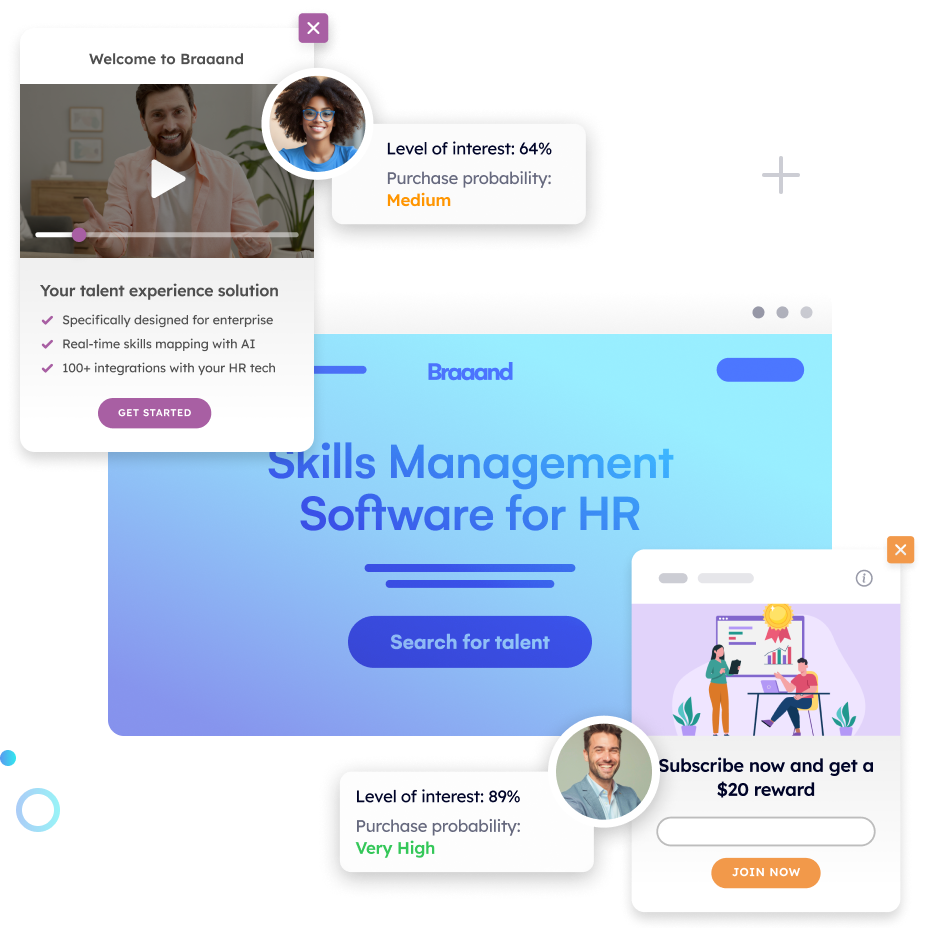
Rick: Pathmonk is the AI for website conversions. We’re increasing all in competition. Over 98% of website visitors don’t convert. The ability to successfully show your value proposition and support visitors in the buying journey separates you from the competition online. Pathmonk qualifies and converts leads on your website by figuring out where they are in the buying journey and influencing them in key decision moments with relevant micro experiences like case studies, intro videos, and much more.
Stay relevant to your visitors and increase conversions by 50%. By adding Pathmonk to your website in seconds, letting the AI do all the work and increase conversions. What you keep doing, marketing as usual, check us out on pathmonk.com. Alright everyone, welcome to today as episode of Pathmonk Presents. Today we are joined by Tom Lillywhite is the s VP of Sales at Naveo Commerce.
Tom, how’s it going?
Tom Lillywhite: Yeah, good. Thank you. How are you?
Rick: Very good. Thanks. Tom, I’m excited to, to talk to you today and, I wanna, I wanna let you introduce your company. So in your own words, tell us about your business and its approach to growth and sales and, what makes your brand stand out in the market, if you
Tom Lillywhite: will.
Sure. Thank you. So yeah, Naveo Commerce is a, we’re a tech organization. It’s been in market for about 20 years, and I think. We span across ERP logistics, great technology, and then we also work in grocery tech as well. I’ve been in the business now for just over a year, and I think we’ve, gone through a bit of a startup mentality in an existing company, so we’ve rebuilt our tech platform entirely.
we’ve bought a lot of new products to market, mainly for our grocery partners globally. I think we are now that we are positioning ourselves as almost a middleware quick connectivity business. So we are not a juggernaut sales, or e-commerce engine like some of the massive players in the market.
But what we are is a very quick and agile and flexible organization. So we’ve got brand new tech we can bolt on very quickly. We don’t have to be end-to-end. We can be, an affiliate or we can be a support to some of the larger organizations like Microsoft and Amazon and Salesforce and such, but our real goal is that we are speed to market.
in, in an ever changing e-commerce engine world, we are the, ones that are talking about cost of inaction and saying, look, utilize us, and we will get you to market much quicker than anybody else.
Rick: Okay. Fair enough. And, I’m also curious at that point then, what’s, what type of customer then is the best fit for, this, right? ’cause I assume that’s a, there’s a key problem that you solve for them and, and that impacts their experience when they first started working with you guys. So how would you describe your, ICP, if you will, if you want to keep that marketing, lingo going.
Tom Lillywhite: Yeah, so our, perfect customer is, effectively any grocery organization who’s looking to, get in on or simplify the market.
So my background was, Quick Commerce. I worked at Deliveroo and I think what we are now got stage of is the Quick Commerce bubble and e-commerce engine has hit grocery customers quite hard. They’ve all found a way around servicing. I think what we are now positioning is to say, okay, everybody’s bolted in.
Everyone works with all these aggregators, Uber Eats delivery, just eat. We’re trying to cram all of these things into an old system. What we are here to do is go, okay, let’s simplify this and clean everything up. because that’s the holy grail of tech. the, more simple it is, the more reactive you can be.
So we are very much about not having to mine the data, not having to, spend time extracting data. We want to be quick flight afoot, and so that data is in actionable and you can use it and move on. But we’re also about cutting down time for colleagues, for, administration, for in-store staff.
So really we can service any client. But I think the one differentiator we do have is that we can work with big managed operations, such as co-op and, Sainsbury’s, Asda, those kind of businesses. But we also are. unique enough and agile enough that we can work with independent retailers as well.
So like Spa International or a big customer of ours, big in, independent retail place. So we can be flexible that we don’t have to do a big drop. We can, make it unique for small number of stores so that we can all play on the same playing field.
Rick: How do these people discover you, in a sense that, are there any marketing channels at the moment that.
That have become your go-to for bringing in more of them?
Tom Lillywhite: I think in, in, grocery is quite a, unique. marketplace just because there’s very few of them. And so the, the market itself is quite small and so there’s a lot of word of mouth and that comes with a positive in that if you do well, people talk about you.
The downside is if you don’t do very well, people also talk about you. So, reputation is key. LinkedIn I think is great for us because, like any big tech integration player. We are not here to do quick sales. we are here for long term partnerships over multiple years, and, integrations can take, 4, 6, 8 weeks.
So it is not a fast process. We try and speed up as much as possible, but LinkedIn is great. Our own website is, has just had a refresh to try and make it a bit more suitable to what we are and what we’ve shaped into as a business now.
Rick: Okay. So word of mouth, which makes a lot of sense. And that’s, that applies to any business, I think.
Yeah. LinkedIn sounds interesting. So social media, more specific to LinkedIn’s, of course ’cause of your, your industry and your vertical. I’m curious, how much does your website play in, pulling in new clients? Is there anything about it that you think really works or anything you’ve got your eye on improving at the moment?
Tom Lillywhite: I think, we, would like to, when our, when our new products are, fully tested and out there, we’ll, we need some more customer testimonials. I think that’s important because then it, it gives you a bit more, a bit more authority in the market if a customer’s actually vouchers and say, yes, we’ve worked with these guys and it’s done well.
the thing is with our website is that we did, we talk about it a lot, is that being a tech company, we could load it with data, we could load it with information, we could load it with everything. Fundamentally, the people that are gonna want to engage with us really will go on the website, look at a few things, and then just hit contact them because they’ll want us to talk to them rather than do the exploration themselves.
and a lot of what we do in a plain text format on a website could be quite generic, so there is no real differentiator that we can really display on a latent webpage. We have played with videos, but again, people’s adoption rate to actually click on a video and invest their time when actually we’ve all been there.
Be it Instagram, be it any social media, the moment you’re interested, you just click contact me and let’s go, let’s get that bit moving and then, we’ll decide whether it’s worthwhile from there.
Rick: Okay. Yeah. Fair enough. maybe let’s switch gears for a second, Tom, and, talk about you as a leader.
Give us a glimpse into what, your typical workday looks like, and, maybe you speak to clients more, but what are the main things you focus on a day to day?
Tom Lillywhite: I think it’s, about, one of the hardest things in, an emerging business, and we’re, trying to grow an incredible rate.
And like I said, we’ve had a, big change in our strategy and our mindset. We’ve brought a lot of new products to market. The most important thing for me, which I really focused on day to day, is making sure that we are. Staying, staying on track and that the goal is, not diminished in any way.
And I think whenever you are in that startup mentality, I know we’re a mature business, but any startup. Everybody’s always working very hard. There’s an element of exasperation, there’s an element of, ah, we’ve got so much work to do. the reality is any businesses in that situation is in great shape because if you’ve got load of work to do, it should mean that providing your CFO’s done a good job then, money’s coming in and everything’s great.
So I think my big mentality is, information sharing as much as possible. I don’t like to forward forecast and say too much too soon. I like to tell the team things when it’s qualified and when I know that it’s worthwhile people investing time and energy into. but yeah, we do have, we’ve got regular kickoff meetings in the morning as check-ins, either as a leadership team.
As project teams, which I can sit over the top of. And then, the majority of my time is spent with customers. and just trying to, whether that’s doing talks, whether that’s doing events, whether that’s actually direct customer meetings, both through existing customers, new customers. that’s where majority of my day sits.
Rick: Okay. there’s something I want to touch with you, Tom, and, it’s about. Staying up to date. So there’s a flood of content out there. and you, mentioned you do talks and obviously you’re seen as a, subject matter expert by many of your customers, your colleagues and leadership team.
How do you stay focused and keep learning? Are there any certain places or, people or routines you turn to for, inspiration or staying ahead?
Tom Lillywhite: I do LinkedIn. I’m not big on social media personally, I don’t have any. that’s, definitely not my world. But LinkedIn I think is great and it’s more for the articles that you see as opposed to what people, are posting from an opinion perspective.
But I think the breadth of, what LinkedIn offers, I think is great. And the more connections you’ve got, of course, the more rich the content can become. ’cause you get that broader spectrum. I think I, I always like to. hold the, character say, if I will never talk about anything unless I really understand it, if I can’t explain it simply, it means I don’t get it.
And I think with all the new things that are happening in tech, tech I’ve worked in now for over 10 years and the amount of fads that come and the amount of buzzwords that come, and the amount of things that come out. Whereas actually tech is very, simple because. The fundamental thing behind every tech exposure, touchpoint is a human being.
And I think for a long time we have tried to create tech problems, which aren’t human problems. And that to me is the big differentiator, which I regularly talk about whenever I get the opportunities that you can hide yourself in a room of a tech organization. You can create huge problems, and then you create the solution.
But fundamentally, you haven’t created. Something that a consumer actually wants or needs, so it’s, there’s a lot of those that have happened in quick commerce. I won’t go into the individual ones now, you can imagine. And, I think a lot of tech also becomes very inhumane.
And, we forget that at the end of that tech journey is, a human being that, that needs connection, that wants connection. my biggest bug bear in, in all of the world is self-service checkout. Just because I think they’re so rude. they’re, the alarms and everything that come out and the comments that actually come up on screen.
You’re like, you’re talking to a customer. Why is it so abrupt? It doesn’t have to be, but it’s from a tech perspective, it does a job, but you’re like, why can’t it just be slightly friendlier? whenever you buy alcohol, it just says approval needed and a flashing light happens.
You’re like, why can’t it just say a colleague’s coming to help? It’s exactly the same thing, but it doesn’t make you feel quite so alien in that environment, So, yeah, I, I just try and balance it and, everything I read, everything I take in, be it through, trade, press, retail, press talks, events, I just always try and take it back to, a human position because that’s the way that for me, I then understand it and then it makes sense.
Rick: I love it. It’s very centered or, like design principles, human, human centered and service centered as far as I can tell. You really care about it. I agree. Self-service checkouts, I never thought about it as rude or, because things are so rough as you say, but that’s true.
yeah, there’s an error. You have to call someone, maybe you feel embarrassed. ’cause something’s going on with the machine itself. It’s not by you necessarily, that’s the per that’s, there’s a person behind that, trying to achieve a goal,
Tom Lillywhite: Exactly. I just think if, you look at the transactions, so in a lot of supermarkets you’ve got self-service, checkout, you’ve still got till many human beings.
And under no circumstance, would you ever go and speak to a store member of staff, do the checkout personally, and then turn around and go, oh, approval needed. You are like, so, why? Just so the actual experience is exactly the same thing. What the customer is receiving, what they’re doing, they’re paying money for doesn’t change.
Why do we feel that the terminology and the questioning of a machine can just be so rude and abrupt? and, I think that’s the bit where, I think that’s where tech sometimes gets lost and why some people get frightened of tech because it actually is not very nice in a lot of circumstances.
It’s, quite a horrible interaction when we do compare it to, what’s the alternative? if you don’t go into tech then the alternative is actually quite a nice experience. It’s friendlier, it’s easier, it’s clear all those bits.
Rick: Okay. Yeah. I, like that. Fake. I’ll, keep that in mind.
I’m sure there’s a, on that note, there’s a couple books that, come to mind on that, but, let’s not make it about, books I’ve read necessarily for me. ’cause I wanna ask you about this as we go into our, rapid fire segment of, the podcast. we’re basically, we ask you a few questions to keep, things light and engaging.
So only question right now is, are you ready for it? Yeah. Let’s do it. So when you consume content, then whether you’re on LinkedIn or, somewhere else, do you prefer watching, reading or listening? Reading. Reading. Okay. So what’s the latest piece of, maybe an article, maybe a book, something else that you read that you picked up, and were there any, gems or ideas that really stuck with you in it?
Tom Lillywhite: I read, an article. About ai, in grocery the other day. And I think, again, ai, I’m, a bit, I’m not a skeptic. I think AI has just been branded with a terrible title, and because the proliferations of ai and then it’s all encapsulated by these two letters, and I think that’s wrong.
But the article I read broke it down quite clearly and said that there are past as avenues, and I think it, it was the realization of it and how AI could be profitable without being daunting. And it doesn’t have to be quite so intrusive into our landscape. But what I did really like is that they then questioned it to say, as good as AI is, why are we now happy in 2025 going into 2026?
Why are we happy that machines giving us one answer? That we trust it versus you put the question into Google and you get four and a half million pages and then it’s almost down to your own discretion to go, I’ll go hunting for the answer that I think suits. So that’s, I just thought it was a really clever dynamic of like, why have we fallen into that?
Is it laziness? Is it, more reliable? And so again, I think that’s, my world, putting a human interaction to go. can you trust this machine that’s just said? Here’s the answer.
Rick: Go,
and use that. Go. Yeah. Yeah, that’s a good point. There’s so much information out there that, you couldn’t possibly be feasible for, anyone to parse through all of it.
So we rely on a machine, but I can, yeah, I see. I see the, issue with that too. but I’m, hoping there’s a, there’s a way to govern, or maybe not, that’s not the right word, but. To, control in a way, how that information is as far as than what we are actually seeing.
Is it the right answer or, is it skewed in some kind of way, which I’m sure it is to an extent, but
Tom Lillywhite: yeah.
Rick: yeah. May maybe it has to do with the next question. So I’m thinking if you had a magic wand and can fix one frustrating thing in your marketing life with tech, what would it be?
Tom Lillywhite: I would, a magic wand would give everybody access to the last 10 years of sales data through machine learning. That would be the gem, because that I, so machine learning, I think gets, tarnished with the AI brush. For me, it’s a very different animal and a very different beast. But like I said, is that one of the biggest problems with any industry, be it grocery, retail, even the restaurant trade?
we struggle with mining data and how far back can you go now physically? people stay in their jobs for maybe two, three years, whereas actually, and so they might have a way of reporting and then someone else comes in and is I don’t like that. I’m gonna do something different.
So by the time you’ve hit 10 years, you might have four or five different iterations of how various people have analyzed data and looked at it. If you could have machine learning that was built in to go right, we are gonna look at sales performance versus customers. We are gonna compare it to the weather.
So whether it goes up two degrees, down two degrees, we’re gonna look at events, anything substantial. So if, for example, if you lived in London, if Chelsea get knocked outta the Champions League early, what does that do to sales, knock on effects, all of those kind of things. To me, then you could actually stare at everything and make such valuable decisions.
Now, a lot of people won’t like that because it will bring data to the floor, but for me, that would just give you such clarity to go, we know what the right thing to do is because the data doesn’t lie. And I think that would be, yeah, that would be my magic wand moment.
Rick: Love it. I love it. And yeah, combining that historical data with, trends and so much complexity in that data itself that you’re mentioning, but it’s, yeah, it would be really interesting to understand, the kind of big picture of it.
yeah. Tom, I want to thank you for being on the show with us today, and I also want to give you the last word. So if someone forgets everything about the interview today, what is the one thing that you should remember about the work you guys are doing?
Tom Lillywhite: I think that we, everything I’ve said, like we, we are trying to normalize tech.
We, I hope it’s come across, you know what I’ve said? I. I take all the emotion out of it and all the nonsense, and I just try and take it down to a human level because like I said, if you don’t understand something, then you can’t fully embrace it and then you’ll never utilize it properly. So we are a tech organization.
We are trying to be as transparent as possible. Yes, we have to make money, all businesses do, but we are trying to deliver things which will simplify, make life easy, and, bring tech into more of a, personable situation so that customers can enjoy that journey, a little bit more. Okay. Very
Rick: good.
Now, Tom, if someone wants to check you guys out and, understand a little bit more about an aveo, where could they go?
Tom Lillywhite: So our website is naveocommerce.com. we’ve got a LinkedIn page, which is also Naveo Commerce. we just had our rebrand, so we’ve, all our new logos and everything have gone bright green and a little bit more grocery focus with lots of green fruit and veg in the background.
so yeah, you can find us there. and then there’s all the contact details to the team, the board, and, everybody to get in touch with.
Rick: Perfect. And we’ll send people there, in the show notes as well. And, again, Tom. I wanna thank you for being with us today, and I wish you a wonderful day.
Fantastic. And you. Thanks for your time. All right. Bye everyone. Cheers.
Tom Lillywhite: Bye.