
Introduction
In this episode of Pathmonk Presents, Rick sits down with Maira Salahuddin, Growth Lead at ThreeFlow, to unpack what actually makes B2B websites convert in complex, enterprise industries. Maira explains how ThreeFlow simplifies collaboration between benefits brokers and insurance carriers, and why clarity beats cleverness in regulated markets. The conversation dives deep into outcome-based messaging, selling the “switch” rather than just the product, and why understanding switching costs is critical in enterprise sales.
Maira also shares practical insights on website trust, LinkedIn as a growth channel, case studies, and how marketers should think about attribution beyond last-click models. A grounded, tactical discussion for B2B marketers navigating long sales cycles and skeptical buyers.


Increase +180% conversions from your website with AI
Get more conversions from your existing traffic by delivering personalized experiences in real time.
- Adapt your website to each visitor’s intent automatically
- Increase conversions without redesigns or dev work
- Turn anonymous traffic into revenue at scale
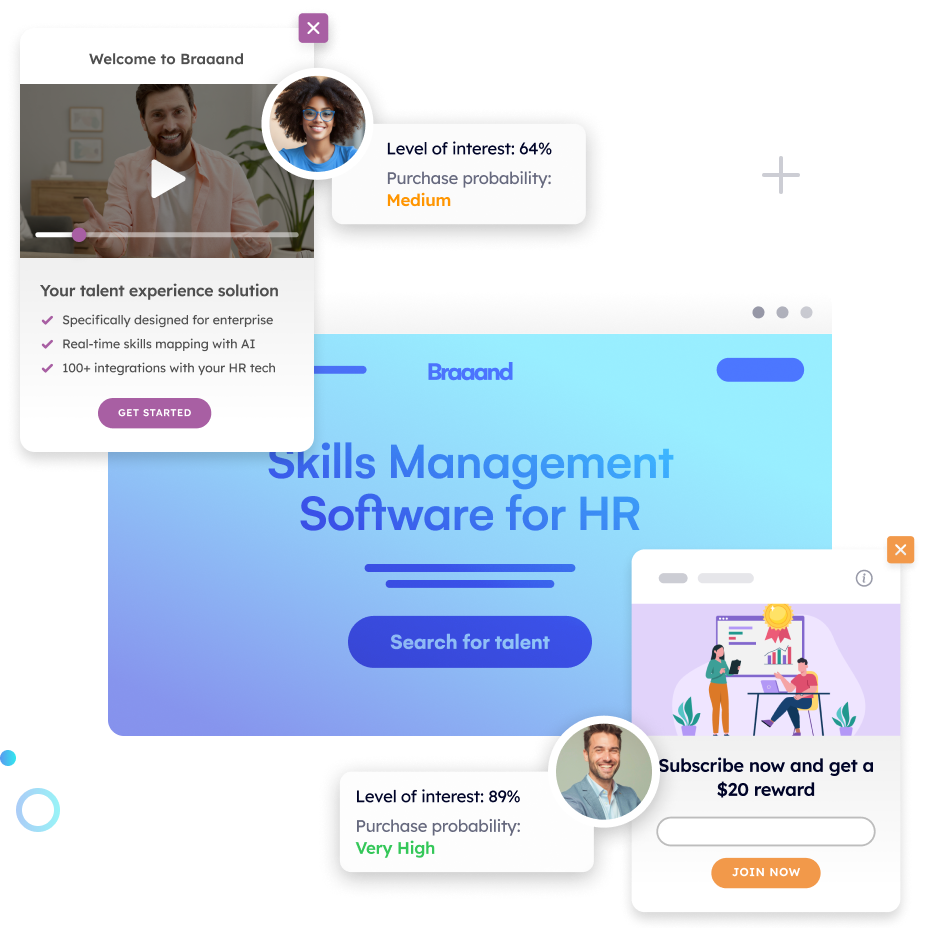
Rick: Pathmonk is the AI for website conversions, but increasing online competition. Over 98% of website visitors don’t convert. The ability to successfully show your value proposition and support visitors in the buying journey separates you from the competition Online. Pathmonk qualifies and converts leads on your website may, figuring out where they are in the buying journey and influencing them in key decision moments with relevant micro experiences like case studies, int videos, and much more stay relevant to your visitors and increase conversions by 50%.
By adding Pathmonk to your website in seconds, letting the AI do all the work and increase conversions while you keep to marketing as usual, check us out on Pathmonk.com. Hi everybody. Welcome to today’s episode of Pathmonk Presents. Today we’re joined by Maira. She’s the growth lead at Three Flow. Maira, welcome to the show.
Maira Salahuddin: Thank you for having me.
Rick: Thank you for being here. Maira, people don’t know this, we tried a couple times and it’s the season, right? We were just saying offline—people get sick and things get crazy a little bit, especially around this time of the year. So I’m glad we made it happen.
Maira, I want to start with the basics a little bit about Three Flow and your role at Three Flow. So what’s the big idea behind your company? And if you were explaining it to a friend over coffee, how would you describe what you do?
Maira Salahuddin: Yeah, so Three Flow is a software designed to simplify collaboration between benefit brokers and insurance carriers within the employee benefit space. If I were having coffee with a friend, I’d probably start by explaining the industry a little bit.
So in the US the vast majority of people get their healthcare and insurance through their employers. Now, your company is not directly working with the insurance companies. Your employer is likely not directly working with the Aetnas and the Cignas and the Sun Life of the world. They’re outsourcing that to a broker who is then working with the carriers to figure out the best options to present to your company.
So Three Flow really simplifies this part of the workflow—the back and forth between your benefits broker and the insurance carrier.
Rick: Okay. Are there specific type of businesses or industries where you feel this really shines? Or do you think it’s universally applicable?
Maira Salahuddin: I feel like it’s fairly industry agnostic because as far as healthcare goes, every type of employer will be providing it. But as far as the industry we operate in, it’s the benefit brokers and carriers who work within the employee benefits insurance space.
There’s many types of insurance, right? There’s real estate, commercial, property. So we are firmly within the health, vision, dental, medical—those sort of product lines that someone would get through their employer.
Rick: Got it. Okay. It sounded logical to me, but I just wanted to double check.
Maira Salahuddin: Yeah, for sure.
Rick: How do most people discover you? Is it typically the HR person that handles these things, or the actual employee? And what marketing channels have become your go-to for bringing in new business?
Maira Salahuddin: Yeah, for sure. So the HR person and the actual employees don’t really interface with us at all. It’s the benefit brokers and carriers who will use our product to figure out what benefits an employer might need.
In terms of how people find us, it’s a very relationship-based industry. The status quo without Three Flow is that a broker and carrier will do a lot of plan design information or figure out what plan to implement over email—so it’s very much email and spreadsheets. It’s ripe for errors, and costly mistakes can happen.
But because the industry has been this way for so long, it’s very relationship based. A lot of brokers and carriers know each other because they’ve been working together for years.
So channels that work for us: direct sales, events, word of mouth, referrals. And outside of that, a lot of our audience looks heavily on LinkedIn—so paid social and organic social both work pretty well for us.
Rick: Okay. That makes sense. How much of a role does your website play in pulling in new clients? And is there anything about it that works really well right now—or anything you’re trying to improve?
Maira Salahuddin: This is a good question because we’re knee deep in the middle of a website overhaul right now.
And our website right now, in transparency, is a tool for trust and education and clarity as opposed to pure lead gen. The audience we speak to is enterprise. It’s not really product-led growth.
So we’re trying to educate the market for a type of product that doesn’t really exist in an industry that hasn’t used software to solve this problem. So we’re operating with a bias to clarity—explaining what we do in a fairly complex and regulated industry.
Rick: Yeah, that sounds like a mission for sure. From your experience, Maira, what makes a website convert? Any tools, tactics, frameworks that work?
Maira Salahuddin: I don’t know if this is a framework, but leading with outcome-based messaging has done really well for me in B2B.
B2B tends to care more about what result you will get as opposed to how you’ll get it. As companies, we get excited about how we work and how we do things. So outcome-based messaging really works.
You also always want to talk about the pain points—what you’re actually solving and why it matters.
And then with a B2B lens, it’s important to talk about the switch that you’re selling. It’s not just acquiring a solution—you’re selling them a way to switch what they’re currently doing. Whether it’s switching from a tool or changing from the status quo, you have to keep that shift in mind. That’s a big ask.
So the way that translates: how well do you play with their existing tech stack? What is the cost to switch versus the cost of inaction? Distilling that messaging into what resonates is really impactful.
Rick: I love that—the emphasis on the switch.
Maira Salahuddin: Another thing—case studies and client testimonials go a long way, especially in B2B and enterprise. But every marketer knows it’s easier said than done to get people to attach their name to a case study. If you can get them, great tool to have.
Rick: Absolutely. Let’s switch gears and talk about you as a leader. What do you focus on day to day? What’s a typical workday like?
Maira Salahuddin: My typical workday is monitoring ongoing campaigns and initiatives and making tweaks where necessary.
And the majority of my day is figuring out how to move the work forward. That can look like a lot of things: working with content to figure out the next piece, iterating on outlines and getting something produced.
It can look like working with sales to figure out lead volume, lead quality, aligning on follow-up. It could look like working with product to see if we need another piece of collateral that sales needs to move conversations forward.
The work doesn’t stop once leads enter the database or the engine runs smoothly. It’s always: how do we get them to move beyond the funnel? How do we get them to take the next step?
Rick: Do you get involved in content creation yourself—hands dirty, so to speak?
Maira Salahuddin: I work with a team. I have a lovely contractor and a design contractor, but I’m doing a lot of ideation and strategy work in-house myself.
Rick: That’s the fun part.
Maira Salahuddin: Content is really the bedrock of speaking to an audience because you want to create ungated content for them to explore, see you as a thought leader, and explain what problems you solve. It’s really important.
Rick: I’ve got a few more questions—rapid fire style. When it comes to content, do you prefer watching, reading, or listening?
Maira Salahuddin: I prefer all of the above. Depending on my mood and how I want to consume information. I can do podcasts, on-demand webinars, and if something’s low lift, I’ll scroll LinkedIn and save what speaks to me.
Rick: What’s the latest piece of content you consumed? Any gem that stuck with you?
Maira Salahuddin: I’m a big fan of the B2Linked podcast with AJ Wilcox. It’s very tactical LinkedIn advice. Something he recently talked about was how he builds a funnel on LinkedIn using excluding audiences as you move throughout the funnel.
So you’re not targeting the same people again for top of funnel awareness once they’ve engaged. You exclude that audience, move them to the next step, and repeat until you’re ready for the bottom of funnel ask. I thought that was really interesting.
Rick: That’s a great one—working by exclusion. If you had a magic wand and could fix one frustrating thing in marketing with tech, what would it be?
Maira Salahuddin: Attribution. At the risk of sounding super Black Mirror, I’d love to attribute things we typically can’t track: the impact of brand, the impact of dark social.
Interestingly, at Three Flow we’ve had new contacts coming in through email—which is interesting, because how can new contacts come in through email? People in our database are forwarding our emails.
So these halo effects are hard to quantify but important for leadership conversations. I’d love to track those. Don’t ask me how.
Rick: You’ve got a magic wand, so it happens. What’s one repetitive task you’d love to put on autopilot forever?
Maira Salahuddin: Attaching and uploading LinkedIn receipts to Ramp. That would make my life and my accountant’s life easier—she pings me every week.
Rick: Fair enough. LinkedIn sort it out. If you could go back and give your past self a pep talk at the start of marketing, what advice would you give?
Maira Salahuddin: You’re gonna do great. But aside: figure out where it hurts. Talk to your customers and prospects as early and as often as possible. Learn their language, what matters to them, and speak in a way they understand. It’s basic, but it’s worked wonders for me.
Rick: I love that—consistent with your focus on outcomes and pain. Maira, thank you for being on the show. Last word: if someone forgets everything, what should they remember about the work you guys are doing?
Maira Salahuddin: We’re simplifying the benefits workflow so it’s easier for the right benefits to get to employees. The “three” in Three Flow is the benefits carriers, the brokers, and both working together in service of the third party—the employer. We’re trying to make an inefficient, tedious process easier in service of the employer.
Rick: If someone wants to check you guys out, where can we send them?
Maira Salahuddin: threeflow.com/requestdemo
Rick: Too easy. Maira, thank you again. Great conversation, great vibe, and you were really easy to talk to. Hope we can do this again soon—maybe in the new year with the new website relaunched. In the meantime, thanks for coming on and I wish you a wonderful day.
Maira Salahuddin: Yeah, thank you for having me.
Rick: Of course. All right, everyone, have a good one.
Maira Salahuddin: Take care. Bye.