
Introduction
In this episode of Pathmonk Presents, Kevin sits down with Kelsey Formost, Head of Marketing at Togal, an AI-powered construction software platform transforming preconstruction workflows. Kelsey breaks down how Togal helps estimators, contractors, and subcontractors automate takeoffs, reduce manual work, and bid faster with higher accuracy.
From a marketing lens, she explains the challenge of selling AI into a traditionally conservative industry and why trust, education, and customer experience matter more than hype. The conversation dives into shifting acquisition strategies, the declining power of traditional SEO, and why third-party reviews and LinkedIn now drive stronger conversions. This episode is packed with practical insights for B2B SaaS marketers navigating AI adoption and buyer skepticism.


Increase +180% conversions from your website with AI
Get more conversions from your existing traffic by delivering personalized experiences in real time.
- Adapt your website to each visitor’s intent automatically
- Increase conversions without redesigns or dev work
- Turn anonymous traffic into revenue at scale
Kevin: Hey everybody. Welcome back to Pathmonk Presents. Pathmonk is the AI for website conversions. With increasing online competition, over 98% of website visitors don’t convert. The ability to successfully show your value proposition and support visitors in their buying journey separates you from the competition online.
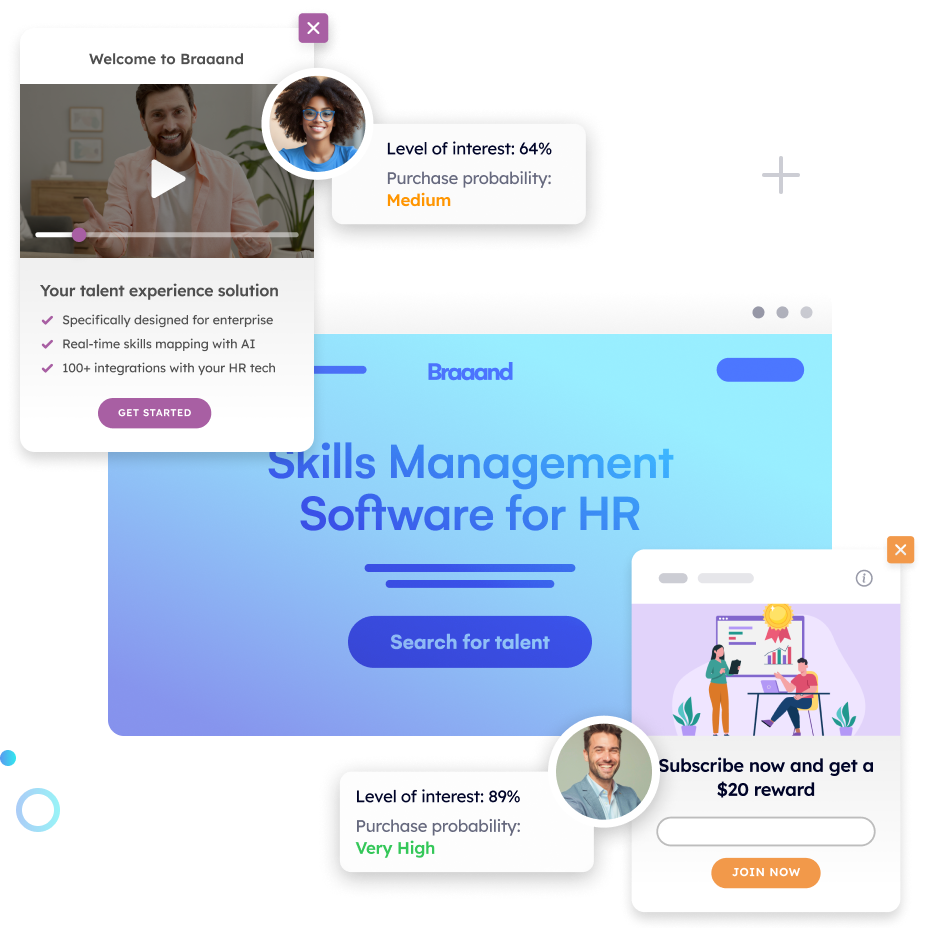
Pathmonk qualifies and converts leads on your website by figuring out where they are in the buying journey and influencing them in key decision moments with relevant micro experiences like case studies, intro videos, and much more. Stay relevant to your visitors and increase conversions by 50% by adding Pathmonk to your website in seconds, letting the artificial intelligence do all the work. And in increase conversions while you keep doing marketing as usual, check us out on Pathmonk.com. Hey everybody. Welcome back to Pathmonk Presents. today we’ve got Kelsey Formost head of marketing over at Togal. Kelsey, how you doing today?
Kelsey Formost: I’m doing great. Thanks Kevin.
Kevin: Thanks for joining today. We’re really looking forward to diving into things and hearing about what you guys have going on over there from a marketing perspective. to get things started, why don’t you just open up to our audience and tell us a little bit about Togal and what’s the company all about?
Kelsey Formost: Absolutely. So Togal, we also refer to it as Togal AI is a construction software platform, and the reason it’s so exciting is we use ai. Proprietary AI that our amazing experts have built over the course of a few years, which in technology years is like a long time,
Kevin: right?
Kelsey Formost: They’ve used this AI and have trained it using actual construction documents so that all of the things that used to be manual are now automated for anybody who is trying to build a building. So if you’re not in the construction space, what that looks like is our ai. You upload your construction documents, like your architectural plans, your spec books, et cetera, and then you ask your plan questions or you run a takeoff using artificial intelligence, and it will do things like. Count all the toilets, tell you how much paint you need, measure all of the interiors of the walls, count the doorways. There’s all kinds of things that people need to know when they’re building a building and our artificial intelligence automates that process, which is something I know Path Monk knows something about.
Kevin: Yeah, we definitely do. But that blows my mind a little bit, honestly. Like I have always thought about architecture and construction building as such a detailed and specific and precise type of process. And you have to dot all the i’s cross all the T’s and everything has to be exact right. And to have an AI that can help. Speed up that process and be as exact as you need it to be. man, I can totally see how this would be an extremely valuable tool to an industry like this. yeah, first and foremost, gotta say that’s a really interesting tool.
Kelsey Formost: Thank you. Yeah, completely. And I think what’s really interesting, and especially for marketers too, what’s interesting about this particular role for me is that the construction industry is one of those industries that’s a bit slower to adopt technology. And so it’s been a really interesting case study in terms of how do we make something that can feel scary like ai. Feel approachable and exciting to an industry that is a little bit slower to adopt and modernize. And it’s been really fun actually, because it allows you to speak to people on a more human to human level, which might seem a little counterintuitive, but it’s a, really cool space to be in right now.
Kevin: I’m really interested in learning more as we keep going on. But speaking about the industry itself, maybe you can tell our audience. What are some of the most, or should I say, what are some of the typical problems that you’re solving for them? It seems like the tool can probably answer a lot of questions and help with a lot of different issues that, construction, businesses are dealing with. But what are some of the more typical problems that this AI is helping to solve?
Kelsey Formost: Great question. So I think we can all agree AI isn’t the future, it’s the present and the future, and what’s amazing is that AI is moving at a rate in which it is helping us solve problems very quickly that have plagued us for decades. for example, our industry is construction, but specifically pre-construction. So anyone who has an estimating department or any subcontractor, even just like a one person mom and pop, general contractor, every single person who builds a building needs to do pre-construction tasks. And now something that used to take maybe a couple of weeks to a month to do is taking maybe a day or two using ai.
And what that looks like in real life is that these businesses are able to stay in business because they can bid on more work. So it’s solving problems like. just eliminating the manual tasks that you have to do in pre-construction, but also we have something called Togal Chat, where you can actually talk to your plans, which sounds so woo Terminator. Future times, I know, but you can say things like you would do a chat, GPT. Hey, help me write, an RFP. help me write a bid for this job. The plans of which I had have just uploaded into your tool, and it will just like a chat GPT, spit out like an outline for an RFP to help you win that job. So at the core of what we’re doing is we’re really just trying to help construction companies of all sizes, place more bids that are more accurate. More quickly so they can win more work and stay in business and potentially get ahead of the competition.
Kevin: Yeah. Two of the things that I take from that, two of the top things that I take from that, number one, the amount of time this much must save. And it’s not just about, oh, the work that’s gonna be so difficult to go through manually and like that, but like you said, if, I can place this bid and get started today. That’s what, multiple weeks that you’re actually finishing the whole project earlier so that you can move on to the next one and then finish that pro the, pre-task of that within one day and move on to the next one.
And it probably allows, construction businesses to fit in, I don’t know how many more jobs per year. Which, when you look at, the revenue at the end of the year, that must be amazing. but number two I would say is. How many times do you probably see construction businesses see mistakes because these things were being handled manually. Like a human error, right? And if you can run these through an automated tool like Togal, you’re like eliminating that, that human error element, right? I’m sure that’s gotta be something that clients talk about.
Kelsey Formost: Completely. And I think one of the things that people get a little scared about is they go, oh God, does that mean that I’m irrelevant? And the fact of the matter is we still have to check our work, but we have a 98% accuracy rating. But we still allow everybody, we always encourage people like, still check your work. It’s just that you don’t have to do all the work before you have to check it.
Kevin: Yeah, that’s a really good point. I totally agree and yeah, I can continue to see the value in until like this. I’m really glad you joined the show. Okay, let’s move on to the next question. from a marketing perspective, which is why we brought you on, and we’re really looking forward to learning about what you guys are doing from a marketing perspective. How are people typically finding out about you currently? Like I’m imagining that, you’re probably doing some SEO and some paid advertising and stuff like that. I would imagine there’s also a pretty decent amount of word of mouth within a, an industry like this where everyone probably knows each other. Maybe you can tell us what are some of those top acquisition channels at the moment?
Kelsey Formost: Absolutely. So the main goal of all of our marketing is simply to get people to the website. And the way that we are doing that has actually really shifted in the last three months. And here’s why. We used to have a pretty big SEO play and paid search. Everybody knows this. We, you’ve been in marketing for two seconds, you know about SEO and paid search. Yeah.
However. As we have seen just as ourselves, as consumers, the way that search is done is changing because of ai. Now, when you search something, you see an AI overview, and it’s actually quite difficult to get people to click on something to learn more because of this AI overview. These AI overviews are excellent summaries, right? So now I personally have tried to get ahead of the game here a bit and said, okay, what makes something show up in an AI overview? And the best thing that is working for us right now is third party review sites. And LinkedIn, and that’s, due to who our ideal customer is of course.
But in terms of B2B SaaS, I really am excited to dive deeper into. Third party review and third party, like word of mouth, like a Reddit things where the consumer knows that the company doesn’t own those words, like it’s somebody else. it’s like the word of mouth of the internet age. And not only does it increase consumer trust by I think over 80%, but it also shortens the amount of time to conversion. And it increases the likelihood that someone will actually. Look you up directly and come to your website organically.
Kevin: Yeah. Those are really valuable words, and I think we’re even seeing that ourselves in the SaaS area. our tool, our AI tool obviously handles a different type of solution, but we have been seeing the same thing, Organic search is evolving, whether it be for, pro or negative, but, yeah. So many people are asking AI tools to find what they’re looking for, which means, like you said, they’re not necessarily clicking into the link to see your website in the first place. They’re just getting that summary beforehand. And so if you know how to speak the language about how these ais are recognizing you in the first place and how they are making the comparisons to some of your competitors and. How they’re providing a summary, then you can get ahead of the game. And I think that’s really smart. Don’t, there’s no reason to optimize yourself on the past when you can get ahead of the curve. So really, well said.
you had talked about how the whole goal of your marketing at the moment is to get people to, to end up on the website and start engaging with you guys and probably fill out, some sort of a form to get in touch so that a member of the sales team can speak with them, right? Speaking of the website. How does it play into the overall client acquisition process? are there any sort of major strengths or weaknesses here? Website at the moment?
Kelsey Formost: Yes. So when I came onto Togal, this was a little over a year ago, January 20, 24. our website was very just like a list of features and I, my background is in copywriting and so I knew going in that immediately had to change. The emotion was missing from the website. How do you want someone to feel when they land on your website? What’s the number one thing you do or sell that your audience already wants that. You do better than anybody else, or you do differently than anybody else. Your biggest value proposition based in emotion should be the first thing on your website.
So we successfully did address that. And there is still room to grow. circling back to the first part of our conversation, which is that people still feel quite scared about ai and the unfortunate thing for marketers is that fear isn’t translating into action. Like a lot of times fear can translate into someone researching and trying to take action to alleviate that fear. But in the case of ai, what I’m seeing certainly and what my colleagues are seeing is like head in the sand syndrome where they just don’t wanna learn it. Like they’re almost ignoring that it exists in many cases.
And so the website now as we’re tweaking it. We’re really trying to hold people’s hands more than we would normally in explaining exactly what does AI mean, what is it doing? why should you care? Things like this, really walking people through almost like a funnel of awareness. So that at the end of that funnel of awareness, it’s a no-brainer for them to at least try this thing.
Kevin: That’s a really good point. I think we’ve seen something similar. How do you feel about, I’ve seen more people utilizing things like customer success stories, testimonials, especially in the AI realm because it’s not necessarily saying, here is how AI can help you. It’s a little bit tough to take that first step forward, but if you hear about other. Human success stories, right? Like the, results that real people are getting, it might make, an individual a little bit more likely to take that first step in terms of taking action. So I’m assuming you guys probably have a section of your website, if not the homepage, where you talk about things like this in terms of how other people are really using the AI to get success.
Kelsey Formost: Completely. we already know as marketers that putting things in context is a great way to, again, minimize that time between somebody being curious and somebody actually taking action. And in the case of ai, it’s more important than ever because then it allows the reader to see themselves in the sit in the successful situation that you are putting in front of them. So it can be like, this large construction company. Who, is one of our main ICPs. They, we’ve, we did the math and they’ve saved over a million dollars in 2024 simply by using this tool instead of this one.
And then for the smaller people sharing, like they used to use this very common software, now they use Togal, and in two months they increased their bid rate by 215%. What would that mean for your business? So absolutely real life stories are like the gold. And it also ties back into what we were saying about third party review sites.
Like when somebody reads from a real person. like a quote that we got on G two the other day was, I don’t want my competitors to know about tole ai.
Kevin: that’s gold.
Kelsey Formost: Which is gold, And better than any statistic that we could ever, make a fancy video about Yeah.
Kevin: But put that, in a frame. Post it up at everywhere.
Kelsey Formost: mail it to everybody I know, right? that’s snail mail. It’s, it’s really interesting and, Yeah, more than ever it’s customer experience comes first, customer results come first. Sharing that is more effective than anything because also it makes people feel, sorry to phrase it this way, but less stupid.
Kevin: Yeah, that’s true.
Kelsey Formost: Because when they see, oh, this person who is also just like. Joe Schmo painter from Nebraska, did the onboarding and they held his hand and he was nervous and now this is his business is churning and he is hiring three more people like. I feel like I can do that versus a company telling you this AI will change your life. It’s a don’t completely different feeling.
Kevin: You don’t need to be the smartest person in the room just to adopt a technology like this, right? It’s made for anyone. And I think that’s a really good lesson for any AI company out there is kinda make it, obvious that anyone can utilize this.
So I wanna move the conversation a little bit away from Togal and a little bit more towards Kelsey as the marketing individual. Maybe you can tell us, like what does a typical day look like for you? what are some of the tasks that you’re typically focusing on?
Kelsey Formost: That’s a great question. I, as the head of marketing, have different attention buckets throughout the day. So really, because my company is more based on the East coast, we’re a fully remote team, but I’m on the West Coast and they’re on the east coast. I do a lot of my meetings, a lot of my touch bases, a lot of the like. collaborative work in the mornings here, and then my afternoons are spent executing tasks, but also doing zoomed out big picture work. What does the, what do I need to be doing? what’s the north star, what’s the lighthouse? And right now for Q2, my lighthouse is customer experience. So are the tasks that I’m doing are my meetings for the next day? Going towards that lighthouse, going towards that north star of, okay, do I need to set a meeting with G two about potentially doing paid campaigns? Great. Do I need to talk to Reddit? Do I need to spend some time, inside our LinkedIn messages, things like that, where it’s highly collaborative in the morning and then Doing actionable tasks and then checking in with my gut and my North Stars. At the end of the day,
Kevin: I, like that I, have a pretty similar situation myself. I’m over in, Portugal, but a lot of the clients we work with are obviously in the states. I think, probably something like 90% of the clients utilizing Catholic are over in the States. And, when I need to chat with them, it means. Starting my day, probably closer to one o’clock in the afternoon or two o’clock in the afternoon till align with, the east coast USA. So yeah, I do something similar. And then once, once everyone’s logging off and you have a little bit of extra time to get your busy work done right. Totally.
next question. We’re always trying to learn, grow upon ourselves, grow. Maybe you can tell me like, where do you go, to improve upon yourself? Like what, where are the places that you’re consuming content that’s meant to make you a better marketing individual?
Kelsey Formost: I love checking in with peers that I trust. I think there is nothing better than someone who’s not trying to sell you something. I think there’s a lot of really great content marketing based content out there in the world, but, to be honest, I get the best tips and gut checks from people in the industry who I really trust, mentors, people I’ve worked with. So I’m always on the lookout for personal relationship, that said. I love Jason Pfeiffer, who is the editor in Chief of Entrepreneur Magazine. His newsletter, one Thing Better is Excellent. and I also really love Adam Grant, who isn’t a marketing professional at all, but I often find myself applying his psychology, especially around decision making to my marketing campaigns, and I really have seen a lot of success that way.
Kevin: I’ll have to add those people to the lists, of places that I go to. So I want to, wrap up the conversation with a few more thought provoking questions before we tie things up and say goodbye. we’re moving into what we call the rapid fire round. and these are gonna be questions that are not necessarily focused on total or yourself, but, let’s have a little bit of fun with it.
question number one. A nice easy one. What’s the last book that you read?
Kelsey Formost: A little less Broken. It’s a memoir by Marian Shimari. She happens to be my best friend, and she is, it’s an incredible memoir. It’s done incredibly well. and she just had her book launch recently. It’s about her adult diagnosis of autism, and it is. Fascinating for people who are neurotypical as well as people who aren’t. And I highly, recommend it to everyone.
Kevin: I will definitely be adding that to my list. I’m looking forward to it. Okay. next question, a little bit more out there. If there were no boundaries in technology and snap your finger and anything is possible, what would be the one thing that you would wanna have fixed for your role as a marketer today?
Kelsey Formost: Oh, if I could snap my fingers, I would say like irrelevant leads that waste people’s time would go away because it’s not for the lead or for us, for our team. That would, be my magic wand. Like people who aren’t a fit for us would just like magically not even see us. Like it wouldn’t even. Take their time or our time.
Kevin: Yeah. Invisibility, cloak and all. They don’t need to say
Kelsey Formost: invisibility. Cloak of irrelevance. Yeah.
Kevin: Yeah. that’s a good one. That’s a good one. Okay. next, if there was one repetitive task that you could automate out of all the repetitive tasks that I’m sure there are, what would be the one that you would wanna automate for yourself?
Kelsey Formost: Laundry.
Kevin: that’s a good one. That’s a good one. any work related ones?
Kelsey Formost: Yeah, work related. Work-related, I would say, like remembering things that are on my to-do list or putting things on my to-do list. I have too many to-do lists and I try to do all of the, the technology ones and for some reason just writing things down in a notebook still works best for me. But yeah, I would love to figure that one out.
Kevin: Really love that. and the last question that I’m gonna ask. What is one piece of advice that you would give yourself if you were to restart your journey as a marketer today?
Kelsey Formost: I would tell myself that no time was wasted and to not second guess my experience before I became a marketer and actually to lean into it. Now I’ll briefly explain what I mean by that. ’cause we’re at time, but I was an actress and a screenwriter for 10 years before I made the transition into digital marketing.
And at first I had a lot of imposter syndrome, like what business do I have? Telling people what’s interesting, what business do I have writing copy that’s supposed to engage people in marketing. And the answer was, I had. Every reason to know that as a screenwriter, especially, I knew what was interesting to people. I knew how to entertain people, and so that’s how I came up with my unique brand of Entertainment First Marketing.
So now I’m 10 years into my role as a digital marketer. I’ve seen low, so many trends come and go, but the one thing that has remained constant is people only engage with things that entertain them. And so that’s what I would tell myself is don’t second guess your experience. In fact lean into your experience and you’re gonna be more successful for it.
Kevin: It’s a really interesting story and I think, Yeah, that’s so unique and not a lot of people get into this industry, early on in their careers and they can get stuck in the same typical, patterns. And to see such a unique way that you entered the digital marketing field, with such unique perspective beforehand. I’ve gotta pick your brain a little bit more about that on another call when we’ve got more time.
But for now, I just wanted to say, Kelsey, thank you so much for joining the show. We really enjoyed having you on today. but before we wrap things up, why don’t you tell everyone in our audience, one more time about Togal and how they can find you?
Kelsey Formost: Absolutely. If you are looking for an AI solution to help you get your takeoffs done, 80% faster, head to that’s TOGA l.ai.
Kevin: Thank you very much, Kelsey.
Kelsey Formost: Thank you.