
How do I balance simplifying my funnel versus adding qualification steps in forms? This is a common CRO tension, and the answer is not choosing one over the other. It’s about sequencing qualification based on user intent.
Funnels should remain simple and low-friction until users show clear buying intent. Early-stage visitors need momentum, not interrogation. Qualification becomes effective only after intent is detected, such as when users request a demo, pricing, or engage deeply with key content.
The most effective approach is progressive qualification: start with minimal friction, then add contextual questions as commitment increases. Behavioral signals like pages viewed, repeat visits, and interactions often provide stronger qualification than long forms.
Balancing simplification and qualification depends on the cost of failure. If losing good leads is more expensive, simplify early. If sales time is the constraint, qualify later and more selectively. Simple funnels and qualified pipelines are not opposites, they just fail when poorly sequenced.
Table of Contents
At some point, almost every marketing team runs into the same question: should we simplify the funnel to increase conversions, or add more qualification to protect lead quality?
On one side, CRO best practices push toward fewer steps, shorter forms, and less friction. On the other, sales teams want more context, better-qualified leads, and fewer conversations that go nowhere. Both are right, and both are often working against each other.
The mistake is treating this as a binary choice.
Simplifying the funnel and qualifying leads are not opposing strategies. They’re two actions that need to happen at different moments in the user journey. Most funnels underperform not because they have too much friction or too little, but because friction is applied at the wrong time.
This article breaks down how to think about that balance in practical terms.
The real problem: optimizing for conversion volume versus sales reality
This question usually comes up when a funnel starts to “work”, but not in the way everyone hoped.
Marketing simplifies the funnel and sees conversion rates go up. Fewer fields, fewer steps, less friction. From a top-of-funnel perspective, things improve.
At the same time, sales starts to feel the impact. More leads come in, but a larger share of them aren’t ready, aren’t a fit, or require a lot of time to qualify manually. What looked like progress upstream becomes inefficiency downstream.
The reaction is predictable. Sales asks for more information upfront. Marketing worries that adding fields will undo the gains they just made. The discussion quickly turns into form length, required fields, and where to “draw the line”.
What’s usually missing from that conversation is intent.
Most funnels treat all visitors the same, regardless of where they are in their decision process. Early-stage users are asked to commit too much, too soon. High-intent users are slowed down by steps that add little value at that point.
The tension isn’t really between simplification and qualification. It’s between applying friction too early or too late. Without intent as a guide, teams end up optimizing one side of the funnel at the expense of the other.
These are some optimizations we can make without compromising lead quality:
Generate better leads to grow your sales
Discover new strategies to unlocking a flood of high-quality leads from your website.
1. Simplify the funnel before the user commits
Your funnel should feel almost frictionless until the moment you’re asking for something that requires real commitment, such as a demo request, pricing inquiry, or direct contact with sales (and even then).
At early stages, users are still forming intent. They’re trying to answer two basic questions: am I in the right place? and is this relevant to me? This is where simplification matters most.
A common mistake is trying to optimize conversions directly on long, complex forms. We’ve seen teams focus heavily on tweaking field order, copy, or button labels in forms that ask for too much too early. Unless intent is already very high and the perceived value is obvious, those optimizations rarely move the needle in a meaningful way.
The problem isn’t the form itself but the timing.
Long forms introduce friction before users have mentally committed. When intent is still forming, aggressive CTAs or early qualification questions slow users down and increase drop-off, regardless of how well the form is designed.
A simple rule of thumb helps here: If the user hasn’t mentally said “yes, I want this” yet, don’t interrogate them.
This is why multi-step forms often perform better in early-stage funnels. They allow you to capture basic information first, preserve momentum, and only ask for more once the user has already taken an initial step. You don’t lose the lead immediately, and you don’t force full commitment upfront.
Early-stage funnels work best when they remove doubt and keep users moving forward, not when they try to extract everything at once.
2. Add qualification only after intent is detected
Qualification should start after the user has taken a first step, not before. The goal of the initial interaction is momentum. Once that momentum exists, qualification becomes both possible and appropriate.
Intent is usually clear when users do things like:
- Engage deeply with the site (repeat visits, key pages, scroll depth)
- Click “Book a demo”
- Request pricing
- Start a sales conversation
At this point, expectations shift.
When intent is high:
- Users expect to put in some effort
- Additional questions feel reasonable
- Drop-off is often lower than teams assume
This is why sequencing matters. Once a user has already raised their hand, qualification feels less like friction and more like a necessary step to move forward.
The key shift is recognizing that qualification works best when it follows commitment. If the form is clearly part of getting what the user wants, it feels like progress, not an obstacle.
https://www.youtube.com/watch?v=gdJhiSjOLlY
3. Use progressive qualification, not form bloat
Another common mistake is trying to qualify everything in a single form. Long, all-at-once forms assume a level of commitment that many users haven’t reached yet. When those forms are abandoned, teams don’t just lose a conversion, they lose all information about that visitor.
A more effective approach is progressive qualification with a web funnel, where information is collected in stages rather than in one demand-heavy moment:
- Step 1: Low-friction entry, such as an email address or company name
- Step 2: Contextual follow-up questions based on what the user does next
- Step 3: Sales-level qualification happens later, or asynchronously
This structure keeps the initial funnel accessible while still allowing teams to gather meaningful data. Qualification becomes an ongoing process instead of a single gate users have to force their way through.
Plus, partial completion is still valuable. If a user drops off after the second step, you’ve already captured intent and basic context, instead of ending up with zero information because the form felt overwhelming.
Over time, progressive qualification also builds trust. Each step feels connected to what the user just did and why they’re being asked for more information. Rather than creating friction, the form becomes part of forward movement through the journey.
4. Decide based on the cost of failure
When deciding how much to simplify or qualify, it helps to ask a very practical question: What’s more expensive right now: losing good leads, or talking to unqualified ones?
The answer should guide your bias:
- Early-stage or low-volume businesses: bias toward simpler funnels to avoid killing demand
- Sales-constrained or enterprise motions: add targeted qualification, but do it later in the journey
This balance isn’t fixed. As traffic grows, sales capacity changes, and the business matures, the right sequencing will evolve too. The goal isn’t to lock in a perfect funnel, but to adjust friction as constraints change.
5. Let behavior do the heavy lifting
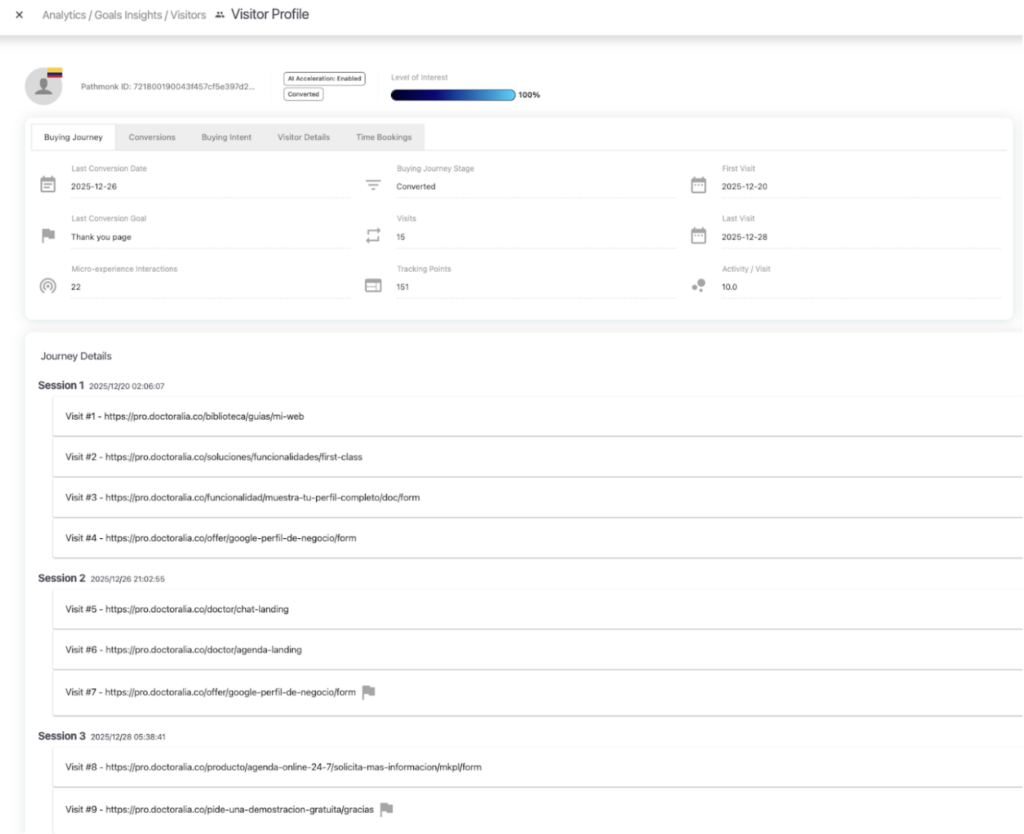
The best funnels don’t rely on forms alone to qualify leads. Behavioral signals often tell you more than form fields ever will, including:
- Pages visited
- Time on site
- Content consumed
- Repeated visits
- Interaction with pricing, use cases, or integrations
When you pay attention to these signals:
- Forms can be shorter
- Questions can be more relevant
- Leads can be routed more accurately
Intent data reduces the need to ask everything upfront. Instead of forcing users to explain themselves, you infer readiness from what they actually do.
How Pathmonk uses real-time behavior to guide qualification
Behavioral signals only matter if you act on them. Pathmonk uses intent signals to decide which microexperience to show, not to force everyone through the same funnel.
Pathmonk reads how visitors interact with the site in real time. Signals such as page depth, time spent, repeated visits, and interaction with key content are used to infer the visitor’s stage in the buying journey. Based on this, the system shows different microexperiences designed to guide the visitor toward the next logical step.
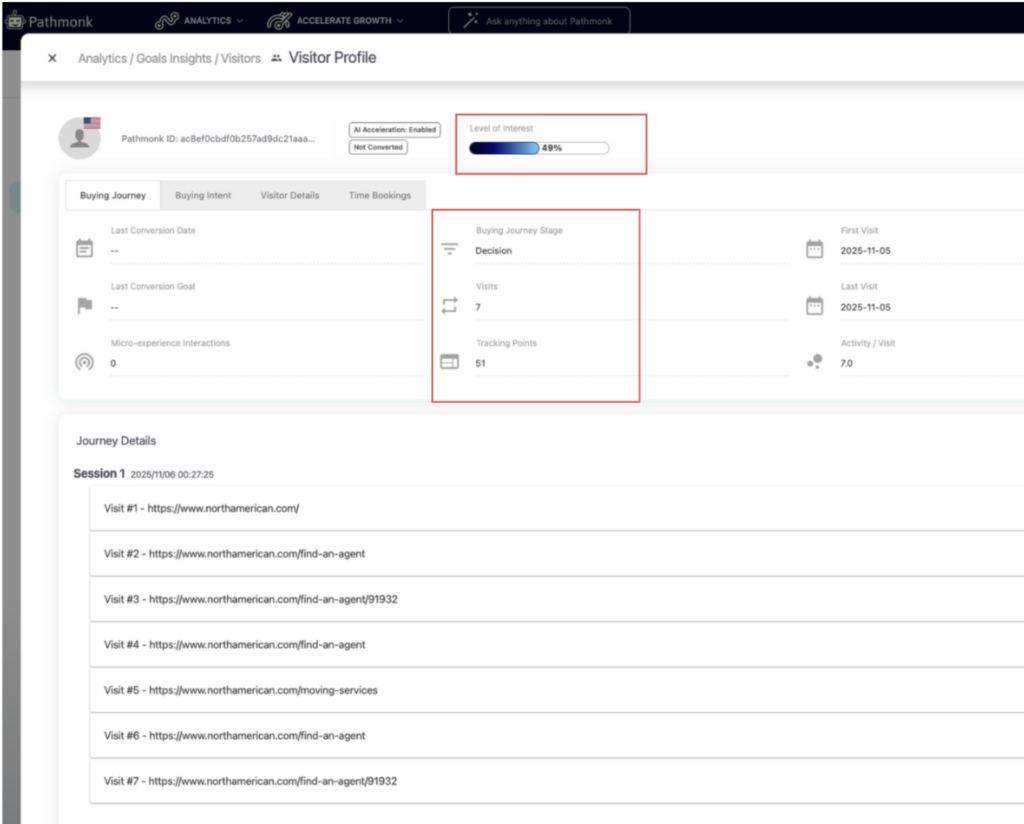
Learn more about how Pathmonk detects the stage of the customer journey and how our fingerprint cookieless technology works.
Early-stage visitors may see clarifying or educational microexperiences that reduce uncertainty and help them orient themselves. As intent increases, microexperiences shift toward comparison, validation, or direct prompts that guide the visitor to the primary conversion, such as a demo request or purchase.
Qualification can also happen explicitly through web funnels. Instead of asking everything upfront in a long form, web funnels allow marketers to increase qualification gradually based on previous answers. Each step builds on the last one, so users only see questions that make sense given what they’ve already shared.
Together, these two mechanisms allow teams to keep entry points simple while still collecting meaningful qualification data. Behavior determines which experience is shown, and explicit questions are introduced only when they help move the visitor forward.
The result is not a shorter or longer funnel by default, but a funnel that adapts to intent instead of assuming it.
Translate all your data into clear insights
Discover how to future-proof your marketing data strategy with AI-powered analytics.
Free download
What happens next: enriching conversion data for simple sales qualification
Once a user converts, qualification doesn’t have to stop. It can continue automatically, without adding friction to the funnel.
For most customers, Pathmonk doesn’t treat the form submission as the end of the process. Once a lead is captured, it can be pushed into existing tools and workflows, such as CRM, marketing automation, or enrichment platforms. From there, additional context can be added without asking the user to fill another form.
That enrichment can include:
- behavioral context collected before conversion
- firmographic data pulled from connected tools
- historical interaction patterns across sessions
Instead of forcing users to explain themselves upfront, the system builds a more complete lead profile in the background. Sales receives not just a contact, but context: what the user explored, how engaged they were, and how close they appear to a decision.
This approach keeps the conversion moment simple for the user while still supporting effective qualification downstream. Forms stay lightweight, and enrichment happens where it belongs: in automated workflows that don’t interrupt momentum.
At this point, qualification becomes a process that continues after conversion, not a gate that blocks it.
Calculate your increased profit in just a few clicks
Easily find out how many conversions and revenue you can expect once Pathmonk is installed on your website.
Calculate your gains
How Pathmonk increased 92% booked appointments in just 2 weeks with intent-guided qualification
A good example of this tension between simplification and qualification is GoodSkin Clinics. On paper, their funnel was extremely simple. The main goal was to get people to call and book an appointment, and the website reflected that: one primary CTA, no qualification, no segmentation. Everyone was treated the same.
The problem was that the simplicity came from an assumption, not from user behavior.
GoodSkin’s website expected users to be ready to book as soon as they landed. But most visitors weren’t. They were still reading about treatments, comparing options, looking at before-and-after cases, or trying to understand whether the clinic was right for them.
So what happened? The booking CTA disappeared after the first screen, users kept browsing, and high-intent visitors got lost in content before ever reaching the booking page.
With Pathmonk, the funnel stayed just as simple: the end goal was still a booked appointment. What changed was when and how the CTA appeared.
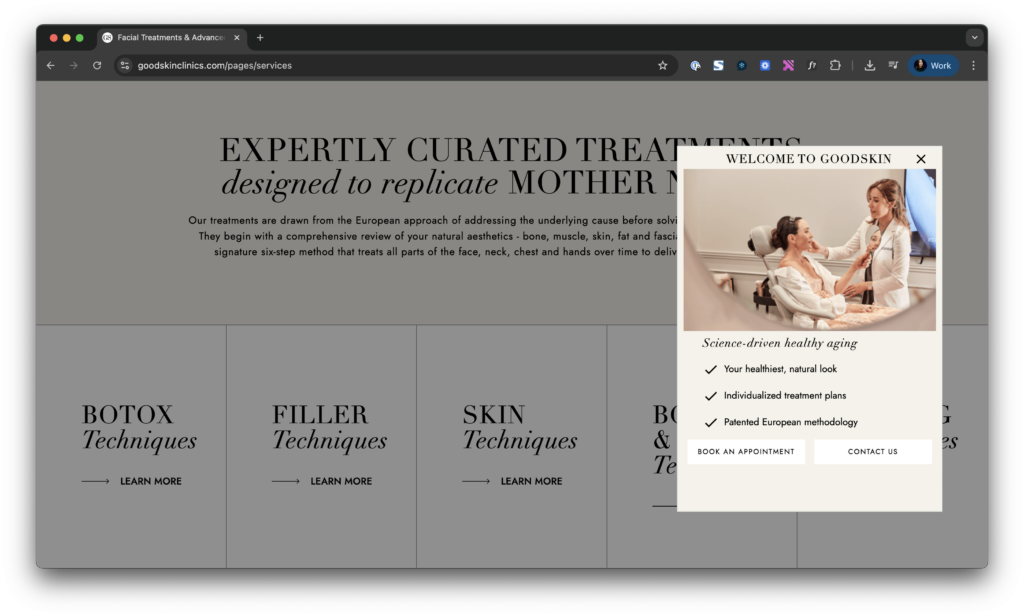
Pathmonk analyzed visitor behavior in real time and adapted the experience accordingly:
- Visitors who were still exploring saw educational prompts explaining the GoodSkin Method and the value of personalized care.
- Visitors comparing treatments or reading FAQs saw reassurance, testimonials, and guidance.
- Visitors showing clear buying signals saw a strong prompt to book a consultation.
The funnel didn’t become more complex. Qualification happened before the form, through behavior, not questions.
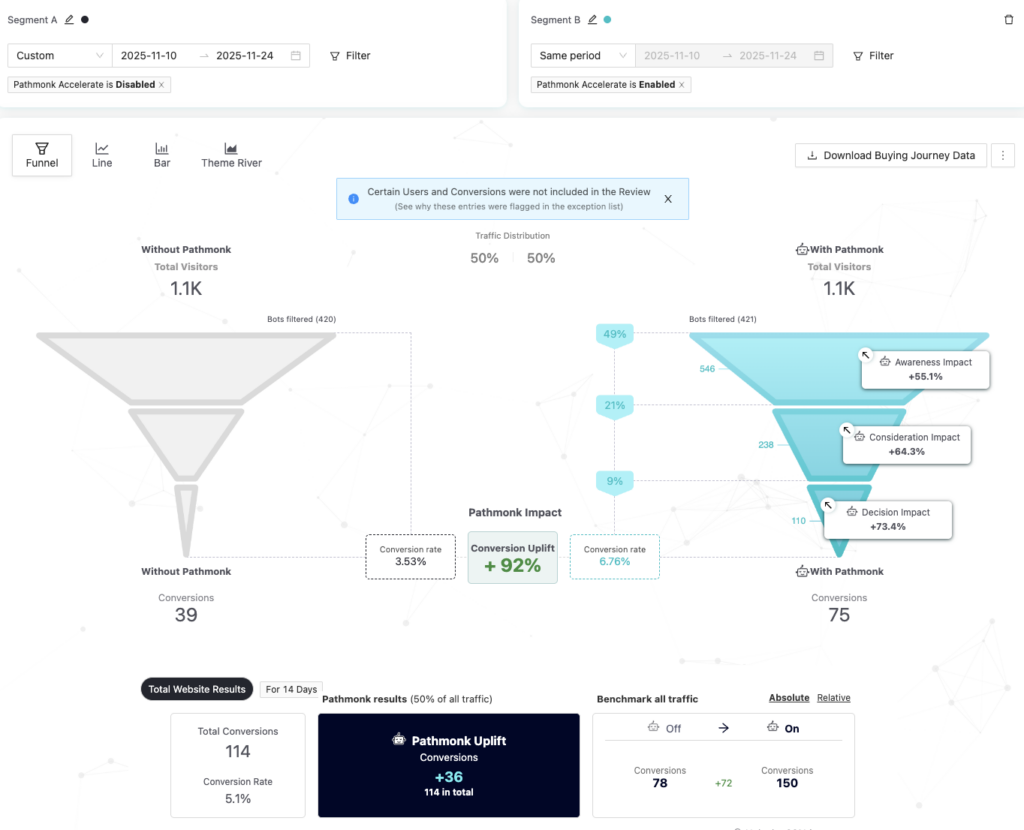
In just two weeks, this approach increased booked appointments by 92%, without redesigning the website or adding friction. The funnel stayed simple, but it stopped being naive.
Ready to see Pathmonk in action? Try our free interactive demo or talk to one of our experts for a personalized tour!
FAQs about prospect qualification
Should I always shorten my forms to improve conversions?
No. Shorter forms tend to help when users are still exploring and haven’t decided to take action yet. But once intent is high, removing too much structure can actually hurt, especially for sales teams. The real lever isn’t form length, but timing. Simplify early to preserve momentum, then introduce qualification once users have already committed to moving forward.
How do I know when a visitor is ready to be qualified?
Readiness usually shows up in behavior, not always in what users say on a form. Repeat visits, time spent on key pages, interaction with pricing or service content, and navigation depth are stronger indicators of intent. When several of these signals appear together, users are far more likely to accept additional questions without dropping off.
Is progressive qualification only useful for B2B funnels?
No. Progressive qualification works anywhere the decision isn’t instant. That includes B2C services, appointment-based businesses, and higher-consideration ecommerce. Any situation where users need reassurance or context before committing benefits from spreading qualification over time instead of forcing it upfront.
What if sales still want more information upfront?
That usually points to missing context, not insufficient form fields. Sales often need to understand why a lead is reaching out and how engaged they are. Behavioral data, page history, and post-conversion enrichment can answer those questions more reliably than adding more required fields to the initial form.
Can simplifying the funnel reduce lead quality?
It can, if simplification is applied indiscriminately. Removing friction at every stage treats all users as equally ready, which isn’t realistic. When simplification is limited to early stages and followed by targeted qualification later, lead quality typically improves rather than declines.
Key takeaways
- Simplifying the funnel and qualifying leads are not opposing goals. They solve different problems at different moments in the journey.
- Early-stage visitors need momentum and clarity, not long forms or sales-level questions.
- Qualification works best after intent is visible, not before. Timing matters more than form length.
- Progressive qualification reduces risk. Even partial completion is better than losing the lead entirely.
- Behavioral signals often qualify users more accurately than form fields. Use them to decide when friction helps.
- The most effective funnels adapt to readiness instead of assuming every visitor wants the same thing at the same time.