How do you stop getting leads who just want free info? If you’re doing lead generation, you don’t stop them completely, and trying to is usually a mistake. People who want “free info” are part of the natural buying journey. The real issue is when your content, forms, and CTAs attract curiosity without intent. If everything you offer is easy to access, educational, and risk-free, you’re training people to consume and leave. The fix is to make your free content valuable but incomplete, clearly framed around a problem that has consequences if it’s not solved.
To filter for intent, introduce friction and specificity. Ask questions that require thought or commitment, not just an email address. Tie your offers to real scenarios, budgets, or use cases. Show outcomes, not just tips. When your messaging speaks to “people with this exact problem right now” instead of “anyone who wants to learn,” low-intent leads self-select out. The goal isn’t fewer leads, it’s fewer time-wasters.
Table of Contents
If you keep getting leads who only want free information, the issue is rarely lead quality in isolation. It usually comes down to how your website frames value and commitment.
Most websites are designed to be, let’s say, generous. We marketers are all about providing value upfront, lower friction everywhere, and invite visitors to get freebies without asking much in return, other than an email. That approach makes sense if your main goal is education or awareness. It becomes a problem when the same experience is expected to produce sales-ready leads.
This article looks at why websites naturally attract people in research mode, why tactics like gated content don’t always fix the issue, and what changes when you start shaping the experience around intent instead of information consumption.
Why you keep attracting leads who only want free information
If most of your leads never turn into real opportunities, it’s not just because your audience may be “bad.” In most cases, your funnel is doing exactly what it’s designed to do to maximize the awareness stage: attract people who want to learn, not people who are ready to decide.
This usually comes down to three structural issues.
1. Your value removes all friction
Free audits, ebooks, templates, calculators, demos with little or no qualification. When access is instant and unconditional, the cost of signing up is close to zero. And when the cost is zero, curiosity is enough.
That’s why these offers attract:
- People collecting information for later
- Students and job seekers
- Competitors and vendors
- Early-stage researchers with no buying context
- And lots and lots of fake emails that just want quick access to your beautiful ebooks.
None of them are doing anything wrong, you’re simply not asking them to show any level of commitment before becoming a “lead.”
2. Your messaging speaks to curiosity, not commitment
Many lead gen pages are written as if the goal were to educate, not to qualify.
Phrases like:
- “Learn how to…”
- “Discover the secrets of…”
- “Get the ultimate guide to…”
- “Everything you need to know about…”
These messages are good for researchers: they promise knowledge without commitment. You can consume the content without ever planning to act on it.
Decision-stage buyers think differently. They are not asking “what is this?” They are asking:
- “Is this for a company like mine?”
- “Will this work in my situation?”
- “What will it take to implement?”
- “Is this worth my time and budget?”
If your copy never asks for commitment, context, or relevance, you’re optimizing just for interest, but not intent.
3. You treat all visitors the same
Most websites show the same CTA, the same lead magnet, and the same path to everyone.
A first-time visitor casually reading a blog post sees the same offer as someone returning for the third time after checking pricing and case studies. From the system’s point of view, they’re identical. And guess what: this is a HUGE problem, my friend.
When you don’t adapt the experience to behavior, you are forcing high-intent users into low-intent paths and give low-intent users access to sales-stage assets.
The result is predictable:
- High-intent visitors get bored or delayed
- Low-intent visitors flood your forms
- Sales teams end up qualifying manually what the funnel should have filtered earlier
If everyone gets the same experience, you shouldn’t be surprised when everyone looks the same in your CRM.
Turn website traffic into sales-ready leads
- Identify high-intent visitors automatically
- Qualify leads before they reach your sales team
- Convert traffic without adding friction or forms
What “low-intent leads” actually look like
Low-intent leads are not a single category, and that’s where most marketing and sales teams get confused. They sit at very different levels of seriousness, but most funnels treat them as if they were the same person, at the same stage, with the same likelihood to buy.
At one end, you have people who are genuinely interested but not ready to act. At the other, you have people who were never real prospects to begin with. When both end up in the same CRM view, lead quality starts to look like a mystery, when in reality it’s a classification problem.
In practice, low-intent leads usually fall into a few clear groups.
1. People who are learning, not buying
This group includes students, junior professionals, and people trying to understand a new role or discipline. They engage because your content is clear, useful, and accessible, not because they are actively trying to solve a business problem.
Their intent is informational. They want context, frameworks, and explanations, but they are not responsible for a decision, a budget, or an outcome.
2. People who are researching the market
These leads often look more promising on paper. They work at real companies and may even be involved in a future purchase, but at this stage they are still mapping the landscape rather than committing to a solution.
They download resources, skim case studies, and compare approaches, but they rarely show the signals that indicate ownership of a decision, such as checking pricing, asking implementation-level questions, or defining timelines. Their intent is exploratory, not commercial (yet).
3. People who want free help
This group is drawn to offers that remove all friction, such as free audits, demos, or strategy calls. They usually arrive with broad questions and loosely defined goals, and the interaction feels useful until the moment it requires commitment, prioritisation, or budget.
Once the conversation shifts from “what could be done” to “what it would take,” they disengage. Their intent is pretty much extractive. They are looking for free input from your side.
4. People who are checking you out
Competitors, vendors, agencies, and consultants also convert through your forms, often because it is the fastest way to see how you position your product, structure your offering, or communicate value.
They are not trying to mislead you, your funnel simply has no way of distinguishing between someone evaluating you as a buyer and someone observing you from the outside.
5. People who were never real leads
This is the group that tends to be ignored in discussions about lead quality, even though it has a measurable impact on metrics.
Fake emails, disposable inboxes, random strings, and form fills created solely to unlock a resource all fall into this category. Sometimes this is automated, sometimes it is human behaviour, but in both cases the outcome is the same: there was never any intention to engage. Their intent is effectively zero.
Now, all companies receive these types of leads, it’s completely normal to have them. The problem is that only a small subset of these leads should ever reach sales, yet most funnels are built in a way that pushes all of them forward by default. When intent is not filtered early, sales ends up qualifying manually, lead metrics become misleading, and the real issue, a lack of intent differentiation, stays unresolved.
Increase conversions from your PPC campaigns
Get more value from your paid traffic by personalizing the website experience based on visitor intent, not just the ad they clicked.
Book a demo
How to stop getting freebie-seeking leads (without reducing demand)
Stopping this type of leads is not about making your funnel harder to navigate or hiding value behind aggressive gates. In most cases, that only reduces demand while leaving the intent problem untouched.
What actually works is introducing the right kind of friction at the right moment, so that people naturally sort themselves based on how serious they are. This is how you can put this into practice:
1. Add friction where it qualifies, not where it blocks
Friction is often treated as something to eliminate, but in reality it can be a useful signal when it is applied deliberately. The goal is not to slow everyone down, but to create small moments where visitors have to show relevance, context, or effort.
This can take the form of gated steps instead of instant access, such as breaking an offer into one or two lightweight actions rather than a single click. It can also mean asking for micro-commitments, like choosing a use case, selecting a role, or confirming a specific problem before moving forward.
Intent-revealing questions are particularly effective here, because they force the user to think about their situation rather than passively consuming content. A simple question about company size, goals, or current challenges already does more qualification than most forms.
What does not work is adding friction that blocks everyone equally. Long forms, mandatory sales calls, or heavy qualification upfront tend to frustrate high-intent users while barely affecting people who were never going to buy. The difference lies in whether the friction reveals intent or just adds effort.
2. Change your CTAs from “access” to “outcome”
Many funnels unintentionally attract freebie-seekers because their CTAs are framed entirely around access. The promise is the asset itself, not what it helps achieve.
“Download the guide,” “Get the template,” or “Access the ebook” all signal that the value lies in the content, not in applying it. That framing naturally appeals to people who want information with no obligation.
Outcome-based CTAs shift the focus. Instead of offering access, they reference application, relevance, or decision-making. “See how this applies to your case” or “Find out if this works for your situation” introduces a subtle but important filter.
This works because it forces a mental check. People who are only browsing can still click, but they are less likely to convert when the CTA implies effort, context, or ownership. People who are closer to a decision, on the other hand, recognise themselves in the language and move forward more decisively.
3. Use behavior, not forms, to qualify leads
Forms capture what people say. Behaviour shows what they actually do.
Time spent on key pages, how far someone scrolls, the order in which they navigate your site, or whether they return multiple times all provide stronger intent signals than most declared data. Someone who has visited pricing, read a case study, and returned twice in a week is fundamentally different from someone who downloaded a guide and never came back.
When funnels rely exclusively on forms, they ignore this context and treat all conversions as equal. Behaviour-based qualification allows you to adapt the experience without asking more questions, simply by responding to what the user has already shown.
This is where freebie-seekers naturally fall away. Their behaviour rarely escalates. High-intent users, on the other hand, leave clear traces that can be used to guide them toward more relevant next steps.
How Pathmonk qualifies visitors beyond free resources
Most tools try to solve lead quality by changing the offer itself, adding heavier forms, or forcing conversations earlier in the journey. Pathmonk takes a different approach by leaving the offer intact and focusing on how people reach it.
The idea is simple: the same lead magnet, demo, or conversion goal can serve very different purposes depending on the intent of the visitor. What needs to change is not what you offer, but the experience that leads up to it.
Pathmonk does this by and using them to shape the microexperience leading to conversion.
Intent detection based on behaviour, not form fields
Instead of relying on what users say in a form, Pathmonk looks at what they do. Pages visited, navigation patterns, repeat visits, and interaction depth all contribute to understanding whether someone is learning, evaluating, or actively considering a decision.
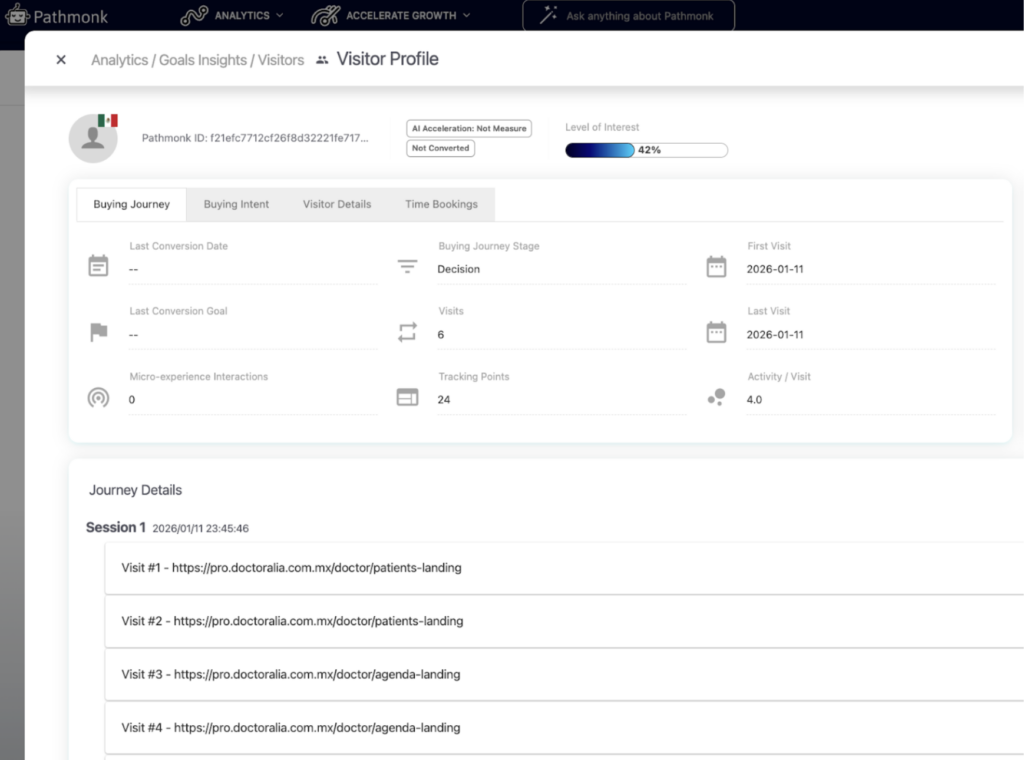
This allows the system to distinguish between a casual visitor downloading a resource out of curiosity and someone who has been actively exploring solutions and comparing options. Learn more about how our fingerprint technology works.
The result is that intent is inferred quietly, without asking more questions or adding visible friction.
Different microexperiences for different levels of intent
Once intent signals are detected, Pathmonk adapts the experience accordingly.
Visitors with lower intent are guided through more context-driven steps, such as educational videos or social proof that help them understand the problem space without pushing them into sales flows prematurely.
Visitors with higher intent are shown clearer, more direct paths to demos and next steps.
Both groups can convert, but they do so for different reasons and at different moments, which is exactly the point.
The same conversion goal, different journeys
A key distinction is that Pathmonk does not change the lead magnet or the conversion goal itself based on intent. Companies still promote the same audit, demo, or resource. What changes is the journey leading up to it.
Freebie-seekers are tracked and qualified, so the system understand how close they are to a decision. Over time, this leads to fewer low-intent leads reaching sales, clearer signals inside the funnel, and higher-quality conversations without sacrificing demand at the top.
Calculate your increased profit in just a few clicks
Easily find out how many conversions and revenue you can expect once Pathmonk is installed on your website.
Calculate your gains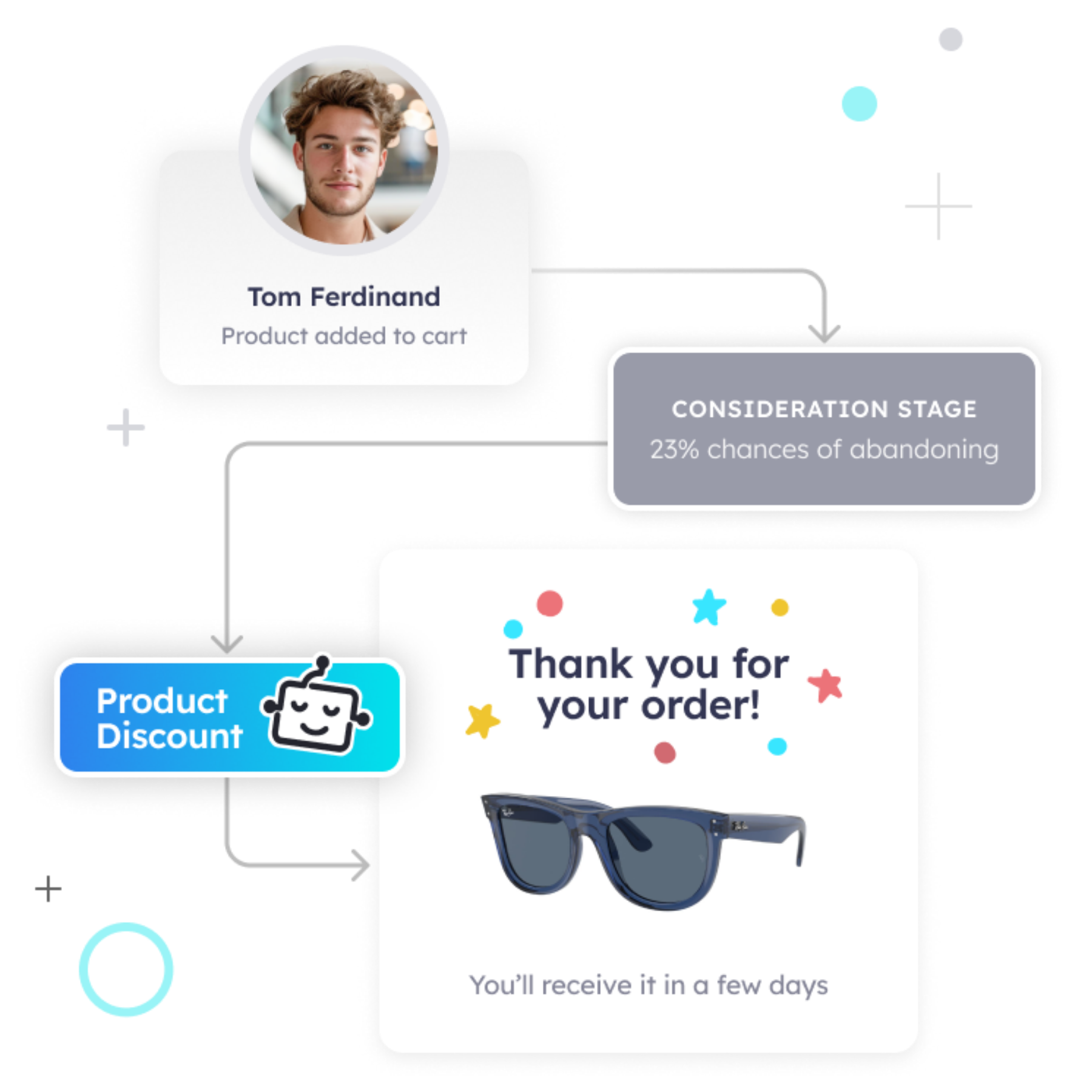
How Doctoralia increased +82% qualified leads beyond free info
Doctoralia’s B2B websites had a familiar problem: plenty of visitors, decent engagement, but not enough qualified demo requests. Everyone, from early-stage readers to ready buyers, was being guided toward the same conversion.
Instead of trying to remove free content or add more friction, Doctoralia changed one thing: they stopped asking all visitors to do the same thing.
Visitors showing higher intent, those exploring solution pages or pricing, were guided toward demo requests. Visitors browsing early-stage content, mainly the blog, were offered a webinar instead.
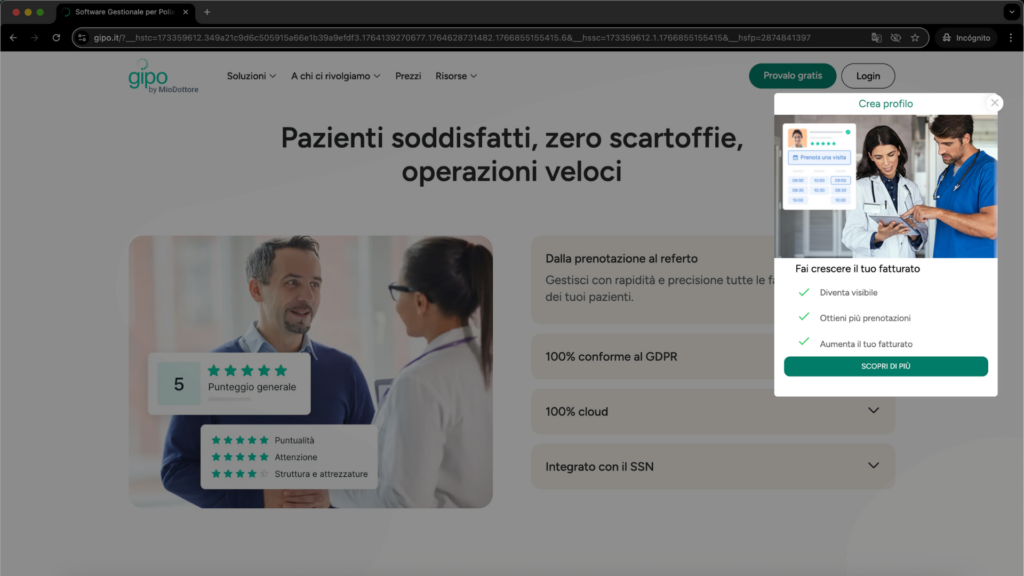
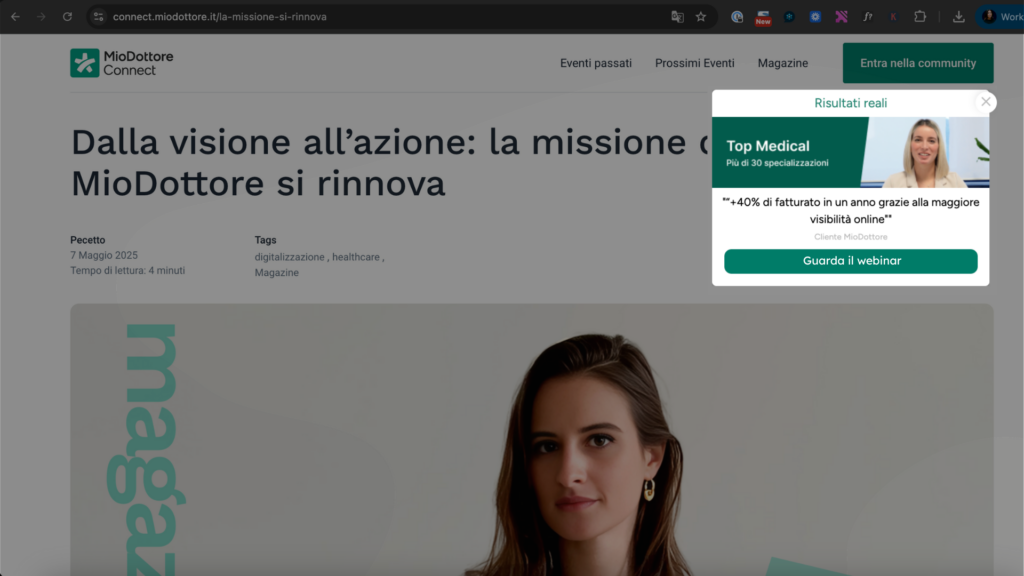
Nothing was removed: free content stayed, and so did demos stayed. What changed was who saw what.
Pathmonk handled this automatically by adapting microexperiences and conversion goals based on visitor behaviour and page context. Early-stage visitors could keep learning without being forced into sales flows, while high-intent visitors reached the demo faster.
The result was a significant increase in qualified B2B leads across markets, without adding traffic, redesigning pages, or killing top-of-funnel content.
Doctoralia didn’t get rid of free-info seekers. They just stopped treating them like sales-ready buyers.
FAQ: stopping low-quality leads
Why do I get lots of leads but no sales?
In most cases, high lead volume with low sales output is a sign of intent mismatch, not a traffic problem. Your funnel is attracting people who are interested in learning but not ready to make a decision, and it treats that interest as if it were buying intent.
When forms are the primary qualification mechanism, anyone willing to exchange an email for content becomes a “lead,” even if they have no timeline, budget, or authority. Sales then inherits the task of sorting intent manually, which rarely scales.
Should I stop offering free resources?
No. Free resources are not the cause of low-quality leads, but the way they are positioned and accessed often is. Removing free content usually reduces demand without improving intent.
The more effective approach is to keep free resources available while changing how people reach them. Introducing context, relevance, or small commitment steps before access allows low-intent users to keep learning without flooding your sales pipeline.
How do you qualify leads without hurting conversion rates?
Qualification does not have to mean longer forms or forced sales calls. In fact, those approaches often hurt high-intent users the most. The key is to qualify through behaviour and experience design rather than explicit questioning. Micro-commitments, outcome-based CTAs, and adaptive paths based on engagement allow intent to surface naturally, while conversion rates remain stable or even improve.
What’s the difference between lead volume and lead intent?
Lead volume measures how many people convert. Lead intent measures how close those people are to making a decision.
High volume with low intent creates (apparently) busy pipelines and weak outcomes. Lower volume with clearer intent leads to fewer conversations, but better ones. The goal is not to choose one over the other, but to design a system where volume does not obscure intent.
How can I tell if a visitor is just researching?
Research-oriented visitors tend to consume content broadly without escalating their behaviour. They read guides, skim pages, and download resources, but they rarely explore pricing, return repeatedly, or ask questions tied to implementation or timelines.
Looking at behavioural patterns, such as page sequence, revisit frequency, and depth of interaction, is often more reliable than form data when trying to distinguish research from purchase intent.
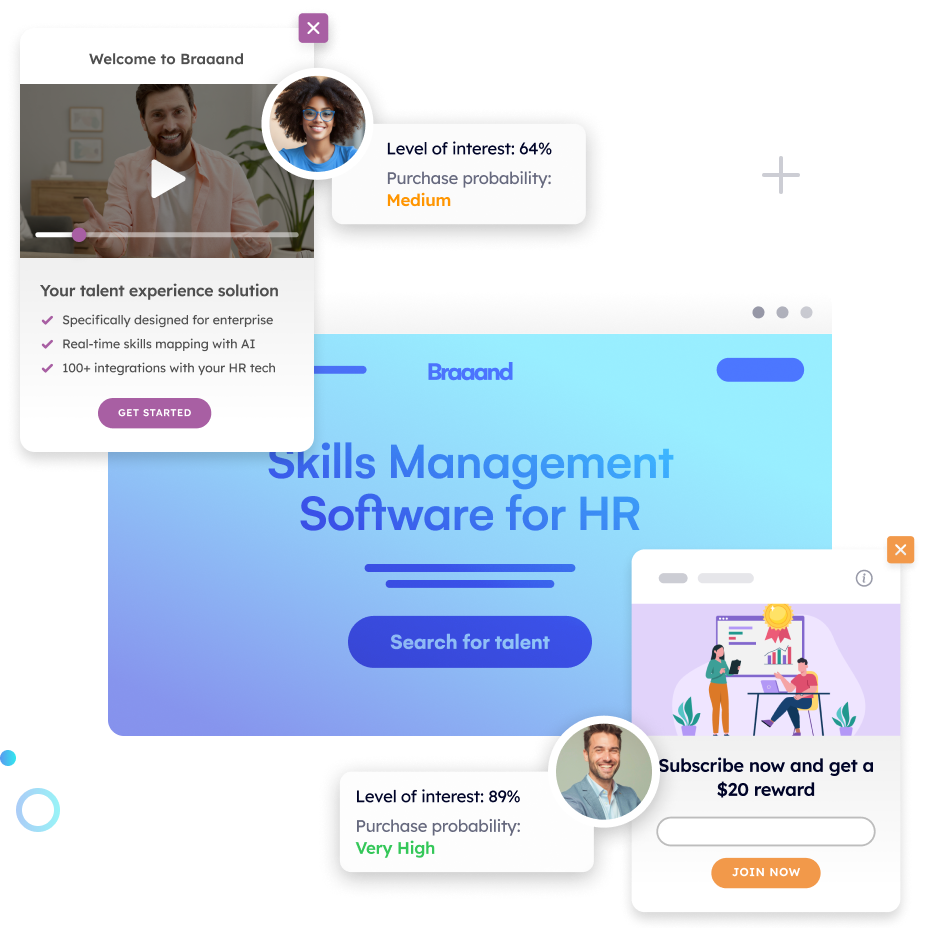
Increase +180% conversions from your website with AI
Get more conversions from your existing traffic by delivering personalized experiences in real time.
- Adapt your website to each visitor’s intent automatically
- Increase conversions without redesigns or dev work
- Turn anonymous traffic into revenue at scale
Key takeaways
- Free-info seekers are not the problem. Treating all visitors as if they were ready to buy is.
- Low-quality leads usually come from funnels that reward curiosity but never ask for intent.
- You don’t stop freebie seekers by removing free content, but by changing how and when people are asked to convert.
- Behaviour is a stronger qualification signal than forms, emails, or declared data.
- Intent-based experiences allow you to nurture early-stage visitors without pushing them into sales flows.
- When conversion goals match the visitor’s stage, lead quality improves without reducing demand.
Get your website’s conversion score in minutes
- Instant CRO performance score
- Friction and intent issues detected automatically
- Free report with clear next steps