Introduction
In this insightful episode of Pathmonk Presents, we welcome Richard Guth, a fractional CMO from Table Needs. Richard shares his expertise on helping small, independently-owned restaurants and food trucks achieve profitability. He discusses Table Needs’ innovative point-of-sale system tailored for quick-service establishments, and how it addresses common challenges faced by mom-and-pop eateries.
Richard also delves into effective marketing strategies, including the importance of organic traffic, website optimization, and multichannel approaches. Listeners will gain valuable insights on lead generation, customer acquisition, and the crucial role of mentoring in marketing leadership.


Increase +180% conversions from your website with AI
Get more conversions from your existing traffic by delivering personalized experiences in real time.
- Adapt your website to each visitor’s intent automatically
- Increase conversions without redesigns or dev work
- Turn anonymous traffic into revenue at scale
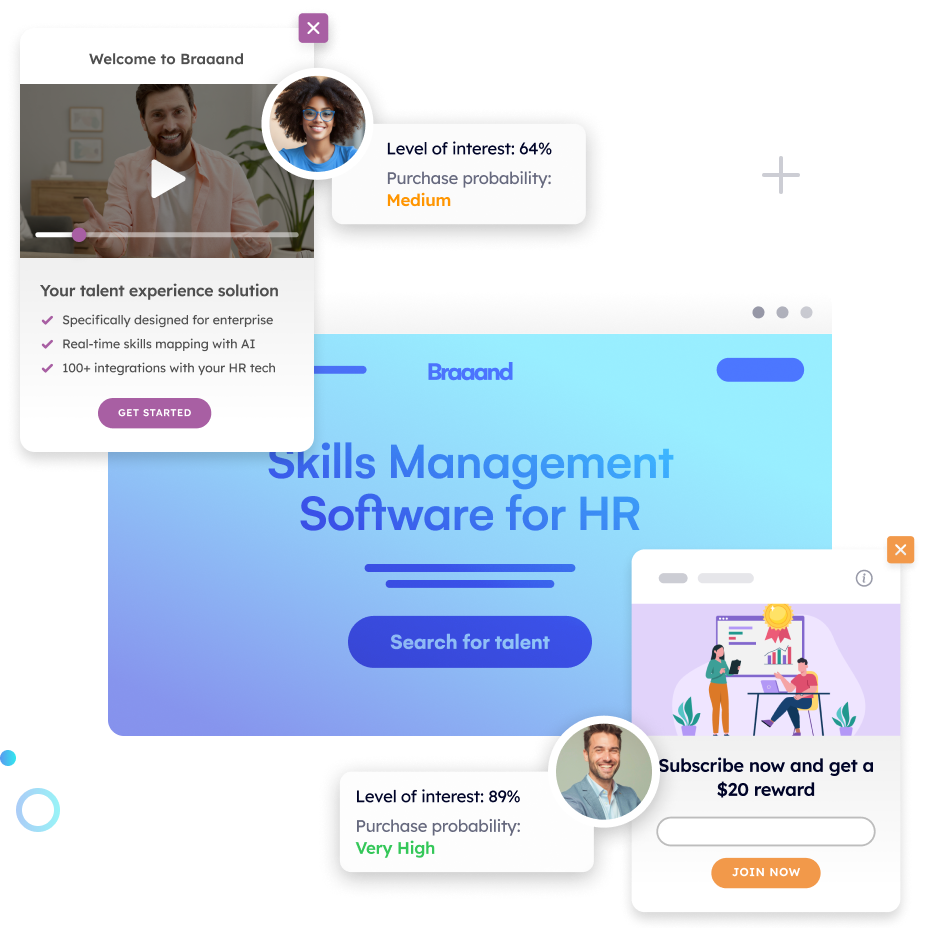
Ernesto: Pathmonk is the intelligent tool for website lead generation. With increasing online competition, over 98% of website visitors don’t convert. The ability to successfully show your value proposition and support visitors in their buying journey separates you from the competition online. Pathmonk qualifies and converts leads on your website by figuring out where they are in the buying journey and influencing them in key decision moments. With relevant micro experiences like case studies, intro videos and much more, stay relevant to your visitors and increase conversions by 50%. Add Pathmonk to your website in seconds. Let the AI do all the work and get access to 50% more qualified leads while you keep doing marketing and sales as usual. Check us out at pathomonk.com.
Welcome to today’s episode. Let’s talk about today’s guest. We have Rich from Table Needs, fractional CMO out there with them. How you doing today, Rich?
Richard Guth: I’m good, thank you.
Ernesto: It’s great to have you on. We were discussing a little bit about Table Needs and a little bit about you and the GMG. But let’s get into it. I’m sure our listeners are wondering what Table Needs is all about. So in your own words, Rich, can you tell us a little bit more?
Richard Guth: Yeah, I joined Table Needs last spring as their fractional CMO. I have a fractional CMO business called Goose Marketing Group and I focus on early stage startups at seed funding, getting ready to get their Series A, or right after they get their Series A, where I help them build their marketing machine.
I mentor and coach CEOs on marketing best practices and multi channel marketing so they can figure out exactly what kind of VP of marketing they need. Then I help them hire and bring that person on full time to replace me.
I also work with late stage startups getting ready for an acquisition, and typically when that happens, there’s a lot of mess to clean up from previous CMOs. So I come on board, clean up the data, clean up the messaging, so we have a crisp offering for the acquisition.
Table Needs is a seed level company, very well funded from a seed standpoint. What they have is a point of sale system, like Clover or Toast or Square — however, theirs is very different.
Their market focus is independently owned mom-and-pop quick service restaurants, cafes, bakeries, coffee shops, and even food trucks. Instead of big franchises and large enterprise deals, we’re building an offering for independently owned establishments to help them become profitable.
We do far more than offering a POS. We do marketing services, have an integrated KDS, scan to pay, scan to order, online ordering, bookkeeping, and help manage cash flow.
The company was founded by restaurateurs who run quick service restaurants. As you know, 60% of new restaurants go out of business in the first year and 80% after five years. We want to change that statistic for these mom-and-pop organizations so they can compete with big franchises.
Ernesto: Definitely. That’s awesome to hear. And you mentioned that statistic — it’s a lot over the years. So definitely good that Table Needs is working with these restaurant owners.
So that way our listeners can get a good understanding of Table Needs: if you were to point out the key problem you solve for clients, what would that be?
Richard Guth: Typically, it’s profitability.
We find that customers come to us either before they open a food truck, restaurant, cafe, bakery, or after they’ve been in business a year or two where they’ve gone with the standard default of Square Retail — which isn’t specific to restaurants, but it’s inexpensive.
Then when their business starts to grow and they upgrade to Square Restaurant or similar products, they find commissions are really high, there are hidden fees, and hardware becomes very expensive. And if they sign, they’re locked into a year or multi-year contract.
We remove those obstacles and overhead: month-to-month contracts, no commissions, no hidden fees. Our product runs on standard iOS and Android devices, so you don’t have to buy unique hardware. You can use what you already have.
That’s why we offer cash flow tools to manage weekly cash flow and a food price calculator to optimize pricing. And if they’re not getting people in the door, we help with marketing.
So we help them build a sustainable business, reach profitability, and maintain profitability long term.
Ernesto: Awesome. So then, I don’t want to assume, but is that the only vertical? Is there an ideal ICP for Table Needs?
Richard Guth: The ICP is quick service restaurants, food trucks, and counter service businesses.
We’re finding they tend to not be in big cities — more tier-two cities or surrounding areas. They often have a big community focus and tend to be early in their journey as restaurant owners.
A full service restaurant isn’t the best option for us. There are other products that are very sophisticated for those. We’re not trying to add features that get in the way of what a food truck or counter service restaurant needs.
Ernesto: Perfect. And how would somebody typically find out about Table Needs? Is there a top client acquisition channel?
Richard Guth: When I started last spring, they had one channel: an influencer who made clever videos about the value proposition and problems we solve. He had a big following, and they were putting their full budget into him. Good leads, good conversion rate, but it didn’t scale.
So we implemented a typical multi-channel marketing approach: added additional influencers like Food Truck associations and restaurant associations, partnered with online media the audience trusts — Quick Service Restaurant, FastCasual.com, Food Truck Operator — and started doing PPC.
But our number one acquisition channel is organic traffic. It wasn’t when I joined, but now our number one source for converting leads into deals is organic.
I’m a firm believer that it’s the result of everything we do. Even if deals aren’t coming directly from PPC, if we turned off PPC, organic would likely go down. So I believe in multi-channel and optimizing everything — especially organic, which means a lot of SEO work.
Ernesto: And so that way our listeners can check you out, they can visit tableneeds.com. Rich, what role does the website play for client acquisition?
Richard Guth: It’s number one — especially for a SaaS company.
We’ve all seen the statistic that 65% of the buyer’s journey happens online before they engage with a salesperson.
So it’s about getting all the content up there so a potential customer can get educated, understand the differences. But before that can happen, you’ve got to get people there.
So there’s a lot of SEO work to rank in the right places so people see you and end up on your website.
We’ve been doing an incredible amount of SEO work. I’m a big believer that SEO is the first thing you do, then you build messaging around those primary keywords. That makes it easier to build a website that ranks for top keywords and draws traffic.
Ernesto: Awesome. Any tools or methods you recommend for website lead generation?
Richard Guth: Content is key.
Make sure that when they search a keyword and land on that page, the story is relevant to that keyword.
On the page, you need a couple of offers. We ask for emails upfront at the top — even if they don’t do it, it gets them thinking. Then we embed additional CTAs throughout the page.
We’re working a lot on content. I’d like to add more videos showing how the product works and some “how-to” content — it’s on the list.
People don’t really read websites, but they skim: headlines, subheads. If something grabs them, they go back and read that section.
So pages need to be skimmable — the intent and key concepts should be clear without reading everything.
Ernesto: Definitely agree. Thanks for that, Rich.
Let’s switch gears and talk about you as a leader. As fractional CMO at Table Needs, what are key tasks you focus on day to day?
Richard Guth: I just finished mapping out a new homepage. I do individual contributor work related to content, SEO, and website layout.
I don’t write the final copy — I build a wireframe, dump in concepts, then hand it off to a writer.
Largely, I’m providing guidance and mentoring. Table Needs has a bright director of marketing, but he’s new to the role, and we have a first-time CEO for a tech company.
So a good portion of my day is brainstorming with them, guiding decisions, discussing best practices, and weighing options.
One example is how to evaluate physical events — there are dozens, but not all have our audience. So I mentor them through that process.
I also spend time building forecasting plans and a reverse funnel: if the revenue goal is X, what are the conversion rates, and how many leads do we need? And we build in time lag — for us, three to six months. In other industries it can be 12 to 18 months.
I built the model, and now they can plug in numbers and do their own modeling.
Overall, I focus on upping the game for the people they have — CEO, marketing, demand gen — helping them get the best out of their resources and understand best practices.
Ernesto: Awesome to hear that. Mentoring is always great.
Let’s jump into our rapid fire questions. Ready?
Richard Guth: Yep.
Ernesto: First up, what’s the last book you read?
Richard Guth: I don’t know. I love biographies. I have a shelf of books and a stack in my bedroom I want to read.
But I spend my day on the computer working with words, and the last thing I want at night is more words.
So when I take a vacation, I read three or four books — but I haven’t taken a vacation in a while. I read a lot of news.
Ernesto: That’s important — staying up to date, especially in marketing where everything evolves.
Next: what’s one single thing Table Needs is focused on the most right now?
Richard Guth: Metrics and conversion rates — the metrics that matter — and using those to optimize the business and customer acquisition costs.
Ernesto: If there were no boundaries in technology, what’s one thing you’d want to fix for your role as a marketer today?
Richard Guth: Tools that help you understand the marketing budget as a whole — which knobs to turn.
Automation dashboards exist, but they don’t help you understand relationships: if I spend more here, what happens there?
Optimizing budget to get the right output takes a lot of brain power. I’d like that to be more automated.
Ernesto: Totally. That’d be awesome.
Lastly: what advice would you give yourself if you restarted your marketing journey today?
Richard Guth: Understand the sales process early.
I spent the first five or six years of my career carrying a bag in enterprise software sales. I learned so much that made me a better marketer.
Many marketing orgs work in a tunnel and don’t engage with sales enough. I’ve made that mistake at a couple companies.
So from day one: focus on your relationship with the sales organization. Don’t assume that just because you’re doing the right things, everyone will appreciate it.
Ernesto: Definitely agree. That relationship is key.
Rich, we’re coming to the end. Last word: if someone forgets everything, what should they remember about Table Needs?
Richard Guth: That we’re here to help small restaurants and food trucks be profitable.
Ernesto: You heard it here. Check them out at tableneeds.com. Thank you so much, Rich, for being on with us today. And to our listeners, thank you for tuning in. Looking forward to our next episode at Pathmonk Presents.