Introduction
Elizabeth Thorn, Head of Marketing at Toggl, joins Pathmonk Presents to unpack how time visibility fuels better marketing and business decisions. She explains how Toggl helps knowledge-based teams understand where time and money are actually spent, moving beyond gut feel toward data-backed planning.
The conversation explores why agencies, SaaS teams, and professional services benefit most from time tracking, and how clearer insights prevent burnout and improve profitability. Elizabeth also shares how Toggl approaches SEO in an AI-driven search landscape, why high-quality educational content still wins, and what truly drives website conversions today. Marketers will gain practical insights on clarity over cleverness, proof over promises, and aligning marketing strategy with real revenue impact.


Increase +180% conversions from your website with AI
Get more conversions from your existing traffic by delivering personalized experiences in real time.
- Adapt your website to each visitor’s intent automatically
- Increase conversions without redesigns or dev work
- Turn anonymous traffic into revenue at scale
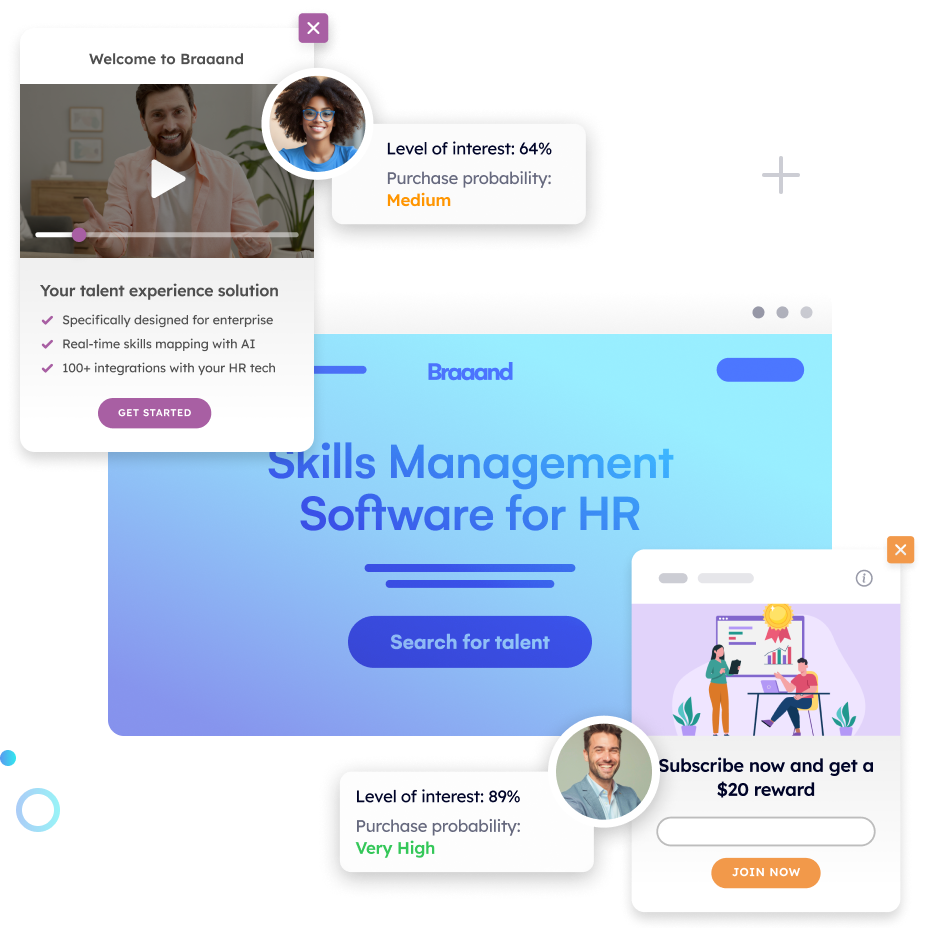
Rick: Pathmonk is the AI for website convergence. With increasing online competition, over 98% of website visitors don’t convert. The ability to successfully show you value proposition and support visitors in the buyer journey separates you from the competition online. Pathmonk qualifies and converts leads on your website by figuring out where they are in the buying journey and influencing them in key decision moments with relevant market experiences like case studies int videos, and much more.
Stay relevant to your visitors and increase conversions by 50% by adding Pathmonk to your website in seconds, letting the AI do all the work and increase conversions while you keep doing marketing as usual. Check us out on Pathmonk.com. Hey everybody. Welcome to today’s episode of Pathmonk Presents.
Today we’re joined by Elizabeth. She’s the head of marketing at Toggl. How you doing, Elizabeth?
Elizabeth Thorn: Good. How are you?
Rick: Doing well, thank you. I’m excited. And Elizabeth, I didn’t tell you this offline, but I’ve been using Toggl for a long time now, and I love, most of the features it has. So I’m excited to go into this conversation with you and, and maybe talk about the basics a little bit, just for people that don’t know, what’s the big idea behind, Toggl? And if you were explaining this to a friend over coffee, how would you describe what you do?
Elizabeth Thorn: That’s a great question. We talk about this a lot internally because I think if you can’t explain what you do over a short sentence to somebody who has no reference, then you’re probably not doing your marketing quite well, or you have a lack of clarity. we always say Toggl helps teams understand where their time really goes. So as it’s a. Traditionally we’re called a time tracking tool. but yeah, we help teams understand where their time is going. And I guess at its core, we believe we’re more than just a time tracking tool. So we’re into time visibility and we, yeah, we give companies the data that they need to plan better, run healthier teams, prevent burnout, ultimately make better decisions based on the reality of. Where their time and money is going instead of just gut feel. So a, we’re currently moving towards a more unified product, which I think in your case is probably, you’re just using the basic time tracking and people know us for Toggl track, Toggl plan. We used to have Toggl hire and now we are rolling everything into one unified product that connects time tracking, project planning, team insights, capacity management, all in one system. And yeah, I think, yeah, ultimately we leave. Time is like a core resource. It’s one resource. Every business is constantly leaking without realizing it. Money, obviously, but time is money. So I think it all boils down to time
Rick: well, you said it, time and money. Those are the one of the two, most important resources we have in this, in this slide, right? What kind of companies are interested in that, if not all right? That’s rhetorical question, but more, what I’m trying to ask here is the, is there any certain type of business or industry where you feel your product and or the suite of products really shines? And is there a key problem that you’re helping them solve at the moment?
Elizabeth Thorn: it’s not, all businesses, like you said, but I think there are certain businesses that benefit more from or naturally integrate time tracking into their workflows. And so we cater more towards those knowledge based teams. They’re selling their time and their, and or their expertise. So that mostly looks like, agencies and consultancies, software and product teams. Particularly ones, serving third party clients. So creative and animation studios, professional services. Anybody who needs to track their hourly time lawyers are another big one for us. marketing teams can benefit from it, I think. I believe. And, uh, everybody else at Toggl believes that, like you said, time is money and understanding where your time is going can help prevent a lot more than just. Tracking billable versus non-billable hours. But teams who traditionally get the most value out of Toggl, I think are those, knowledge slash service-based teams. I think their core problem, across any team we serve or any user we serve, is just a lack of visibility. So people who use Toggl, um, especially larger enterprise teams, tend to have questions about Where’s our time actually going? Which projects are profitable? Who’s maybe overloaded and on the verge of burnout? and particularly one big thing that we’ve been talking with a lot of agencies recently about is where are we underpricing or over-servicing, which is a huge, issue for a lot of marketing teams, particularly who are marketing agencies. but yeah, so I think we allow them with our reporting and as long as you’re tracking time consistently, you can go in and basically replace, I think hindsight with foresight, which is pretty strong for any team. You don’t wanna just be able to look back on these reports in hindsight and say, we’re spending a little bit too much time here. And, oh, Elizabeth is already burnt out, several months ago. the idea is that we give them, the, data and the insights that they need to spot problems early and make decisions based on that data.
Rick: Okay. it sounds like you have, you’re catering to different personas right now we’re getting a little bit more into the technical side of things for, it’s a marketing podcast after all. I’m curious, how do most of these, these people discover you? And in other words, are there any marketing channels that have become your go-to for bringing in more business for Toggl?
Elizabeth Thorn: I would say our two strongest channels, if you count direct as a separate channel, we do just an attribution. Our two strongest channels are organic and direct. And so with organic, we have a really strong SEO engine. That’s been of like the core of Toggl customer acquisition funnel for, years. It’s how they started out. I think it was more so just timing when Toggl came around. 2010. they had actually what was called, instead of a marketing team, they had a traffic team. And so back in 2010, if you were in the world of SEO, you remember how. I don’t wanna say easy, but it was much easier. It was very, it was a lot more simplistic in nature, right? To create content, attract people through an organic search channel, and then, they get on your website and they learn about your business. with that, because we have such a strong foundation dating back 15 years, that is still a really strong channel for us. And then direct as well. I think we have the fortune of having, Quite a strong brand in, our space, specifically within I guess the niche of time tracking, but in like capacity and project and, to other productivity tools, we’ve made a name for ourselves. So direct traffic is quite big as well, which I think also caters into everything that we do off our website in terms of social and paid channels through YouTube or Reddit. people are finding us through these ads and then coming to us directly searching for us directly, I think outside of that, we have traditionally invested and continue to invest heavily in educational content and customer proof, which is key for both organic and direct. So once people get there, we’re not just, they haven’t just found us. We’re also like giving them educational and informational and high value content once they’re there. Because I think, as in, the marketing space, nobody really wants to be sold to anymore. They want to be. I think what we’re all looking for is just really good information about how to solve the problem that we have and with which tool. So we try to be really transparent and honest and fair about that as well.
Rick: Okay. It’s interesting to know, obviously SEO and organic is, it sounds like it’s the, is the biggest channel, right? has that changed at all in the last two or three years with LLMs and, the way you do SEO and you way you do marketing generally speaking at all? Or has that remained the same?
Elizabeth Thorn: It’s definitely changed. I would say we’ve had, so I have an SEO and content background. Before I joined Toggl, I had my own, uh, small SEO and content agency. And I originally joined Toggl in 2023, at the end of 2023, to build out a content strategy. And so that was my focus, and it’s even from the end of 2023 until now, it’s changed drastically. I think again, because we have such a strong foundation and a lot of authority, it didn’t affect us as much as I saw it affecting other. B2B SaaS websites or just websites in general, which is nice, but we can obviously notice the difference. And I think, we have a really, good, SEO specialist of Guinea, in-house, and him and I go back and forth a lot and talk about the changes in the, search landscape and AI search now is obviously different and the strategies are a little bit different in that, we’re trying to understand obviously like how LLMs are pulling AI citations, right? And so we wanna know what. It is that users are looking for, and how to frame that around before it was keywords, right? And so people search generally for keywords and just the way that people are searching is changing now. And so we can’t really rely on, we’re looking and testing a lot of AI search tools. HFS is the, SEO tool that we use, but it’s the brand radar kind of feature that they have that’s really helpful. But there’s a really good robust tool right now that can tell you like. 70 people this month searched for this specific term in chat, GPT, and so we’ve been relying a lot on our sales team to ask questions for people who come through for demos, which is really interesting. And what we’re finding is that a lot of people are asking very, specific questions. And so we’ll get like a query, instead of, ’cause it’s more conversational, right? Whereas traditional search in the Google search bar was like. Best time tracking software. When you’re speaking to an LLM, whether it’s Claude chatt, perplexity, or whatever you are asking more natural, it’s a conversation that you’re having with that, that robot. And so people will come in and they’ll tell us, they’ll be like, yeah, I searched for Hey, I’ve got a team of 18 people. This is our budget. We need a time tracking software that does X, Y, and Z. this feature is the most important for us. We want reviews over 4.5 on G two, like a very, specific, and they’ll feed that into it and trust the LLM and it’ll, that will pull back information. And I think what we’re finding is that we can’t cater to all of those very niche individual searches. And instead what we’re doing is getting back to the basics, obviously and just focusing on high quality content. So I think, again, of getting our SEO specialists and myself go really are able to nerd out about this and it’s, an exciting time to work in SEO content. ’cause I think. The path forward is to get back to the basis, just create great content, give your users what they’re looking for, answer the questions that they have, understand what their real pain points are, right? And yeah, give them good content, answer their questions. And I think that if you understand what you’re selling and who you’re selling to, it’s a lot easier. And I think it, it alleviates a lot of pressure. SEO to, have to, it was, I dunno if anybody worked in SEOI did obviously from, like five, 10 years ago it became a game of we can pay for backlinks and we need X amount of backlinks to rank and then we, need this keyword seven times. it just became a, bit too much of a game of, bit too much of a formula. People lost sight of what I think marketing is, especially in terms of content, which is high quality, informational. The questions that they have. So I think it’s, it is ultimately an exciting change, but it has changed a lot for us. Yeah.
Rick: Yeah, I’m sure. And, thanks for explaining, giving us some insights. Maybe you already answered to what I’m about to ask, but, from your experience, and you said just make great content and, answer those questions and the rest, this is my assumption, right? This is what I’m hearing. The rest takes care of itself. Of course, there’s not. It’s not the case a hundred percent. But, question is from what you experienced, what actually makes a website convert? Is there any favorite, let’s say framework that you use or a little kind of I don’t know, even a tool stack that, I’m, I know I’m a I cow on, tech stack, right? anything like that? Is there anything you can share with, our audience that, can help them out?
Elizabeth Thorn: Yeah, I think, I we’re only recently exploring AI tools in terms of conversions, and so understanding where people are going, so it’s like a tool like Munk or Dream Data or something like that. post hog Hotjar, things that we’ve used just in terms of figuring out where people, are going and what they’re doing and how long they stay on a certain page. So it’s like identifying where people might be dropping off and then testing something different. I think as far as tools and approaches. Analytics tools. I think attribution tracking has become so difficult in the past few years that it’s difficult to understand where people are coming in from, but once they’re on the website, it does help to see where they’re going and what they’re engaging with. But I think that’s the first aspect of it and figuring out. Where they’re getting stuck is key. And then once they get stuck, I think, a few of the things that we’ve seen that have helped quite significantly in terms of conversion rate for us on the website is, clarity. So think again, copywriters writing, especially in a B2B SaaS world, everybody’s trying to differentiate themselves and create. Really crazy interesting copy. And I think that’s great and it’s obviously necessary, but I think clarity beats cleverness. So if, users don’t immediately understand what problem you solve and whether or not it’s for them, like you, you lose them, right? So you can only be so clever before you lose their interest. And then I think, Proof beats promises in that you can say whatever you want on the website, but if you’re not backing it up with customer case studies, data, screenshots, real outcomes, at the end of the day, like buyers are becoming more advanced. And I think what worked 10 years ago where you could just say, Hey, we do this, and people would be like, okay, great. That’s what I need. the buyers are, a lot more savvy now, and they know and they’ve got. 50,000 other tools, not 50,000, but they’ve got dozens of other tools that are promising the same thing. And what they wanna see is that real proof. So I think that helps convert as well. And knowing, again, where to put that proof on the website makes a, big difference.
Rick: No, that’s a fair point. And again, thanks for sharing that. That’s a, that’s super helpful. Now, we’re going into the back half of our, Episode here, Elizabeth. So I wanna switch gears for a second. I wanna talk about you and I wanna ask you a few questions, and if you don’t mind, we’ll do a rapid fire style, right? we’ll get into, your day to day, and then I want to learn a couple things, and I’m sure audience is also curious about, what you’re into in terms of content and, a bunch of other interesting things. What are the main three things that you focus on, on, on your day to day? What’s the day in the life of Elizabeth like when she gets to work and, she focuses on three things, let’s say. I’m sure it’s more, but yeah. Let’s, stop it At three,
Elizabeth Thorn: three things I would say as head of marketing, daily, it’s my job to translate. Business goals and to clear like growth strategy and like actionable next steps for our team. So I’m constantly referring back to our strategy and making sure that the team’s on, on pace. I mean orchestrating as outside of marketing, again, like a project manager. I’m just orchestrating campaigns, making sure everybody has what they need. There’s no blockers. Contracts are signed, it all falls in line with strategy, budget, everything like that. And then I think, Pattern spotting is a, is an interesting one. I’ve been talking to a lot of other marketing leaders recently. So understanding what’s working, what’s slowing us down, where momentum is leaking. and then again, turning that into a clear growth strategy. So looking, for patterns. Yeah.
Rick: I love it. Yeah, I mean it’s, That’s, the start typically for me, like whenever I do some kind of knowledge work, that’s my first thing I do. if I look for pa, maybe I’m writing something right, and maybe you relate to this, you look for patterns, you start with a pattern, and then, you get into the flow of things. I, I love that, by the way. now when it comes to content Do you prefer watching reading or, listening to, to things?
Elizabeth Thorn: I would say. It’s a mix of watching and reading. so I’ll watch a podcast over just purely listening to it. I think that engagement is interesting, but yeah. reading a lot of, like, newsletters. I sub subscribe to several newsletters. Ben Goody’s, SEO newsletter, pavilion Newsletter. yeah. So like industry newsletters. That’s probably the most, yeah.
Rick: Okay. now then take your pick, right? ’cause this next question is about. What’s the latest piece of content I’m gonna say in terms of, whatever, something you read or something you listened to or watched, that you picked up. And was there any idea that really stuck with you in it?
Elizabeth Thorn: The Pavilion newsletter again, I think, is really exciting. I think it’s called Top Line, from Pavilion is the name of the newsletter. And I recently got one this week that’s talking about, GTM. GTM in 2026 and what teams are learning. And I think I sent it to our CRO and our product marketing lead and we had a discussion about just how, yeah, the integration of. Like revenue engines are mixing with partnerships and mixing with product marketing. So again, like having clarity on what you’re saying and then distributing that via, I guess it’s not that non-traditional now, but like partnerships, so it’s third parties. It’s not like a traditional marketing channel in the sense of what we probably learned 5, 10, 15 years ago. yeah, pavilion newsletters is great. Yeah. Talking about GTM, just a GTM playbook for 2026 and what we’re looking at ahead for the year.
Rick: Noted. All right, thanks for sharing. this is a peculiar one, but here we go. So if you had a magic wand and you could fix one frustrating thing your marketing life with tech, what would you pick?
Elizabeth Thorn: I think, this is getting into Pathmonk a little bit in what you guys do, but the ability to see like a, the real decision making layers through the funnel. So I think we’re still forced to infer from intent. Like from surface level signals, where people are at and what they’re doing and why they’re doing it. And so I think it would be really cool to have, I’m talking about real time. I don’t think we could ever really get this much insight, but when somebody’s on the page to know, like when did their team internally agree that they needed a solution? And when did that budget get approved and when Are they comparing vendors? Like at what stage in the funnel are they comparing vendors and like when does that urgency suddenly spike to force them into. To look for a product. So I think all of that before it happens. And then on page as well, like you, we’ve talked about before. So like, when they’re on the page, where are they getting stuck? Why and why? Just like having a little bit more data into I would love to be able to hear their, thought process basically. If we could record that and have that funneled into some dashboard, that would be, that’d be really helpful.
Rick: That would be really cool. it’s somewhat spying, but
Elizabeth Thorn: we’re heavily against Toggls Great surveillance. I agree. But, so yeah, some like non spying, really interesting way to do it. I think that would be,
Rick: I, yeah. Yeah.
Elizabeth Thorn: Quite cool. Yeah.
Rick: Oh yeah, I agree. I agree. I was joking by the way.
so last question. If you could go back and, give your past self a quick pep talk at the start of your marketing journey, your journey in content. What kind of advice would you give yourself?
Elizabeth Thorn: I think in hindsight it would be, I wish I had learned a little bit faster, quicker, earlier, how businesses actually make money. So I think instead of chasing. Learnings around tactics. So like how to optimize a blog for us. Yeah. Which is important and you need to know that if that’s what your role is. all of that’s important, but I think what’s really important and special, and it makes you valuable as a marketer is understanding the actual revenue impact of marketing and, tying it back to, what you’re doing. So I think that’s something big for us internally. Toggl. I try to make sure we put a lot of emphasis on we’re gonna build this really cool campaign. It’s gonna look really cool. We’re having a lot of fun, but. We need to understand like how the business makes it money, makes its money so we can pull those levers correctly. I think learning that five years ago for me would’ve been really helpful.
Rick: Oh, I’m sure. Learning the why behind things, right? Yeah. in many different facets.
Elizabeth, I want to thank you for, being on the show with us today. I want to give you the last word. Also, if someone forgets everything about an interview today, all the insights you share with us. What is the one thing that you should remember about the work you guys are doing at Toggl and, and, and you are doing as a head of marketing?
Elizabeth Thorn: I think, yeah, humanizing marketing is incredibly important. Don’t lose sight of who we’re really marketing to, which are humans. Yeah, Toggl. I think, yeah, we’re trying to build, the future of time visibility and really capitalize on something that is, time is essential to us all, and I think what we really want is to give people the power to understand it and use it better, Yeah.
Rick: Beautiful. Okay. Elizabeth, if someone wants to check you guys out, where could they go and, how could they get in touch?
Elizabeth Thorn: tole.com. It’s TOGG l.com. yeah, we’re present on most social media platforms, but yeah, our website’s the best place to go. you can check us out on YouTube. We’re publishing a lot new, a lot of new video content coming up recently because it’s coming up soon. So yeah, tole.com.
Rick: Beautiful. All right. Thanks again, Elizabeth for flaring your, insights with us, and I wish you a wonderful day.
Elizabeth Thorn: Thank you.
Rick: Of course. Bye everyone.