

Tripling lead generation output with AI requires operating across three simultaneous layers: classifying visitor intent in real time, delivering conversion-optimized experiences calibrated to each visitor’s journey stage, and running autonomous A/B experiments that continuously shift traffic toward winning variants. The multiplier is not achieved by generating more traffic. It comes from converting a larger fraction of existing traffic more efficiently, with less manual intervention between optimization cycles.
The “x3 automatically” outcome depends on a precise definition of automation: the system must learn, test, and reallocate traffic without human touchpoints between cycles. Teams that deploy AI only as a copywriting layer or a chatbot addition will not reach this threshold. The lead volume increase is a downstream result of AI correctly classifying visitor intent, triggering the right experience at the right journey stage, and compounding those gains over a 60 to 90 day window.
Table of Contents
The average B2B website converts between 1% and 3% of visitors into leads. That number has remained stubbornly low despite years of CRO investment, form optimization, and content upgrades. The reason is structural: most lead generation systems are designed around static rules applied uniformly to heterogeneous audiences.
A visitor arriving from a branded search query after three previous visits is not the same as one landing on a blog post for the first time from an organic keyword. Serving both the same hero section, the same CTA, and the same gating strategy is a category error. It is also the default behavior of most websites.
AI changes this by making behavioral differentiation operationally feasible at scale. The technology exists to classify visitors by journey stage in real time, serve them contextually appropriate experiences, and route them through qualification flows calibrated to their intent level. The result, when implemented correctly, is a compounding improvement in lead volume and quality simultaneously.
What marketers frequently misunderstand is the distinction between AI-augmented lead generation and AI-automated lead generation. Augmented means human teams use AI outputs to make better decisions, still requiring campaign cycles, brief writing, and manual updates. Automated means the system learns, tests, and shifts traffic allocation without human touchpoints between optimization cycles. The 3x threshold typically requires the second model. Knowing how marketers can use AI for lead generation is the starting point, but deploying it in a self-optimizing loop is what produces compounding results.
This article covers the technical architecture of AI-automated lead generation, the specific mechanisms that produce volume multipliers, how to measure output correctly, and where these systems fail.
Why most lead generation systems underperform
Before covering AI-specific mechanisms, it is useful to diagnose exactly where standard lead generation breaks down. Three structural problems account for most of the gap between available traffic and captured leads.
Static experiences served to dynamic audiences
A website’s content, CTAs, and gating logic are typically configured once and refreshed quarterly at best. Meanwhile, visitor composition changes daily. Traffic quality from paid campaigns shifts. Organic visitors arrive at different journey stages depending on which queries they used. Return visitors have accumulated context that new visitors lack.
Applying the same experience to all of them produces average results. The decision to gate content, the specific CTA copy, the form length, and the offer type all have different optimal values depending on who is looking at them. Static systems cannot accommodate this. If your conversion rate is low, the question is almost always whether the problem is traffic quality or the website experience itself — and in most cases it is both, operating simultaneously.
Get your website’s conversion score in minutes
- Instant CRO performance score
- Friction and intent issues detected automatically
- Free report with clear next steps
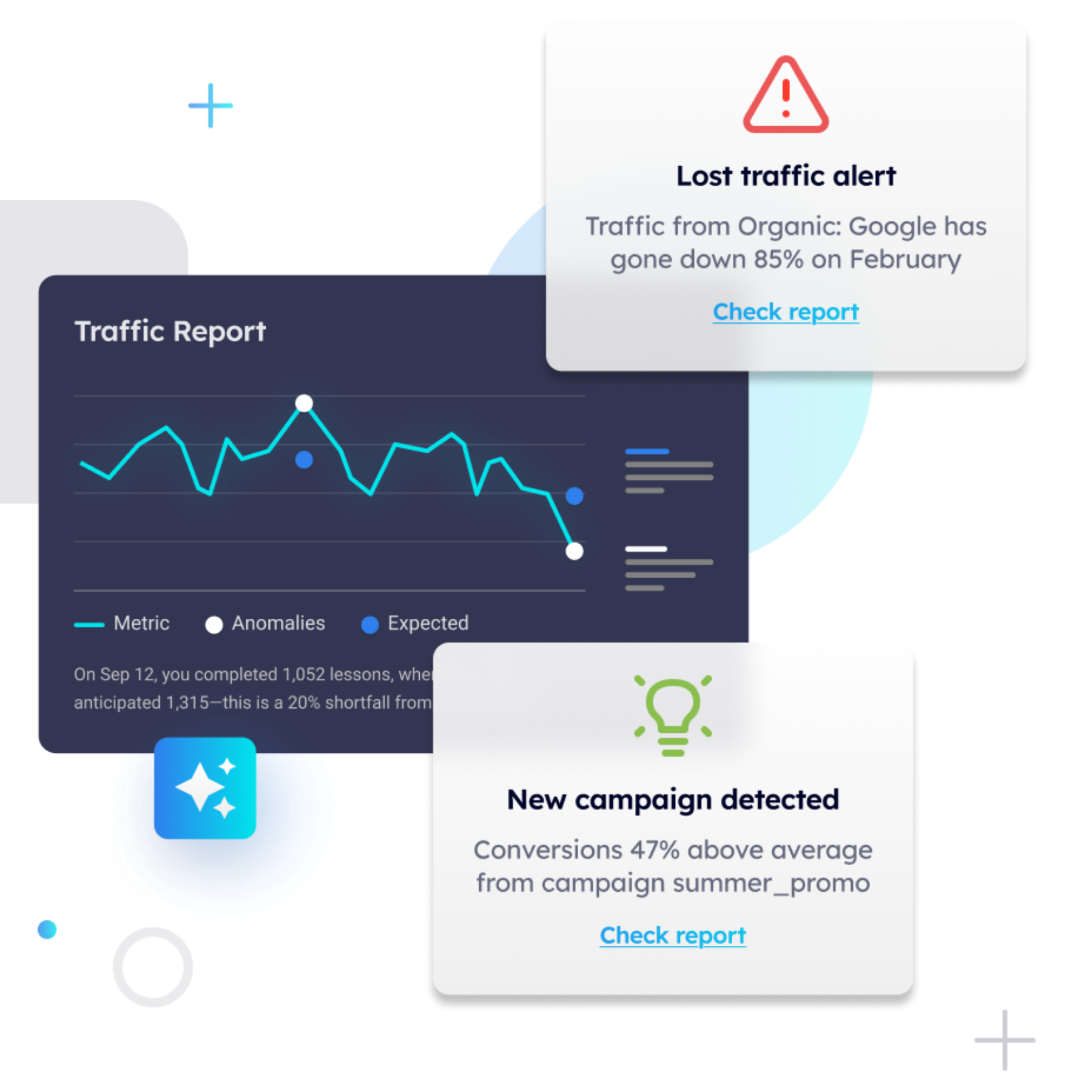
Qualification friction concentrated at the wrong stage
Most B2B lead capture occurs through forms positioned at the bottom of a journey that the visitor has not completed. The visitor has not yet developed enough intent to justify providing their information, so they leave. Alternatively, visitors with high intent hit a generic contact form that does not match the specificity of their question, and they also leave.
Form abandonment rates for B2B gated content typically range between 60% and 80%. That means the majority of visitors who reach a conversion touchpoint disengage before completing it. The tension between simplifying your funnel and adding qualification steps is a real strategic problem — AI resolves part of it by presenting qualification questions progressively, at the moment when intent indicators reach a threshold, rather than as a uniform gate applied to all traffic.
The downstream problem is equally costly: leads who arrive with no intent to buy beyond free information consume SDR time without contributing pipeline. Fixing this requires qualifying at the point of capture, not after the fact.
No persistent signal across sessions
Standard analytics treats each session as independent. If a visitor reads a pricing page, leaves, and returns three days later, the second session typically begins without any contextual state from the first. The website serves the same awareness-level experience to someone who has already demonstrated decision-stage behavior.
Cookieless behavioral fingerprinting resolves this by maintaining persistent visitor profiles without relying on third-party cookies. With third-party cookies increasingly deprecated, this architecture is now a requirement rather than a differentiator. The system recognizes returning visitors, knows which pages they have consumed, and can advance them to the appropriate experience for their accumulated signal level.
Turn website traffic into sales-ready leads
- Identify high-intent visitors automatically
- Qualify leads before they reach your sales team
- Convert traffic without adding friction or forms
The three AI mechanisms that drive 3x lead generation
1. Intent scoring and real-time journey classification
The foundation of AI-automated lead generation is a reliable intent model. The system must be able to classify each visitor into a journey stage — awareness, consideration, decision — based on behavioral signals, and update that classification dynamically as they interact with the site.
Behavioral signals that feed intent models:
- Pages visited and sequence of navigation
- Time spent on specific content types (pricing, case studies, feature pages)
- Scroll depth on high-intent pages
- Return visit frequency and recency
- Interaction events (clicks on demo CTAs, form field engagement, video completions)
- Traffic source and query context (where available)

The output of this classification is a visitor-level intent score that gates which experience the system serves. A visitor scoring in the awareness tier receives content designed to educate and build problem recognition. A decision-stage visitor receives a direct conversion path: a demo booking flow, a free trial prompt, or a qualification sequence. Predictive lead scoring differs from traditional rule-based scoring in that the model weights signals dynamically based on historical conversion patterns, not fixed point assignments.
The lead generation multiplier from this mechanism comes from eliminating the mismatch between visitor readiness and the experience intensity. High-friction conversion attempts on low-intent visitors produce low conversion rates and poor lead quality. Low-friction experiences served to high-intent visitors leave conversions on the table. Intent classification resolves both simultaneously. Understanding what behavioral data means in a marketing context is essential for configuring these models accurately.
2. Microexperiences triggered by behavioral signals
Intent scoring alone does not generate leads. It must be coupled with experiences that convert. Microexperiences are small, targeted interactions triggered in response to specific behavioral signals. They are distinct from pop-ups in that they are not time-gated or exit-triggered uniformly; they fire based on journey stage and the specific page context. Exit-intent pop-ups in their traditional form have declined significantly in effectiveness, precisely because they apply a uniform trigger to a heterogeneous audience with no behavioral context.
Examples of microexperience applications in lead generation:
- A visitor on their third visit to the pricing page, with a decision-stage score, receives a direct demo booking prompt with a two-field form
- A first-time visitor reading a product feature page receives a content offer (a comparison guide or case study) as a soft lead capture that matches their discovery context
- A visitor who has shown engagement with a specific vertical case study receives a follow-up experience offering to connect them with a relevant account manager
The key difference from traditional pop-up strategies is specificity. Each experience is constructed to match the visitor’s current context. Micro-moments — the specific instances when visitors show intent signals — are the correct trigger points for these experiences. Deploying them at the wrong moment, or uniformly, destroys the conversion lift.
Qualification flows extend this further. Instead of a static form, a qualification flow is a branching interaction sequence that adapts based on answers. The visitor is guided through questions that identify their use case, company size, or urgency. The system routes them to the appropriate end node: a booking link, a resource download, or a sales outreach request. This produces leads with richer qualification data attached, reducing the manual qualification burden on SDR teams. Properly structured lead generation landing pages and qualification flows together address both volume and quality.
3. Autonomous A/B testing and traffic allocation
The third mechanism is what makes “automatic” a defensible claim. Without ongoing experimentation and optimization, an AI lead generation system converges on a fixed configuration that decays in performance as visitor behavior evolves.
Autonomous A/B testing operates as follows: the system maintains a controlled split of traffic (typically 50/50 during learning), runs variant experiences against the control, and shifts traffic toward the winning variant once statistical confidence reaches a defined threshold (typically 95%). A minimum control group (around 5%) is always maintained to preserve ongoing measurement integrity. The innovations in CRO that distinguish agentic AI from traditional split testing lie precisely here: the system manages the experiment lifecycle autonomously rather than waiting for a human to analyze results and redeploy.
This means the system is continuously running experiments without requiring a human to design, launch, and analyze each test. Over time, the microexperiences served to each visitor cohort reflect the accumulated learning from thousands of real-world experiments, not the assumptions of a campaign brief written six months ago.
The compounding effect of this is significant. A single A/B test cycle might produce a 15% conversion rate improvement on a specific experience. Run across multiple experience types, journey stages, and traffic sources simultaneously, the aggregate improvement compounds toward the 3x multiplier over a 60 to 90 day window.
B2B-specific layer: identifying anonymous companies
For B2B lead generation specifically, there is a fourth mechanism that adds significant leverage: company-level identification of anonymous website visitors.
The majority of B2B website traffic never interacts with a form. Visitors from target accounts research the product, visit pricing and case study pages, and leave without identifying themselves. Standard analytics records this as a session with no associated lead. Intent data surfaces this traffic by correlating behavioral fingerprints with firmographic data.
The system can identify which companies are visiting, which pages they are consuming, how deep into the buying journey they are, and what their intent signal strength looks like. This creates a prospecting layer that does not require form completion as a precondition. Comparing intent data platforms against traditional lead generation tools consistently shows the intent data approach wins on pipeline quality precisely because it captures demand at the research stage rather than waiting for the visitor to self-identify.
Practical use cases for B2B intent lead data:
- Triggering outbound sequences to accounts showing high-intent signals before they convert inbound
- Prioritizing SDR follow-up queues by company-level intent score rather than by form submission date
- Identifying target account engagement to validate ABM campaign effectiveness
- Building suppression lists for paid campaigns against accounts already in late-stage evaluation
Leveraging intent data for account-based marketing is one of the highest-ROI applications of this layer. The intent signal tells you not just that a company visited, but which buying stage they are in — which determines whether to route them to marketing nurture or direct sales outreach.
This mechanism does not replace form-based lead capture. It adds a parallel lead generation channel that captures demand that the standard funnel would have lost entirely. For teams with a defined ICP and ABM infrastructure, this layer alone can represent 20% to 40% of identifiable pipeline.
Implementation architecture and technical requirements
1. Minimum traffic thresholds
AI-automated systems require sufficient traffic volume to generate statistically valid experiment results within a reasonable time window. Below approximately 10,000 monthly pageviews, the confidence intervals on A/B test outcomes are too wide to reliably identify winning variants. CRO on low-traffic sites has a different optimization playbook — at this volume, the system runs but learning cycles are slow.
At 30,000 to 50,000 monthly pageviews, the system can run multiple simultaneous experiments across journey stages and reach significance faster, enabling the compounding optimization loop to produce results within 30 to 45 days.
2. SDK installation and data collection
The behavioral data collection layer requires a lightweight SDK installed on the site. This can be deployed via tag managers (GTM is the standard approach) without developer involvement. The SDK collects behavioral events, builds visitor intent profiles, and communicates with the AI engine to determine which experience to serve.
CSP (Content Security Policy) configuration is required for sites with strict header policies. The relevant domains need to be whitelisted to allow the SDK and experience delivery assets to function correctly.
3. Conversion goal configuration
The AI system needs a defined conversion goal to optimize against. A single primary goal (demo booking, lead form submission, free trial start) is required. Secondary goals can be added once the primary is validated. The goal is tracked via one of four standard methods: thank-you page URL matching, page-load pixel, visitor action pixel (for same-page events), or a hosted thank-you page.
Assigning monetary value to conversions improves AI prioritization. For lead generation, the goal value is typically derived from the formula: Goal Value = LTV × close rate × SQL-to-close rate. This enables the system to optimize toward revenue-weighted outcomes rather than raw lead count. Understanding what metrics actually drive revenue is a prerequisite for configuring these values accurately.
4. Baseline measurement requirements
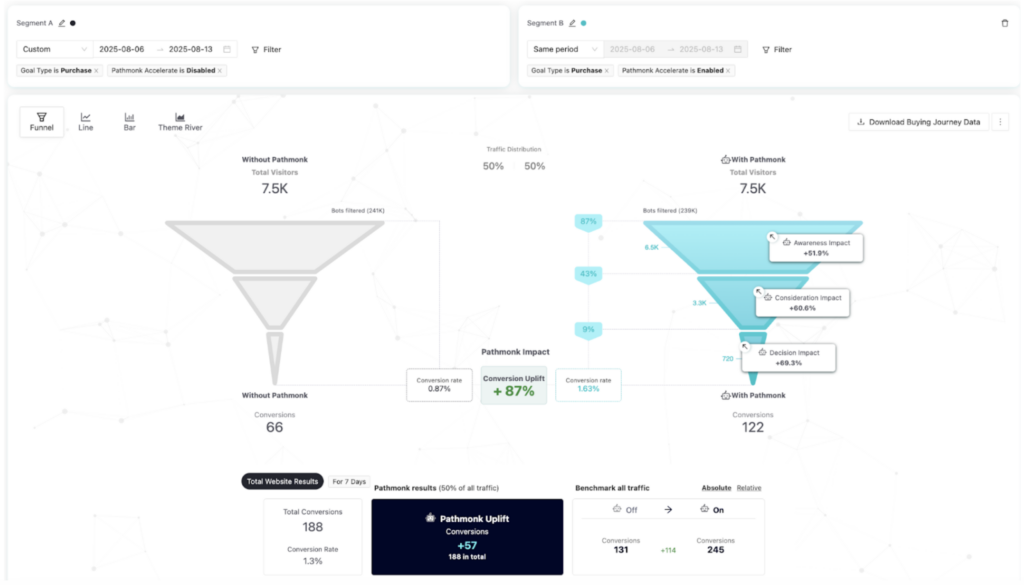
To measure a 3x improvement, you need an accurate pre-AI baseline. Month-over-month comparisons using standard analytics are unreliable due to traffic volume seasonality and channel mix shifts. The correct measurement framework is a concurrent A/B split: 50% of traffic receives the AI-optimized experience, 50% receives the unmodified site, measured simultaneously. Conversion rate uplift is calculated from this split, not from historical comparisons. Knowing how to successfully measure conversion rate is foundational before attributing any improvement to AI.
When AI lead generation does not produce a 3x multiplier
AI automation does not overcome all structural problems. Several conditions will limit or eliminate the multiplier effect.
- Insufficient organic or direct traffic. AI optimizes conversion of existing traffic. If lead generation is primarily dependent on paid acquisition with landing pages that exist outside the main site, the behavioral learning from the main site does not apply to those sessions.
- No product-market fit signal in existing traffic. If the current 1-3% conversion rate is low because visitors are fundamentally not the right audience, AI will improve the conversion of the wrong visitors. The lead volume may increase but the lead quality will not. Intent models amplify existing patterns; they do not create new demand. Understanding how to generate leads when you don’t fully know your ICP yet is a prerequisite step before deploying intent-based optimization.
- Conversion goal that cannot be directly optimized. If the desired lead capture mechanism requires a human workflow step (a sales rep manually qualifying and following up within a narrow window), the AI can increase the number of qualified leads reaching that step but cannot optimize the downstream step itself. The system bottleneck shifts to the human workflow.
- Conflicting conversion experiences. Sites with multiple competing CTAs, live chat widgets, cookie consent banners, and existing pop-up campaigns create signal noise for visitors and interaction conflicts for AI-served microexperiences. These need to be rationalized before deploying behavioral personalization.
How Pathmonk helps increase lead generation automatically with AI
Pathmonk operates as an AI-powered website conversion platform specifically designed to automate the mechanisms described above. The system works across three functional layers relevant to lead generation.
The intent detection layer uses a cookieless behavioral fingerprinting approach that identifies visitors without relying on third-party cookies or requiring consent banners. This means the intent data collected is more complete than cookie-based alternatives, which increasingly miss iOS and privacy-browser users. Pathmonk classifies each visitor into awareness, consideration, or decision stages based on real-time behavioral signal accumulation, updating the classification dynamically as the visitor navigates.
The microexperience layer serves targeted interactions at the moment when a visitor’s intent score passes a threshold appropriate for conversion. For lead generation specifically, Pathmonk supports qualification flows that replace static forms with adaptive branching sequences. Visitors answer questions relevant to their context; the flow routes them to the end node (booking link, download, or contact request) most appropriate to their answers. This produces leads with attached qualification data rather than raw name-email captures.
The autonomous optimization layer runs A/B experiments continuously. Pathmonk starts with a 50/50 traffic split and shifts allocation toward the winning variant once 95% statistical confidence is reached, while maintaining a permanent minimum 5% control group for ongoing measurement integrity. This is the mechanism that makes the system “automatic” in the strict sense: no human is required to design, launch, or analyze individual test cycles.
For B2B lead generation specifically, Pathmonk’s B2B Intent Leads add-on surfaces anonymous company-level visitors. The system identifies which companies are browsing the site, what pages they have consumed, and what their intent score is — without requiring a form submission. This data can be exported via Zapier to CRM platforms and used to trigger outbound sequences or prioritize SDR queues based on demonstrated site behavior rather than cold targeting.
The platform installs via a single SDK snippet compatible with GTM, and requires no developer involvement for ongoing management. The AI dashboard provides a set of training tasks (importing data, labeling page types, enabling intent filters) that accelerate model performance. Pathmonk backs the system with a 20% minimum conversion uplift guarantee under standard operating conditions.
How Ausbildung-Weiterbildung generated 87% more leads with AI-powered personalization
Ausbildung-Weiterbildung is a Switzerland-based career and vocational training platform operating in a high-competition vertical. The site attracts a large volume of visitors at different stages of the educational decision-making process, from early research through to direct enrollment inquiries.
The team was generating leads through standard content and form gating, but conversion rates were low relative to the volume of traffic showing genuine interest signals. Visitors who arrived from search queries indicating active decision-making were receiving the same experience as early-stage browsers. The qualification data attached to captured leads was also thin, making sales follow-up inefficient.
They deployed Pathmonk’s AI personalization across their main site. The system began classifying visitors by journey stage and serving differentiated microexperiences based on intent level. Visitors showing decision-stage signals received direct qualification prompts; awareness-stage visitors received content-oriented interactions. The autonomous A/B testing layer ran experiments across experience variants to optimize conversion rates at each stage.
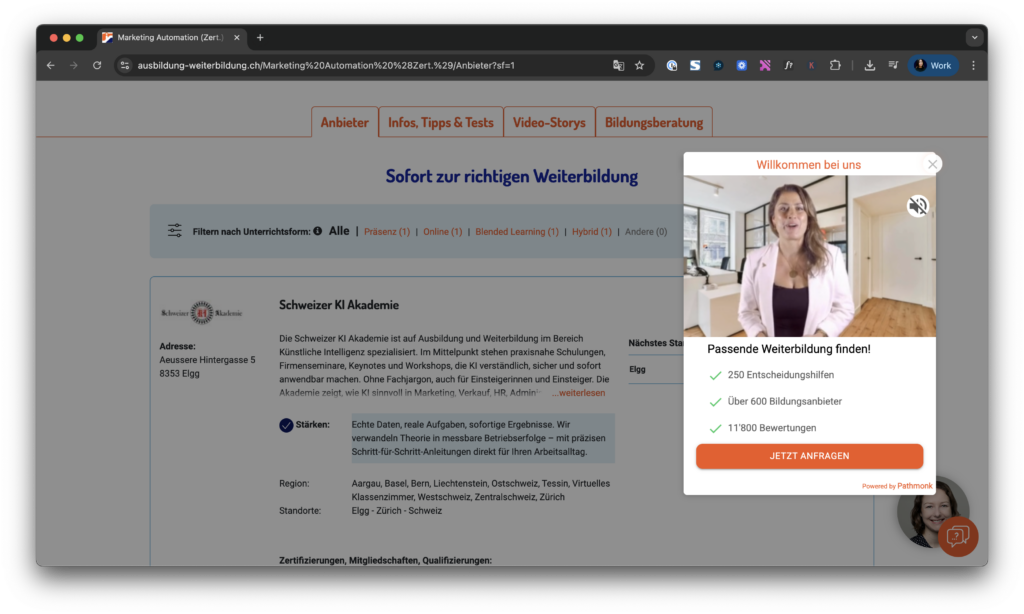
Within the first week of deployment, lead volume increased by 87%. The improvement was concentrated in the decision-stage visitor cohort, where experience specificity most directly addressed the gap between visitor intent and the conversion path being offered. The speed of the result reflects how much conversion volume was being lost in the pre-AI state to mismatched experiences rather than to insufficient traffic.
FAQ on AI-powered lead generation
Is a 3x improvement in lead generation achievable without increasing ad spend?
Yes. The multiplier comes from converting a higher fraction of existing traffic, not from acquiring more of it. The mechanism is closing the gap between visitors with intent and visitors who complete a conversion action. Ad spend determines traffic volume; AI personalization determines what percentage of that traffic converts. CRO is worth the investment precisely for this reason — it improves returns on all existing acquisition channels simultaneously.
How long does it typically take to see a 3x improvement from AI-automated lead generation?
The timeline depends on traffic volume. Sites with 30,000+ monthly pageviews can reach statistically significant A/B test results within 30 to 45 days and accumulate compounding improvements over 60 to 90 days. Smaller sites with 10,000 to 20,000 monthly pageviews typically see meaningful results by the 60 to 90 day mark. A 3x multiplier from a starting 1.5% conversion rate to 4.5% is measurable within that window at adequate volume.
Does AI lead generation improve lead quality or just volume?
Both, when implemented with qualification flows. Behavioral intent scoring ensures conversion attempts are concentrated on high-intent visitors, reducing low-quality lead capture. Qualification flows collect structured data during the conversion process itself. Understanding the difference between lead qualification and lead scoring is important here: AI advances both simultaneously, whereas traditional systems treat them as sequential steps.
How should lead generation performance be measured against an AI-personalized baseline?
Use the concurrent A/B split that the platform runs natively. Compare conversion rates between the personalized variant and the control group over the same time window. Avoid month-over-month or year-over-year comparisons, which conflate AI effects with traffic seasonality, channel mix shifts, and external market changes.
What happens to the lead volume if the AI system is turned off?
Conversion rates revert toward the pre-AI baseline for the traffic that was being handled by the personalization system. The control group (typically 5%) continues to convert at the baseline rate throughout, providing a clean reference point. This is why maintaining the control group is operationally important: it provides a real-time measure of the value being delivered.
Can AI lead generation conflict with existing marketing automation platforms?
The behavioral personalization layer operates on the website itself, upstream of the MAP. It increases the volume and quality of leads entering the MAP without modifying the downstream nurturing sequences. Conflicts are possible if existing pop-up campaigns or chat tools fire on the same visitor segments, creating competing experiences. An audit of existing on-site conversion layers is recommended before deployment.
Does this approach require cookies or visitor identification consent?
No, when implemented with cookieless fingerprinting. Pathmonk’s approach uses probabilistic behavioral signals rather than cookie-based tracking, which means it functions without consent banners and is not affected by ITP, ETP, or third-party cookie deprecation. Real-time personalization in a cookieless environment is now technically achievable without sacrificing measurement completeness.
What is the difference between AI lead scoring and traditional rule-based lead scoring?
Traditional rule-based scoring assigns fixed point values to predefined actions (e.g., +10 for visiting the pricing page, +5 for opening an email). AI-based scoring uses a model trained on historical conversion data to weight behavioral signals dynamically, identifying non-obvious signal combinations that predict conversion. The AI model updates as new data accumulates, whereas rule-based systems require manual recalibration. The power of intent data marketing lies in this adaptability — the model reflects current buying behavior rather than the assumptions embedded in the original rules.
Increase +180% conversions from your website with AI
Get more conversions from your existing traffic by delivering personalized experiences in real time.
- Adapt your website to each visitor’s intent automatically
- Increase conversions without redesigns or dev work
- Turn anonymous traffic into revenue at scale

Key takeaways
- A 3x lead generation multiplier from AI requires automation across intent classification, experience delivery, and autonomous experimentation simultaneously, not just one of these layers
- The primary mechanism is converting a higher fraction of existing traffic, not acquiring more of it; AI amplifies existing demand rather than creating new demand
- Intent scoring must segment visitors by journey stage in real time; serving the same experience to awareness-stage and decision-stage visitors averages down conversion rates for both
- Qualification flows replace static forms with adaptive interaction sequences, producing more qualified leads with richer attached data at higher completion rates
- Cookieless behavioral fingerprinting extends measurement to visitors excluded by cookie deprecation and privacy browser defaults, increasing the effective addressable audience
- For B2B, company-level intent identification of anonymous visitors creates a parallel lead generation channel that does not require form completion
- A/B testing must be concurrent (split traffic, same period) to produce valid uplift measurements; historical comparisons are too noisy to be reliable
- AI lead generation does not overcome structural problems: low traffic volume, mismatched audience, or downstream qualification bottlenecks will limit the multiplier regardless of personalization quality
- The autonomous optimization loop compounds over time; results at 30 days are not the ceiling; they are the baseline for ongoing improvement